On the night of April 18th, 1909, somebody in Ada, Oklahoma, walked into the power company office and forced the engineer on duty to throw a switch. The street lights died, the town went black, and about forty men crossed thirty feet of alley between the county jail and the old Frisco livery barn, dragging four prisoners bound with bailing wire. The ropes they had prepared were not hangman’s knots. They were simple loops.
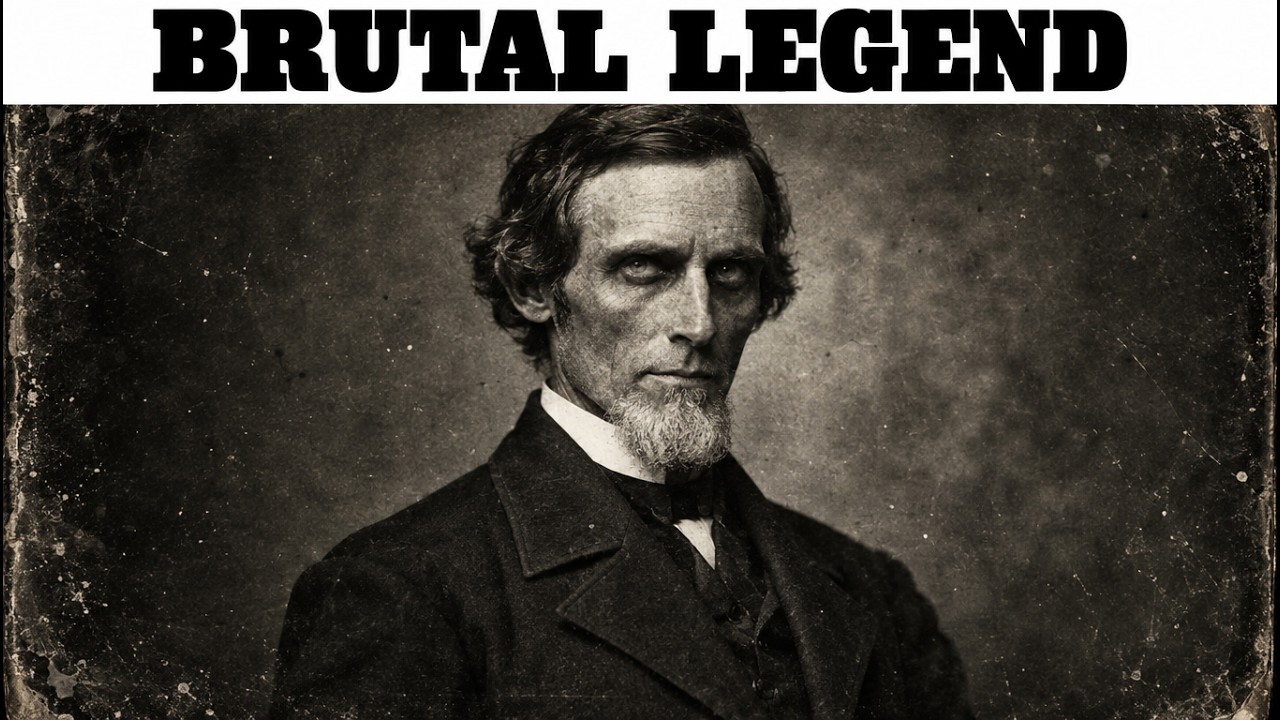
Anyone who has studied an execution can tell you the difference, and the difference is the whole point. A hangman’s knot is engineered to break the neck. A simple loop does not. A simple loop means the man strangles slowly, fully awake while he does it.
Three of the four went up first. The last man waited on the barn floor and watched them die. He was not in a hurry. He asked that his diamond ring be given to his wife, and that was granted.
He asked that a diamond shirt stud go to the jailer for a kindness. He asked to wear his black hat, and somebody set it on the side of his head and he laughed. Then he asked for the one thing that mattered to him, the thing he had worn in every kind of weather for twenty years. And this is the only request they refused.
He asked for his coat. “I’d like to have my coat,” he said. “I don’t want to die naked. ”
Before they pulled him up, he said one more thing, the sentence that follows this man through every book written about him since: “Let the record show that I’ve killed 51 men.
”
His name was James Brown Miller. And there is a number running underneath this entire story, a number simpler than 51 and far more disturbing: zero. Zero days in prison. Not one.
Over roughly twenty-five years, Jim Miller was arrested for murder as a child, convicted of murder as a young man, indicted, tried, and retried in courtrooms across three states and territories, and he never served a sentence. He walked out every single time. The mob in Ada was not skipping a step in the process. The mob in Ada was what happens when a town does the arithmetic and realizes the process has never once worked on this man.
This is the story of that coat, why they wouldn’t give it to him, and how a polite, churchgoing, hymn-singing man from Arkansas became the highest-paid hitman in the American Southwest, with a running price list that can still be reconstructed today. Start with the arithmetic of his childhood, because it is genuinely hard to believe. He was born near Van Buren, Arkansas, on October 25th, 1861, the eighth of nine children. His father Jacob was a miller and a stonemason, and one account credits him with work on the first capitol building in Austin.
The family moved to Texas when Jim was about a year old. His father died a few years later, and his mother Cynthia took the children to Evant, Texas, to live with her own parents. In 1869, Jim Miller’s grandparents were found murdered in their home. He was eight years old, and he was arrested for it.
He was never prosecuted. For the rest of his life, nobody ever found another suspect. That is zero number one, at eight years old. He was then sent to live with his sister Georgia and her husband John Thomas Coupe on a farm at Plum Creek near Gatesville.
He and Coupe did not get along. He had, by the accounts of people who knew him then, a vicious temper. On the evening of July 30th, 1884, John Coupe was asleep on his own front porch when a shotgun blast killed him and a horseman galloped off into the dark. This time they tried him, and this time they convicted him, and he was sentenced to life in prison.
Two things about that trial tell you exactly who you were dealing with. The first is that the prosecution proved careful planning. This was not a hot-blooded fight. It was a man executed in his sleep in a place where he could be found.
The second is his alibi. His alibi was church. He said he had been at a camp meeting all evening. His chief witness was a young woman, and on the stand she broke.
She admitted that Miller had left her and that he did not return until the regular service was over and the shouting commenced. Hold that image, because it is the blueprint for the next twenty-five years: Jim Miller slipping out of a revival meeting, doing murder, and slipping back in while the congregation was shouting. The conviction was overturned on appeal, on a technicality. The case was never retried.
Zero number two. He was twenty-two years old with a reversed murder conviction and a shotgun, and the machinery of Texas justice had just taught him the single most valuable lesson of his career. He drifted. In San Saba County he ran with bad company and was disarmed and arrested by a lawman named J.
D. Harkey, a name to remember because Harkey shows up again twenty years later, standing in a hotel lobby while Miller works upstairs. Then Miller went to McCulloch County and hired on as a cowhand for a rancher named Emanuel “Mannen” Clements. This is the hinge of his whole life, and it is not about a gun.
It is about a family. Mannen Clements was a violent man who had killed at least a couple of men himself, and he was first cousin to John Wesley Hardin, the deadliest pistol fighter in Texas, whom Clements had personally helped break out of jail in 1872. Miller became close to Clements’s son Manny, who was as violent as his father, and to Clements’s daughter Sally, whom he married. Sources put the wedding at either 1888 or 1891.
So a twenty-something with a reversed murder conviction married directly into the most feared gunfighting clan in Texas. He did not need to be fast. He had married an infrastructure: cousins, in-laws, alibi witnesses, and eventually lawyers. Watch how fast it pays off.
In March 1887, Manny Clements pulled a pistol on Ballinger City Marshal Joe Townsend, and Townsend killed him. Seven months later, Townsend was riding home at night when a shotgun fired out of the dark and swept him off his saddle. Townsend survived. His arm had to be amputated.
Nobody was ever brought to trial. That is the first appearance of what became Miller’s signature, the thing that makes him different from every gunfighter you have ever heard of. He did not face men. He waited for them in the dark with a double-barreled shotgun, usually while they were doing something ordinary: sleeping, riding home, dealing cards, driving a wagon full of feed.
There is no fast draw anywhere in this story. There is only a man standing behind a tree. He spent the next couple of years around the Mexican border, and later bragged about it in a line so cold it is worth quoting exactly. He said he had “lost my notch stick on Mexicans that I killed out on the border.
” Lost the stick, not the count — the stick he was cutting the notches into. Then, in 1891, he rode into Pecos, Texas, and did the single strangest thing in his entire career. He became a police officer. Pecos at that moment was a raw town just beginning to acquire a little civilization, and a description survives of what its people did with their time: making a living, going to church, picnics, engaging in a friendly drink now and then, praying three times a day, and fist fighting twice a week.
Miller hired on as a deputy to Reeves County Sheriff George A. “Bud” Fraser, who never asked about his background because in West Texas at the turn of the century, asking about a man’s background was both discourteous and hazardous. And for a while, he was the model deputy. He didn’t smoke.
He didn’t drink. He went to church every week without fail. He made his rounds in black boots, a black Stetson, and a long black broadcloth frock coat that he wore in every kind of weather in West Texas in summer. That coat is the reason people started calling him a deacon.
It is also, as you are about to see, the reason he was still breathing, because the model deputy had a side business. Cattle and horse theft were exploding up and down the Pecos Valley, and Deputy Miller spent more and more time out of town chasing thieves, and he never caught any. Fraser’s brother-in-law, a hard case named Barney Riggs, worked out why and said it out loud: fire Miller, because Miller is the rustler. Riggs, incidentally, had himself been sentenced to life in Yuma for killing a rival over a woman, and had been pardoned in 1887 after he killed two convicts who attacked the warden during an escape attempt.
That is the caliber of person accusing Jim Miller of being a criminal. Fraser had no proof, so he kept Miller on. Then Miller killed a Mexican prisoner who was trying to escape. Riggs alleged the real reason: the prisoner knew where Miller had hidden a pair of stolen mules.
On Riggs’s information, Fraser went and found the mules, and then he fired his deputy. Zero number three: nobody was ever punished for the prisoner. What followed was not a gunfight. It was an election.
In 1892, Jim Miller ran for sheriff against Bud Fraser and lost, then turned around and won the office of city marshal, and began stuffing the city payroll with gunmen, several of them his own in-laws, including Manny Clements. Pecos split in half. And the half that backed Jim Miller was the church half: the pillars of the congregation, the respectable people who had seen him in the pew every Sunday and simply would not believe it. That is the real mechanism of this man, and it is worth being precise about it because it is not folklore.
He joined a church in every town he ever lived in, and cultivated friendships with the most reputable citizens he could reach. When he was charged with something, he had a ready-made supply of pillars of the community prepared to testify to his character. The piety was not a disguise he wore around town. It was a legal instrument.
He was assembling character witnesses in advance. In May 1893, with Fraser out of town, Miller’s crowd simply took over Pecos, and law-abiding citizens were afraid to leave their homes. Somebody wired Fraser, who caught a train home. Miller arranged an ambush on the station platform, and a citizen overheard the plan and got a second telegram through.
Fraser stepped off that train flanked by Texas Rangers, the trap collapsed, and so did the case against Miller. The man who had warned Fraser, Kohn Gibson, later fled to New Mexico and was murdered there. So Fraser stopped waiting for the courts. In April 1894, he found Miller standing in front of his hotel in Pecos and opened fire without preamble, shouting that Miller was a thief and a murderer and that this one was for Kohn Gibson.
He hit Miller in the right arm. Miller drew left-handed and sprayed wildly, hitting a bystander. Fraser put a round into Miller’s groin and dropped him, then emptied the rest of the cylinder into the middle of that black coat. Three bullets in a space you could cover with a coffee cup, directly over the heart.
Jim Miller was carried to a doctor. They cut the coat off him, and underneath, strapped to his chest, was a steel plate. Now, to be straight about this: it is the most famous fact about Jim Miller, and it is not unanimous. Several standard reference works state it flatly — the plate under the frock coat caught Fraser’s bullets and saved his life.
At least one modern account argues there is little evidence for it and that the breastplate is legend. What is not disputed is the outcome. Bud Fraser put three bullets over Jim Miller’s heart at close range, and Jim Miller got up. What he said while he was recovering was this: “I’m going to kill Bud Fraser if I have to crawl 20 miles on my knees to do it.
” And while he lay there healing, the churches of Pecos rallied to him harder than ever, because he had recently been converted at a revival meeting. On December 26th, 1894, they met again. This time Fraser shot first and hit Miller in the arm and the leg, then went for the chest twice over the heart, and Miller stayed on his feet. Fraser, who apparently still did not understand what he was shooting at, turned and ran.
Miller then had Fraser charged with attempted murder, which is its own kind of audacity. The case went to El Paso and hung. For the retrial, Miller brought in family help: the newly released John Wesley Hardin, now a practicing attorney. Hardin was shot dead in El Paso’s Acme Saloon by John Selman before he could do much good.
Fraser was acquitted, lost his re-election bid, and left for New Mexico. He should have stayed there. In September 1896, he came back to visit his mother and sister in Toyah, Texas, eighteen miles from Pecos, carrying a special revolver loaded with what he called explosion balls. On the morning of the thirteenth, he was sitting at a saloon table dealing a hand of Seven Up.
Miller was waiting across the street in a hotel, tipped off by a lookout named Bill Heggett. He crossed, pushed the shotgun barrel over the saloon’s swinging doors, and fired both loads into the head of the man who had shot him four times over the heart and lived to tell people about it. Fraser’s body stayed in the chair. Fraser’s sister confronted Miller afterward.
He told her he would kill her too. Two juries heard the case. The first hung 11 to 1. And in the months between trials, Jim Miller spent his time helping his minister run prayer meetings.
In January 1899, the second jury acquitted him. That is zero number four, and it is the moment the transformation completes. He had now killed a sitting former sheriff in front of witnesses in a public saloon and walked out of a courthouse a free man. There was no longer any reason to pretend to be a lawman.
From here on, Jim Miller stopped being a criminal who killed people and became a business. And here is where the second number starts, running alongside the zero, these two figures rising and falling against each other being the entire story. The zero is his convictions. The other number is his rate.
It starts small. A man named Joe Herp, no relation to Wyatt, turned state’s evidence against Miller in a case of suborning perjury, and Miller’s conviction in that case was naturally reversed. Riding the train home, Miller announced to the car: “Joe Herp turned State’s evidence on me, and no man can do that and live. Watch the papers, boys, and you’ll see where Joe Herp died.
” Three weeks later, Joe was killed by a shotgun blast. Miller then rode a horse roughly a hundred miles in a single night to establish that he had been somewhere else. Understand what he had just done. He announced a murder in front of witnesses, committed it on schedule, and was never charged.
That is not a killer. That is an advertisement. The prosecutor who had gone after him in that case later stayed overnight at a hotel in Memphis, Texas, and was dead by morning, officially of peritonitis. The doctor later said the peritonitis had been arsenic.
The hotel’s temporary cook had been a friend of Miller’s, and had vanished. The doctor did not press the point. He knew, as everyone in that part of Texas knew, what happened to people who pressed points about Jim Miller. And now, before the rates get serious, here is the fact that ought to stop you cold.
In this period, having been convicted of murder once, tried for murder twice more, and suspected in a string of shotgun ambushes, Jim Miller joined the Texas Rangers. He served as a resident ranger at Memphis, Texas, and in Hall County. And while working in that capacity, he killed a man in neighboring Collingsworth County. In 1900, he moved his family to Fort Worth.
Sally opened a boarding house, and the older children helped run it. Their father commuted, because it was in Fort Worth that Jim Miller began, in the flat language of the record, to advertise as a professional killer. The opening price was $150 a man. And now watch the ledger climb, and notice who he was killing, because this is the part that turns a gunfighter story into something much bleaker and much more modern.
He killed two men near Midland in 1900. When he was arrested for one of them, his traveling partner, Lawrence Angel, was persuaded to take credit for the killing, and Jim Miller appeared as a witness to testify that Angel had acted in self-defense. Let that settle. He served as the exculpatory witness for the man taking the fall for his own murder.
In the summer of 1902 in Ward County, he claimed he caught three men stealing cattle, killed two with a Winchester, and wounded the third, who got away clinging to his horse. On August 28th, 1902, he took $500 to kill a lawyer named James Jarrett. Jarrett was not a gunman. He was an attorney near Locker who had successfully represented small farmers, “nesters,” who were fencing land that big cattle outfits wanted left open for grazing.
He beat the ranchers in court, so the ranchers bought a shotgun instead of an appeal. Miller caught him watering his horses near his own farm and shot him again and again as he lay on the ground. Miller’s comment afterward is one of the ugliest lines in the history of the West: “He was the hardest damn man to kill I ever tackled. ”
Then the price went up again.
On March 10th, 1904, in Fort Worth, Miller took a contract on a man named Frank Four. Four was accompanied by three lawmen: J. D. Harkey, the man who had arrested Miller twenty years earlier in San Saba County, along with Jinx Clark and Tom Coggins.
Miller left all three of them sitting in the lobby of the Westbrook Hotel, went upstairs, and shot Four in the restroom. Four died three days later. Then Miller came back downstairs and tried to surrender to Harkey. Harkey refused to have anything to do with it.
Clark and Coggins later testified that they had witnessed the shooting and that Miller had acted in self-defense. So Jim Miller killed a man in a hotel bathroom and produced two peace officers to swear it was self-defense. Zero again. By 1906, he was working in Indian Territory, and the price had reached four figures.
A man named Port Pruitt had been shot and crippled in 1903 by a deputy U. S. marshal and Indian policeman named Ben Collins, and Pruitt wanted him dead. Before hiring Miller, Pruitt had hired a different gunman for $500, and that gunman took a $200 advance, went and told Ben Collins there was a contract on his life, and left the territory.
Think about that for a second. Somewhere in this story, there is a professional killer who took the money, warned the target, and ran. Then Port Pruitt hired Jim Miller for a reported $1,800. On the evening of August 1st, 1906, a shotgun went off at the gate of Collins’s little farm.
Collins died hard. Knocked off his horse with a load of buckshot in him, he got off six rounds from his revolver. The second load took him in the face, and he was dead before his wife could reach him. She had heard the whole thing from the house.
Miller was arrested and indicted for it. Then the case did what every case against Jim Miller did: it sat. Months passed. One conspirator died.
One of the Pruitts was killed by a lawman in an unrelated incident. Miller was out on bail by late 1907, back in Fort Worth gambling and speculating in real estate. And he had started wearing diamonds, a ring and shirt studs purchased with the proceeds. Remember the ring.
It has about eighteen months left to live. Then, in 1908, comes the most famous allegation attached to his name, and honest history requires handing you both halves of it. On February 29th, 1908, Pat Garrett, the man who killed Billy the Kid, stopped his buggy on a desolate road near Las Cruces, New Mexico, to answer a call of nature, and was shot through the back of the head. Garrett had been in a bitter dispute over land and grazing with powerful neighbors, and with a man named Wayne Brazel over a herd of goats.
In his buggy he carried no sidearm, only a folding shotgun in a case. Brazel confessed on the spot, claiming self-defense after another argument about the goats. The only eyewitness, Carl Adamson, backed him. A jury acquitted Brazel in under ten minutes.
The version that made Miller legendary goes like this: he had been offered $1,500, had appeared in Doña Ana County in January posing as a cattleman shopping for grazing rights, and had thereby given Garrett a reason to make that trip. And the local sheriff, Lucero, never believed the self-defense story for a moment. He found Garrett lying in the road with his fly still unbuttoned and a heavy glove still on his right hand, not the condition of an experienced gunfighter about to start a fight, and concluded the birdshot-loaded shotgun beside the body had been placed there. A mounted officer searching the brush found horse droppings and two spent Winchester shells.
The same officer discovered that Carl Adamson was related to Jim Miller. Now the other half: a number of modern historians consider it unlikely that Miller pulled the trigger, on the straightforward grounds that Brazel confessed and stood trial for it, and Miller was never indicted. Nobody has ever proven it either way. What is certain is this.
By 1908, if a famous lawman was assassinated from ambush anywhere in the Southwest, the entire region’s first guess was Jim Miller. The reputation had become self-sustaining. He no longer needed to do the killing to be credited with it. Late that year, his brother-in-law Manny Clements was killed in an El Paso saloon fight, and Miller swore to avenge him.
He also swore to kill Barney Riggs, the man who had exposed the mules fifteen years earlier. Both promises had to wait, because a contract came in from Oklahoma, and it was the largest of his life. The price was $1,700; some accounts say $2,000. Compare it to where he started: $150 a man in Fort Worth in 1900.
In nine years, his rate had gone up roughly twelvefold. There was no competition because there was no risk, because there had never been a conviction. The zero was the business model. The zero is what made him expensive.
Ada, Oklahoma, was less than two years into statehood, a booming cotton town. And in or near it, in the single year 1908, thirty-six people had been murdered. The target was Allen Augustus “Gus” Bobbitt, a rancher, a former deputy U. S.
marshal, and one of the genuinely good men in this story. Years earlier, in Pottawatomie County, Bobbitt had led the effort that ran two brutal saloon operators, Jesse West and Joe Allen, out of the territory. West and Allen had been the kind of men who wrecked a competitor’s saloon when he refused to sell. Now they wanted to come back, and they believed Bobbitt was what stood in the way.
West reportedly told an employee: “I did say in the courthouse at Tecumseh that I would never work again until one of us was in the grave. I have kept my promise. ”
They reached Miller through a middleman named Barry B. Borrell, a former bank cashier turned livestock trader who also did the surveillance, watching Bobbitt’s movements and telling Miller when to move in.
But Gus Bobbitt had done something in 1904 that nobody else in this entire story thought to do. Worried that West and Allen would come for him someday, he drew up a will. And in it, he set aside $1,000 as a reward for the capture of whoever killed him. Gus Bobbitt prefunded the investigation into his own murder.
Hold that, because it is the reason this is the last chapter and not another acquittal. Saturday, February 27th, 1909. Bobbitt was in Ada buying two wagon loads of cottonseed meal for his stock. He drove one wagon; a neighbor he’d hired for the day, Bob Ferguson, drove the other.
Heading southwest on the Ada-Ardmore road, they passed a well-dressed rider in a tie and a riding cap, a strange outfit for a man on a shabby brown farm mare. The rider had a rag held up to his face, as though he had something in his eye. Behind his saddle was something wrapped in a folded slicker. He greeted Bobbitt pleasantly.
Neither man recognized him. Six miles out, they turned down the lane to Bobbitt’s ranch, and a half mile from the house they came to a large oak tree, behind which a man was standing with both hammers of a double-barreled shotgun cocked. The first load tore into Bobbitt’s legs and lifted him upright on the wagon seat. “Oh God,” he cried out.
The second, fired from behind the elm on his other side, went into his left side, twenty-six pellets in his leg and above the hip. He fell out of the wagon into the pasture, and his team bolted into the dark. And then Jim Miller did something he had never done before. He ran out to the body with a pistol drawn, saw that Bobbitt was still alive, and did not finish him.
He ran to the mare and galloped off past Ferguson, throwing his shotgun into a stream as he went. Tennessee Bobbitt had heard the shots and came running. Her husband asked her to put his head in her lap, and she did. He told her who was responsible, his old enemies.
He told her how to dispose of his property. He lay there in his own field with his head in his wife’s lap for close to two hours, giving instructions, and then he died. The only two things Jim Miller had ever needed were a clean trail and a jury. Within three weeks, he had lost both.
He had left behind wire cutters used to cut fences on his way in, and the cutters were traced to the man who bought them: Barry Borrell. The distinctive brown mare was traced northeast to the town of Francis, to a man named John Williamson, who turned out to be Miller’s own nephew. Williamson had sheltered his uncle before and after the killing and had been threatened with death if he talked. Surrounded by angry men, he talked.
He said he had loaned Miller the mare, and that Miller had admitted killing Bobbitt. A teenager named Oscar Peeler, who had taken $50 to guide Miller to his target and had rented the house Miller stayed in, talked too, and said the checks covering the rental had come from Jesse West. Texas lawmen arrested Borrell in Fort Worth on March 23rd, and took Miller without resistance near Fort Worth on March 31st. And West and Allen, safe in Texas, were brought in by a telegram that is the single funniest document in the history of the Old West.
It was fraudulent, and it read: “Come to Ada at once. Need $10,000. Miller. ” They came.
They were arrested at the train depot in Oklahoma City on the night of April 6th. And Jesse West said something to the detective who took him that shows he understood his situation better than his own lawyer did: “I would have killed him on sight. I didn’t kill him, but that was the only reason I didn’t get the chance. But they will kill us if you take us back to Ada.
”
Now put yourself in Ada in the second week of April 1909, and the lynching stops looking like frontier savagery and starts looking like a calculation. Here is what the town could see. It could see Jim Miller living in the county jail like a hotel guest, shaving twice a day, having his sheets changed every morning, eating steaks sent in from the Elite Cafe, and having carpet laid down on the floor of his cell. It could see a flood of telegrams and letters arriving from Texas and New Mexico cattlemen testifying to his fine character, the pillars-of-the-community mechanism working exactly as designed one last time.
And they could see who he had hired. Moman Pruitt was the most successful criminal defense lawyer in Oklahoma, and arguably in America. Over half a century at the bar, he defended 342 murder cases. He won outright acquittal in 304 of them.
Thirty-seven were convicted of lesser charges. Exactly one client received a death sentence, and President McKinley commuted it. In his entire career, Moman Pruitt never lost a client to an executioner. And it could see what had just happened two days earlier up at Norman.
A man named Stevenson, charged with murdering Deputy Marshal R. W. Cade, had been acquitted by a jury. So the town of Ada did the math.
Zero convictions in twenty-five years, plus the best defense attorney in the state, plus an Oklahoma jury. And the answer came out the same way it always had. The mob formed on the streets near midnight on April 18th. The county attorney, Robert Wimbish, met it on the way and tried to send the men home, and failed.
They forced their way in, got the drop on the deputy and jailer Walter Goyne, wired his hands with bailing wire, clubbed part-time deputy Bob Nester over the head when he reached for his pistol, and kept the night guard outside. A county judge and a night policeman both pleaded with them. And the fact that two city officials happened to be standing at the jail at two in the morning tells you roughly how much of a surprise this was. The sheriff and several other officials were conveniently out of town.
The sheriff’s own son said in an interview decades later: “I think they knew what was going on. Somebody killed the street lights. They took the four men thirty feet down the alley to the Frisco barn. ”
They asked Jesse West what he knew about the Bobbitt murder.
He said he’d tell them nothing, and that if he had a pistol, he’d shoot some of them. A tall man in a slouch hat said: “The ropes. ” West took a beating, and then a rope. They offered Jim Miller his freedom if he would talk, and he talked.
Then they forgot the offer. That bargain, freedom in exchange for the truth, was the very last transaction of Jim Miller’s life, and it was the first one in twenty-five years where he was the one who got cheated. He went last. Three men strangling in front of him in the low light of a few lanterns.
He said: “If you’re going to hang me, do it quick. ” He gave up the diamond ring for Sally and the stud for the jailer. He asked for his hat and got it, and laughed when it was set on his head, and said something like: “I’m ready now. You couldn’t kill me otherwise.
Let her rip. ” And he asked for the coat, and was refused. And he said he didn’t want to die naked. Then: “Let the record show that I’ve killed 51 men.
”
A man who had beaten every court in three states, who had never once made an admission that could hurt him, chose the last thirty seconds of his life to inflate or confess his own body count. Frank Canton, Oklahoma’s adjutant general, said he knew of thirteen Miller killings in Texas alone from personal knowledge. Modern reference works credit him with about a dozen documented. Some historians point out he had no reason to lie with a rope on his neck.
Others note he had spent his entire life building a reputation, and that the reputation was the product. Either way, he understood something true about himself in that moment. He was not going to be remembered as a man. He was going to be remembered as a number.
When his body finally stopped moving, one of the vigilantes took Jim Miller’s black broadcloth coat and laid it across his shoulders as he hung there, and said: “It won’t help him now. ”
A photographer named N. B. Stall was brought in, and the picture he took — four men hanging in a row from the rafters of a livery barn, Miller on the end — became one of the most reproduced images in the lore of the Old West.
Governor Charles Haskell was furious that Ada hadn’t notified him, and convened a special grand jury. It sat for three days and interviewed twenty-eight people with knowledge of the event. Not one of them could or would name a single member of the mob. The grand jury’s finding was less a condemnation than a diagnosis.
They deplored that the affair had happened, and stated their belief that the occurrence was largely due to the tardy administration of justice by the court. Deputy Walter Goyne, the man who had told the newspaper the mob tied him up at the jailhouse, said years later of Miller’s final moments: “I ought to know because I hung him. ”
So the zero held to the end. Zero convictions against Jim Miller in twenty-five years, and zero prosecutions of the forty men who killed him.
The law’s record in this story is perfect in the worst possible sense. It never once functioned. Long lines of people filed through the undertaker’s parlor. Some of them had come to make sure.
Some of them still believed he’d been framed. He was buried in Oakwood Cemetery in Fort Worth. Sally, who had kept a boarding house while her husband commuted to murders, outlived him by twenty-nine years and was buried in the same ground in 1938. In 1997, a monument went up near the site of the livery stable, and the phrase they chose to carve on it was “The End of the Old West.
” On the hundredth anniversary in 2009, Ada held a ceremony at that monument to commemorate the passing of the four men. And the town argued about whether that was appropriate, which means Ada was still arguing about Jim Miller a century after it killed him. And now the last thing, which loops all the way back to the coat. Everything you have just heard about this man is real.
What is not real is his name. Look at the contemporary record — the court documents, the newspapers printed while he was alive, the paper trail of a man who was constantly in court — and you will not find “Deacon Jim. ” You will not find “Killing Jim. ” You will not find “Killer Miller.
” Those names appear in print after 1909. In his own lifetime, the only nickname anyone can document for James Brown Miller is one word, and it is almost sweet. They called him “Kid. ”
The churchgoing assassin in the long black coat, the deacon, the figure who walks through a hundred books and a dozen songs — that man was assembled after the hanging by writers out of a photograph and a sentence about fifty-one dead men.
His most famous quality, the pious nickname that makes the story irresistible, was hung on him the way that coat was hung on his shoulders in the Frisco barn: draped over him after he was already dead, by somebody who knew perfectly well it wouldn’t help him now. Which leaves exactly one honest accounting of Jim Miller, and Ada wrote it before the legend arrived. It came from a respected citizen asked to sum the man up, and it did not mention the church, or the coat, or the fifty-one.
“He was just a killer,” the man said.
