On the afternoon of Tuesday, February 4th, 1986, 17-year-old Shondra May came home from school just like she did every other day. She sat down and finished her homework, then ate dinner with her mother. Nothing about the evening felt different. Nothing warned her that it would be the last normal night of her life.
Shondra worked part-time at a McDonald’s in Forest, Mississippi, about 12 miles from her home in the small community of Pea Ridge. Her shift started at 6:00 that evening. So, around 5:30, she said goodbye to her mother and got in her car. The drive usually took about 20 minutes, and she pulled into the McDonald’s parking lot with 10 minutes to spare, giving her just enough time to clock in before her shift began.
It turned out to be a slow night. Customers weren’t coming in, and after a while, her manager decided there was no point keeping a full staff on the clock. He told some of the employees, including Shondra, that they could head home early. Shondra clocked out at 7:24 p.
m. , but she didn’t leave right away. She lingered a little, holding out hope that business might still pick up, and she could get back to work. It never did.
After a few more minutes, she accepted that the night was over, gathered her things, and got ready to leave for good. Before walking out the door, Shondra did what she always did. She called her mother to let her know she was on her way home. Then she waved goodbye to her co-workers and walked out of the restaurant at 7:40 p.
m. She didn’t drive straight home, though. She made one quick stop at a nearby variety store to pick up a Valentine’s Day card for her boyfriend. Witnesses inside placed her there around 7:45, just minutes after leaving McDonald’s, and the cashier remembered her checking out and walking back to her car completely alone.
That would be the last confirmed sighting of Shondra May before she vanished. Back at the house in Pea Ridge, Shondra’s mother, Janelle, expected her daughter home by around 8:00. 8:00 came and went. By 8:15, Janelle was starting to feel uneasy.
A little after that, the phone rang. It was Shondra’s father, Richard, calling to check in on his family. Richard worked as a riverboat pilot and was out of state at the time, far away from Pea Ridge and unable to do anything himself. When Janelle told him that Shondra still wasn’t home, he could hear the worry in her voice.
Richard tried to think it through logically. Maybe the car had broken down somewhere along the route. He suggested that Janelle call her brother-in-law, Alton Spivey, who lived right next door. If Shondra really had car trouble, Alton could drive the route she normally took and see if he spotted her.
Alton agreed right away. He and his son got ready to head out and look. But before they could even leave the driveway, Janelle decided to step outside to speak with Alton first. She opened her front door and what she saw stopped her cold.
Sitting on a small gravel road only about 80 yards from the house was Shondra’s car. The driver’s door was open. The interior light was still glowing in the dark, but there was no sign of Shondra anywhere. Janelle rushed toward the car.
Everything looked untouched at first glance. Her purse was still there. Her money was still there. Her glasses, her makeup, her schoolbooks, even her jacket, all sitting exactly where she would have left them.
But one thing was missing that made no sense at all. Shondra’s driver’s license was gone. There was nothing else out of place. No broken glass, no torn clothing, no sign that a struggle had taken place anywhere near the car.
It was as if Shondra had simply stepped out and disappeared into thin air, taking nothing with her but a small plastic card that on its own seemed almost meaningless. Almost. That single missing item would end up shaping the entire case for decades to come, though nobody standing on that gravel road that night could have guessed why. Alton tried to make sense of it.
He asked Janelle if it was possible Shondra had gone off somewhere with her boyfriend. Janelle shut that idea down immediately. Shondra would never do something like that without calling first. She was unusually close to her mother, who suffered from serious health problems including diabetes, and relied on kidney dialysis just to stay alive.
Shondra made a point of always keeping her mother informed of where she was. Running off without a word simply wasn’t something she would do. With no answers and a rising sense of dread, Alton and his son set out to drive the roads looking for her, while Janelle stayed behind and got on the phone. She called Shondra’s boyfriend, a young man named Tony, but he had been at home with his own parents all evening and hadn’t heard from her at all.
She called Shondra’s friends one by one. Nobody had seen her. Nobody had heard from her. With panic setting in, Janelle called the police.
The Scott County Sheriff’s Office wasted no time. Within hours, they had issued a missing person bulletin to every neighboring county and organized search parties to comb the area around where the car had been found. Nothing turned up. From very early on, investigators had a strong instinct about what they were dealing with.
Shondra didn’t fit the profile of a teenager who would run away. She was steady, responsible, and close to her family. Detectives quietly began operating on the assumption that she had been taken against her will, and they started retracing every step of her final hours. The investigation began at the McDonald’s where she had worked.
Her manager told police she had been a model employee for over a year, cheerful, always on time, and completely free of any bad habits like drinking or drugs. Nothing about her behavior that final night had seemed unusual, and she had been alone when she left the building. From there, detectives were able to locate the witnesses at the variety store, confirming that Shondra had bought her Valentine’s card and left by herself around 7:45. After that single sighting, the trail went cold.
Nobody came forward who had seen her car on the road as she made her way home. She had simply vanished somewhere between that parking lot and her own driveway. While search parties fanned out across the county, detectives turned their attention to the people who knew Shondra best. She was a senior at Leake Academy, a small school with only 36 students in her graduating class.
She was a member of the National Honor Society, wrote for the school newspaper, and was active in the student Christian organization. Teachers described her as impeccably behaved. Classmates described her as kind and easy to like. Friends confirmed something detectives had already suspected.
Shondra rarely strayed far from home because she wanted to stay close to her ailing mother. Everyone who knew her insisted the same thing. She would never have done anything to cause her mother pain, and she certainly would never have walked away on her own. Whatever had happened to her, it had happened against her will.
A week after Shondra was reported missing, Mississippi State Police joined the search. Extensive searches by air and on the ground swept across three counties. Still, nothing was found. No car, no clothing, no trace of the missing teenager.
It was around this time that a chilling rumor began making its way through the community, one that investigators themselves could not fully dismiss. Some believed Shondra had been pulled over by someone impersonating a police officer. It was a theory that fit disturbingly well with the facts. If Shondra thought she was being stopped by real law enforcement, she would have pulled over calmly and handed over her license without a second thought, explaining both the total absence of any struggle and the one item that had vanished from her car.
Investigators took the possibility seriously enough that they spent weeks chasing down reports from residents who claimed they had been approached by a car flashing a single blue light, the kind used by an unmarked patrol vehicle. None of those reports could be confirmed, but none of them could be ruled out, either. The idea that Shondra’s abductor might be wearing a badge or pretending to be an officer settled over the town like a fog that refused to lift. On February 19th, two and a half weeks after she vanished, the Scott County Sheriff’s Department made it official.
Shondra’s disappearance was being classified as a kidnapping. The FBI joined the investigation. More large-scale searches were launched, but each one came back empty. Shondra’s parents, desperate and supported by a community that refused to give up, put up a $45,000 reward for any information.
Tips poured in. None of them led anywhere solid. The following week, the National Guard joined civilian volunteers in sweeping through northern Scott County and southern Leake County, areas investigators believed held the best chance of finding her. A massive search on February 25th produced nothing.
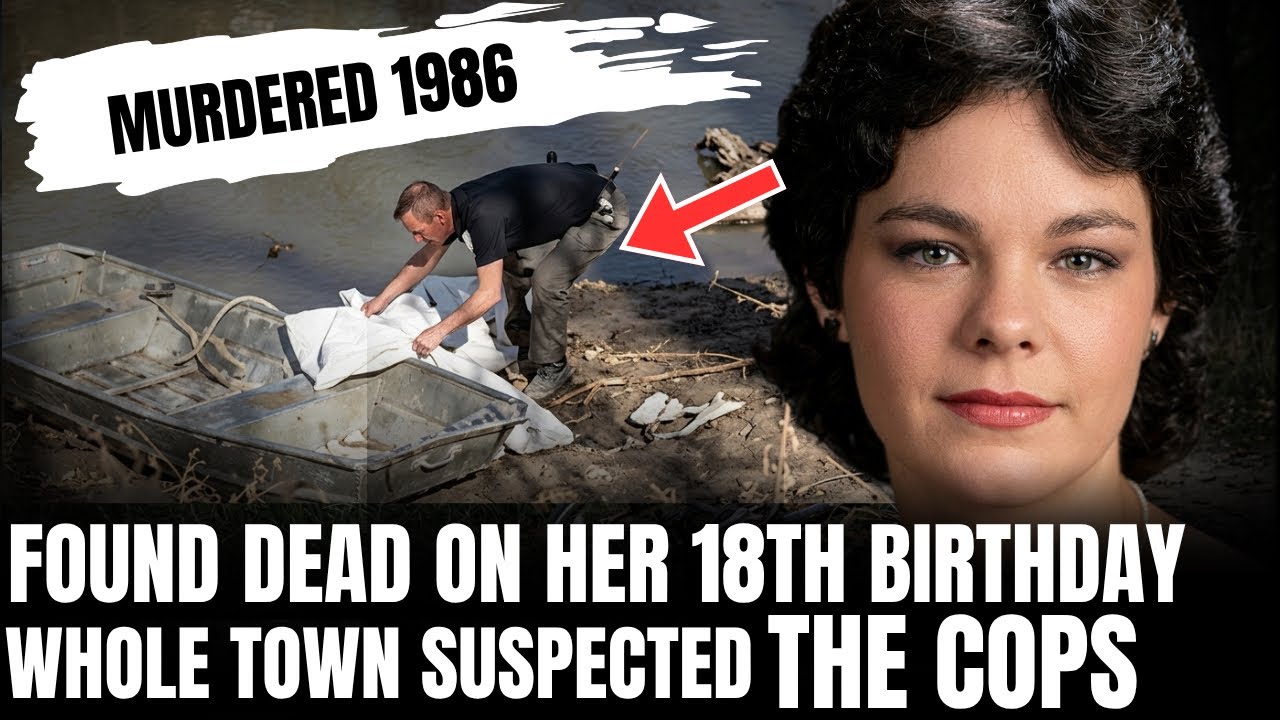
Searchers planned to go out again the next morning. They never got the chance. In the early hours of February 26th, the search for Shondra May came to an end in the worst possible way. An off-duty firefighter from Jackson had been out along the banks of Baker’s Creek near Bolton, Mississippi digging for fishing worms when he noticed something in the water.
It was Shondra’s body. The location was more than 80 miles from where she had last been seen alive. And the date, of all dates, was February 26th. It was the day Shondra should have been turning 18 years old.
The medical examiner determined that Shondra had only been dead somewhere between 5 and 10 days by the time she was found. She had been missing for 22 days. That gap meant one horrifying thing. For as long as two full weeks, possibly longer, Shondra had still been alive somewhere being held captive before her killer finally ended her life.
Investigators were able to make a preliminary identification almost immediately thanks to a high school class ring still on her body engraved with her own initials. Dental records would later confirm what everyone already feared. It was Shondra. The autopsy painted a brutal picture.
She had been struck in the head with a heavy object at some point before her death. She had been sexually assaulted. She had then been strangled with pieces of packing tape still wound tightly around her neck. The same tape the medical examiner believed had been used to end her life.
Her body had been bound hand and foot, gagged, wrapped in bags, and thrown into the creek like garbage. Two days later, on February 28th, 1986, Shondra’s funeral was held at Calvary Baptist Church. The tiny sanctuary could not come close to holding everyone who wanted to be there. Nearly 300 people packed in to say goodbye.
Six of her classmates served as pallbearers. Every student from Leake Academy attended, each of them struggling to process the loss of someone who had sat beside them in class just weeks before. Grief turned quickly into fear across the whole community. Forest was a small town, the kind of place where everybody knew everybody, and murders like this simply didn’t happen there.
If a police impersonator really was responsible, then no one felt safe because the very people meant to protect them could no longer be trusted without question. Women became afraid to drive alone at night. Parents watched their daughters more closely and set earlier curfews. Even routine traffic stops started to feel uneasy, with drivers wondering whether the flashing light behind them belonged to a real officer or to someone pretending to be one.
The pressure on detectives to find Shondra’s killer became almost unbearable, and a new reward fund, built from donations by local businesses and ordinary residents, grew larger by the week. Everyone wanted the same thing, an arrest that would let the town breathe again. It would not come for a very long time. Even with all that pressure and all that money on the table, solid leads never materialized.
Callers reported rumors more often than facts, and investigators found themselves chasing shadows. The police impersonator theory refused to go away, and in April of 1986, investigators turned their attention to one of their own. A Scott County Sheriff’s Deputy came under suspicion. To his credit, the deputy agreed to take a polygraph test voluntarily.
He passed, and he was cleared. By July of 1986, Shondra’s grieving parents had grown frustrated enough to say publicly that they felt law enforcement wasn’t doing enough to find their daughter’s killer. That single comment to the press had consequences nobody expected. By October, investigators had shifted their focus onto Richard May himself, Shondra’s own father.
Despite the fact that he had been working out of state the entire time his daughter disappeared. Richard agreed to take a polygraph test. He passed that one, too. After that, the case simply stalled.
No new suspects, no new evidence. The trail that had once stretched across three counties and involved state police, the FBI, and the National Guard went completely cold. Shondra was laid to rest at a small cemetery near Pea Ridge. But her gravestone would carry a strange and painful gap.
Her date of birth was carved in clearly. The space for her date of death was left blank. Nobody knew exactly which of those 22 missing days had been her last, and her parents refused to guess. They chose to leave it open, waiting for the day someone would finally be able to tell them.
Janelle May, Shondra’s mother, died in 1994, having spent the last 8 years of her life without ever learning what happened to her daughter. Richard continued living in Mississippi for decades afterward, still hoping. Shondra’s brother, Tim, who had been 18 at the time of her murder, grew older carrying the same unanswered questions his parents had carried to their graves. Over the years, investigators developed a handful of suspects, some of them known locally for using flashing lights to pull people over, feeding right back into the original rumor that had haunted the case from the very beginning.
But nobody was ever charged. Investigators later admitted that mistakes made in 1986 had badly damaged the physical evidence. The tape that had bound Shondra’s body was removed almost immediately at the scene by a young deputy who didn’t yet understand modern evidence protocols. The garbage bags she had been wrapped in were also handled improperly.
Worse still, Shondra’s own car had been used by her cousin and his father as they searched for her the night she disappeared, unknowingly compromising whatever evidence it might have held. For years the case sat cold, a source of quiet grief in a small town that never stopped talking about it. Then, in 1992, a name surfaced that would eventually change everything. A man named Ruben Weeks had been arrested and imprisoned in Missouri for the kidnapping and rape of a woman there in 1991.
The details bore an eerie resemblance to what had happened to Shondra six years earlier. Investigators took notice, and the local newspaper even ran a story naming Weeks as a suspect in the May case, but at the time there simply wasn’t enough evidence to charge him, and the case went cold once again. Decades passed. Janelle died without answers.
Richard eventually passed away, too, in 2023 at the age of 81, joining his first wife in the same small cemetery, still without the truth. Only Tim remained to carry the family’s hope forward, along with his own children and grandchildren. But the case was not forgotten. A group of retired investigators took a fresh look at the file with experienced eyes, determined to see if anything had been missed the first time around.
They worked alongside Scott County Sheriff Mike Lee, who had grown up in the very community shaken by Shondra’s murder, and had made solving her case a personal promise to the people he served. Slowly, patiently, they began reaching out to people who might have been too afraid to talk decades earlier. Investigators believed some witnesses had simply been scared back then and that with so many years gone by and so many people from that era now deceased, someone might finally be willing to speak. The strategy worked.
Investigators managed to build relationships and open doors that had been closed for almost 40 years, eventually locating three witnesses who had actually been present for parts of what happened to Shondra. Piece by piece, the case that had once felt permanently frozen began to move again. At the center of it all was Ruben Weeks, the same man named as a suspect back in 1992. His 1991 Missouri conviction had required him to submit to DNA testing at the time, confirming his guilt in that case.
Decades later, modern forensic testing methods, far more advanced than anything available in 1986, allowed investigators to connect that same DNA profile directly to Shondra’s murder. On April 29th, investigators finally moved. Sheriff Mike Lee arrived with a caravan of law enforcement officers at an RV park in Madison County where 63-year-old Ruben Weeks had been living quietly. Just one day earlier, Weeks had been out fishing.
When officers came for him, he needed his wheelchair to make it to the patrol car that would take him to jail. Weeks was charged with kidnapping, rape, and murder in connection with Shondra’s death. At the scene of his arrest, he denied any involvement. It was, however, far from his first brush with violent crime.
Investigators noted that Weeks had previously confessed to other similar attacks, including the abduction of a motel clerk in Missouri in 1991, a woman he had kidnapped, raped, and bound with tape before she managed to survive and later testify against him in court, earning him a life sentence. For Shondra’s family, the arrest was the moment they had waited nearly 40 years to see. Tim May, who had spent four decades hoping for exactly this news, made it clear that both his parents had died without ever getting to witness it. He credited Sheriff Lee’s promise to the community and the tireless work of everyone who had helped keep the investigation alive.
In December, Weeks appeared in court where prosecutors argued strongly that he should remain in custody without the possibility of bond. The DNA evidence connecting him to Shondra’s murder had been laid out, and it appeared the case against him was strong. Then, just as it seemed the town of Forest, Mississippi might finally get to see a trial and a verdict for a nearly 40-year-old murder, the story took one final, unexpected turn. On a Saturday in December, Ruben Weeks died while still in custody.
Authorities said the cause of death was not immediately known, but stated that no foul play was suspected. Because he had died while incarcerated, the Mississippi Bureau of Investigation took over review of the circumstances surrounding his death. Standard procedure whenever someone dies behind bars. Just like that, the man believed responsible for one of Mississippi’s most haunting cold cases would never stand trial.
There would be no courtroom verdict, no jury decision, and no chance for Shondra’s surviving family to hear a judge formally hold him accountable. The confirmation had come through science instead of a courtroom, and the ending had come through death instead of justice fully served. Shondra May was 17 years old when her life was taken from her. A bright, well-liked student with a close bond to her parents and a future that should have included so much more.
She never got to celebrate turning 18. She never got the chance to grow up, to walk across a stage, to build the life she was clearly working toward. For nearly 40 years, her family lived with a gravestone that couldn’t even say when she died, and a community that never fully shook off the fear her murder left behind. Today, thanks to the persistence of retired investigators, a sheriff who kept his word, and advances in forensic science that simply didn’t exist in 1986, the family finally has an answer to who took Shondra from them.
It came far too late to give them the courtroom justice they once hoped for, and it came after both of Shondra’s parents had already passed away without ever hearing the name Ruben Weeks confirmed as their daughter’s killer. But for her brother Tim, and for a town that never forgot her, it is, at last, some measure of closure.
