The surveyor found the cabin in 1901 while mapping property lines in a remote corner of Greenbrier County, West Virginia. The family living there had not received a visit from any government official in at least twenty years. An elderly couple, their three grown sons, and several grandchildren. The surveyor noted that they were in surprisingly good health despite their isolation.
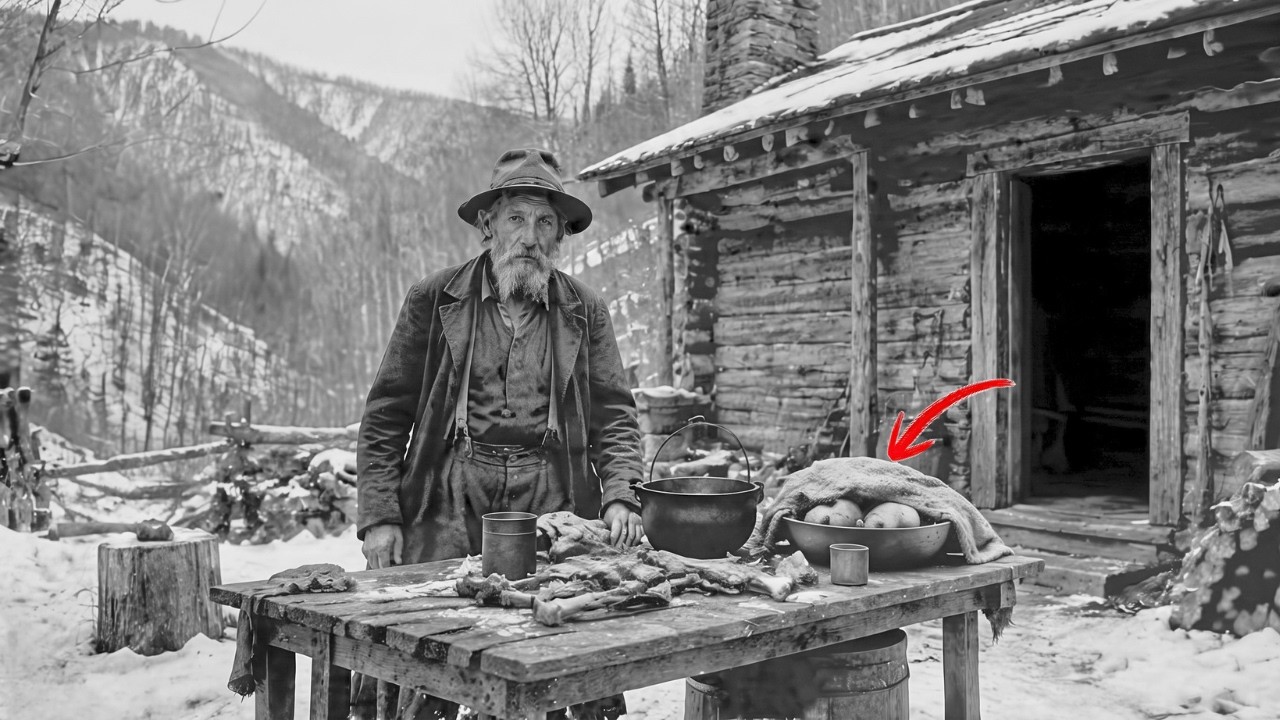
They had a productive garden. They had livestock. They seemed largely self-sufficient. What troubled him was the small cemetery behind the property.
It contained far more graves than a family this size could justify. When he asked about the extra graves, the family told him they belonged to relatives who had died during past winters. He recorded that in his report and moved on. But he returned the following year as part of a different survey and noticed that two of the graves he had counted the previous year were no longer there.
The ground where they had been had been disturbed and smoothed over again. When he asked about it, the family became hostile and ordered him off the property. He reported the incident to the county sheriff, who refused to investigate. The sheriff told him that people in that part of the county handled their own affairs and it was best not to interfere.
That refusal was not born of indifference. It was a strategy. Rural Appalachian sheriffs understood the limits of their jurisdiction in ways outsiders could not grasp. They knew which families cooperated and which did not.
They knew which hollows could be entered safely and which could not. They knew that certain investigations would lead nowhere, because the jurors would come from the same communities, the same bloodlines, the same shared history. Pursuing these cases was not merely fruitless. It was dangerous.
Not because the families involved would resort to violence, though some might have, but because opening those doors would expose the entire community to a kind of scrutiny no one, guilty or innocent, wanted to endure. There was a phrase that circulated among law enforcement in the region during that period. The exact wording varied from county to county, but the meaning was constant. Leave the mountain alone, and the mountain will leave you alone.
It was not a philosophy of justice. It was a philosophy of survival. The same philosophy, in fact, that caused the problem in the first place. This pattern of official disregard is one of the most persistent features of the Appalachian cannibalism accounts.
Time and again, authorities who received reports of suspicious activity in remote communities chose not to investigate. Sometimes it was simple pragmatism. Access to these communities was genuinely difficult, and the resources required for an investigation were not considered worth the effort. Sometimes it was fear.
Law enforcement officers in rural Appalachian counties were themselves products of these communities and understood, to some degree, what they might find if they looked too closely. And sometimes it was complicity. There are documented cases where sheriffs and other local officials were related by blood or marriage to the families in question and had a personal stake in ensuring that certain practices remained hidden. The result of this systematic avoidance was that practices continued for far longer than they should have.
In the most isolated communities, there is evidence that ritual consumption of human remains continued into the 1930s and possibly beyond. The most disturbing accounts from that later period do not come from government records or travelers’ diaries, but from oral histories collected by Works Progress Administration workers during the Great Depression. The WPA sent writers and researchers into Appalachian mountain communities throughout the 1930s to document folk traditions, music, and daily life. Most of what they recorded was harmless and fascinating, the rich cultural heritage of a region the rest of America had ignored.
But scattered among the thousands of interviews and field notes were accounts that the WPA workers themselves classified as disturbing. In 1938, an interviewer in a remote area of Mingo County, West Virginia, recorded a conversation with an elderly woman who described a tradition her family had maintained for as long as anyone could remember. She called it “the taking. ” When a family member died during the winter months, the body was not buried immediately.
Instead, certain parts were preserved and consumed by the surviving family members as part of a ritual the woman described as ensuring the transfer of the deceased’s strength to the living. She spoke about this with complete seriousness. She did not describe it with shame or hesitation. She described it the way anyone might describe a family tradition, a particular way of making bread or a specific prayer recited before meals.
When the interviewer asked whether she realized this practice was illegal and considered morally wrong by the broader society, she answered that the broader society had never provided anything for her family and therefore had no right to tell them how to honor their dead. That interview was flagged by the WPA supervisor in the region and was not included in the published collection of folklore. The original transcript was kept in a regional archive where it remained unexamined for decades until a graduate student discovered it in the 1980s while researching death customs in Appalachia. Similar accounts exist in WPA files from eastern Kentucky, southwestern Virginia, and the mountainous parts of north Georgia.
They are not numerous, perhaps two dozen accounts in total across all the WPA collections, but they are consistent in their details, consistent in their descriptions of practices, and consistent in the matter-of-fact tone with which individuals discussed these matters. These were not people who had been forced into cannibalism once during a desperate winter and carried the trauma for the rest of their lives. They were people who had grown up in communities where the practice was part of the cultural fabric, where it had a name, rituals surrounding it, and was understood as a natural, if private, part of mountain life. The decline of these practices, to the extent that they declined, was not driven by a moral awakening but by the slow erosion of the isolation that fueled them.
The arrival of railroads in the late nineteenth and early twentieth centuries began connecting mountain communities to the outside world. The coal mining industry brought thousands of outsiders into the region. Roads were built, schools established, and churches affiliated with national denominations replaced the independent congregations that had developed their own theologies. As isolation faded, so did the conditions that made those practices necessary and the cultural frameworks that made them acceptable.
But this transformation was not complete. It was not a switch turned from one state to another. It was a slow, uneven erosion that occurred at different rates in different communities. Hollows closest to railroad lines changed first.
The deepest hollows changed last. And in between remained a gray zone of partial connection for decades, where communities maintained their traditional practices while simultaneously beginning to interact with a world that would have been horrified if it had known. This gray period, roughly from 1880 to 1950, produced some of the most psychologically complex situations in the entire history of the phenomenon. Families who had practiced these traditions for generations suddenly found themselves sending their children to schools where they sat beside children from families that had never known such isolation.
Young men who had grown up with one set of norms went to work in the coal mines alongside men operating under entirely different assumptions about acceptable behavior. Women who had learned the old ways from their mothers married into families that knew nothing about them and had to decide whether to continue the practices in secret or abandon them completely. The weight of this double life is clear in the few accounts that survive from that period. One WPA researcher in eastern Kentucky recorded a conversation with a woman who described attending a church supper in her community and realizing for the first time that the food she had grown up eating during the winter months was not something other families ate.
She was in her fifties at the time of the interview. She said the realization had come when she was twelve years old, and that it had been the most confusing experience of her life. Not because she felt guilt. She said she did not feel guilt.
But because she suddenly realized the world was far larger and more complex than she had imagined, and that her family occupied a place in it that could never be explained or defended to people who had not lived what she had lived. That woman’s experience was certainly repeated across hundreds of families during the transition period. The moment of realization, the sudden awareness that what was normal inside the family was not normal outside it, and the decision, conscious or unconscious, to remain silent, to protect the family, to carry the knowledge without sharing it. Some families navigated this transition by gradually abandoning the old practices.
They had access to food now. They had connection to the outside world. The conditions that called for those practices no longer existed, so those practices stopped. For these families, the transition to modernity was painful but ultimately successful.
The old ways became stories, then whispers, then silence, then nothing. Other families were not so fortunate. For them, the practices were so deeply rooted in their identity, so completely integrated into their spiritual and emotional lives, that abandoning them felt like abandoning their ancestors, like betraying the people who had survived because of those practices. For these families, the coming of roads and schools and churches was not liberation.
It was invasion. And they responded the way they had always responded to threats from the outside world. They retreated deeper into the mountains. They closed their gates.
They stopped speaking to anyone who did not share their blood. These are the families whose descendants may still practice a form of the old ways in the most remote corners of Appalachia. Not out of desperation, not out of hunger, but out of fidelity to a tradition that predates every institution, every law, every moral framework the modern world has built to ward off the dark. But fading does not mean vanishing.
Throughout the twentieth century, reports from the most remote parts of the Appalachian range continued to suggest that the old practices had not entirely died out. These reports were rare, most of them unverifiable, but their consistency makes them difficult to ignore. In 1952, a logging crew working in a remote area of McDowell County, West Virginia, discovered a cabin that appeared to have been recently abandoned. Inside, they found evidence of habitation by what they estimated to be four or five people.
They also found, in a smokehouse behind the cabin, remains that the county coroner later identified as human. The coroner’s report noted that the remains showed evidence of butchering consistent with food preparation. No suspects were ever identified, and the case was closed without resolution. In 1967, a hiker in the Daniel Boone National Forest in eastern Kentucky reported finding a campsite deep in a hollow containing what he described as a drying rack from which hung strips of meat.
He said the meat had an unusual appearance and odor. He reported the location to a forest ranger who investigated and found that the camp had been cleaned out and abandoned by the time he arrived. No further investigation was conducted. In 1983, a social worker conducting welfare checks in a remote area of Harlan County, Kentucky, reported conditions in one family that she described as “beyond anything I was trained to handle.
” Her report was sealed by the county and never made public. When researchers attempted to access it through Freedom of Information requests in the 2000s, they were told the file had been lost. These individual accounts, each ambiguous on its own, form a pattern when viewed together. They describe a practice that did not end with a single dramatic revelation or a decisive legal action.
Instead, it retreated slowly into the deepest, most inaccessible corners of the mountains, continuing in attenuated form among the most isolated families, surfacing only in occasional glimpses that people consistently chose to ignore or suppress. There is a letter in the West Virginia State Police archives, written in 1923 by a patrolman named Harold Fulton to his commanding officer. Fulton had been assigned to patrol a remote area of Wyoming County after a report from a neighboring family that they had seen no sign of life at a particular property for several weeks. Fulton found the house occupied by an elderly woman living alone.
The rest of the family, at least six people according to the neighbors, had disappeared. The woman told Fulton they had left to look for work in the coal camps, but he noticed inconsistencies in her story, and he noticed the condition of the smokehouse, which he described as containing meat he could not identify. The letter Fulton sent to his commander did not request an investigation. It requested a transfer.
He wrote, and this is an approximation of the original wording, “I do not wish to return to that part of the county. ” “I have seen something I do not wish to see again. ” “And I do not believe any investigation I conducted would produce a result anyone in this department would wish to know. ” His request was approved.
No investigation was conducted. The case was never officially opened and therefore never officially closed. It simply faded from the institutional memory of the West Virginia State Police, surviving only in a file that was transferred to the state archives when Fulton retired in 1948. This pattern of deliberate ignorance was not unique to West Virginia.
Similar examples can be found in the records of law enforcement agencies throughout the Appalachian region. In eastern Kentucky, a deputy sheriff wrote a memo to his department in 1931 describing a situation in a remote part of Pike County that he believed involved practices contrary to civilized behavior. The memo recommended that the department investigate. The recommendation was noted in the department’s log.
No action was taken. In southwestern Virginia, a county health inspector reported in 1944 his observation of conditions in a remote home that he described as involving the storage and consumption of materials of human origin. His report was filed with the county health department. The county health department forwarded the report to the state board of health.
The state board of health responded with a letter acknowledging receipt of the report and advising the county health inspector to exercise discretion in matters relating to the cultural practices of isolated communities. Exercise discretion. Cultural practices. These were the words institutions used when they did not wish to confront what was happening in the mountains.
And because no one confronted it, it continued. In 1971, a group of hikers in the Cherokee National Forest in eastern Tennessee reported finding a structure deep in the woods that they described as a processing station. The structure consisted of a stone platform, a series of metal hooks mounted on a wooden frame, and what appeared to be a drainage channel cut into the rock. The hikers, experienced in the outdoors, said the structure resembled no hunting camp or animal processing facility they had ever seen.
They photographed the site and reported it to the Forest Service. When rangers investigated the following week, the structure had been dismantled and the site cleared. In 1989, a retired coal miner living in Mingo County, West Virginia, contacted a professor at a regional university and offered to share information about practices he had witnessed during his childhood in the 1930s and 1940s. The professor, a specialist in Appalachian folklore, arranged a series of interviews.
The miner described his family’s participation in what he called “the old way,” a practice involving the consumption of recently deceased family members during the winter months. He said the practice had been common in his community during his childhood and only stopped when the road was built into their area of the county in the late 1940s. When the professor asked why the road ended the practice, the miner said it was because once the road existed, it became possible to transport bodies to an undertaker. Once the undertaker became involved, the family no longer had private access to the remains of their dead.
This interview was recorded but never published. The professor who conducted it stated publicly that he believed the account was reliable, but that publishing it would cause harm to the communities involved, many of whose members were still alive and identifiable through the interview’s details. The Scots-Irish settlers who poured into the Appalachian Mountains during the eighteenth and early nineteenth centuries were not the gentlest of people. They did not have the luxury of being so.
They came from a region of the British Isles that had been at war in various forms for centuries. The borderlands between Scotland and England were a place of constant raiding, feuding, and vengeance. The culture that emerged from that environment was built on clan loyalty, personal honor, and a deep suspicion of any authority beyond the family unit. These people did not trust kings, or churches, or their neighbors unless bound to them by blood.
And when they arrived in the American colonies, they brought all those instincts with them. The colonial authorities did not quite know what to do with these settlers. They were too violent, too independent, too numerous to be controlled. So the authorities did what authorities have done throughout history when faced with peoples they cannot manage.
They pushed them into the borderlands. They offered them cheap land in the mountains, land no one else wanted because no one could reach it, and told them they were welcome to stay there as long as they stopped causing trouble in the lowland settlements. The Scots-Irish accepted the offer. They loaded what they could carry onto horses and mules, walked their families toward the mountain gaps, and disappeared from the view of polite society.
And for many of them, polite society never saw them again. The first generation of mountain settlers maintained some connections to the outside world. They traded furs and ginseng root at markets in the towns on the edge of the mountains. They sent their sons down to the lowlands to bring back salt, gunpowder, and iron tools.
But each succeeding generation pushed a little deeper into the mountains, climbed a little higher into the hollows, and moved farther from the trails that connected them to anyone else. By the third or fourth generation, some of these families were effectively alone for over a century. Think about what that means. Think about what it means to grow up in a world where you never see another human being except those who share your surname.
Where the only stories you have ever heard are those told by your grandmother, who heard them from her grandmother, who may or may not have remembered them accurately. Where the only moral code you know is the one your family built for itself over decades of making choices no one else ever judged. You have no newspaper. You have no books except a Bible no one in your family can read.
You have no preacher, no teacher, no policeman, no doctor, no one from outside your hollow who might tell you that what your family does is not what other people do. In this world, the concept of normal is whatever your family decides it is. And when your family has been accustomed to eating certain things in certain winters for as long as anyone can remember, that becomes normal. It is not questioned.
It is not examined. It simply is. This is not a moral failure. It is a failure of information.
These people were not evil. They were uninformed. They had been abandoned by every institution that might have connected them to the broader human moral consensus. And in the absence of that connection, they built their own consensus out of the resources available to them.
And the resources available included hunger, death, and desperate calculations of survival. The mathematics of hunger in the mountains are brutally simple. A family of six needs roughly four thousand calories a day to survive a winter with minimal effort spent gathering firewood and maintaining shelter. One deer, if you can find it, provides about fifty to sixty thousand calories.
That is fifteen days of survival for a family of six. One deer gets you through two weeks, but in a hard winter, where the snow is five feet deep and the temperature has not risen above freezing for a month, you may not find a deer at all. You may find nothing. So you eat what you stored in the fall, dried beans, corn, salted pork.
But those provisions were calculated for a normal winter, and this is not a normal winter. By January, the stores are running low. By February, they are gone entirely. And now you are looking at your family, at the children crying from hunger, at the elderly who have stopped moving, at the weakest among you who is clearly not going to survive no matter what you do.
And the calculus becomes horribly simple. The average adult human body contains about eighty thousand calories. That is twenty days of food for a family of five. And the person who just died was going to die anyway.
And the ground is frozen too hard to dig a grave. And the children are crying. This is the moment the first generation faced. And this is the moment that broke the taboo.
Not in a single dramatic act of transgression, but in a quiet, practical calculation made by people who had no other options and no one to tell them that what they were about to do was something most of the world considered unforgivable. The second time was easier than the first. And the third time was easier than the second. And by the time the children who survived that first winter grew up and had children of their own, the memory of that transgression had faded.
What remained was the knowledge, the practical knowledge of how to process the meat, how to preserve it, how to divide it among the surviving family members. This knowledge was passed down the way all practical knowledge is passed down in oral cultures, from parent to child, without context, without moral commentary, as just another survival skill in a world that demanded many such skills. The Cree people of the northern Appalachian region and beyond understood this process better than any European observer. They had a word for it, “wendigo.
” And they understood that it was not a supernatural possession but a psychological and cultural transformation. A person who ate human flesh and survived because of it is changed by the experience. Not in a mystical sense, but in a practical, purely psychological sense. The taboo has been broken.
The line has been crossed, and once crossed, it becomes easier to cross again, and easier still the next time. The Cree treated the wendigo as a contagion because they understood that it was one. Not a physical contagion, but a mental one. A person who has consumed human flesh can transmit the desire to do so to others simply by normalizing it within the family or community.
A mother who fed her children human flesh during a famine winter did not just keep them alive. She transmitted to them the knowledge that this was possible, survivable, and not punished by any authority they knew. She created, in Cree terms, new wendigos. This is the mechanism of cultural transmission that operated in isolated Appalachian communities generation after generation.
And it operated with terrifying efficiency because there was nothing to counter it. No outside influence, no alternative perspective, no mirror in which these communities could see themselves as the broader world saw them. One specific detail that most accounts omit may be the most important one of all. The cannibals did not consume strangers.
They consumed their own kin. This distinction matters because it destroys the most comfortable explanation for the phenomenon. If the cannibals had been predators who hunted travelers and outsiders, the story could be classified under criminal pathology. Dangerous individuals performing dangerous acts.
We have categories for that. We have language to describe it. But the Appalachian cannibals were not preying on anyone. They were consuming the bodies of people they loved, their mothers, their children, their husbands and wives.
And they were not doing it in the frenzy of mad desperation, but with the calm deliberation of people performing a ritual they had been taught by someone they trusted. This is what makes the story so difficult to absorb. Not the act itself, which is horrifying but ultimately understandable as a survival mechanism. What makes it difficult is the emotional context in which the act was performed.
Imagine sitting at a table with your children, feeding them the remains of their grandmother, knowing that their grandmother would have wanted this. That their grandmother had done the same thing when she was young. That this was not a violation of your family’s values but an expression of them. An act of love within the only framework of love you have ever known.
That is the part that the comfortable world refuses to accept. We want the cannibals to be monsters because monsters can be defeated. We want them to be aberrations because aberrations can be isolated and contained. We want them to be the product of unique circumstances that will never recur because that allows us to believe that the barrier between civilization and what these families became is thick, permanent, and impenetrable.
But the anthropological record tells a different story. It tells us that the barrier is thin, and that it is not maintained by some innate human quality of goodness or restraint, but by infrastructure. By roads and schools and churches and courts and grocery stores and ten thousand small interactions that form the daily texture of life in a connected society. Remove those things, and the barrier does not hold.
It never has. Many of the WPA interviews point to a religious dimension to the consumption, a belief that eating the flesh of a family member during the winter months was not merely a practical act but a spiritual one. That it kept the deceased person’s spirit alive within the family. That it honored them in a way that simply burying them in the frozen ground could not achieve.
This religious interpretation is crucial because it explains how the practice continued even when the practical need for it faded. In communities where isolation was beginning to break, where food was becoming more available through trade or government assistance, the consumption continued not because people were starving but because it had become embedded in the family’s spiritual life. It had become a way of honoring the dead, a way of maintaining continuity with ancestors, a sacred act performed in secret, away from the eyes of outsiders who could never understand its meaning. What do we say about a grandmother teaching her granddaughter the proper way to process the remains of a family member, not because the family is starving, but because this is what they have always done?
What do we say about a community that developed its own theology around this practice, its own rituals, its own calendar of observances? We say nothing. We look away. We place the report in a sealed file.
We exercise discretion in matters relating to the cultural practices of isolated communities. We approve the request for reassignment. We close the case without opening it. We convince ourselves that what happens in those hollows is none of our business.
This is the pact of silence that protected the Appalachian cannibals for over two hundred years. And it is maintained not only by mountain residents but by every institution in a position to break it. The churches that did not send missionaries into the deepest hollows. The schools that did not insist on attendance.
The law enforcement agencies that did not investigate. The newspapers that did not print the stories. The universities that did not publish the research. Everyone participated in this silence, and each had their reasons.
And none of those reasons is good enough to justify the continuation of a practice that violates the most basic standards of human civilization. Yet the silence continues. Because breaking it requires confronting truths none of the responsible parties wish to face. The churches would have to admit their influence never reached the people who needed it most.
Law enforcement would have to admit they deliberately ignored evidence of crimes. Governments would have to admit that their settlement policies created the conditions that made those crimes inevitable. And Appalachian people themselves, the vast majority of whom never participated in these practices or even knew about them, would have to bear the stigma. So the silence continues, not because it is right, but because the alternative is worse.
Or so everyone has decided. But silence has a cost. And the cost is that the truth festers. It does not heal.
It does not resolve. It waits. It waits for the moment when someone decides that the price of speaking is less than the price of staying silent. There are hollows in these mountains where no outsider has set foot for generations.
There are families whose histories stretch back to the settlement era, unbroken and unbranched. Their bloodlines are as pure and narrow as the creeks that run through their lands. There are places where cell phones do not work and GPS signals do not reach. Where the county road ends at a chain stretched between trees, with a sign that says nothing but implies everything.
And in those places, the mountains still keep their secrets. The same way they always have. In the silence, in the stone, and in the deep memory of people who learned long ago that some truths are too heavy to be carried into the light. You do not enter those hollows, not because of what you might find, but because of what might find you.
Because the people who live there have not forgotten what their ancestors learned. That survival is not a moral category. That hunger does not negotiate. And that the mountains, which were here before any of us and will remain long after we are all gone, do not care what we do to each other within their folds.
They never have. And they never will. The wind that moves through the laurel thickets at dusk, the wind that sounds almost, but not quite, like a human voice, does not tell you to leave. It tells you that you are already too late.
That whatever you came looking for here, the mountain has already found and consumed, the way it consumes everything, the way it always has.
