On the night of July 31, 1999, two seventeen-year-old girls set out for a birthday party and never came home. Nearly twenty years later, a single piece of evidence handed the police a last name. But the man behind that name had been living right under their noses all along, a respected deacon and truck driver with no criminal record, a man so far from suspicion that the police chief knew him personally, as a friend. The evening began as a celebration.
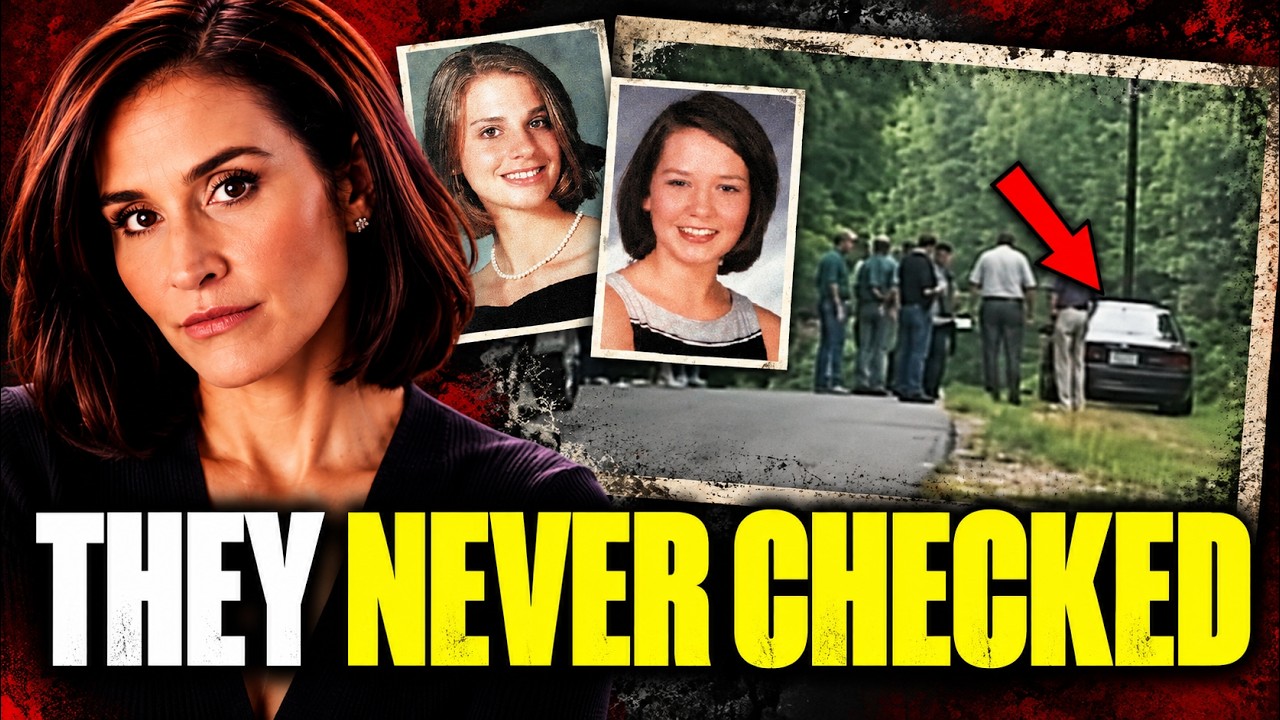
It was Saturday night in Dothan, Alabama, and JB Beasley was turning seventeen. She and her closest friend, Tracy Haire, were about to start their senior year of high school, and tonight they were heading to a field party in her honor. If you have never been to a field party, the setup was simple. Someone finds an empty field outside town, a group of teenagers shows up, usually in pickup trucks, they park in a large circle, turn on the headlights, someone brings a barrel, someone else plays music loudly.
There is no designated location, no reservations, and ideally not a single adult within earshot. The two girls left Dothan in JB’s black Mazda and got lost somewhere along the way. In 1999, there was no phone in the cupholder giving turn-by-turn directions. If you did not know where you were going, you relied on gas stations, payphones, or finding another human being who hopefully knew the way.
JB and Tracy ended up heading in entirely the wrong direction. Instead of finding the party, they wound up in Ozark, more than twenty miles away. Around 11:30 that night, they stopped at a small store called the Big Little Store and asked someone for directions back to Dothan. Tracy used a payphone to call her mother.
She told her they had gotten lost, but everything was fine. They had directions now. They were skipping the party and heading home. It was a completely ordinary phone call.
No panic, no one chasing them. As far as Tracy’s mother knew, her daughter had made a series of wrong turns, figured it out, and would be home soon. They never made it home. Early the next morning, police in Ozark spotted JB’s car parked on the side of a quiet rural road next to a wooded area, less than a mile from the Big Little Store.
The car was unlocked, and the driver’s side window was rolled down. Strangely, the girls’ belongings were still inside. Their purses were there, the cash untouched. The only thing that seemed to be missing was the car key.
There was no sign of JB or Tracy. But here is something that is hard to believe looking back: the police did not open the trunk right away. Later that morning, officers from Dothan arrived to help. When they began examining JB’s car, they noticed things that did not look right.
The rearview mirror was broken, lying on the floor of the car. There was mud inside the front of the vehicle, and the outside was covered with dust and dirt. There was what looked like a handprint on the rear driver’s side door, and some kind of dark substance on the rear bumper. One of the Dothan officers asked a very obvious question.
“Have you checked the trunk? ” No. The Ozark officers did not have the keys, so they had not been able to open it. But the Dothan officer realized you did not need the keys.
There was a trunk release lever inside the car. He pulled it. The trunk opened, and JB and Tracy were inside. Both girls had been shot in the head.
They were still fully dressed, but one look at their clothing made it clear they had been somewhere else before they ended up in that trunk. Tracy’s clothes had wild burrs stuck to them. Her new shoes were completely covered in mud. The bottom of JB’s jeans was dirty too, with soil smearing both the inside and outside of the pant legs.
Investigators looked at this and asked themselves where these girls had been. It did not look like they had simply gotten into the car and been attacked there. Their clothing suggested they had been in a muddy, weedy place before their bodies were put in the trunk. Investigators recovered bullets and spent shell casings.
Tests later showed both girls had been killed with the same weapon. But the most important evidence came from JB. Semen was found inside her body and on her bra and underwear. As grim as that discovery was, from an investigative standpoint it might be the thing that solved the case.
They had DNA. They could build a profile of the man who had been with JB. There was only one problem. They did not have a name to match it to.
They ran the DNA through the databases. No match. They compared it to men they suspected. No match.
The years passed. Police talked to hundreds of people. Tips came in. Men were questioned.
There were even people who claimed they knew what had happened that night. Every time investigators could get DNA to compare, it was not their guy. It must have been frustrating beyond words, because the answer was literally sitting in an evidence file somewhere, the genetic fingerprint of a man who had been with JB at the time of her murder. Five years passed.
Ten. Fifteen. By 2018, the case had gone unsolved for nearly two decades. Then something happened on the other side of the country.
Police arrested the Golden State Killer, and the way they found him changed cold case investigations almost overnight. They used genetic genealogy. Instead of asking whose DNA this is, you ask who is related to this person. The chief of police in Ozark saw what happened in California and realized they had DNA.
Why not try this? They sent the evidence to Parabon NanoLabs. A genetic profile was developed and uploaded to GEDmatch. Now they were searching for relatives, then working backward to see which family lines connected, slowly narrowing down a huge number of people until they reached their person.
In this case, the genealogy pointed investigators toward a family. Then the chief saw one of the surnames: McCraney. The name meant something to him immediately because he knew someone with that name. Coley McCraney.
These were not strangers who happened to live in the same town. The chief and Coley had both grown up in the area. They had known each other for years. They were friends.
Coley was the last person you would expect to show up in the middle of a double murder investigation. He had no prior criminal record. He was forty-five years old. He worked as a truck driver and was a respected preacher and deacon in the town.
This was not a man police had quietly suspected all along. His name was not buried somewhere in an old case file. He had never been questioned in 1999. He was not on their radar at all.
So the chief did something that must have been very strange. He called Coley himself. Essentially, he said, “Hey, we’re working on this cold case. Would you be willing to come in and provide a DNA sample?
” Coley agreed. They brought him to the station, took a swab from the inside of his cheek, and sent that sample to be compared with the DNA from the 1999 evidence. It matched. Coley McCraney, the man no one had looked at, was apparently the man they had been searching for all along.
Now investigators went back to examine who Coley McCraney had been in 1999. At that time, he was a young veteran. He had just finished his service in the United States Navy and returned home to Ozark, where he worked as a truck driver. But then they looked at where he was living, and things got very interesting.
Remember the Big Little Store, where JB and Tracy had stopped after getting lost, where they asked for directions, where Tracy called her mother, the last place we know for certain the girls were alive. Coley lived about half a mile away. Then there was Herring Street, where the girls were found inside the trunk. That was less than a mile from Coley’s home too.
This was not just someone who happened to live somewhere in the Ozark area. He was living right there. And now the police had his DNA on JB. In March 2019, after about twenty years, he was arrested.
But the story was not over, because Coley now had to explain something. Why was his DNA on JB? At first, he told police he did not know her and did not know Tracy. But the case went to trial in 2023, and Coley took the witness stand in his own defense.
Suddenly he knew the girls, or at least he knew JB. In fact, he now had an entire story about her. He said he first met her a few weeks to a month before the murders at a mall in Dothan. He said he was coming out of a RadioShack when the two of them started talking.
And not just a quick “hi, how are you, my name is…” kind of conversation. According to Coley, they stood there talking for about fifteen minutes. He said he did not have a home phone at the time, and he also had a girlfriend, so instead of giving JB a number his girlfriend might answer, he gave her his mother’s landline number so they could quietly arrange another meeting. And Coley said that is exactly what happened.
According to him, he and JB loosely planned to meet at the Big Little Store at 10:00 on the night of July 31. But 10:00 came and JB did not show up, so Coley said he left. Later that night, he had car trouble and ended up back at the Big Little Store. And who happened to be there?
JB, with Tracy. The two girls who had gotten lost trying to find the party somehow wound up at the very store where Coley said he had planned to meet her earlier that night. According to Coley, he offered to guide them down a shortcut back to the highway. At some point, they stopped where his truck was parked.
Tracy stayed outside while Coley and JB got into the sleeper cab of his truck, and Coley said that is where they had consensual sex. Then, he said, the girls gave him a ride to Ozark and dropped him off around 12:30 in the morning, and they drove away alive. According to Coley, that was the last time he ever saw either of them. That was his explanation for the DNA.
But there was a big problem with this account. More than one, actually. When police first questioned Coley, he had not told them any of this. So when his own defense attorney asked him on the witness stand why he had not told police any of this four years earlier, Coley said he had been terrified.
He had just been arrested, he panicked, and he lied. But then Coley’s wife took the stand. She was the same woman he had been dating in 1999. She remembered something from that night.
She said she came home around 8:00, and Coley came home sometime after that. Then around 10:00, he left again. He did not come back until about 12:45 in the morning. When he finally got home, he told her his car had broken down.
Where did he say it was? At the Big Little Store. She said she went back there with him so he could pick it up. So regardless of which version of the rest of the story you believe, Coley’s own account and his wife’s testimony placed his vehicle at the same store where JB and Tracy were last seen alive.
And consider the timing. Tracy made that call to her mother around 11:30, and then the girls drove off in their car. Witnesses saw them leave. Then Coley came home at 12:45, and their car was found less than a mile from that store.
They must have been attacked sometime shortly after they drove off. But the defense still had points to make. Police never found the murder weapon. There was no eyewitness saying they saw Coley McCraney shoot these two girls.
And DNA does not come with a stamp explaining exactly how that semen got there. After nearly twenty-four years, the entire case came down to twelve people sitting in a jury box. Would they believe Coley’s explanation, or would they believe the DNA, the timeline, and the fact that his story had changed? In April 2023, they gave their answer: guilty on all four counts of capital murder.
He was sentenced to life in prison without the possibility of parole.






