The smell always came first, before any other memory. Warm copper, fresh oil, and that faint metallic edge of ozone from the motors, or the sharp tang of burning varnish from the transformers. That smell meant a basement was ready to race. Track sections clicked together over cold concrete, ninety-degree corners and narrow straights and neon-colored guardrails, set up and taken down and rearranged until the layout felt perfect.
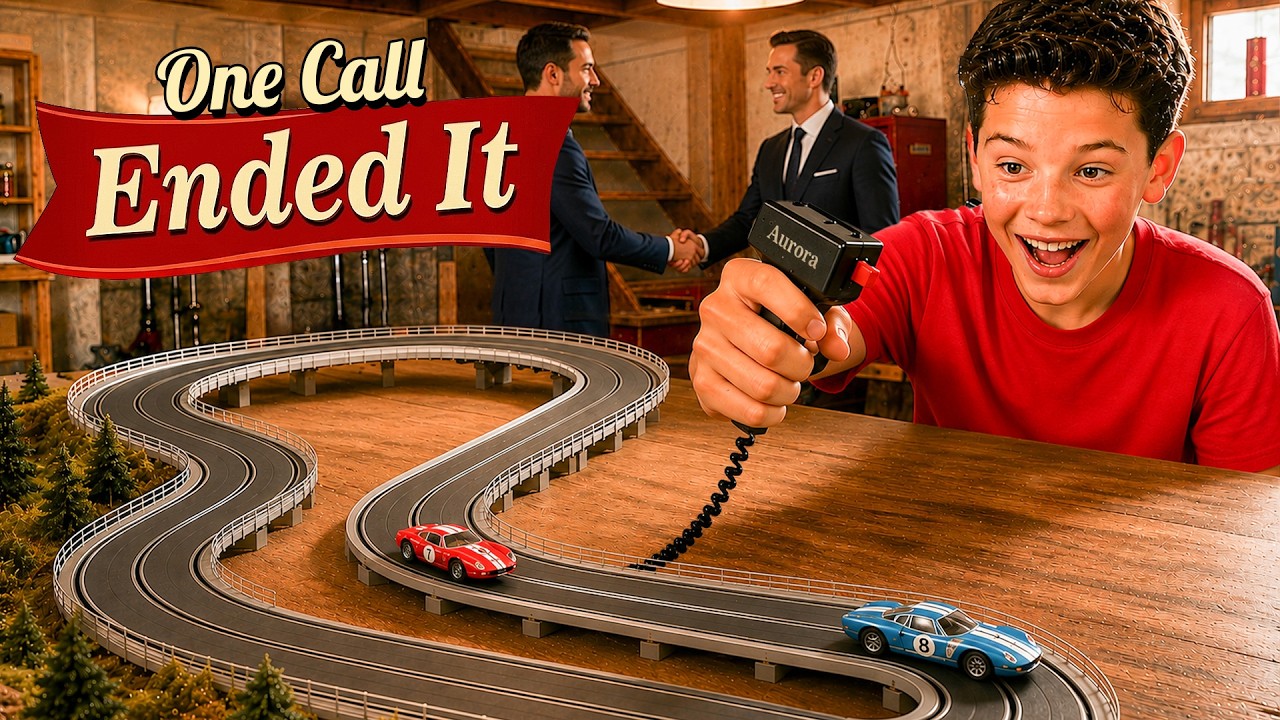
Upstairs, dinner was probably getting cold. Dad’s tool box sat nearby, just in case a car needed a mid-race repair. The click of the hand controller was as familiar as a light switch, automatic, something your finger knew how to do without you thinking about it. Two cars, two lanes, and an argument every single time about who got the inside lane, because everyone knew the inside lane was faster if you could hold it.
The track joints loosened eventually, and you learned to fix that yourself. Electrical tape and patience, instead of waiting for anyone to help. Bodies got swapped between chassis until half the cars on the table no longer matched the pictures on their own boxes. A new car arriving meant something back then.
You turned the box over in your hands before opening it, reading the paint scheme and the number on the door, deciding whether it looked fast. The first lap after pulling a car out of the box was always too fast, just a squeeze of the trigger to see what it could do before the actual racing began. By the mid-1970s, Aurora’s AFX cars had magnetic downforce built into the chassis. They stuck to the track through corners that had once sent cars flying off the table and sliding under the couch.
Buyers noticed. Retail orders climbed every quarter. Toy fair displays got bigger just to keep up with demand, and sales followed. Fifteen million dollars in 1970.
Forty-five million by the end of 1976. Tripled in six years, with no sign of slowing down. Nobody in that basement was thinking about balance sheets. You were thinking about whether you had saved up enough allowance for the next car in the catalog, and whether the kid down the street would trade you an extra guardrail for it.
That number should have been a launching pad for something bigger. Instead, it turned out to be the highest point the entire company would ever reach. Aurora was no longer just a slot car company by then, though you couldn’t tell that from the basement floor. The food giant Nabisco had owned Aurora since 1971 and pushed it into generic toys, board games, dolls, and cheap licensed merchandise tied to whatever cartoon was popular that season.
Walk down the toy aisle in 1975 and you would find the Aurora name on things that had nothing to do with racing at all. Stacks of dolls beside board games with plastic pieces that still smelled of the molds they had been poured into. The slot car boxes were still there, but they were crowded now, sharing shelf space with a company trying to be everything at once. Those toys needed something slot cars never had before: constant national television advertising just to move product off crowded store shelves.
They sold through big discount chains that squeezed suppliers to the last penny of profit before agreeing to stock anything. Even the genuine successes barely covered their costs by the time the bills came due. One of those toy lines made things worse. A horror-themed line called Monster Scenes landed Aurora in real trouble with worried parents and hostile press in 1971.
Complaints poured in from living rooms across the country, and retailers pulled the line from shelves within weeks. None of that reached your basement. Your AFX car still ran the same way on a Saturday afternoon whether the company upstairs was making money or not. By 1977, Nabisco had a toy division that looked active on paper but was losing money in reality.
Something had to change. So Nabisco made one phone call. That single call is the decision this whole story is built on. In 1977, Nabisco sold Aurora’s model manufacturing tooling to a competitor named Monogram, ending Aurora’s run in model kits forever.
Then it sold everything else. The toy business and the slot car division went for eleven and a half million dollars total. Eleven and a half million for a brand that had done forty-five million in sales just the year before. Nabisco wanted out of the market, and priced the deal accordingly.
The buyer was a British toy company most Americans had never heard of, and still haven’t: Dunbee-Combex-Marx. The boxes on the shelves didn’t change. Same logo, same packaging, same cars. Nothing about the sale showed up anywhere a kid would look.
And the company that had just bought your favorite childhood hobby was already in trouble Nabisco never bothered to ask about. Dunbee-Combex-Marx had built its entire business by buying up other struggling toy companies one after another. Anything cheap. In 1976, it bought Louis Marx & Company, once the biggest toy maker on the planet but now badly weakened.
Aurora came next in 1977. Another logo added to an already crowded pile that included a doll company and a model train maker. Now it also owned a slot car brand run from a factory on Long Island. Its chairman, Lord Westwood, told shareholders Aurora would be quickly rescued and made profitable again.
Given what happened later, that sounds like a man who never understood what he had just bought. The factory in West Hampstead kept working exactly as it always had. The kids buying these cars had no idea any of this was happening. They just kept racing.
Elsewhere, the company holding them up was already falling apart. A slot car company isn’t usually killed by an interest rate. But this one was. By 1979, British interest rates had risen to seventeen percent, and borrowing money to keep a toy empire afloat cost a fortune every month.
A strong pound made selling anything abroad harder on top of that. The British side of the business was still turning a profit, but the American side, especially the Marx and Aurora factories, was losing millions. By November 1979, the company owed more in America than all its assets there were worth. No bank was willing to lend it another dollar.
None of that reached local news in most towns. The basements kept running all through the winter of 1979, exactly as they always had. Transformers humming, cars racing, no awareness that the company which made them was sinking across the ocean. A slot car track never cared about interest rates in London.
The bank holding the loan certainly did. The company tried to sell off its struggling American brands before things got worse, but every deal fell through. Nobody wanted to take on the debt attached to them. On February 19, 1980, Midland Bank ran out of patience.
Dunbee-Combex-Marx was placed under receivership. Shares that once traded at 178 pence froze at just 22 pence. Most of the company’s value had vanished in under three years. Across its American operations, 2,500 workers were laid off almost at once, without warning.
The Aurora factory in West Hampstead, New York closed the same week. The machines stopped while finished cars sat untouched on the production line. Stores that had sold AFX products for years simply stopped receiving boxes. No announcement, no final shipment, just an empty space on the shelf where those cars used to be.
Kids asked their parents whether the cars had been discontinued. Parents didn’t have a real answer either. Nobody explained it, because there was no simple explanation to give. The company that made the toy simply no longer existed.
Fixing a worn gear or a broken guide pin used to take five minutes and a quick trip to the hobby shop for a spare part. After February 1980, it became a scavenger hunt. People combing classified ads and hobby magazines for parts for cars nobody made anymore. Those workers didn’t lose their jobs because the cars stopped selling.
They lost them because a British toy conglomerate overreached and dragged Aurora down with it. For a few chaotic years after the collapse, almost nobody knew who actually owned the AFX name. A shadowy entity called Aurora Canada held it for a while, then it went bankrupt too. In 1983, the Japanese company Tomy stepped in.
It bought the name, the patents, and every piece of the original tooling outright. Tomy also brought back the engineer who had designed the original high-speed chassis years before, a man named Jim Russell, who had left Aurora before Nabisco sold it. Russell spent years watching from the outside while other people’s decisions destroyed the thing he had helped build. When Tomy asked for his services, he didn’t need much convincing.
With Russell back at the drawing board, the cars started winning again. Faster, smoother, designed the way hobbyists had always wanted them from the start. Slowly, the smell came back too. Warm copper and fresh oil, some basement somewhere roaring back to life after years of silence.
By the late 1990s, Tomy received two major commercial offers to acquire its American side of the business. It turned both down. Tomy realized those buyers would dismantle the brand, the same approach that had destroyed Aurora in the first place. Instead, it handed the entire operation to Jim Russell personally.
In 1998, Jim, his son Steve, and his wife Mimi founded a small family company called Racemasters. Jim’s health began to decline in 2003, and Steve and his wife Lori gradually took over management. After Jim passed away in 2010, they kept building on what he had started. That work eventually produced the Mega G+ chassis, one of the fastest 1:64 scale platforms ever built.
Walk into a hobby shop today and you can still buy a car that is a direct descendant of the one that flew off your basement track in 1976. Some of the men racing these cars today are the same kids who raced them the first time. Older now, still arguing over who gets the outside lane. Some of them are teaching their grandchildren how to hold the controller steady through a corner, just the way someone once taught them.
Step back, and the real story looks different than it did from the basement floor. Aurora slot cars never failed. The company surrounding them was sold twice by people chasing spreadsheets instead of understanding what they truly owned. Once to get rid of it, then almost by accident, to the one person who truly understood it.
The car survived because someone who genuinely loved the hobby finally got the chance to run it on his own terms. Most of the people who dealt with Aurora never set foot in a basement. If you had a track in your basement back then, part of you already knew the cars were never the problem.
It just took the rest of the world a little longer to figure that out.






