Sheriff William Teague knocked on the cabin door three times and announced his authority in a voice loud enough to carry through the dense Kentucky woodland. Silence answered him. He knocked again, harder. Still nothing.
He glanced at Isaiah Brooks, the town blacksmith, who gave him a short nod, and then the sheriff pushed the door open. It swung inward, unlatched, with a piercing creak that echoed through the stillness. Beyond that door lay the answer to a question that had been haunting Perry County for weeks, and what the sheriff and his men found inside would force them to confront something they had never imagined. The winter of 1842 had been brutally severe in the Appalachian Mountains of Eastern Kentucky.
Temperatures plunged well below zero and snow buried the roads linking the small, isolated settlements. The region was considered among the most isolated in the entire nation. Families lived separated by miles of deep woodland, communication between communities was slow, and in Perry County the law struggled to reach. Travelers frequently vanished in those mountains.
The wildlife was plentiful, the trails were dangerous, and a man lost in the cold could die within hours. But what began to unfold that winter was not the work of weather or accident. It was something systematic, something calculated, with a coldness that carried beyond the freezing climate. It began with a trader named Thomas Wardle, who set out from the town of Hazard bound for a small village called Buckhorn to the north.
Thomas made this trip every three weeks, carrying essential supplies to isolated households, always following the same path along the North Fork of the Kentucky River. He was forty-three years old, experienced on the trails, and knew every bend and risk in those mountains. In February of 1842, he never reached his destination. His wife, Martha, waited five days before seeking help, knowing delays were common in such weather.
But when Thomas failed to appear after a full week, Martha persuaded several residents to organize a search. What they found unsettled them. Thomas’s horse was discovered wandering alone near a place known as Wolf’s Throat, a narrow passage between two rock formations where the trail became perilous. The animal’s cargo was undamaged, but there was no trace of the trader.
Searchers scoured the region for three days. They saw unusual markings in the snow, as if something heavy had been dragged off the main trail into the forest, but fresh snow buried the tracks and the undergrowth made pursuit impossible. The search was abandoned. The official judgment held that Thomas had likely fallen from his horse, injured himself, and died of cold somewhere in the woods where his body would never be found.
That explanation might have stood, had it not been for what happened two weeks later. An itinerant preacher named Reverend Samuel Hutchkins was traveling the same terrain, headed from Hazard to the higher town of Colmes. A well-liked man of sixty-one, the reverend had devoted his life to preaching in remote Appalachian settlements. He vanished without a trace.
Two days later, his horse was found in the exact same spot as Thomas Wardle’s, the rider gone and the load untouched. Losing one traveler could be bad luck. Losing two in the same region in less than a month signaled something far more sinister. Meetings were held in local churches, theories developed.
Some spoke of criminals working the highlands, though that did not explain why the loads were left intact. Others suggested a hostile bear, but seasoned hunters dismissed this. Bears did not drag men into the forest while leaving perfectly preserved horses and cargo behind. It was then that a hunter named Jacob Mercer came forward with alarming information.
Jacob lived alone high in the mountains and knew them better than anyone. He testified that a few weeks before Thomas Wardle’s disappearance, he had encountered something strange while hunting. In a remote place far from any known trail, he had noticed a building that should not have been there. An old cabin, partly buried among tall trees and rocks, built to be practically invisible to anyone who did not know precisely where to look.
The strangest thing was that it appeared inhabited. Smoke rose from the chimney, and Jacob thought he saw movement through a small window. What unsettled him most were the remains of recent fires and scattered bones near a dumping area. Bones too large to be those of small animals.
He had dismissed them at the time, thinking they were deer remains. Now, in light of the disappearances, his mind returned to that moment, and he began to feel afraid. Jacob Mercer’s disclosure shifted the course of the investigation entirely. Until then, the people of Hazard believed they were dealing with tragic accidents or, at worst, common criminals.
The description of a secret cabin placed where no one should be living brought new weight to the matter. Sheriff William Teague decided to organize a larger expedition to investigate the place Jacob had described. Teague was fifty-seven years old and had held office for over two decades. He had seen land disputes end in violence, whiskey smugglers, whole families vanish to escape debt.
But something about this case deeply troubled him. There were no bodies, no signs of struggle, and the horses were consistently found in the same spot with their loads undamaged. And now there was a cabin no one else knew existed, despite Jacob’s insistence that it was real. A party of fourteen men left Hazard before daybreak on March 12, 1842.
Alongside Sheriff Teague and Jacob Mercer as guide were local farmers, two traders familiar with the trails, and Isaiah Brooks, the blacksmith, a muscular man carrying a hunting rifle and fierce determination. Isaiah wanted to know what had happened to Thomas, whose wife was a relative of his. The trek took approximately six hours. They followed the familiar routes for the first few miles, then Jacob led them off the official paths into a part of the forest so dense the sky was barely visible.
The trees were ancient, trunks so broad that three men with outstretched arms could not embrace them. Sunlight filtered through the canopy casting uneven shadows over moss and decades of dead leaves. After another hour, Jacob signaled for the party to stop and pointed ahead. Between two rock formations covered in dark green lichen, barely visible, stood the cabin.
It was low, built of dark timbers, its roof covered in moss and small shrubs that had grown over it, blending completely into the surroundings. Someone passing twenty meters away without knowing of its existence would never notice it at all. Sheriff Teague ordered the men to split up and surround the cabin. If hostile occupants were inside, he wanted no escape.
For fifteen minutes the fourteen men stood in silence, weapons ready, hearts pounding. Then the sheriff and Isaiah Brooks approached the front entrance while Jacob and two others covered the back. When the door swung open and they stepped inside, what they saw made their blood run cold. The interior was dark and cold, lit only by weak light from the open door and a small window covered with a soiled rag.
A distinct odor hung in the air, something between mildew, old smoke, and another smell neither man could immediately place but which was sickening. The main room was small with a cast-iron stove in one corner, a rough table in the center, and crates against the wall. But the sheriff’s attention was drawn to personal items strewn across the floor and table. An open Bible lay with yellowed, soiled pages.
Beside it sat a pair of glasses Isaiah immediately recognized as Reverend Hutchkins’s, having seen them many times during Sunday sermons. Martha Wardle would later confirm the brown wool coat hanging over a chair near the stove belonged to her husband. On the table, among crumpled papers and melted candles, lay a leather pouch containing silver coins and banknotes, valuables no common robber would have left behind. The sheriff called the other men inside.
In a wooden chest they found more clothing, all men’s, of varying sizes, suggesting they belonged to different people. There were tools, hunting knives, ropes, and other items that might have belonged to travelers. But it was when Isaiah Brooks opened a narrow door leading to a second, smaller room at the back that the true nature of the place revealed itself. It served as a pantry with grain sacks, canning jars, and dried meat hanging from ceiling hooks.
Everything seemed ordinary until Isaiah noticed something odd on a lower shelf. There were stacks of books, seven leather-covered diaries worn by frequent use. Isaiah grabbed the first and turned to a random page. Written in black ink, the penmanship was clear and firm.
The entry was dated November 1838, four years earlier. It recounted in full the arrival of a lone traveler who had sought shelter during a storm. After reading a few lines, Isaiah felt sick. The journal did not merely record the traveler’s arrival.
It detailed everything that happened afterward, and it was too frightening to read aloud at that moment. Sheriff Teague gathered all seven journals and placed them in his pack. He ordered the men to keep searching, not only for evidence but for any sign of the people who lived there. The matter was now clear: whoever occupied the cabin was connected to the disappearances.
But where were they now? The ashes in the stove were warm, yet the cabin seemed deserted. Someone had been there recently, perhaps within the last twenty-four hours. Jacob Mercer found the next vital clue.
At the back of the cabin, concealed by thick bushes, stood a small shed made of old planks, its door secured with a rusted padlock. Isaiah pried the lock open with an iron crowbar found inside the cabin. When the door swung open, daylight revealed a long, narrow space lined with shelves. On those shelves were hats, boots, belts, pocket watches, rings, crucifixes, and many more personal items that had clearly belonged to different people.
The sheriff began counting the items in his head, trying to estimate how many victims had passed through this place. There were many, more than he cared to acknowledge. This had not started with Thomas Wardle in February. It had been going on for years, perhaps since the cabin was built.
And the question troubling every man present was the same. Who could do something like this? And where were they now? Sheriff Teague ordered two men to remain and guard the cabin while he and the rest returned to Hazard to gather reinforcements and equipment.
All evidence had to be catalogued, every item examined, the victims identified. Most importantly, they needed to find those responsible before they disappeared into the vastness of the mountains. On the return walk, none of the men spoke much. Isaiah carried a silver pocket watch engraved with initials he had found in the shed, hoping someone in Hazard might recognize it, perhaps tied to an old disappearance people had blamed on natural causes.
When they reached town at nightfall, a crowd was already waiting. News traveled fast, and the departure of fourteen armed men that morning had not gone unnoticed. Martha Wardle was there, along with family members of others who had disappeared over the years. Their faces were anxious, desperate, yet afraid of what they might hear.
Teague calmed them and called a meeting at the main church for the next morning. That night, he and two deputies locked themselves in the sheriff’s office and began reading the journals. What they read would permanently affect their understanding of evil. The diaries were precisely structured, with dated entries going back to 1836, six years before their discovery.
The first pages of the oldest journal were written in a delicate but firm feminine hand. The author identified herself only as Temperance, without a last name. She described her arrival with her sister, whom she called Mercy, in that remote region of the Kentucky mountains. They had fled an unidentified place seeking total seclusion from society.
Temperance described how they discovered the abandoned cottage, rebuilt it, and learned to hunt and survive alone in that harsh land. For several pages it seemed like an ordinary account of two women trying to live independently. They recorded planting a small garden, gathering medicinal plants, building a storage shed. But in an entry dated September 1836, the tone changed dramatically.
A lost man had appeared, knocking on the door, asking for shelter and water. They invited him in. Three days later, the next entry described how the man had become inconvenient, asking questions about why two women lived alone, suggesting they needed male protection, and hinting he would return with others to check on them. Temperance’s writing revealed growing irritation.
She and Mercy had fled precisely to escape this kind of intrusion. Then, coldly and calculatedly, she described their decision. She explained how they mixed specific herbs into the visitor’s food, substances she had studied for years and knew would induce deep sleep, how they waited until he was completely unconscious, and how together they solved the problem permanently. The diary did not provide vivid specifics, but the implications were plain and terrifying.
What made the reading more disturbing was what came after. Temperance showed no remorse. On the contrary, she wrote of a sense of liberation, of power, of complete control over her own destiny. She described how they had disposed of the evidence, kept some of the man’s belongings that might be useful, and continued their lives as if nothing had happened.
No guilt existed, no fear of consequences, only a calculating coldness that chilled the blood. And it was not an isolated incident. The following pages revealed a pattern that would repeat many times over the years: lost travelers knocking on the door, traders on the trail following smoke from the chimney, preachers on the road seeking shelter, hunters wanting rest. All were greeted with apparent hospitality by two seemingly harmless women.
All disappeared without a trace, their possessions stored in that terrible shed. Sheriff Teague realized he was dealing with something unprecedented. He had heard of killers acting out of greed, revenge, or passion. This was different.
Temperance and Mercy killed methodically, with planning, with cold efficiency that suggested years of practice. And most frighteningly, they had developed a justification for their actions. In one particularly disturbed entry from 1839, Temperance philosophized that human laws were made to oppress and control people, especially women, and that she and Mercy had chosen to live entirely outside civilization to overcome these artificial rules. Every person they destroyed was a threat who might reveal their location, summon law enforcement, and force them back into a society that had mistreated them.
In Temperance’s twisted mind, they were survivors, not murderers. The diaries also revealed the dynamic between the sisters. Mercy appeared less often, described as a silent, submissive presence who blindly accepted Temperance’s choices. Temperance was clearly the leader, the planner, the decision maker.
Mercy was fragile, frightened of the outside world, completely dependent on her older sister for survival. As the sheriff read on, the records grew sparser. The last entry was dated January 27, 1842, just weeks before the cabin was discovered. Temperance wrote of a shortage of supplies, harsher winters, and the need for caution because of increased activity on the trails.
She noted seeing smoke from a campfire a few miles away, someone getting close to their territory. The final sentence was simple and horrifying: Maybe it’s time to move again. Temperance and Mercy knew their hiding place was becoming dangerous. They had likely abandoned the cabin recently, perhaps days or hours before the sheriff and his men arrived.
They could be anywhere in those limitless mountains, possibly already establishing a new hideout. The meeting at Hazard Church the next morning was among the most tense the community had ever witnessed. The building was packed, with people standing in the aisles and outside straining to hear through open windows. Sheriff Teague, seven journals piled on the table before him, outlined what they had found, omitting the most distressing details but making clear they faced something serious and long-running.
Two women known only as Temperance and Mercy had lived in seclusion for at least six years and were responsible for several missing people. The reaction was immediate. Shouts of shock, tears, disbelief. Some refused to believe women could commit such crimes.
Martha Wardle sat in the first row, her face pale as the snow outside. When the sheriff confirmed her husband’s belongings had been found, she broke down. Beside her, the reverend’s widow sat in silence, knuckles white around a handkerchief. The sheriff asked anyone with information about past disappearances to come forward and called for volunteers to join search parties.
They had to find the sisters before they established a new hideout and continued their crimes. In the hours that followed, the sheriff’s office filled with people. A farmer recalled his brother vanishing in 1837 while traveling from Hazard to Hindman, assumed to have moved west. Now the family suspected something worse.
An elderly woman named Elmina Pritchard told a particularly interesting story. She and her late husband had gotten lost on the trails in 1839 and stopped at a remote cabin, where they were met by two women who offered water and directions. Elmina described them as remarkable in appearance, courteous but aloof. One was tall and thin with dark hair pulled into a tight bun and eyes she described as piercing and uncomfortable.
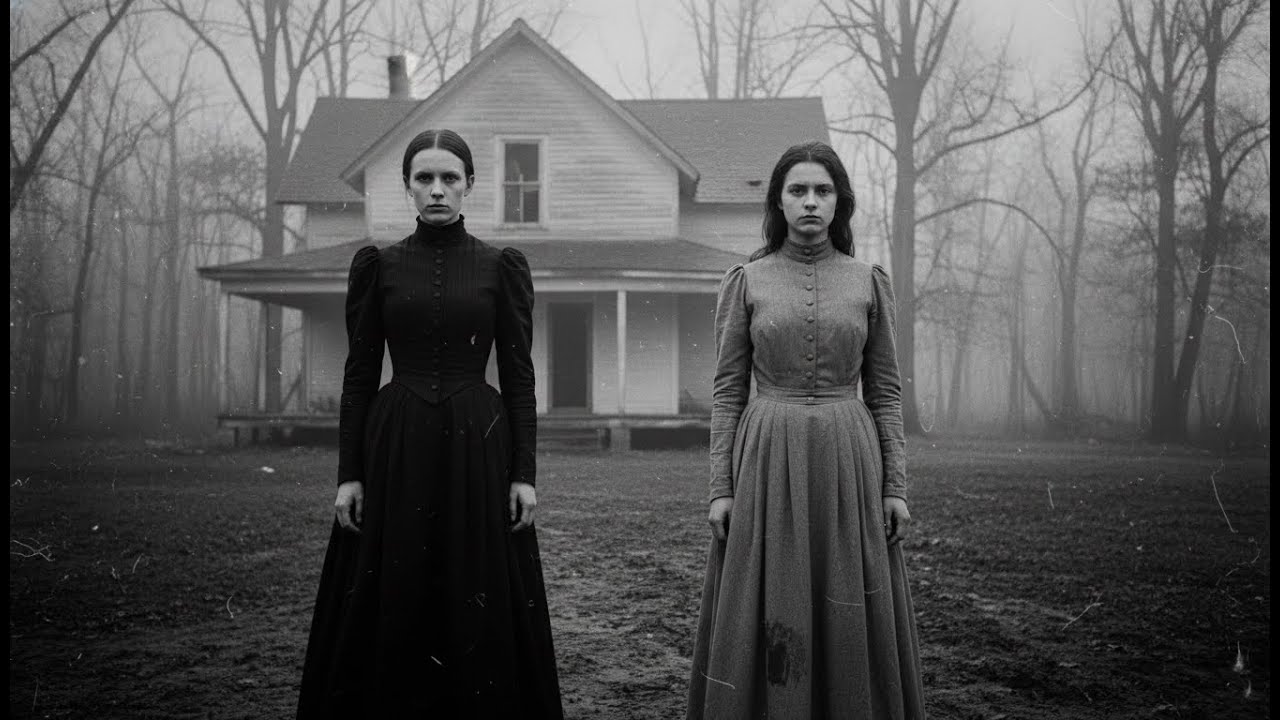
The other was shorter, younger, with blonde hair and a continually frightened expression like a cornered animal. This was the first visual description of Temperance and Mercy. The older woman appeared to be between thirty-five and forty, worn by outdoor life. She spoke courteously but coldly, dressed simply and neatly.
The younger woman appeared about twenty-five, pale, as if she rarely saw the sun, and spoke barely a word. Elmina also recalled something she had not considered significant at the time: as they left, she spotted men’s clothing drying on a line behind the cottage. Caps, coats, shirts. She asked if men lived there too, and Temperance curtly said they were garments of travelers who had stopped earlier and left belongings behind.
The explanation had seemed odd, but Elmina and her husband were in a hurry. The most important detail was the cabin’s approximate location, further south, near the border with Leslie County. This confirmed what Temperance’s last journal entry suggested. The sisters moved around.
When they sensed discovery or depleted an area’s resources, they abandoned everything and established a new hideout. The search became infinitely more complicated. The Kentucky Appalachians stretched for hundreds of miles with thousands of valleys, caves, and remote places where someone could live for years undetected. Temperance and Mercy were specialists at disappearing.
But Sheriff Teague was a determined man. He organized five search parties, each with eight armed men equipped to remain in the highlands for days. Each group received a specific area, focusing on regions where isolated cabins might exist unnoticed. Teague also sent messages to sheriffs in neighboring counties.
Over the following weeks, the parties scoured the mountains tirelessly, finding many abandoned cabins, some so old their walls were barely standing, recent campsites, extinguished fires, little-used trails, but no definitive sign of the sisters. It was as if they had vanished into the forest. Meanwhile, the sheriff continued reading the journals, searching for clues. During one of these nighttime readings he noticed something intriguing.
In several entries scattered over the years, Temperance mentioned gathering specific herbs in a place she called Blackwater Dale. She offered no details about its location, but indicated it was a specific place rich in rare medicinal plants where she and Mercy went regularly to replenish their supplies. The name was unfamiliar to the sheriff, but he knew someone who might recognize it. He sought out Ezekiel Morrison, an eighty-three-year-old man born and raised in these mountains who knew every valley and stream better than any map.
When the sheriff mentioned Blackwater Dale, Ezekiel’s eyes lit up. It was an old name used by early settlers and Native Americans before them, referring to a specific area in the higher elevations of Perry County where springs flowed over dark rocks, giving the water a distinctive color. The location was considered sacred by some ancient cultures, and later people avoided building there, believing the area cursed or haunted. Ezekiel drew a rudimentary map showing the way.
It was a difficult journey, at least two days of rugged terrain, but it was the first solid lead in weeks. Sheriff Teague decided to lead an expedition personally. The Blackwater expedition departed Hazard on the freezing morning of April 19, 1842. With Teague went Jacob Mercer, whose tracking skills were unmatched, Isaiah Brooks, now a constant presence in the search, and four other trusted men.
They followed the main trail northeast, stopping in small towns to ask if anyone had seen two women traveling alone. The answer was always no. In a region where women rarely traveled unaccompanied, two unknown female faces would have been recognized. This meant Temperance and Mercy were extremely cautious, likely traveling at night or along paths where they would not encounter others.
On the second day, after leaving the last marked route, the terrain became brutal. They climbed steep slopes covered in loose rock, crossed knee-deep icy streams with currents strong enough to knock a man off his feet. The trees grew denser, blocking sunlight and casting the place into perpetual gloom. It was Jacob who first spotted the black waters.
Climbing a steep ridge, the valley revealed itself below, a natural depression between three mountains, dense with vegetation, crisscrossed by streams glowing with the distinctive dark hue that gave the place its name. The water was not literally black but deep amber, nearly brown, from minerals in the rocks. In the dim light, the effect was disturbing and beautiful. They descended with extreme caution, alert for any sign of human presence.
The place was very quiet. No birdsong, no rustling of small animals, only the sound of running water and wind through ancient trees. Something about the place made the hairs on the backs of their necks stand up. It took over three hours of searching before Isaiah noticed marks on trees, small strategic cuts on specific trunks forming a pattern visible only to someone who knew what to look for.
Trail markers, set by someone who wanted to navigate the area without leaving clear signals for others. Jacob examined them closely and confirmed they were recent, likely from the last few years. Following the discreet markers, the group moved deeper into the valley, to a spot where streams combined into a small pool of dark, still water. And there, hidden behind a screen of weeping willows and partially camouflaged by the shadow of an overhanging cliff, stood another cabin.
This structure was smaller, more primitive, even more carefully blended into its surroundings. The wood walls were coated in living moss, deliberately grown. The roof was low, covered with interwoven branches and earth, so that from above it looked like part of the mountainside. They would have passed within meters without noticing it.
Smoke rose from a vent hidden among the rocks. Someone was inside. Sheriff Teague gestured for the men to surround the cabin. They waited fifteen minutes in total stillness.
Then the sheriff and Isaiah approached the entrance, rifles ready. Before they could knock, the door opened. A woman stood there as if she had been waiting for them. Tall and thin, graying dark hair pulled back in a severe bun, eyes gray and cold as winter ice.
Her face betrayed no surprise, no fear, no emotion. She simply looked at Sheriff Teague and said in a low, controlled voice, “I was wondering when you’d get here. ” It was Temperance. The sheriff placed her under arrest on suspicion of complicity in several disappearances and murders.
She did not resist, did not try to escape, showed no reaction. When he asked about Mercy, she nodded slightly and said, “Very well, but you’ll want to come in. Mercy is inside and isn’t feeling well. ” Isaiah and the sheriff entered cautiously, weapons ready.
The cabin was even more spartan than the first, only the bare essentials. On one of two narrow plank beds covered with animal skins lay a small, motionless figure. Mercy lay on her side facing the wall, so thin she was almost skeletal, her blonde hair matted and lifeless. When Isaiah touched her shoulder and she slowly turned, the face he saw made his stomach turn.
Mercy was terribly ill. Her eyes were sunken and dull, her complexion sickly, a deep wet cough racking her weak frame. Temperance watched from the doorway with the same blank expression. She said Mercy had been like this for three weeks, developing a fever soon after they left their previous shelter.
Temperance had tried treating her with herbs she knew, but nothing worked. “That’s why we’re not leaving here. She can’t walk more than a few steps without collapsing. ” Mercy needed immediate medical attention.
The sheriff ordered two men to fashion a makeshift stretcher from branches and blankets. Mercy would be transported back to Hazard for treatment while awaiting trial. Temperance would be kept in close custody. While the men prepared the stretcher, the sheriff searched the cabin.
He found no more diaries, but other disturbing objects: a wooden box under Temperance’s bed containing more victims’ belongings, watches, rings, medallions, each meticulously preserved like trophies. Temperance also kept a small notebook of sketches and characteristics of medicinal plants, many of them poisonous. Isaiah, checking the neighboring shed, found hidden beneath loose floorboards a great many bones. Human bones, buried crudely, without ceremony or respect.
The remains of victims who had passed through this place. The sheriff ordered the bones carefully collected. It would be almost impossible, but later they would try to determine how many people were represented there. When everything was ready for departure, the sheriff confronted Temperance directly.
He asked why she had done it, why murder so many innocent people. For the first time, something resembling emotion crossed her face. It was not remorse but something like rage. “Innocents.
They invaded our territory. They threatened us with their very existence. We are only protecting our freedom. You cannot understand because you are bound by your ridiculous laws, your invented moralities.
We transcend all that. ”
The journey back to Hazard with the two prisoners took three full days, far longer than the outward trip. Mercy needed frequent rest, and at times seemed on the verge of death, her breathing shallow and irregular, fever ravaging her thin body, leaving her delirious. Sometimes she called out for someone named Abigail; other times she begged forgiveness from a father figure who existed only in her fevered mind.
Temperance remained entirely composed during the trip, upright despite her bound hands, face expressionless, occasionally glancing at her sister but showing no visible concern. It was as if she had disconnected from all normal human emotion. During a rest stop, Isaiah tried to talk to Temperance. He needed to understand how two women had become capable of such cruelty.
Temperance looked at him with those steely eyes for a long minute before speaking. Her voice was low yet crisp, each word carefully chosen. She explained that she had been born in Massachusetts forty-three years earlier, the daughter of a strict Puritan preacher and a mother who died giving birth to Mercy seventeen years later. Her father raised them with harsh punishments, teachings of sin and damnation, and strict control over every aspect of their lives.
Temperance had been forced to care for Mercy since infancy, becoming a mother while still a child herself. She was never allowed friends, never allowed to study anything but the Bible, never given any independence. When Temperance was twenty-four and Mercy just seven, her father arranged a marriage to a fifty-two-year-old widower, a cruel man known for having beaten his first wife to death. Temperance refused, something she had never done before.
Her father imprisoned her in the cellar for two weeks without food, only water. During those two weeks in the dark and cold, something broke permanently in Temperance. She emerged transformed, not by regret or obedience but by something deeper. She agreed to the marriage to placate her father, but the night before the ceremony, she and Mercy disappeared, stealing her father’s hidden money, gathering provisions, and fleeing west, vowing never to return.
For years they wandered, working when they could, stealing when necessary, always moving before anyone asked too many questions about two lonely women. Temperance learned about medicinal herbs from healers they met, discovering a talent for identifying poisonous plants. Mercy remained always in her sister’s shadow, too terrified of the world to question any decision. Eventually they reached Kentucky and realized they could disappear entirely in the Appalachian Mountains.
They found their first abandoned cabin in 1835 and decided it would be their home. For the first time in their lives, they were genuinely free. Temperance was determined to protect that freedom at any cost. “The first murder,” she explained in that cold monotone, “was unplanned.
An act of panic and anger when a merchant began asking questions, threatening to return with other men to check on them. But after it happened, I realized something. I felt no guilt, no remorse. Only relief that a threat had been removed.
” She realized there would be no repercussions, that bodies could vanish into those enormous mountains without ever being discovered. Isaiah listened with growing horror. There was no humanity in this woman. Any spark of compassion had long been extinguished.
She defended her conduct with a twisted logic that made sense only in her shattered mind. The victims were not people with families and dreams. They were obstacles, potential dangers to the independence she and Mercy had won. When they finally reached Hazard on the afternoon of the third day, a mob was already waiting.
News of the killers’ capture had spread quickly, and nearly the entire population had gathered. Anger hung in the air, shouts demanding instant justice. The sheriff and his men formed a human barrier to protect the prisoners as they were moved to jail. Mercy was taken immediately to the town’s only physician, Dr.
Edmund Harris. His diagnosis was grim: severe pneumonia worsened by years of starvation and exposure. He was not sure she would survive treatment, her body was so frail. Temperance was held under constant observation in a separate cell.
She showed no interest in escape or suicide, simply sitting on her narrow bed, eyes fixed on the wall, occasionally asking about Mercy’s condition. Over the next days, the sheriff’s office worked to compile evidence. The seven journals were catalogued. The belongings found in the cabins were compared with missing persons records.
Family members were called to identify artifacts. Martha Wardle recognized her husband’s pocket watch by its engraved initials. The reverend’s widow identified his Bible by his marginal notes. An elderly farmer wept at seeing his son’s hat, which had disappeared four years earlier.
Each identification was a confirmation of loss, a painful but necessary closure for families who had spent years without knowing what had become of their loved ones. Dr. Harris, with an expert brought in from Lexington, examined the bones from the Blackwater Valley shed. They determined the remains constituted at least seventeen different persons, all apparently males of varied ages.
It was a horrifying figure, and the journals suggested there could be even more victims whose remains had been disposed of elsewhere or buried in places never to be found. In the backyard of the doctor’s house, Mercy began to show signs of improvement. Her fever dropped, her breathing eased, she regained some clarity. But with physical improvement came something unexpected.
Mercy began to speak, and what she had to say changed everyone’s understanding of what had really happened in those cabins. In early conversations she seemed confused and frightened, constantly asking about Temperance, panicking when told her sister was imprisoned. But gradually, as she felt more secure, she revealed details not in the diaries. Mercy was not merely a passive accomplice.
She was practically a prisoner. Temperance had exerted total control over her since childhood, using fear, manipulation, and occasionally physical violence to ensure absolute obedience. Mercy had never killed anyone with her own hands. Her role was always indirect, preparing poisoned food as instructed or helping clean up afterward, always under threat of abandonment or worse.
Temperance made all decisions; anyone who disputed her faced harsh punishment. Mercy described nights when Temperance locked her outside the cabin for minor mistakes, leaving her exposed to mountain cold for hours until she begged forgiveness. Temperance constantly reminded her she was too frail to live alone, that the outside world would consume her in days, that her sister’s care was the only reason she survived. It was psychological iron as effective as prison.
When Dr. Harris asked why Mercy never tried to escape, especially during Temperance’s long absences when she was out hunting or gathering supplies, the answer was simple and devastating. Mercy had attempted it once, a few years before. She walked almost a full day before getting completely lost in the mountains.
Temperance found her, following her clumsy tracks. The punishment was severe, and Mercy never tried again. But Mercy’s most important revelations concerned the victims themselves. She remembered several in detail, things not present in the diaries.
A young trader who offered chocolates from his cargo while speaking politely. An elderly preacher who blessed them both and prayed they would find peace in their isolated lives. A hunter who showed a faded photo of his family, proud of the three young children waiting at home. Silent tears accompanied every recollection.
Unlike Temperance, Mercy felt tremendous regret. She was not a cold-blooded psychopath. She was a victim too, bound by circumstances and a domineering personality that had dictated her entire existence. This did not entirely exonerate her, but it complicated the question of culpability.
The sheriff took this information to prosecutor Jonathan Whitmore. Together they debated how to proceed. Temperance was clearly the killer, the mastermind. But what was Mercy’s level of responsibility?
Was she an accomplice or another victim? The answer was not simple, and both knew the trial would be complex and potentially controversial. Meanwhile, rumors of the Appalachian Mountain murders began to spread beyond Perry County. Newspapers from Lexington, Louisville, and even further sent reporters.
Female serial killers were extremely rare, and the isolated, calculated nature of the crimes captured the public’s dark imagination. A Louisville journalist named Henry Caldwell spent two weeks in Hazard interviewing witnesses and reviewing evidence. He obtained a brief interview with Temperance in jail, which he later characterized as deeply disturbing. Temperance spoke without emotion, defending her conduct with the same warped logic she had used with the sheriff.
She saw herself not as a criminal but as a survivor doing what was necessary to protect her freedom. Mercy, in contrast, came across as a broken woman traumatized by years of psychological abuse and plagued by guilt. In his articles, Caldwell raised difficult questions about criminal responsibility, free will, and how far someone under coercive control could be considered culpable for acts committed under another’s influence. His reports provoked considerable debate.
Some argued both women deserved the maximum sentence. Others felt Mercy deserved leniency, having herself been a victim. A few controversially expressed sympathy for Temperance, arguing that the society that brutalized her shared blame for the monster she became. The trial was set for October 1842 at the Hazard courthouse, the biggest legal proceeding the town had ever witnessed.
Prosecutor Whitmore spent months preparing. Temperance refused legal representation, insisting she did not recognize the court’s authority. Mercy accepted a court-appointed attorney, a recent graduate named Robert Mitchell. As the trial date approached, Mercy’s physical recovery continued but her mental state deteriorated.
She suffered terrifying nightmares, waking up screaming, frightening the doctor and his wife caring for her. In lucid moments she wished for death, saying it would be more merciful than living with her memories. Dr. Harris was genuinely concerned she might not be fit to stand trial, but the laws of the time had no sophisticated provisions for mental health or psychological coercion.
Mercy would face court regardless. Temperance remained unchanged, spending her days reading the Bible the sheriff allowed her, though it was unclear whether she believed anything within it or simply passed time. She requested paper and ink to compose lengthy essays, which the sheriff seized and read. These writings revealed a complex, deeply troubled mind.
She wrote philosophical essays on morality, liberty, and what she called the tyranny of civilized society, arguing that laws were tools of oppression, especially against women, and that she and Mercy had rejected these artificial chains. In her warped mind, the men she killed were not innocent victims but representatives of the oppressive system that had wounded her since childhood. A letter to Mercy, even knowing it would never be delivered, was among the most unsettling. In it she expressed something that could be interpreted as sisterly love, but so intertwined with possessiveness and control that the two were impossible to separate.
Temperance wrote that she had devoted her life to defending Mercy, that everything she had done ensured her younger sister would never suffer at the hands of cruel men like their father or the widower Rowe. But reading that letter, Sheriff Teague realized something fundamental. Mercy had never been recognized by Temperance as an independent person with her own choices. To Temperance, Mercy was an extension of herself, a possession to be protected and controlled.
The love she claimed was not love. It was ownership. As summer gave way to autumn, Hazard prepared for the trial. Carpenters expanded the courthouse to accommodate the expected spectators.
The sheriff organized additional security, bringing personnel from other counties. October 1, 1842, dawned cold and foggy. Hundreds had arrived from all over Kentucky and neighboring states. Hotels were full, locals rented rooms, and the streets buzzed with nervous energy.
The trial of the murderous mountain sisters had become the most significant event in Perry County history. The courthouse, originally built to seat about fifty, now held about 120 with emergency expansions, and hundreds stood outside waiting for news. The judge was Thaddeus Moorhouse, a sixty-eight-year-old with a reputation for fairness but severe rigor. Temperance was brought in first, walking between two guards, hands chained, wearing a simple gray dress someone had donated.
Her hair was tidy and pulled back, her face kept its blank expression as she passed through the crowd. She looked at no one, eyes fixed ahead. Some shouted abuse; others watched in silence, trying to fathom how an ordinary-looking woman could have committed such acts. Mercy arrived minutes later, supported by two attendants, still too weak to walk alone.
The contrast was stark. Temperance seemed cool and controlled. Mercy was visibly terrified, eyes swollen and red from crying. When she saw her sister at the defense table, she began shaking uncontrollably and had to be practically carried to her own chair across the room.
Whitmore opened the case with a speech lasting over an hour, describing the discovery of the cabins, the disturbing diaries, the victims’ belongings, the buried bones. Witness after witness identified items belonging to missing family members. Jacob Mercer described finding the first cabin. Isaiah recounted what they found in Blackwater Valley.
Each testimony built a devastating picture of systematic murder over years. When it came time for defense, Temperance shocked everyone by standing and requesting permission to address the court directly. Judge Moorhouse hesitated but allowed it. What followed was nearly two hours in which Temperance laid out her twisted philosophy, her justification for every action, her complete rejection of the court’s authority.
She spoke with disturbing eloquence, citing philosophers, strangely interpreted biblical passages, arguments about natural rights and the tyranny of human laws. The audience listened in horrified silence. Some were plainly struck by her evident intelligence even as they rejected her conclusions. Some were simply appalled.
Judge Moorhouse interrupted several times, trying to bring the speech back to legal issues, but Temperance persisted, determined to explain her complete viewpoint. It was clear she was not seeking acquittal. She was seeking affirmation, recognition that her actions, however severe, had an inherent logic that should be understood. The trial lasted six days.
Selected portions of the diaries were read to the jury, though the judge omitted the most disturbing passages. Elmina Pritchard described her encounter with the sisters years earlier. Dr. Harris presented his analysis of the bones.
On the sixth day, after deliberating just three hours, the jury returned its verdict: guilty of first-degree murder on multiple counts. Under Kentucky law, the sentence was clear. Temperance would be executed by hanging. November 1st, exactly one month after the trial concluded, was set as the date.
When the sentence was read, Temperance showed no expression, only nodding slightly, as if confirming something she had long known. Mercy’s trial began the next day. Robert Mitchell had developed a defense based on coercion and psychological control. He called Dr.
Harris to testify about Mercy’s mental health and years of abuse. He brought in an expert from Lexington who had studied psychological dominance, showing how fear and persistent manipulation could negate free will. But there was much evidence against Mercy. She had admitted participation, helped conceal bodies, made poisoned meals, said nothing while innocent people vanished.
Whitmore argued that regardless of circumstances, Mercy had opportunities to flee, seek help, report her sister. The fact that she had done none of these things made her guilty as well. The most dramatic moment came when Mercy herself took the stand. In a low, shaky voice often broken by tears, she spoke of her life under Temperance’s control.
She spoke of her terrible father, the frantic escape when she was just a girl, years of absolute dependency. She described the punishments, the constant fear, the internalized conviction that she was too weak to survive without her sister. Asked directly why she had never tried to escape or seek help, Mercy gave an answer that silenced the room. “Because I believed I deserved it all.
I believed I was guilty of killing our mother in childbirth. I believed Temperance was right when she said I was a burden, that I was only alive because of her kindness. I believed the world outside was even worse than anything she could do to me. When you hear something every day for twenty years, it becomes true within you.
” The jury deliberated two full days before returning a verdict: guilty of complicity in murder, but with mitigating circumstances acknowledged. The sentence was life in prison without parole. It was harsh, but not the death penalty many in the crowd had demanded. When the sentence was announced, Mercy burst into tears, not of relief but of something approaching acceptance.
In the days after the trials, Hazard slowly returned to normal. But the town had been permanently scarred. People spoke in hushed tones about the murderous sisters and the victims who never came home, about how evil could lurk in isolated places and flourish undisturbed for years. Sheriff Teague spent weeks finalizing reports, trying to identify victims through the belongings.
Letters went to authorities in neighboring counties and states about missing men. Some families received closure. Others would remain forever without answers. Martha Wardle received her husband’s belongings in a small private ceremony.
With no body to bury, she erected a memorial in the local cemetery, a simple headstone with Thomas’s name and the dates of his birth and disappearance. Other families followed suit, creating a row of memorials to those lost in the dark mountains. Temperance spent her last days writing more essays. She showed no fear of death, asked no forgiveness or clemency.
Occasionally she asked for news of Mercy. When told her sister had been sentenced to life in prison, she murmured, “At least she’ll be safe. ” It was a bizarre statement from someone who had used and manipulated Mercy so cruelly, but it revealed Temperance’s twisted mindset. For her, control was love, and prison was security.
On the night of October 31st, the eve of the execution, something unexpected happened. Mercy, held in a separate cell awaiting transfer to the state prison, asked to see her sister one last time. The sheriff hesitated, but after consulting with Judge Moorhouse, permission was granted under strict supervision. The meeting took place in a small jail room with the sheriff and two guards present.
Mercy was brought in first, still frail but able to walk independently. When Temperance entered, chained, the sisters stared at each other across the dim room. Mercy finally broke the silence. “I needed to see you and tell you something before it’s too late.
I needed to tell you that I forgive you, but I also need you to know that what you did to me was wrong. What we did together was wrong, and I will spend the rest of my life trying to find a way to live with that. ” Temperance looked at her sister with an unreadable expression. For a moment something that might have been genuine emotion crossed her face, then vanished.
When she spoke, her voice held its familiar monotone but with a slight crack, almost imperceptible. “I did everything to protect you, Mercy. Everything. The world would have destroyed you.
I saved you from that. ” Mercy shook her head slowly, tears streaming. “You didn’t save me from anything. You imprisoned me and made me a part of terrible things.
People died, Temperance. People with families, with lives, with dreams. They weren’t threats. They were just people.
And we killed them. We are monsters. I am a monster. And I will have to carry that until the day I die.
” For the first time since her capture, something cracked in Temperance’s facade. Her eyes filled with tears she would not allow to fall. Her jaw clenched, and she turned her face away. The silence was heavy.
Finally, Temperance whispered something so softly that only Mercy and the sheriff heard it. “I’m sorry. ” For the first and only time, it sounded as if she truly meant it. Mercy stood, walked to her sister, and despite the guards’ protests, embraced her.
It was a strange and tragic embrace, a mixture of love, hatred, forgiveness, and pain accumulated over decades. Temperance stood rigid, then her chained hands awkwardly rose and returned the embrace. The sisters remained like that for nearly a minute, weeping silently before the guards separated them. That was the last moment they shared.
Sheriff Teague left that room deeply disturbed. He had witnessed something intensely personal and painful, a glimpse of humanity in two women who had committed inhumane acts. It changed nothing about the crimes or sentences, but it added a layer of complexity that would haunt him for years. On the morning of November 1st, under a gray, threatening sky, hundreds gathered in the courtyard behind the jail where the gallows had been built.
Entire families were present, including people who had traveled for days. Temperance was brought out at eight o’clock, wearing the same gray dress, her hair loose for the first time since her capture, falling over her shoulders in dark waves. Her face was pale but composed. She climbed the wooden steps without resistance.
When the executioner asked if she had any last words, Temperance looked out at the crowd and spoke clearly. “You condemn me today, but every one of you suffers your own faults. I recognize mine, which makes a difference. I don’t ask for forgiveness because I don’t think you have the right to grant or refuse it.
But I say this: the world you’ve built with its laws and convenient moralities creates people like me. You are as responsible as I am, and one day you will have to face it. ” Until the end, she was harsh and unrepentant. The executioner slipped the hood over her head, adjusted the rope, and pulled the lever.
The trapdoor opened and Temperance fell. Her death was instantaneous. The crowd remained silent for several minutes. There was no applause, no celebration, only a somber acknowledgment that justice, as the law understood it, had been served.
Mercy learned of the execution a few hours later when the sheriff came to inform her. She took in the news silently, without tears, merely nodding slowly. Something inside her seemed to close permanently. In the following days, she was transferred to the state prison in Frankfort, where she would spend the rest of her life.
Temperance’s body was buried in an unmarked area of Hazard Cemetery, far from the victims’ memorials. No ceremony, no mourning. It was as if the community intended to obliterate her existence as quickly as possible. But memories like that do not die easily.
The story of the murderous sisters of the Appalachian Mountains would be told for generations. In the years that followed, slow but significant changes came to Perry County. The cabins where the crimes occurred were burned by order of Sheriff Teague, who did not want morbid curiosity turning them into destinations. Nature gradually reclaimed the land, but eliminating physical memory did not erase collective memory.
The story became local folklore, told on cold nights around campfires, whispered as a warning to travelers venturing alone into remote trails. Details were exaggerated over time. Some tales spoke of scores of victims, others of dark ceremonies that never happened. The truth, already disturbing enough, was embellished until it became almost mythological.
Sheriff Teague remained in office another seven years. He never spoke publicly about the case beyond official duties, but those close to him noticed changes. He became quieter, more thoughtful, often lost in thoughts he shared with no one. He retired in 1849 and died peacefully in 1854 at sixty-nine.
Jacob Mercer never returned to that part of the mountains, shifting his hunting grounds further west, telling friends those valleys held a shadow he could sense even from afar. He died in 1861 at seventy-three. Isaiah Brooks eventually left Kentucky entirely, moving with his family to Ohio to escape painful memories. He rarely mentioned what he had witnessed; his children grew up only vaguely aware that something terrible had happened in their father’s past.
Martha Wardle never remarried. She lived another thirty-two years, running a small drapery shop in Hazard and devoting much of her time to charity through the church. She visited Thomas’s memorial every week without fail. When she died in 1874, she was buried beside it, finally reunited with him in some way.
As for Mercy, her story took an unexpected turn. In her first years in prison she battled severe depression and frequent suicidal thoughts. But slowly, with the help of a compassionate prison chaplain named Father Michael O’Connor, she began a long and painful process of confronting her actions and seeking some kind of redemption. She learned to read and write more proficiently and kept her own journal, very different from Temperance’s, filled with meditations on guilt, responsibility, and forgiveness.
She wrote letters to the families of victims she could identify, asking forgiveness even knowing she would likely never receive it. Some letters were destroyed in rage. Others went unanswered. But some families, years later, responded that while they could not completely forgive, they recognized Mercy had also been a victim of Temperance.
Over the years, Mercy became a quiet but respected presence in the prison, helping other inmates learn basic skills, working in the library, participating in religious services. She never tried to diminish her crimes or seek clemency, accepting her sentence as fair. Mercy lived in prison for forty-one years. In 1883, at sixty-eight, she developed a lung condition too severe for the medicine of the time.
In her final days, Father O’Connor remained by her side. Mercy died quietly, praying for forgiveness for herself and her sister. She was buried in the prison cemetery beneath a simple headstone marking only her name and dates. The legacy of the Appalachian sisters became a grim reminder of how deeply human beings can descend when isolation, trauma, and distorted power dynamics combine.
Historians and crime scholars studied the case for decades, examining the psychological motivations, the dynamic between the sisters, and how so many deaths went undetected for so long. The case raised questions about criminal liability under psychological coercion that remained relevant for more than a century. The dichotomy between Temperance, the criminal mastermind, and Mercy, the coerced accomplice, became a case study in judicial systems grappling with culpability that was not simply black and white. The Appalachian Mountains of Kentucky remained a place of wild beauty and extreme seclusion.
New trails were blazed, communities grew, modernization eventually reached even remote areas. But the valleys where the cabins once stood remained largely uninhabited. Locals avoided those regions, and even now, more than 180 years later, an unexplainable unwillingness persists to build or create a long-term presence there. Blackwater Valley still exists, though few know its exact location or the sad history attached to it.
Streams still flow over dark rocks, giving the water its deep amber hue. Ancient trees still cast long shadows, and the vegetation remains dense and impenetrable. It is a place of natural beauty, but it carries echoes of events that should never have happened. The victims never returned home, but their memories were preserved by family members who refused to let them be forgotten.
The memorials in Hazard still stand today, worn by time. Descendants of those families occasionally visit, bringing flowers and keeping alive the memory of those who lost their lives in the dark depths of the Kentucky mountains in 1842.






