In the early hours of a Tucson morning in 1882, Deputy U. S. Marshal Wyatt Earp and a small posse stepped off a train and scanned the platform. They had been tracking a man named Frank Stilwell, the man they believed had murdered Wyatt’s brother Morgan in Tombstone just days earlier.
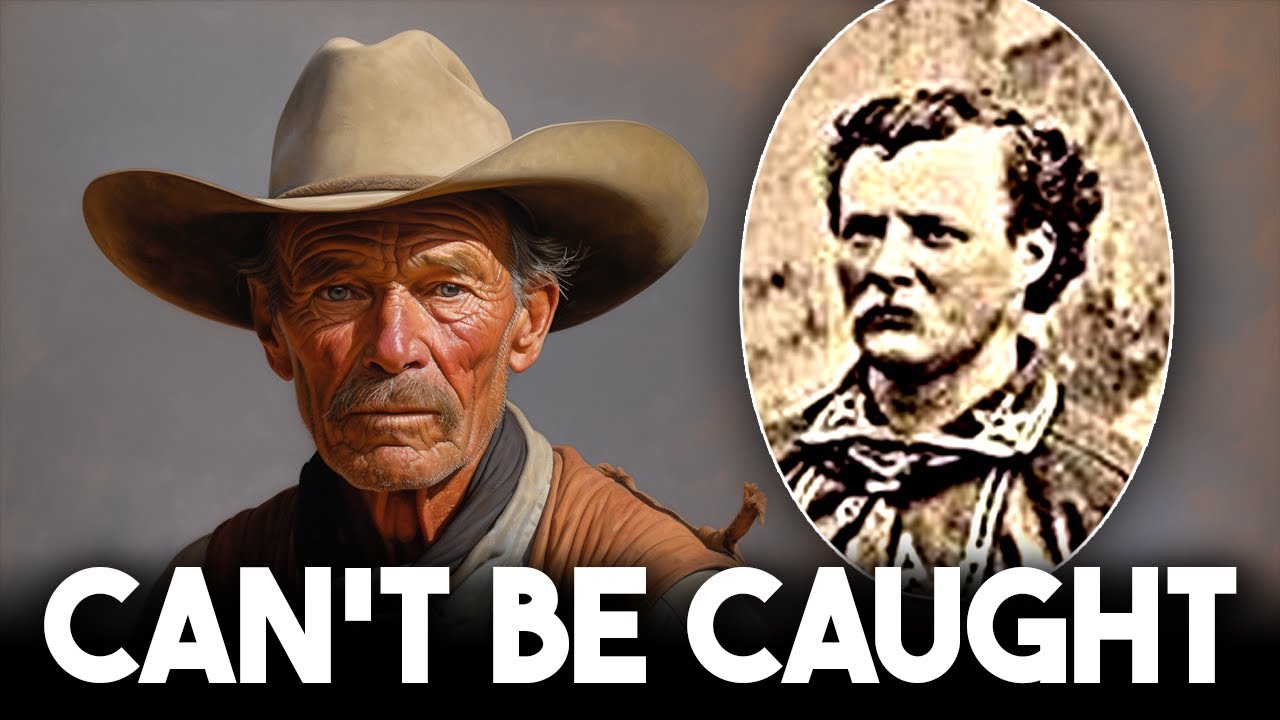
When Stilwell appeared, armed and waiting, the encounter that followed would end with his body riddled with buckshot on the railroad tracks—and would ignite a manhunt that would follow the Earp brothers for the rest of their lives. Frank C. Stilwell was born in Iowa in 1856 to William Henry Stillwell and Charlotte B. Sarah Winfrey.
His paternal grandfather also carried the name William Henry Stillwell. Before Frank had reached his teens, the family uprooted and moved to the Kansas territory, settling near Palmyra, a small settlement that hugged the banks of the Santa Fe Trail. It was there, in the raw borderlands between settled country and the open frontier, that Frank spent his formative years. He was a boy in a world being torn open by westward expansion, and he saw firsthand the mounting friction between the settlers streaming in and the Indigenous peoples who had long called the land home.
Those years were also marked by fracture and loss. His parents’ marriage dissolved, and before Frank was grown, his father died while serving in the Civil War. The most powerful presence in his young life became his brother, Simpson “Comanche Jack” Stilwell, a name that carried real weight on the frontier. Simpson was a man of many titles: Native American warrior scout, deputy marshal, police judge, and United States commissioner.
He had been a scout for the army, had survived capture and escape among the Comanche, and had earned the respect of men on both sides of the law. Frank looked up to him, and Simpson’s commitment to justice and his opposition to lawlessness left a deep impression on his younger brother. Yet the path the two brothers took would diverge in ways neither could have foreseen. In 1877, the brothers set out together on a journey that took them first to Anadarko in the Indian Territory, and then westward to Prescott in the Arizona Territory.
It was in Prescott that Frank crossed a line he would never step back over. During a violent argument, Frank killed a man named Jesus Vega. Whether the killing was truly in self-defense, as Frank would later claim, the act itself changed the course of his life. The authorities cleared him of the charges, accepting his account, but the violence that had been simmering beneath the surface had now been given release.
Simpson had devoted his life to upholding the law; Frank had just taken a life in anger. The split between the brothers’ paths was no longer just a matter of temperament—it was a matter of who they had become. Frank drifted away from that life of order and into the shadows of the frontier economy. After leaving Miller’s Ranch, he signed on as a companion to a man named C.
H. Hamblin. The work was not glamorous, but Frank was restless. Soon he was drawn into mining ventures in Mojave County, a rough and lawless corner of the territory where claims were contested with fists, guns, and sometimes murder.
In 1879, Frank and a partner named James Cassidy were accused of killing Colonel John Van Houten, a mining rival with whom they had clashed. The dispute had boiled over on the question of mining rights. But when the accusations were brought, the evidence against Frank and Cassidy was thin, and both men avoided indictment. Frank walked free again, and the pattern of his life was becoming clear: accusations followed him, but never convictions.
Frank Stilwell had become a consummate con artist, a man who slipped between identities and fabricated details about himself as easily as other men changed shirts. He was a master of deception, and the borderlands of Arizona gave him room to operate. In 1881, he was accused of taking part in the robbery of the Sandy Bob line, a stagecoach operation. Again, the proof did not hold.
Frank and his collaborator, a man named Pete Spence, escaped prosecution and went on their way. To this day, a significant number of historians remain firmly convinced that Frank Stilwell was in fact one of the men behind that theft, even if the law never managed to prove it. As the years wore on, the friction between the Earp family and the loosely organized outlaw faction known as the Cowboys grew steadily more dangerous. The Cowboys were not a single gang but a shifting network of cattle rustlers, stagecoach robbers, and killers who operated across the Arizona and Mexican borderlands.
They had a stranglehold on parts of the territory, and the Earps—Virgil, Wyatt, Morgan, and their allies—had made themselves the Cowboys’ sworn enemies. Frank Stilwell had thrown in his lot with the Cowboys, and that put him directly in the Earps’ sights. In his capacity as deputy U. S.
marshal, Virgil Earp formally reported Stilwell and Pete Spence to federal authorities for interfering with the delivery of the mail. It was a serious charge in those days, but it was only the beginning. When Morgan Earp was murdered in Tombstone, suspicion fell on Stilwell. The evidence pointed toward him, and the Earps were convinced of his guilt.
The tension that had been building between the two groups for years had reached its breaking point. For Wyatt Earp, the law had failed his family once too often. The court system could not—or would not—deliver the justice he demanded. With Morgan dead and the threats mounting, Wyatt decided to take matters into his own hands.
Wyatt organized a posse of deputies, and among them rode the notorious Doc Holliday, a gambler and gunman whose name was already legend. The group made their way to Tucson, hunting for Stilwell and another Cowboy, Ike Clanton. They found Stilwell at the railroad depot. The exact circumstances of the killing would be disputed for decades, with different accounts offering different versions of what happened in those dark hours.
But the outcome was not in dispute: Frank Stilwell was shot dead by the Earp posse on the train tracks. His body was left there, riddled with buckshot, a warning to the Cowboys who had thought themselves untouchable. The assassination of Stilwell was a turning point in the long war between the Earps and the Cowboys. Stories multiplied about how the killing had been carried out, and the version one believed depended largely on whose side one stood on.
The Cowboys were enraged by the death of their ally and swore vengeance. The Earps, for their part, knew that the killing had only escalated the stakes. Stilwell’s death did not end the conflict; it inflamed it, turning a simmering feud into a full-blown blood war. The battle between the Earps and the Cowboys had actually come to a head earlier, in the dusty streets of Tombstone, Arizona, in the legendary gunfight at the O.
K. Corral. In that fiery exchange, the Earps, along with Doc Holliday, faced off against a group of Cowboys in a confrontation that would become the most famous shootout in Western history. The firefight cemented the Earp brothers’ reputations as lawmen willing to confront the criminals who terrorized the region, no matter the cost.
The events that led up to that gunfight—the threats, the insults, the escalating violence—would go on to shape the entire mythology of the American West, turning men like Wyatt Earp into figures of near-mythic proportions. The Earps’ relentless pursuit of justice, and their willingness to stand against the Cowboys, was a reflection of an era in which the law was thin and the men who wore badges were often the only thing standing between order and chaos. The fight between the Earps and the Cowboys was a struggle between those who tried to enforce the law and those who took pleasure in defying it. The lines between right and wrong were often blurred, and few men on either side were saints.
But the conflict itself captured something essential about the frontier: a place where justice was measured in gunfire, and where a man’s reputation could be the difference between life and death. After Stilwell’s death, a number of different narratives surfaced describing the circumstances and reasons behind it. His many enemies had their own versions, and his few defenders had theirs. But one thing was certain: Frank Stilwell, a man accused of murdering Morgan Earp and tangled in a web of crime and deceit, met his end on those Tucson tracks.
His funeral was a solemn affair, but a lonely one. There was no escort of mourners to honor him, no procession of friends to carry his memory forward. The absence of an escort at his burial reflected the solitary and miserable end of a man who had filled his life with violence and criminality. Stilwell’s remains were first laid to rest in the Old City of Tucson Cemetery.
Some time later, his bones were disinterred and moved to a mass grave in Tucson’s Evergreen Cemetery. Even in death, he did not receive a marked grave or a place of honor—just a common resting place among the anonymous dead. The way he was buried was yet another reflection of the ominous legacy he had left behind. It served as a reminder of the harsh and barbaric features that were so prevalent in the Wild West, where a man who lived by the gun was often left to be forgotten in an unmarked pit.
The story of Frank Stilwell exemplifies the anarchy and bloodshed that were typical of the frontier era. He was a man whose callous demeanor and utter indifference to the value of human life made him a dangerous adversary. The fact that he was able to evade justice for so many years reveals just how difficult it was for law enforcement officials to maintain order in the Wild Frontier. A man with no fixed identity, no loyalty to the law, and no hesitation to use violence could move through the territories almost at will, leaving behind a trail of accusations that never quite became convictions.
The name Frank Stilwell remains synonymous with fear to this day. His legacy has left an imprint on the annals of Wild West history that will not be erased. By looking closely at his life and his crimes, we gain insight into the forces that shaped his character and the deeds that defined his existence. He was not born a villain, but a fractured childhood, a father lost to war, and a frontier world that rewarded ruthlessness turned him into one.
His life is a chilling reminder of the darker side of an era that continues to capture our collective imagination—an era of legend, bloodshed, and men who chose their own law over the law of the land.