In July 1850, ritual fires burned in the heart of the Kingdom of Dahomey, and blood flowed as sacrificial victims were beheaded to honor the dead ancestors of a people who had built their wealth and power on the slave trade. Among those marked for death was a six-year-old girl of noble Yoruba birth, a child named Aina whose aristocratic family had been wiped out. She was to be killed on the grave of a nobleman because she herself was of noble blood. Amid this horror, a British captain named Frederick Forbes arrived on a diplomatic mission.
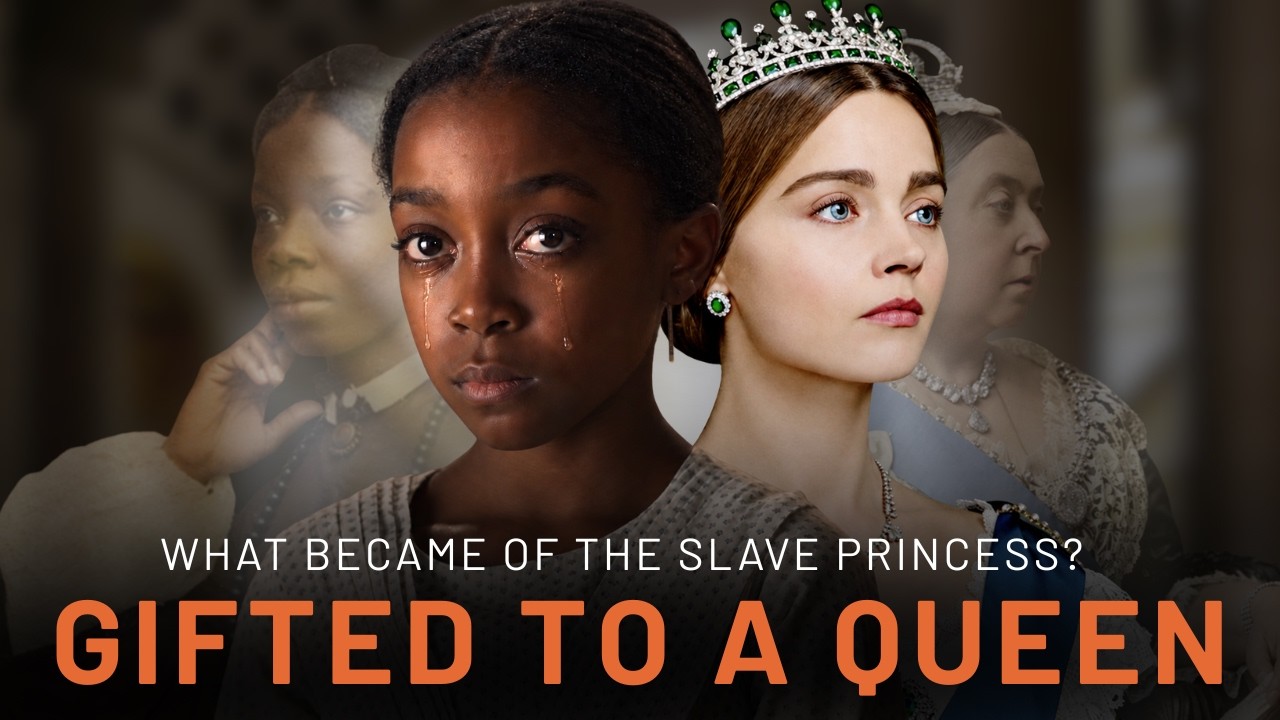
His frightened eyes caught Aina’s, and taking pity on her, he tried to negotiate with King Gezo for her life. He told the king that Queen Victoria would not honor a ruler who killed children. Gezo relented and gave the girl to Forbes as a gift, with the words, “From the king of the blacks to the queen of the whites. ”
By becoming a gift, the orphan was saved.
She set off for Britain with the captain, who gave her a new name upon her baptism: Sarah Forbes Bonetta. Forbes was the captain’s surname, and Bonetta was the name of the ship that carried them to England. Whether anyone asked if she wanted to be baptized or renamed is doubtful. She would use the name Aina in her adult life, a quiet assertion of the identity that had been taken from her.
During the voyage, it became clear that this was an extraordinary child. She learned English remarkably quickly and showed such talent for music and learning that Forbes himself wrote, “She is far ahead of any white child. ” The compliment was striking for its time, given the deep prejudice black people faced in Britain. On November 9, 1850, Aina met the woman who had made her rescue possible and would now shape her future: Queen Victoria.
The Queen was taken with the girl, her sad story, and her soft, curly black hair. She wrote in her diary of the child’s exceptional intelligence and decided to become her godmother and patron. Whether this was genuine compassion or a social experiment is difficult to say with certainty. Victoria took a great interest in the people of her vast colonies and was, for her era, less prejudiced toward other races than many of her subjects.
But she was still the head of a system built on colonialism. She did not consider these people her equals, nor did she question her right to own them. She did not take the girl into the palace to live, though she invited her there and gave her gifts. After a year in Britain, Aina developed a severe cough.
A prevailing belief held that black people could not survive the British climate, so it was decided she should be sent back to Africa. For a girl who had only just grown used to a new country and language, this was a terrible blow. She was sent to a missionary school in Freetown, Sierra Leone, where she learned French and the manners of a high-society lady. Still, she longed to return to Britain.
When she was twelve, the Queen arranged for her to come back. The captain who had saved her had since died, so she was placed with a new foster family: the Reverend James Schön, a former missionary in Africa, and his wife Elizabeth. The sweet girl charmed them as well, and they grew so close that she began calling Elizabeth her mother. For at least this brief moment, Aina found something that felt like home.
Victoria did not forget her young ward. She continued to invite Aina to Windsor and allowed her to spend time with the royal children, which is how Aina became friends with Princess Alice, whose wedding she later attended. Sometimes the Queen even received her privately, admiring her drawings and her musical performances. Aina’s intelligence drew unwanted scrutiny.
Racist ideas about black people’s intellectual inferiority were widespread, and her abilities clearly disproved them. Newspapers responded by claiming she was so clever because her skull was shaped just like a European’s. As Aina grew into a young woman, Queen Victoria turned her attention to marriage arrangements. Matchmaking was one of the Queen’s favorite pursuits.
To prepare Aina for this, she was taken against her wishes from the family that had become so dear to her and placed with Miss Welsh, who was meant to turn her into a model Victorian lady. When Aina turned nineteen, she received a marriage proposal from James Davies, a thirty-one-year-old merchant from Sierra Leone. They had known each other since her time at the missionary school, but barely knew one another. Aina did not want to marry him.
In a letter to her beloved foster mother Elizabeth, she poured out her feelings: “Others would say, ‘He is a good man, and though you don’t care about him now, you’ll soon learn to love him. ‘ That, I believe, I never could do. I know that the generality of people would say, ‘He is rich, and your marrying him would at once make you independent. ‘ And I say, ‘Am I to barter my peace of mind for money?
‘ No, never. ”
The lines revealed a young woman who dreamed of love and refused to sell herself for money. But after so many years under the Queen’s patronage, she could not refuse the man Victoria had chosen for her. The couple married in Brighton on August 14, 1862.
The Queen spared no expense, arranging a celebration fit for a princess, with sixteen bridesmaids and ten horse-drawn carriages. What good was any of that, though, when marrying someone you did not want? On the marriage certificate, Aina gave her full name as Aina Sarah Forbes Bonetta, her own quiet way of showing she had not forgotten her roots. Because her husband’s business was based in Africa, the couple moved there shortly after the wedding.
A year later, they had a baby girl, whom they named Victoria in honor of the Queen, who became the child’s godmother. The couple had two more children, Arthur and Stella. Their descendants still live in and around Lagos today, as well as in Britain and Sierra Leone. In December 1867, Aina returned to Britain, unaware this would be her last visit and her final meeting with the Queen.
Victoria recorded the occasion in her diary: “Saw Sally, now Mrs. Davies, and her dear little daughter, much darker than herself. Called Victoria, aged four, a lively intelligent child with big melancholy eyes. ”
Soon after, Aina developed tuberculosis.
The only treatment of the time was a change of climate, so she traveled to Madeira, hoping its mild air would help her recover. Nothing helped. She died there on August 15, 1880, at the age of thirty-seven. Queen Victoria was deeply saddened by her goddaughter’s death and promised to continue supporting the children financially, a promise she kept.
She paid for the education of Victoria, the young namesake, at Cheltenham Ladies’ College, something remarkable in an age when girls had so little access to education, and stayed in touch with her for the rest of her life. The story of Sarah Forbes Bonetta has been heavily romanticized, both in Queen Victoria’s time and in our own. It is often presented as a real-life Cinderella story with a fairy godmother, but in reality, it is the story of a woman who endured unimaginable trauma. She lost her family, her home, and her native language.
She found herself in an entirely new country where, though not enslaved, she still spent her whole life without the freedom to make her own choices and live as she wished. And yet, through her own example, she broke down countless prejudices about black people and changed the way many saw them. Perhaps in that sense, all those hardships meant something.






