On April 14, 1943, a prisoner at the Sachsenhausen concentration camp near Berlin ran toward the electrified perimeter fence and died. The man was Yakov Dzhugashvili, a senior lieutenant in the Red Army who had been captured by the Germans in the chaotic summer of 1941. He was also the eldest son of Joseph Stalin. German records and witness testimony indicate he died by suicide, either electrocuted or shot by guards.
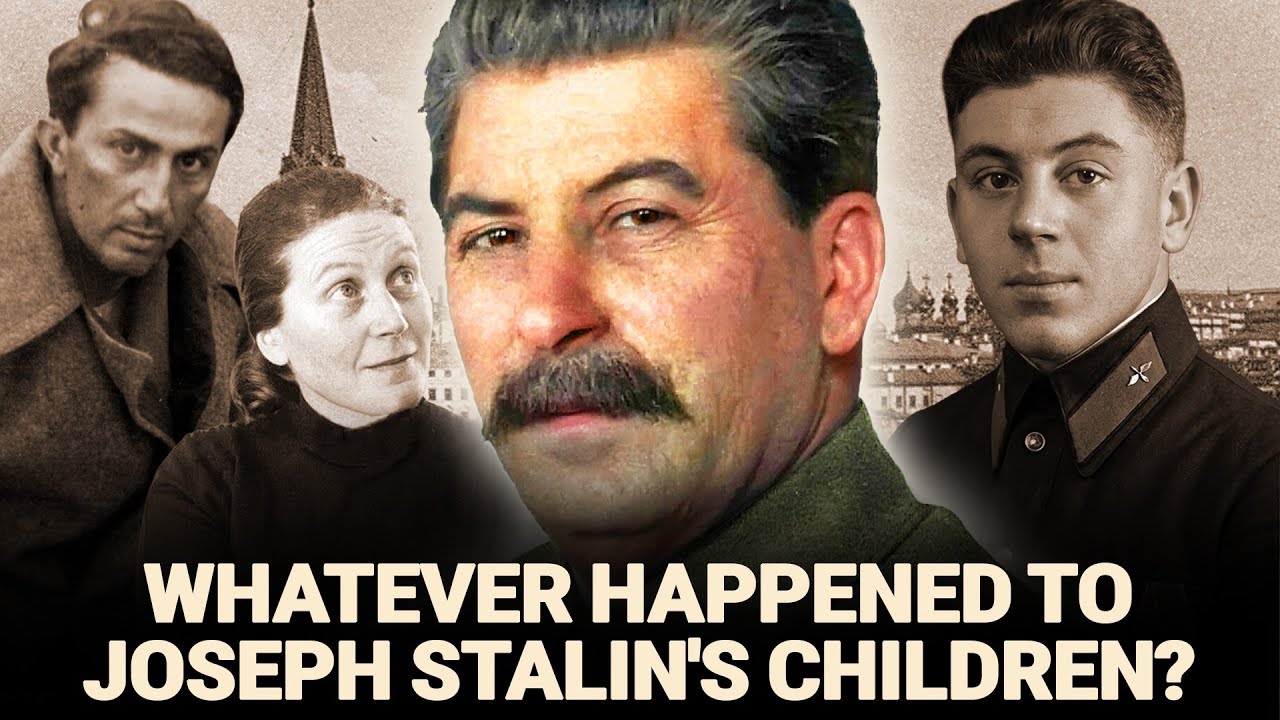
He was 36 years old. His father, who had already declared publicly that he had no son named Yakov, never acknowledged his death. Yakov had been born in 1907 in Tiflis, Georgia, then part of the Russian Empire. His father was still known as Iosif Dzhugashvili, an underground revolutionary activist frequently arrested by the Tsarist police and involved in bank robberies to fund Bolshevik activities.
His mother, Kato Svanidze, came from a family of modest respectability. She died only months after Yakov’s birth, likely from typhus or tuberculosis. Stalin attended the funeral and reportedly displayed visible grief, but he quickly returned to revolutionary work. The child was placed with his maternal relatives, the Svanidze family, in Tiflis.
Stalin remarried in 1919 to Nadezhda Alliluyeva and began his ascent within the Communist Party, but Yakov remained in Georgia. Contact between father and son was sporadic, limited to occasional letters and financial support. By the early 1920s, Stalin had become general secretary of the Communist Party and was establishing himself as Lenin’s successor. Yakov, now a teenager, was brought to Moscow to join his father’s household.
The reunion was difficult. Yakov spoke Georgian and limited Russian. He was shy, awkward, and unused to the formality of the Kremlin compound. Stalin’s new family, his wife Nadezhda and their children Vasili and Svetlana, formed a separate unit.
Yakov occupied an uncertain position, a son by blood but an outsider by history. He attended technical schools in Moscow and pursued engineering studies, demonstrating steady competence but showing no ambition for political connection. Those who knew him described him as introverted and melancholic. He married twice.
His second marriage, to Yulia Meltzer, produced a daughter, Galina, born in 1938. Stalin’s opinion of his eldest son was dismissive. He reportedly considered Yakov weak and disappointing. The psychological distance between them was vast.
When Germany invaded the Soviet Union in June 1941, Yakov held the rank of senior lieutenant and served in an artillery unit. His unit was deployed to the Western Front. Within weeks, the Red Army suffered catastrophic losses, with millions of soldiers killed, wounded, or captured. In mid-July 1941, Yakov was captured near Vitebsk during the chaotic retreat of Soviet forces.
German intelligence quickly identified him as Stalin’s son. Nazi authorities publicized his capture widely, distributing photographs and statements as proof of Soviet weakness. Stalin’s response was immediate and harsh. He issued Order No.
270, declaring that soldiers who surrendered were traitors, and explicitly stating that the families of captured officers could be arrested. Stalin reportedly said he had no son named Yakov. When German authorities later attempted prisoner exchanges, offering to trade Yakov for captured German officers including Friedrich Paulus after Stalingrad, Stalin refused all offers. Yakov was held in various POW camps before being transferred to Sachsenhausen, where high-value prisoners were detained under special surveillance.
His status provided marginal protection, but it also made him a permanent propaganda tool. He remained in captivity, aware that his father had disowned him. After his death, his body was cremated. No formal funeral took place, and news of his death was not publicly acknowledged in the Soviet Union during the war.
Yakov’s daughter, Galina, was five years old when her father died. She was raised largely outside public view and died in 2007. Her descendants live in Russia and have occasionally engaged with historians, but they remain private individuals. Stalin’s second son, Vasili, was born on March 24, 1921, in Moscow, the first child of Stalin and Nadezhda Alliluyeva.
Unlike Yakov, Vasili grew up inside the center of Soviet power, raised in Kremlin apartments and country residences surrounded by guards, tutors, and the children of other high officials. He attended elite schools reserved for the children of party leadership and was provided with every material advantage available to the Soviet elite. His upbringing was not warm. Stalin was a distant father, preoccupied with political maneuvering and the increasingly violent purges of the late 1920s.
Nadezhda managed the household but was frequently strained. When Vasili was 11 years old, on November 9, 1932, his mother died from a gunshot wound in the Kremlin apartment. The official cause was listed as appendicitis, but it is widely accepted that she died by suicide following a bitter argument with Stalin during a public dinner. The death was traumatic.
Stalin withdrew emotionally even further, delegating supervision of the children to staff and relatives. Vasili’s behavior changed. He became more reckless and aggressive, and he learned quickly that his surname offered protection from consequences. He struggled academically not from lack of ability but from lack of discipline.
Teachers were afraid to fail him. He was involved in fights, destroyed property, and drank alcohol at a young age. In 1938, Vasili enrolled in aviation school at Kachinsk. He was a capable pilot, and multiple accounts confirm that despite his other failings, he had genuine skill in the cockpit.
He completed training and received his commission as a lieutenant in the Soviet Air Force. His military career progressed at an extraordinary pace. By the time of the German invasion in 1941, he was already a senior officer. During the war, he commanded various air regiments and divisions, flying missions and participating in major operations.
His promotions were accelerated by his connection to Stalin, but his record was also inflated by official reports. By the end of World War II, Vasili held the rank of major general. He was 24 years old. Vasili married three times.
His first marriage, to Galina Burdonskaya in 1940, produced a son, Alexander, and a daughter, Nadezhda. The marriage was unstable, and Galina later accused Vasili of domestic violence. His second marriage also ended in divorce. His third marriage, to Yekaterina Timoshenko, lasted through his later life but followed the same patterns of instability and conflict.
Vasili’s relationships with his children were distant. He was frequently absent, consumed by military duties, social obligations, and increasing alcoholism. His drinking became notorious. He hosted lavish parties, crashed vehicles, and engaged in public altercations.
His behavior was tolerated during Stalin’s lifetime because no one dared confront the dictator’s son. Stalin was aware of Vasili’s conduct. He occasionally reprimanded him but more often protected him. He despised weakness, but he could not bring himself to fully disown his only surviving son.
Joseph Stalin died on March 5, 1953. Within days, Vasili’s world collapsed. Without his father’s protection, he became a liability to the new Soviet leadership under Khrushchev, Malenkov, and Beria. Complaints that had been suppressed for years were now filed officially.
In April 1953, less than two months after Stalin’s death, Vasili was arrested. The charges included corruption, abuse of authority, and anti-Soviet agitation. He was tried in a closed military court and sentenced to eight years in prison. No public announcement was made.
He was held in Vladimir Central Prison, a facility for political prisoners. He was released in 1960 after serving seven years, broken physically and mentally. Years of heavy drinking had damaged his health. He had no career, no position, and no prospects.
He was sent to Kazan under internal exile restrictions, monitored by state security. He attempted to reconnect with his children, but the relationships were strained. He had been absent for most of their lives. He continued drinking, and his health deteriorated rapidly.
Vasili Stalin died on March 19, 1962, in Kazan from complications related to chronic alcoholism. He was 40 years old. He was buried in a Moscow cemetery under the name Vasili Vasilyevich Dzhugashvili, not Stalin. The funeral was small and unofficial.
No state representatives attended. His children survived him and lived quiet lives, largely removed from public attention. Stalin’s only daughter, Svetlana, was born on February 28, 1926, in Moscow. She was his youngest child and occupied a unique position in his life.
He called her by the affectionate diminutive Svetanka and showed her a degree of warmth he displayed toward no one else. She was his favorite. Her early childhood was spent in the Kremlin and at Stalin’s dacha in Kuntsevo. She received private tutoring in languages, literature, and music.
Stalin was more present in her early life than he had been for his sons. He spent time with her, brought her small gifts, and allowed her into his study. She remembered him reading to her and showing occasional tenderness. Svetlana was six years old when her mother died in November 1932.
Stalin informed her that Nadezhda had died from appendicitis. Svetlana would not learn the truth of the suicide until years later. After her mother’s death, Stalin became harder and more withdrawn. His tenderness toward Svetlana continued, but he was no longer capable of sustained warmth.
Svetlana was an excellent student, fluent in Russian, German, and English. She studied at Moscow University, initially modern history, then literature. She sought a life in writing and translation, and she did not use her surname to advance professionally. But every relationship, every job, every social interaction was mediated by the fact of who she was.
State security monitored her movements, her correspondence, and her associations. In her late teens, Svetlana fell in love with Alexei Kapler, a Soviet filmmaker nearly two decades older than her. Stalin was furious. In 1943, Kapler was arrested and sentenced to ten years in labor camps.
Svetlana was forbidden from contacting him. It was her first direct experience of her father’s capacity for cruelty, and it marked a turning point in their relationship. Svetlana married three times. Her first marriage, in 1944, to Grigory Morozov, produced a son, Joseph, born in 1945.
Stalin disapproved, and the marriage ended in divorce in 1947. Her second marriage, in 1949, to Yuri Zhdanov, the son of Stalin’s close associate Andrei Zhdanov, produced a daughter, Yekaterina, born in 1950. This marriage also ended in divorce. Her third marriage, in 1963, was to Brajesh Singh, an Indian communist she met in Moscow.
Singh died in 1966. Stalin died on March 5, 1953. Svetlana was 27 years old and present at his bedside during his final hours. She later described the scene as horrific.
After his death, she continued working as a translator and teacher, living quietly in Moscow. In 1966, after Brajesh Singh died, Svetlana requested permission to travel to India to scatter his ashes. Soviet authorities granted the request, believing she would return. In March 1967, while in India, Svetlana walked into the American embassy in New Delhi and requested political asylum.
The request was granted. She was flown to Switzerland, then to the United States. Her defection was a global sensation and a propaganda disaster for the Soviet Union. Stalin’s daughter had rejected the system her father built.
Svetlana wrote two major memoirs. The first, Twenty Letters to a Friend, was published in 1967. The second, Only One Year, appeared in 1969. Both were bestsellers translated into dozens of languages.
She described her father’s coldness, his cruelty to those around him, and her growing awareness of the system’s brutality. She did not defend him. She sought to understand him and ultimately failed. Her post-defection life was unstable.
She married an American architect, William Wesley Peters, in 1970, and had a daughter, Olga, in 1971. The marriage ended in 1973. She struggled financially despite the success of her books. She moved frequently, living in Arizona, California, and England.
In 1984, in a move that shocked observers, she returned to the Soviet Union, claiming homesickness. By 1986, she left again, returning to the United States. She spent her final years in Wisconsin, living in modest circumstances, and changed her name multiple times seeking anonymity. Svetlana Alliluyeva died on November 22, 2011, in Richland Center, Wisconsin, of colon cancer.
She was 85 years old. Her death received limited media attention. She was cremated, and her ashes were scattered at an undisclosed location. Three children, three distinct outcomes.
Yakov, the neglected firstborn, died in German captivity, abandoned by the father who never fully acknowledged him. Vasili, the indulged and corrupted son, destroyed himself through the privileges his name afforded, dying in obscurity nine years after his father. Svetlana, the favored daughter, spent her life fleeing the legacy she inherited, crossing continents in search of an identity separate from Stalin and never finding it. They carried his surname.
It granted them material comfort and extraordinary access. It also imprisoned them. None escaped the gravitational pull of their father’s power.
None lived a life that could be called free.






