The knife was already wet with Captain Dubois’s blood when Mary felt the first tremor of the new power moving through her, and in that moment she understood that there would be no going back. The ceremonial dagger had opened his throat in a single precise cut, but this kill had been different from Moreau’s. As his blood poured onto the ancient stones of the abandoned convent garden, she had begun to chant in a language that predated civilization, and something in the dying captain’s body had answered. She could feel his memories flowing into her like water into dry ground, the locations of hidden treasures, the names of associates, the routes of his slave ships.
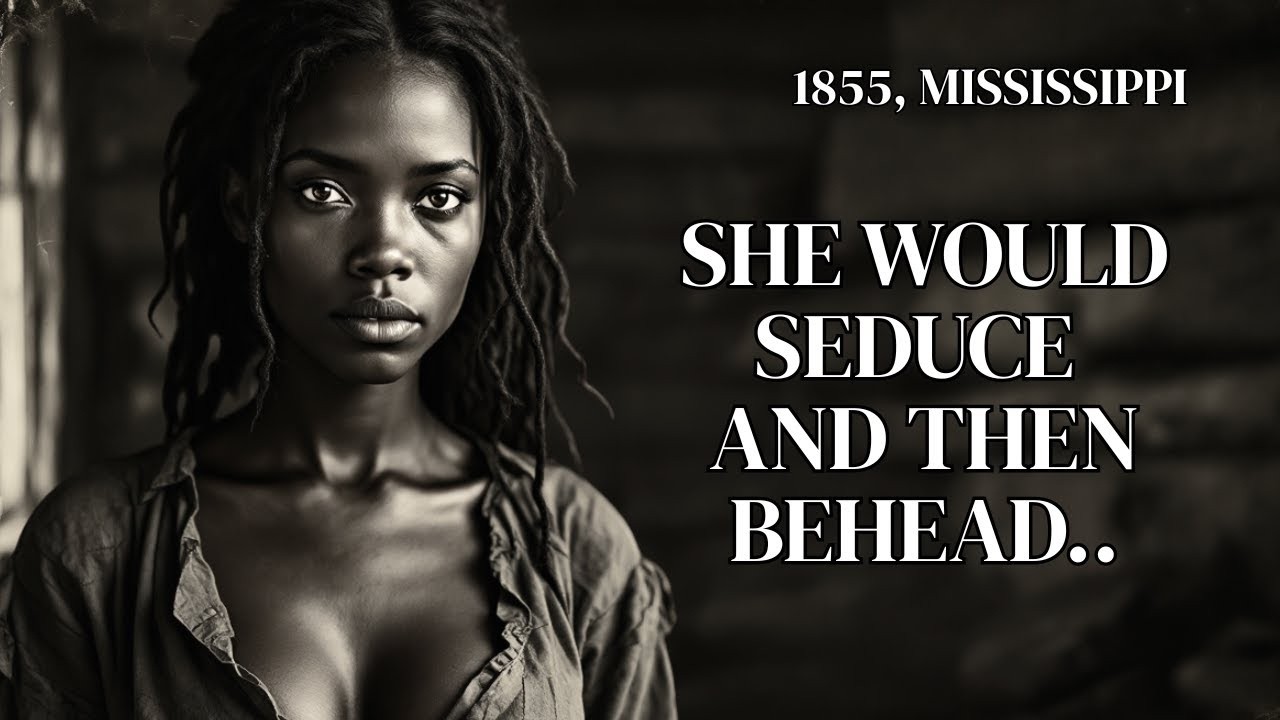
His very essence had been devoured, and she knew things now that she had not known before. Three weeks earlier, Mary Delaquois had stood in the kitchen of the Beauregard mansion in the summer of 1839, her dark skin glistening with perspiration as she prepared the evening meal for her masters. At twenty-three, she possessed a beauty that was both blessing and curse, high cheekbones that caught the lamplight, eyes the color of rich coffee, a figure that drew unwanted attention from every man who laid eyes upon her. The city outside was trapped in a suffocating embrace of heat and humidity, and the French Quarter’s cobblestone streets radiated a warmth that could be felt through the thickest boots.
The air hung heavy with the scent of magnolia blossoms mixed with the less pleasant odors of human sweat and desperation. Madame Beauregard’s voice cut through the kitchen’s stillness. “Mary, bring the wine to the dining room. ” The woman’s pale face was flushed from the heat and too much afternoon sherry, her elaborate dress wilting in the oppressive temperature.
As Mary carried the crystal decanter through the mansion’s ornate hallways, she could hear the voices of the dinner guests, wealthy plantation owners, merchants, and politicians who gathered regularly to discuss business and politics while their slaves served them in silence. Tonight’s conversation centered on the slave uprising rumors circulating through the city like wildfire. “I tell you, we need to be more vigilant,” declared Colonel Thibodeaux, a portly man whose plantation lay just outside the city. “These Negroes are getting ideas above their station.
Just last week, I had to make an example of one of my field hands who dared to look me in the eye. ”
Mary’s jaw tightened as she poured wine into the crystal glasses, her movements graceful and controlled despite the rage building inside her chest. She had learned long ago to mask her emotions, to become invisible while remaining in plain sight. “Perhaps,” suggested Dr.
Rousseau, a thin man with calculating eyes, “we should consider the methods they use in Haiti. Fear is the most effective tool for maintaining order. ”
The conversation continued as Mary retreated to the kitchen, but their words echoed in her mind. She had heard whispers of Haiti, of slaves who had risen up and claimed their freedom through blood and fire.
The thought both terrified and thrilled her. Later that evening, as the guests departed and the household settled into sleep, Mary slipped out through the servants’ entrance into the sultry New Orleans night. The French Quarter transformed after dark. Gas lamps cast dancing shadows on the wrought iron balconies, and distant music drifted from the taverns and brothels that catered to sailors and merchants.
She pulled her shawl over her head and made her way through narrow streets toward a small shop tucked away in a forgotten alley. Mama Brigitte’s shop was known throughout the slave community as a place where one could find remedies for both physical and spiritual ailments. The elderly woman who ran it was rumored to be a powerful practitioner of voodoo, though she maintained the facade of a simple herb seller to avoid attracting the authorities. The shop’s interior was dimly lit by candles, and the air was thick with the scent of dried herbs, incense, and something else, something that spoke of power and ancient knowledge.
Mama Brigitte emerged from the shadows, her weathered face creased with lines that spoke of decades of hardship and wisdom. “Child,” she said, her voice carrying the musical cadence of her Haitian heritage, “I’ve been expecting you. The spirits, they whisper your name on the wind. ”
Mary felt a chill despite the oppressive heat.
“I need help, Mama Brigitte. I can’t live like this anymore. Every day I watch them treat us like animals, and I feel something dark growing inside me. ”
The old woman studied Mary’s face in the candlelight, her eyes seeming to peer into her very soul.
“Darkness, yes, but also power. You have the gift, child, the ability to make men see what you want them to see, to make them desire what will destroy them. ”
From beneath the counter, Mama Brigitte produced a small cloth bag filled with herbs and what appeared to be bone fragments. “This gris-gris will enhance what already lies within you.
But remember, child, power always comes with a price. Once you start down this path, there ain’t no turning back. ”
Mary took the bag, feeling its weight in her palm. It seemed heavier than it should, as if it contained more than just herbs and bones.
“What kind of price? ”
“The price of becoming something more than human, but also something less. You will have the power to destroy your enemies, but you will also lose pieces of yourself with each life you take. The question is, are you willing to pay it?
”
As Mary walked back through the empty streets, the gris-gris bag clutched in her hand, she thought of Colonel Thibodeaux’s words about making examples of slaves who dared to look their masters in the eye. She thought of Dr. Rousseau’s casual discussion of using fear as a tool of control. She thought of all the nights she had lain awake listening to the sounds of other slave women being violated by their masters, powerless to help them or herself.
By the time she reached the Beauregard mansion, her decision was made. Three days after her visit to Mama Brigitte’s shop, Mary found herself serving at another of Madame Beauregard’s elaborate dinner parties. The gris-gris bag hung hidden beneath her dress, and she had noticed changes, subtle at first, but growing stronger each day. Men’s eyes lingered on her longer than before, their conversations faltered when she entered a room, and she could sense their desires like heat radiating from their bodies.
Tonight’s guest of honor was Monsieur Gaston Moreau, a wealthy sugar plantation owner known throughout New Orleans for his cruelty toward his slaves. Stories circulated of workers who had simply disappeared after displeasing him, and of young slave women who had been found floating in the bayou after catching his attention. As Mary served the soup course, she felt Moreau’s eyes following her movements. He was a man in his fifties with graying hair and soft hands that had never known honest labor.
His wife had died the previous winter, leaving him free to indulge his darker appetites without even the pretense of propriety. “Beauregard,” Moreau said, his voice thick with wine and desire, “that girl of yours, she’s quite striking. Is she for sale? ”
Monsieur Beauregard laughed, a sound devoid of warmth.
“Mary, I’m afraid not, my friend. She’s far too valuable in the kitchen. But perhaps we could arrange other accommodations. ”
Mary’s hands trembled slightly as she ladled soup into Moreau’s bowl, but she forced herself to remain calm.
As she leaned forward to serve him, she allowed her eyes to meet his directly. For a moment that seemed to stretch into eternity, she felt something electric pass between them. His pupils dilated and his breathing became shallow. “Perhaps,” Mary whispered, her voice barely audible but somehow carrying clearly to his ears, “Monsieur would enjoy a walk in the garden after dinner.
The night air might provide relief from this terrible heat. ”
Moreau nodded mutely, his eyes never leaving her face. As the clock struck eleven, the last of the guests departed, leaving only Moreau, who had lingered under the pretense of discussing business. Mary watched from the shadows as her master retired to his study with a bottle of brandy, leaving Moreau alone in the parlor.
She approached him slowly, and he rose from his chair as if drawn by invisible strings. The Beauregard garden was a maze of exotic plants and hidden alcoves designed for romantic encounters. Spanish moss hung from ancient oak trees like ghostly curtains, and the air was heavy with the scent of night-blooming jasmine. Mary led Moreau to a secluded corner where a marble bench sat beside a small fountain.
“You’re so beautiful,” Moreau breathed, reaching out to touch her face. “I’ve never seen anything like you. ”
Mary allowed him to caress her cheek, all the while studying his face in the moonlight. “Tell me about your plantation,” she said softly.
“Tell me about the slaves who work your fields. ”
As if compelled by forces beyond his control, Moreau began to speak. He told her of the punishments he inflicted for the smallest infractions, of the women he had taken by force, of the children he had sold away from their mothers. With each confession, Mary felt the darkness within her growing stronger.
“You enjoy causing pain,” she observed, her hand trailing down his chest. “You find pleasure in the suffering of others. ”
“Yes,” he admitted, his voice thick with shame and arousal. “God help me.
Yes. ”
Mary smiled, and in the moonlight her expression was both beautiful and terrible. “Then you’ll understand what comes next. ”
The blade appeared in her hand as if by magic, a thin, sharp knife she had taken from the kitchen and blessed with oils from Mama Brigitte’s shop.
Moreau’s eyes widened as he saw it, but he seemed unable to move, trapped by the power of her gaze. Her hand moved with practiced precision, the blade sliding across his throat in one smooth motion. Blood flowed like a dark river in the moonlight, and Moreau’s body crumpled to the ground beside the fountain. The sound of his death was lost beneath the gentle splash of water over stone.
Word of Gaston Moreau’s death spread through New Orleans like wildfire. The official story, as reported in the Daily Picayune, was that the plantation owner had been murdered by unknown assailants while walking alone in the French Quarter. His throat had been cut with surgical precision, and his body had been found at dawn by a street sweeper, drained of blood and bearing no signs of robbery. But in the slave quarters and the hidden corners where the city’s oppressed gathered, a different story began to take shape.
They spoke in hushed tones of justice finally being served, of a dark angel who had come to settle old debts. The name Mary was whispered with a mixture of fear and hope. Mary herself continued her duties at the Beauregard Mansion as if nothing had changed, but the other slaves began to treat her with deference that bordered on reverence, sensing something powerful and dangerous in her presence. Mama Brigitte watched these developments with knowing eyes, remembering what she had seen in Haiti during the revolution, when ordinary people had been transformed into instruments of divine vengeance.
Three weeks after Moreau’s death, a young slave boy approached Mary while she was hanging laundry in the mansion’s courtyard. “Miss Mary,” he whispered, glancing around to make sure they weren’t being watched, “there’s a man wants to see you. Says his name is Claude, and he’s got a message from someone important. ”
That night, Mary made her way to Congo Square, the only place in New Orleans where slaves were allowed to gather freely, at least on Sundays.
During the week it became a meeting place for those who moved in the shadows. She found Claude waiting beneath a massive oak tree, a tall, lean man with skin the color of polished mahogany and eyes that held the wisdom of someone who had seen too much. Scars crisscrossed his forearms, but he carried himself with the dignity of a free man. “Mary Delacroix,” he said, his voice carrying the musical accent of the Caribbean Islands.
“I bring greetings from those who fight in the shadows. ”
“And who might that be? ” Mary asked, though she suspected she already knew. “The Underground Railroad has many branches, some that run north to freedom, others that run deeper into the darkness.
We’ve heard of your talents. There are those who believe you could be valuable to our cause. ”
“What cause would that be? ”
Claude smiled, revealing several missing teeth.
“The cause of justice, sister. The cause of making our oppressors pay for their crimes in blood. ”
He reached into his coat and withdrew a small leather pouch, similar to the gris-gris bag that Mama Brigitte had given her, but somehow different, older, more powerful. “This comes from the mountains of Haiti, blessed by the spirits of those who died fighting for freedom.
It will enhance your abilities. ”
Mary took the pouch, feeling the leather warm to the touch. “What do you want in return? ”
“There’s a man named Captain Dubois who runs a slave ship called the Serpent’s Kiss.
He’s been bringing fresh captives from Africa, selling them at the market on Chartres Street, but he’s also been taking liberties with the women during the voyage, using them, breaking them, sometimes killing them for sport. He frequents the Café du Monde after his ships come in, usually around midnight. ”
Mary felt her jaw tighten. “Where can I find him?
”
Claude stepped closer, his voice dropping to a whisper. “But be careful, sister. Dubois is not like the plantation owners you’ve dealt with before. He’s killed men with his bare hands, and he’s suspicious by nature.
If you’re going to take him, you’ll need to be smarter than you’ve ever been before. ”
As if summoned by their conversation, the sound of drums began to echo across the square, a complex rhythm that spoke of ancient gods and older hungers. Mary felt the new gris-gris bag pulse in response. Other figures began to emerge from the shadows, forming a loose circle around the oak tree, their movements synchronized with the ancient rhythm.
Mary found herself drawn into the circle, her body moving to the beat without conscious thought. As the ritual reached its climax, she felt something fundamental shift within her. The last vestiges of the frightened slave girl she had once been burned away like morning mist. The Café du Monde sat at the edge of the French Quarter, its gas lamps casting warm pools of light onto the cobblestone streets that led down to the Mississippi River.
Even at midnight, the establishment bustled with activity. Mary positioned herself across the street, hidden in the shadows of a wrought iron balcony, watching the café’s entrance with the patience of a predator. The new gris-gris bag pulsed against her chest like a second heartbeat, and she could smell the fear and desperation that clung to the slave ships moored at the docks. At half past midnight, Captain Dubois finally appeared.
He was a large man, broad-shouldered and thick-necked, with the weathered skin of someone who had spent decades at sea. A cutlass hung at his side, and his eyes held the cold calculation of a man who viewed other human beings as nothing more than cargo. Mary watched as he entered the café and took his usual table near the window, ordering a bottle of rum. She waited another hour, allowing him to consume enough alcohol to dull his reflexes.
Then she crossed the street and entered the café. She had chosen her outfit carefully, a dress elegant enough to suggest she was a free woman of color, but revealing enough to catch the attention of a man like the captain. Within minutes, she felt his eyes upon her. She turned slightly, allowing their eyes to meet across the smoky room, and smiled.
“Good evening, Mademoiselle,” he said, his voice carrying the rough accent of the docks. “I don’t believe I’ve had the pleasure of your acquaintance. ”
“Perhaps not,” Mary replied, her voice soft and musical. “But I’ve heard many stories about the famous Captain Dubois.
They say you’re a man who has seen the world and lived to tell the tale. ”
His chest swelled with pride, just as she had known it would. They moved to a secluded table in a darker corner, and Mary listened with apparent fascination as Dubois regaled her with accounts of his voyages. But always his stories returned to the human beings he transported in chains, describing them as if they were animals.
“The women are always the most trouble,” he said, his eyes growing dark with memory. “They fight, they weep, they try to throw themselves overboard. Sometimes you have to discipline them to remind them of their place. ”
“You must be very strong,” she said, leaning closer, “to maintain control over so many people, to make such difficult decisions.
It takes a special kind of man. ”
Dubois preened under her praise, his hand reaching across the table to cover hers. “Perhaps we could continue this conversation somewhere more private? The night is still young.
”
“Actually,” Mary said, her voice dropping to a whisper that seemed to bypass his conscious mind, “I know a place that’s much more intimate. A garden where we can be completely alone, where no one will disturb us. ”
She could see his pupils dilate as the power of the gris-gris bag washed over him. They left the café together, Mary’s arm linked through his as they walked through the empty streets toward the old Ursuline Convent.
The building had been abandoned for several years, its gardens overgrown and wild. Spanish moss hung from the ancient trees like funeral shrouds, and the air was thick with the scent of night-blooming flowers and decay. Mary led him to a secluded corner where a crumbling stone bench sat beside a dry fountain. “Tell me, Captain,” she said, her voice carrying an otherworldly quality that made the very air seem to vibrate, “do you ever dream of them, the people you’ve destroyed?
”
For a moment, confusion flickered across his features. “Dream of whom, my dear? ”
“The women you’ve violated, the children you’ve sold, the men you’ve murdered. Do their faces visit you in the night?
”
Dubois’ expression hardened, and his hand moved instinctively toward his cutlass. But he found himself unable to draw the weapon, his muscles refusing to obey his commands. “What are you? ” he whispered, fear finally penetrating the fog of alcohol and lust.
Mary smiled, and her teeth gleamed like pearls in the moonlight. “I am justice, Captain. I am the voice of every soul you’ve silenced, the vengeance of every life you’ve destroyed. I am what you made me.
”
The blade appeared in her hand, not the simple kitchen knife she had used on Moreau, but something older and more terrible, a ceremonial dagger with an obsidian blade carved with symbols that seemed to writhe in the moonlight. The dagger moved with supernatural speed, opening his throat in a single precise cut. But this time, Mary didn’t simply watch him die. As his blood flowed onto the ancient stones, she began to chant, calling upon powers that had slumbered since the world was young.
Dubois’ eyes widened in terror as he felt his life force being drawn from his body, not just his blood, but his very essence being consumed. When it was over, Mary stood over his desiccated corpse feeling more powerful than ever before. Claude emerged from the shadows, his face grave with concern. “It is done?
”
“It is done,” Mary confirmed. “But this was different from before. I could feel his memories, his knowledge. I know things now that I didn’t know before.
”
Claude nodded, unsurprised. “The power grows stronger with each life you take, but so does the danger. Dubois was well connected. His disappearance will not go unnoticed.
You’ll need to be even more careful now. ”
Mary looked down at the captain’s remains, feeling no remorse. “Let them notice. Let them fear.
The more they understand that their crimes have consequences, the better. ”
“Perhaps,” Claude said, “but remember, you are not invincible. There are those in this city who have power of their own, who will not hesitate to use it against you if they feel threatened. The real test is yet to come.
”
The discovery of Captain Dubois’ body sent shock waves through New Orleans’ elite society. Unlike Moreau’s death, which could be dismissed as a random act of violence, the captain’s murder bore all the hallmarks of something far more sinister. Detective Inspector Henri Laveau, no relation to the famous voodoo priestess Marie Laveau, stood in the abandoned convent garden, studying the crime scene with the methodical attention of a man who had seen too much death in his thirty years of service. The morning sun cast harsh shadows across the stone bench where Dubois’s desiccated corpse had been found.
“Two prominent men dead in less than a month,” said his assistant, Sergeant Boudreaux, a nervous young man who kept glancing over his shoulder. “Both with their throats cut, both found in secluded locations. This isn’t coincidence, Inspector. ”
That afternoon, Madame Beauregard entered the kitchen with a stern expression and a man Mary didn’t recognize, a tall, thin individual with pale skin and calculating eyes.
“Mary,” Madame Beauregard said, “this is Detective Inspector Laveau. He has some questions for you about the recent unpleasantness in the city. ”
Mary kept her eyes downcast in the manner expected of a slave, but she could feel the detective’s gaze studying her with uncomfortable intensity. “I understand you served at a dinner party here recently where Monsieur Moreau was a guest,” Laveau said.
“Can you tell me about that evening? ”
“Yes, sir,” Mary replied, keeping her voice steady and subservient. “I served the soup course and helped clear the table. Monsieur Moreau seemed to enjoy the meal.
”
“Did you notice anything unusual about his behavior? Did he seem nervous or frightened? ”
Mary shook her head. “No, sir.
He appeared to be in good spirits, laughing and talking with the other gentlemen. ”
Laveau studied her face carefully. “Tell me, Mary, have you heard any talk among the other slaves about these murders? Any rumors or speculation about who might be responsible?
”
“People are frightened, sir,” she said carefully. “There’s talk of evil spirits and curses, but I don’t put much stock in such superstitions. ”
Laveau’s eyes narrowed slightly. “Superstitions?
You don’t believe in voodoo, then? ”
Mary felt a chill run down her spine. “I’m a Christian, sir. I attend services at the cathedral when my duties permit.
”
“Of course,” Laveau said, but his tone suggested he wasn’t entirely convinced. After the detective left, Mary made her way to Mama Brigitte’s shop that evening, moving through the shadows with even more caution than usual. “The police are asking questions,” she said. “A detective named Laveau.
He suspects something. ”
Mama Brigitte’s eyes widened at the name. “Henri Laveau? That man is more dangerous than you know, child.
His grandmother was a powerful mambo, a priestess of the old ways. He may not practice the religion himself, but he carries the blood of those who could see beyond the veil. ”
“What should I do? ”
Mama Brigitte reached beneath her counter and withdrew a small mirror framed in black wood carved with protective symbols.
“This will show you when enemies approach. But more importantly, you must change your methods. The pattern you’ve established, targeting prominent men, using seduction as your weapon, it’s too predictable. Your enemies are learning to anticipate your moves.
”
“There’s something else,” Mama Brigitte continued. “Word has reached certain influential people about your activities. There are those in this city who profit greatly from the slave trade, who see you as a threat to their livelihood. They’re organizing, pooling their resources to hunt you down.
”
As if summoned by their conversation, the mirror in Mary’s hands began to glow with an eerie light. Images flickered across its surface, men in expensive suits gathering in a smoke-filled room, their faces twisted with hatred and fear. She could see Detective Laveau among them. “They’re meeting tonight,” she whispered.
“The Tremaine Plantation, just outside the city. ”
“You’ll be walking into a trap,” Mama Brigitte said urgently. “They know you’re coming, child. They’re counting on your pride, your anger to make you reckless.
”
But Mary was no longer listening. “Give me whatever protections you can,” she said, her voice filled with deadly resolve. “Tonight, the legend of Mary of New Orleans either ends in glory or dies in flames. ”
The Tremaine Plantation sat like a monument to human cruelty on the outskirts of New Orleans, its grand mansion rising from manicured grounds watered with the blood and sweat of countless enslaved souls.
Mary crouched in the Spanish moss that draped from an ancient oak tree, studying the mansion through the protective mirror. The surface showed her not just the physical layout of the building, but the spiritual energies that surrounded it, dark auras of violence and corruption, protective wards placed by practitioners of the darker arts. They were expecting her. Inside the mansion, Detective Inspector Laveau stood before a gathering of New Orleans’ most powerful men.
“Gentlemen,” Laveau said, “we all know why we’re here. This creature that calls herself Mary has murdered two prominent citizens and shows no signs of stopping. If we don’t act tonight, none of us will be safe. ”
“But it’s an outrage,” Colonel Thibodeaux slammed his fist on the mahogany table.
“A slave, a piece of property, daring to raise her hand against her betters. ”
A new voice spoke from the shadows. Dr. Matthias Blackwood was known throughout the city as a physician and scholar, but those with knowledge of the darker arts whispered that his true expertise lay in realms decent people preferred not to contemplate.
“How could I resist? It’s not often one encounters a practitioner of such raw talent. This Mary has managed to channel forces that most people can’t even perceive, much less control. The wards I’ve placed around this estate will prevent her from using her supernatural abilities to escape once she’s inside, and I’ve brought along some associates who specialize in dealing with practitioners of the darker arts.
”
Three figures emerged from the shadows, dressed in dark robes that seemed to absorb the lamplight, their faces hidden behind masks carved from human bone. “Witch hunters,” Laveau said, his voice betraying a hint of unease. “I thought they were just legends. ”
“Oh, they’re quite real,” Blackwood assured him.
“The church has been training them for centuries to deal with threats like our dear Mary. ”
Outside, Mary felt the change in the spiritual atmosphere as the protective wards pressed against her like a physical blow. But she reached into her dress and withdrew the ceremonial dagger, and the gris-gris bags around her neck pulsed with power. As she approached the mansion’s walls, other figures began to emerge from the surrounding darkness.
Claude appeared first, followed by a dozen other escaped slaves carrying weapons that had been blessed by Mama Brigitte herself. Then Mary turned to see Mama Brigitte herself emerging from the shadows, her elderly frame radiating power that made the very air shimmer. “This is our fight,” Mama Brigitte said. “It always has been.
”
The old woman raised her hands, and the protective wards around the mansion began to weaken as her power clashed with Blackwood’s defenses. Inside, Blackwood stiffened as he felt his defenses being dismantled. “She’s not alone,” he said, his voice tight with alarm. “There are others with her, powerful others.
”
Mary materialized in the center of the parlor, her form seeming to coalesce from shadow and moonlight. She was no longer the frightened slave girl who had served soup at dinner parties. The woman who stood before them was a figure of terrible beauty and implacable purpose, her eyes burning with the fire of righteous vengeance. “Gentlemen,” she said, her voice carrying harmonics that seemed to resonate beyond the physical, “I believe you wanted to see me.
”
The first witch hunter lunged with inhuman speed, but Mary flowed like water around his attack, her own dagger finding the gap between his ribs. The hunter’s scream was cut short as his life force was drained away. His two companions began to chant, weaving a web of binding spells, but Mama Brigitte stepped through the mansion’s wall as if it were made of mist. She spoke a single word in the ancient tongue of her ancestors, and the binding spells shattered like glass.
“You dare bring your pale magic into my city,” Mama Brigitte said. “You dare threaten my children with your hollow righteousness. ”
Blackwood raised his hands, dark energy crackling between his fingers, but Claude appeared behind him, a blessed blade sliding between his shoulder blades. The doctor’s scream echoed through the mansion as his own dark power turned against him, consuming him from within.
The remaining plantation owners scrambled for weapons or tried to flee, but they found the exits sealed. Mary moved through them like death incarnate, her blade finding its mark with each strike. But she didn’t simply kill, she judged. Each man faced a reckoning, forced to confront the suffering he had caused before his life was forfeit.
Colonel Thibodeaux found himself reliving every moment of cruelty he had inflicted on his slaves. Judge Beaumont experienced the despair of every innocent person he had condemned. Detective Inspector Laveau was the last to face Mary’s judgment. Unlike the others, he showed no fear as she approached.
“You’re not just a killer,” he said. “You’re something else entirely. Something that was created by the very system you’re destroying. ”
“And what am I, detective?
”
“You’re the reckoning. The price that was always going to be paid for the sins of this city. My grandmother saw it in her visions, a dark angel who would rise from the ashes of oppression to burn away the corruption. ”
“Then you know why I can’t let you live.
”
Laveau nodded slowly. “I know. But before you take my life, let me tell you something. This won’t end with my death or even with the death of everyone in this room.
The system is bigger than any of us, deeper than you can imagine. You’ve won a battle tonight. But the war will continue long after you’re gone. ”
Mary’s blade found its mark, but Laveau’s words echoed in her mind as his life ebbed away.
As the last of her enemies fell, the mansion around her began to burn. Mama Brigitte approached her through the smoke and flames. “It is done, child. Your enemies are dead.
Your people are free to fight another day. But the price—”
Mary looked down at her hands, seeing not just the blood of her enemies, but a darkness that had taken root in her soul, feeding on violence and growing stronger with each life she claimed. “The price was always going to be paid,” she said, echoing Laveau’s words. “The only question was, who would pay it?
”
In the days and weeks that followed, word of what had happened at the Tremaine Plantation spread throughout the South, carried by escaped slaves and sympathetic abolitionists. The official story was that a gas lamp had exploded during a private gathering, killing several prominent citizens. But in the slave quarters, people whispered of darker truths. Mary Delacroix had vanished the night of the fire, disappearing into the bayous and swamplands that surrounded the city.
Some said she had died in the flames. Others claimed she had become a spirit of vengeance that would return whenever injustice grew too great to bear. Three months after the fire, in a cabin hidden among the cypress trees of the bayou, Mary sat before a small altar adorned with candles, bones, and offerings to the spirits of her ancestors. Claude sat across from her, bringing news from their agents in other cities.
“The plantation owner in Georgia, Whitmore, he’s been eliminated. Our people made it look like an accident, a fall from his horse during a hunting expedition. But the slaves on his plantation know the truth. ”
“What of the judge in Savannah?
”
“Still alive, but frightened. He’s hired bodyguards, rarely leaves his house, and has started freeing some of his slaves. Fear can be as effective as death, sometimes more so. ”
“There’s something else,” Claude continued, his voice growing more serious.
“Mama Brigitte wants to see you. She says the spirits have been restless, that they’re trying to warn her about something. ”
The next evening, Mary made her way through the familiar streets of New Orleans. Mama Brigitte was waiting for her, but the old woman’s face was creased with worry lines that hadn’t been there before.
“Child, you need to listen carefully. The spirits have shown me visions, dark ones. There are forces gathering against you, powers that make Dr. Blackwood look like a child playing with toys.
”
“What kind of forces? ”
“The church. Not the local priests, but the hidden orders. They call themselves the Order of the Sacred Flame.
They’ve been hunting practitioners of the old ways for centuries, and they have methods that, well, let’s just say that death would be a mercy compared to what they do to those they capture. ”
Mary stared at the silver cross Mama Brigitte withdrew from beneath her counter, feeling its power like a physical weight. “How long do I have? ”
“Days, maybe a week.
They’re already in the city. They know about me, about Claude, about everyone who’s helped you. This isn’t just about stopping you anymore. They want to root out the entire network.
”
Mary was quiet for a long moment. “What do you advise? ”
“Run. Disappear into the bayous, or better yet, leave the South entirely.
Go north, where there are people who will help you. Live to fight another day. ”
But Mary shook her head. “No.
I won’t run. Too many people are counting on me, believing in what I represent. If I disappear now, it will be seen as proof that the old order is stronger than the forces of change. ”
“It’s not pride,” Mary replied.
“It’s responsibility. I started something here, something that’s bigger than just me. If I abandon it now, all those who have died will have died for nothing. ”
Mama Brigitte nodded slowly, then reached beneath her counter once more.
This time she withdrew a small vial filled with a liquid that seemed to absorb light rather than reflect it. “Then take this. It’s the last gift I can give you, a potion that will enhance your powers beyond anything you’ve experienced before. But be warned, child.
Using it will change you permanently. You’ll become something that exists more in the spirit world than in the physical one. You’ll have the power to face your enemies, but you’ll also lose the last vestiges of your humanity. ”
Mary took the vial, feeling its weight in her palm.
“Will I still be me? ”
“You’ll be what you choose to become. The question is, what are you willing to sacrifice for victory? ”
As Mary left the shop for what she knew would be the last time, she carried with her not just the vial of transformation, but also the weight of a decision that would determine not only her own fate, but the fate of everyone who had believed in her cause.
The Order of the Sacred Flame was coming. But they would find that the legend of Mary of New Orleans was not so easily extinguished. In the days that followed, the city held its breath as two ancient forces prepared for a confrontation that would determine the future of the resistance movement. On one side stood the representatives of order and tradition armed with centuries of experience in hunting down threats to their authority.
On the other stood a young woman transformed by suffering into something beyond human understanding, carrying the hopes and dreams of all those who yearned for freedom. But regardless of the outcome, the seeds of change had already been planted. In slave cabins across the south, in the meeting places of abolitionists, in the hearts of all those who had heard her story, the spirit of resistance burned bright. Mary had shown them that the system was not invincible, that even the most powerful oppressors could be brought low by those they sought to control.
The summer of 1839 was ending, but the fire that Mary had lit would burn for generations to come. Whether she lived or died, whether she triumphed or fell, the legend of Mary of New Orleans would endure, a reminder that justice, once awakened, could never truly be silenced.






