In the eastern reach of Kentucky, where the mountains lie down close together and the names of the dead outnumber the names of the living, there was a homestead nobody had any business visiting. They called it the Vance place. In the autumn of 1881 there was only one Vance left to call it anything at all. The man sent up there was named Phineas Crow.
He was thirty-nine years old that autumn, a county recorder out of Pikeville with a long thin frame slightly stooped from carrying his instruments through more years of country than he had bothered to count. His hands were stained at the knuckles from ink and at the fingertips from tobacco, and his face had the particular tiredness of a man who had spent half his life riding out to settle the lines of dying families. He had a way of speaking quietly. He had a way of writing slow.
He was good at his work. He had no business being good at the work that found him in Sallow’s Hollow that October. The clerk in Pikeville had set the papers down on his desk the second Tuesday of the month and said only that the Vance homestead was overdue in its tax of seventy-six cents for the year prior, that there was rumor the last Vance had taken to his bed, and that somebody ought to ride up there and put the affair in order before winter closed the trace. The clerk’s mouth, when he said the name Vance, did a small thing that men’s mouths do when they are saying a word they would rather not have in their teeth.
Phineas noticed. He had noticed similar mouths over similar names before, and it had never meant anything good. He left at first light on the morning of the twentieth. It was a two-day ride to the head of Sallow’s Hollow, and the wagoner who took him the last seven miles was a hill man named Maynard Trout, who would only go as far as the second creek crossing.
Beyond the creek, Maynard said, the team got skittish, and the team had been right more than once. Phineas paid him a half-dollar, took his case and his rolled tape and his folded coat under one arm, and walked the rest. The trace climbed for a long time. The leaves were down.
That was the first thing he remembered later. It was the wrong time of year for the leaves to be down. The other ridges still held their color. Sallow’s Hollow had been stripped a month early, as if the trees had heard something coming and decided to be ready.
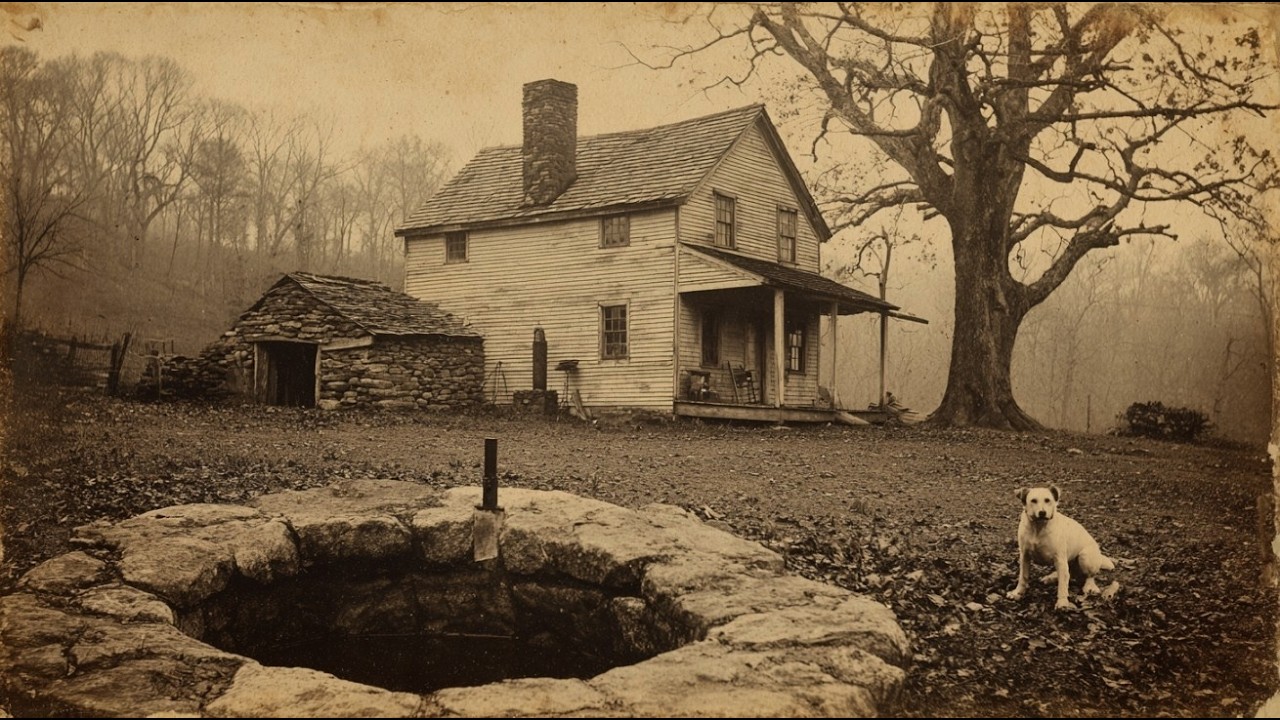
The house sat at the head of the hollow with its back against the rock. It was two stories of gray board with a porch that had once been painted some color, now reduced to memory, and a stone chimney that gave up a thin line of smoke into a sky the color of pewter. There was a barn off to the right leaning a quarter turn off true, a smokehouse, a hen lot with no hens in it. A hound dog of indeterminate age lay on the porch boards with his chin on his paws and watched Phineas come up the path without barking once.
Hounds that have given up on barking are a sound themselves of a kind. Phineas knew the sound. There was a man on the porch sitting in a ladder-back chair with a wool blanket across his knees, watching the path the same way the dog was watching it. He didn’t get up.
He didn’t wave. He waited until Phineas was at the bottom of the steps, then he said, “You’re the recorder? ”
“I am,” Phineas said. “Wilmot Vance.
”
“What’s left of him. ”
That was how they met. Wilmot Vance was sixty-seven that autumn, though he wore the years like a coat two sizes too big. His hair had gone the white of an old bone, and there was little of it left.
His face had folded in on itself the way faces do when a man has gone without a reason to chew. His hands, kept above the blanket, had been broken at some old date and reset wrong, so that the fingers all leaned a little to the same side, as if pulled by a wind nobody else could feel. His eyes were good. That was the thing Phineas noted first.
Whatever was wrong with Wilmot Vance, his eyes had not gone with the rest of him. They tracked. They held. They watched Phineas climb the steps, and they saw him.
“Come on in,” Wilmot said. “I’ve been waiting on somebody. ”
“For the deed? ”
“For somebody,” Wilmot said.
“The deed will do. ”
He led Phineas into a front room that smelled of cold ash and dried apples and something else underneath—an old wet smell that Phineas couldn’t quite place at first. He thought it was the well. He thought it was the cellar.
He thought it was the kind of smell that gets into the boards of a house that has stood too long over wet stone, and that’s a smell a country recorder knows and forgives. They talked about the tax first. The tax was the easy part. Seventy-six cents for the year of 1880, and Wilmot dug a small leather pouch out from inside his shirt and counted out the coin in copper and one worn silver three-cent piece.
Phineas wrote the receipt. He smoothed it. He set it under a stone on the table so it wouldn’t curl. “The clerk asked me to walk the lines,” Phineas said.
“You can walk them tomorrow. ”
“He also asked me to record the household. ”
Wilmot looked at him for a long moment. “There’s only me.
You can record me twice if it makes him feel any better. ”
Phineas almost smiled. He didn’t. There was something in the room that made smiling feel like the wrong sort of thing to do.
He took his small ledger from his case and uncapped his ink and asked Wilmot the questions a recorder asks. Year of birth, place of birth, name of father, name of mother. Wilmot answered them slow. His father had been Mordecai Vance, dead these forty years.
His mother had been Hephzibah Vance, born Hephzibah Rand, dead twenty-two. He had one brother, Obadiah, drowned in the spring rise of 1859. He had one sister, Berlinda, gone south in the war and never come back. He had no wife.
He had no kin in the hollow. “And before your father? ” Phineas asked, because the deed in his case ran back to a grant of 1794, and there was a great deal of paper to account for. “My grandfather was Cassius Vance,” Wilmot said.
“He built the well. ”
Phineas had been writing. His pen stopped. It was the smallest thing.
He could not have said later why he stopped. It was the way Wilmot Vance said the word well, the way it sat in the room when he was done saying it, the way the old smell underneath the apples and the cold ash seemed to thicken a quarter shade for just a moment after. He wrote it down. He wrote, “Cassius Vance who built the well.
” Then he capped his ink. “I’ll walk the lines tomorrow,” he said. “If you’ve a back room I could use, I’d be obliged. ”
Wilmot took him to a small room off the kitchen that had a rope bed and a washstand and a window that looked out on the backyard.
The backyard had a clothesline with nothing on it and a chopping block and a stone-lined well with an iron lid pulled half across its mouth. Phineas saw the well through the window before he set his case down. He saw it, and he did not, for some reason, want to look at it any longer than he had to. He turned away.
He told himself it was tiredness. A man who had ridden two days had a right to be unsettled by any well that wasn’t his own. He slept poorly. It was the first night.
He was woken sometime after one in the morning by a sound from the yard. It was not a loud sound. It was the sound of stone being moved against stone, a slow dragging sort of motion. The way the iron lid of a well would sound if a man were sliding it back by half a hand’s width, and then by another half.
Phineas lay still in the rope bed and listened. The sound went on for a count of five. It stopped. He held his breath.
He heard nothing then, nothing at all, for what felt like a long time. The whole hollow had gone quiet in a way the country does not normally go quiet at night. There were no owls. There were no leaves moving against the side of the house.
There was only the absence of sound. And underneath that absence, the very faintest impression of a kind of wet breath. He got out of bed. He went to the window.
The moon was three nights from full, and the yard was as bright as a bad room. He could see the chopping block. He could see the clothesline. He could see the well with its iron lid pulled half across its mouth, exactly the way it had been when he looked before sundown.
Nothing had moved. The dog was not on the porch. He could hear no breathing now. He could not even be sure he had heard the dragging.
He stood at the window for a long time. He told himself it had been nothing. He went back to bed. He did not sleep until the gray came.
In the morning, Wilmot was on the porch in the same chair with the same blanket, the dog at his feet, the kettle on inside. Phineas drank coffee that had been made from grounds boiled twice, ate cornbread Wilmot had baked the day before, and said nothing about the night. “You hear it? ” Wilmot asked.
Phineas looked at him over the rim of his cup. “Hear what? ”
“The lid. ”
Phineas set the cup down.
“I heard something. ”
Wilmot nodded the way a man nods when his suspicion is confirmed, but he had not been hoping to have it confirmed. He didn’t say anything more for a minute. He looked out over the yard past the chopping block to the well.
“You’ll hear it again tonight,” he said, “and the night after, if you stay. ”
“I meant to walk the lines today. ”
“Then walk them. The lines are fine.
The lines haven’t moved in a hundred years. Walk them and come back, and we’ll sit and have a talk this evening. ” He looked at Phineas with the good eyes. “You’re owed a talk.
If you’re going to hear the lid, you’re owed a talk. ”
Phineas walked the lines that day with the old grant in his hand and his rolled tape over his shoulder, and he found that Wilmot had been telling the truth. The lines hadn’t moved. The blazes on the old trees were where they ought to be.
The cornerstones were buried where the survey of 1794 said they would be. There was a stretch of ground along the eastern boundary where nothing grew, which was odd, but blanket spots like that were not uncommon in this country, and Phineas wrote it down without comment. He came back to the house an hour before dark with his face cold and his boots wet from a creek he had been obliged to cross twice. The well in the backyard was where it had been.
The lid had not moved. He noted that too, though he could not have said to whom he was reporting. That evening Wilmot fed him a stew of squirrel and the last of the year’s onions, and they sat at the table with a single lamp between them, and Wilmot told him about the well. The Vances had come into the hollow in 1793, the year before the grant was written.
Cassius Vance, the patriarch, was a man of forty when he led his people up the trace and chose the head of the hollow as the place to put down. His people numbered sixteen souls counting Cassius. They were thin and tired, thin and tired for two years. The land they had come from had gone sour on them.
Their crops had failed. Their cattle had died in a way that made the men who saw it stop saying the word disease and start saying nothing at all. They had walked west, then south, and they had ended at the head of Sallow’s Hollow because there was water there. And because Cassius Vance had been a finder of water all his life, and because something in the rock under the head of that hollow had spoken to his hands in a way no other place had spoken since they left their old country.
He had dug the well himself, dug it deep, lined it with stones carried up from the creek with the help of his two oldest, who were grown men. He laid the iron lid across it on a Sabbath in May of 1794. He stood at its mouth and he did not, by the report of his own son who was there, pray. He spoke to the well.
He spoke low, the way you speak to a horse that is uncertain of you. He said certain words, and then he took from his pocket a folded piece of paper with writing on it, weighted it with a smooth white stone, and dropped it down the well. There had been a sound—the sound, the son said later, of a small thing being received. After that, the land was good to them.
Their corn came in heavy. Their cattle grew fat. Their sows littered and the litters lived. The Vances became, in two generations, the most prosperous family in Sallow’s Hollow—and the only family in Sallow’s Hollow, because the other settlers who tried to put down in the hollow all, for one reason or another, moved on.
Some were driven out. Some were bought out. Some simply walked one day and did not come back. Their houses were left for the rain to take.
The Vances stayed. They paid the well. That was the phrase Wilmot used. Every Vance, by the time he was a grown man, was taught the way of it.
You wrote down on a piece of paper a thing you wanted gone. A debt, a bad word spoken, a weakness you wanted to be rid of. You could write down a sorrow, if a sorrow was what you had to give. You folded the paper, weighted it with a smooth white stone—of which there was a small heap kept on the kitchen mantel for the purpose—went out at first dark, slid the iron lid back by a hand’s width, and let the paper drop.
Then you slid the lid back the way it had been, went inside, and did not look back at the well until morning. By morning, what you had given to the well was gone from you. And the land was good to you in a way it was not good to other men. And no Vance ever, in any year, drank from that well.
There was another well, a shallow one by the smokehouse, for the family’s water. The deep well, the one Cassius had dug, was for nothing but the giving. “That was the arrangement,” Wilmot said. “That was how we lived.
”
He set his spoon down. His stew had gone cold. “My father told me,” he said, “the year I turned twelve, that the arrangement was a kind of debt that ran the other way. We gave, and the land gave back.
And as long as there were Vances to do the giving, the land would be good. He said it would always want a giver. He said the worst thing a Vance could do was to leave it without one. ”
He looked across the table at Phineas.
“My brother drowned in ’59. My sister went south in the war. I married a woman from Letcher County in ’66. She left in ’71.
We had no kin. I have no kin. ” He paused on the word kin for a long time. “There is nobody after me.
The well knows. ”
Phineas, who had been listening with his hands folded on the table and his face very still, said, “How does it know? ”
Wilmot’s eyes were the good eyes again, the tracking eyes. “It listens.
It always listened. We thought we were the ones doing the speaking. That was the part we got wrong. ”
He pushed himself up out of his chair with a long, slow effort, went to the cupboard in the corner of the parlor, and took down a ledger.
It was bound in calfskin that had gone the color of old butter, with a leather strap that had once had a brass clasp. The clasp was gone. He brought it back to the table and set it down between them. “The givings,” he said.
“All of them, from my great-grandfather to my own. You’re a recorder. You ought to see it. ”
Phineas opened the ledger.
The first page was dated in the year 1794. The hand was Cassius Vance’s, tight and careful, slightly slanted to the left. The first giving was a single line: “The grief of my wife at the loss of her mother. Given the third Sabbath of May.
”
Phineas read it twice. He turned the page. There were hundreds of givings, page after page in different hands as the generations turned, all recorded the same way—a single line, the thing given, the date. Some were mundane: a bad temper in the matter of my brother Obadiah.
A pig stolen from the Hendrick farm in the year ’10. A curse spoken against my father on the evening of his death. A year of bad weather given in the spring of ’43. Some were less mundane.
A debt to a man whose name I will not write. The dreams that came after the war. The thing I did at the river that no one knew. The wrong that was done to me which I would be free of.
Some, when Phineas tried to read them, made his eyes go strange, the way a man’s eyes go strange when he tries to focus on a fly hovering just beyond the reach of his nose. The last entries were in Wilmot’s hand. They were sparse. There had not been many givings in the last ten years.
A summer fever given in ’73. A grief given in ’76 with no further detail. A weakness in the knees given in ’79. And then, on the very last filled page, in a hand shakier than the other entries, a single line: “It is asking now.
I have not given. I do not have what it is asking for. ”
That entry was dated the 8th of October, 1881. Twelve days before Phineas had arrived.
He closed the ledger. “What is it asking for? ”
Wilmot didn’t answer for a long time. He had folded his ruined hands in his lap, looking at the ledger as if it were a thing he had carried a long way and was not yet permitted to set down.
“What it always asked for. A giver. A Vance to keep on giving. There is nobody after me.
The land knows it. The well knows it. It thinks I’m trying to leave without paying. ”
“Are you?
”
“I’m dying. ”
Wilmot said, “That’s not the same thing. ” He looked up at Phineas. “I can’t leave the way my brother left.
I can’t leave the way my sister left. There needs to be one more giving from this house. Or what’s been given for eighty-seven years comes back. All of it.
To the place that gave it. And to the man who lives in the place. ”
Phineas was quiet for a long time. He could hear the fire ticking in the stove.
He could hear the wind working at the corner of the porch. He could hear, just at the edge of his hearing, a sound that might have been water moving against stone, deep and slow, somewhere outside. He said, “And what do you mean to give it, Mr. Vance?
”
Wilmot didn’t answer. He stood, took the ledger off the table, carried it back to the cupboard, and set it on the same shelf he had taken it from. Then he turned around and said, “There’s a back room you ought to sleep in tonight. The same one you slept in last night.
The window faces the yard. If you hear the lid, you don’t get up. You don’t look out. You don’t strike a light.
You lie there. Whatever comes through that window, you don’t answer. Do you hear me, Mr. Crow?
”
Phineas heard him. He went to bed at eight that evening with his coat over his nightshirt for the cold, lay in the rope bed with his pocket watch in his hand, and listened to the house. The second night, the dog did not come up to the porch. That was the first sign.
Wilmot mentioned it at supper in passing: the hound had been gone since midmorning, and the hound did not, as a rule, go more than two ridges. Phineas did not think much of it at the time. Hounds wander. But when he lay in the rope bed and listened to the house, he found himself listening also for the dog, and the dog was not there.
The silence the dog had used to fill was now a silence the size of a hound. Phineas found he could feel the absence of the hound the way you can feel a missing tooth with the tip of your tongue. He fell asleep around eleven. He woke at four minutes past one.
It was the lid again. The sound of stone being moved against stone, slower this time, more deliberate, as if whoever or whatever was moving the lid had a different sort of purpose than the night before. Phineas lay in the rope bed with his pocket watch in his hand and his eyes open, and he remembered what Wilmot had said. He did not get up.
He did not strike a light. He did not turn his face to the window. He lay on his side and stared at the wall and counted his breath the way a man counts a wagon team across a low bridge. The sound stopped.
There was a long silence. Then there was a wet sound from the yard—the sound of something that had been below the water for a long time coming up into the air. He shut his eyes. There was a sound of footsteps on the boards of the porch.
They were slow. They were heavy in a way that was not quite the weight of a man. They went the length of the porch and stopped at the door. He heard the door.
He heard the latch. The latch did not move. Something stood at the door and breathed against it for a count of nine. He counted because he had to put his mind somewhere, and counting was a place to put it.
The breath had a sound in it—a wet slow rattle that no living thing he had ever heard had made. The breathing stopped. The footsteps went back along the porch. The footsteps went past his window.
He kept his eyes shut. He heard the sound of the iron lid being set back into place, the soft scrape and the dull clunk. He heard a settling. He heard the wind come back all at once, as if the wind had been waiting to come back.
Then he heard nothing at all that did not belong. He did not sleep. He lay in the rope bed until the gray came. When the gray came, he got up, put his boots on, and went out into the yard.
There was a track from the well to the porch. The track was wet. The boards of the porch were wet. The track went up the porch and stopped at the door.
It did not come back. There was no track going from the porch to the well. There was only the going. The coming back, if there had been a coming back, had not left a print on the ground.
Wilmot was not in his chair on the porch. Phineas went into the house. The kitchen was empty. The kettle was cold.
The fire in the stove had not been laid. The cupboard in the parlor was open, and the ledger was gone. He found Wilmot in the back room of the upper floor, sitting on the edge of a stripped bed fully dressed in his good Sunday clothes with the ledger on his knees. His hair had been brushed.
His ruined hands were folded on the cover of the ledger as if it were a small dog he was holding still. He looked up when Phineas came into the room. “There’s a wagon comes through the foot of the hollow at noon,” Wilmot said. “Old Maynard, you know him.
”
“I know him. ”
“You’ll go out with him. You’ll take the deed I made out. You’ll take the ledger if you’ll have it.
If you won’t have it, leave it on the table. I’d rather it went with a recorder than burned. ”
“Wilmot—”
“You’ll go before noon. You’ll go and you won’t come back to the hollow.
You’ll not come back to this end of the county. You’ll not write a letter. You’ll not send a man up. The clerk at Pikeville will be told that Wilmot Vance, sixty-seven, died on the 22nd of October in the year 1881 of natural causes, of which there were several to choose from.
You’ll record it. You’ll bury the deed at the bottom of the cabinet. You’ll forget the name of this hollow. ”
He smiled then, a small smile and a tired one.
“You’ll do me that favor, because last night I made up my mind. And tonight I’ll make up the rest. ”
Phineas sat down on a small stool by the door because his legs had gone uncertain. “What did you decide?
”
“What it asked for. What it always asks for. ”
“You can’t give it yourself. ”
“That’s the trouble with you townsmen,” Wilmot said.
“You think a thing has to be given by somebody else. The Vances always gave themselves, Mr. Crow. The grief was theirs.
The temper was theirs. The bad weather they took into themselves first before they wrote it down. Every giving on every page of that book was a piece of a Vance. We gave ourselves to it eighty-seven years a sip at a time.
There’s just none of us left to sip now. So I’ll give it the whole. ”
He set his ruined hand on the ledger. “I’ll write the last entry tonight.
I’ll go to the well. I’ll set the lid, and it will be even. The land won’t come asking again. There won’t be any Vances for it to ask of.
”
Phineas opened his mouth and closed it. There were a hundred things in him that wanted out of his throat. Arguments. Offers.
He could take Wilmot out of the hollow himself. Put him in the wagon and go down to Pikeville together, and Wilmot could die in a clean room with a doctor at the foot of the bed. And what was in the well could go on asking—and asking would not be the same as taking. There was a thing in Wilmot’s eyes that stopped his throat.
It was not exactly resolution. It was older than resolution. It was the look of a man who had been thinking about a thing for forty years and had now come to the end of his thinking. Phineas closed his mouth.
He said, “What do you want me to do? ”
“Get out by noon. ”
“And after? ”
“Don’t tell the story for a year.
After a year, tell it how you like. Tell it true. The hollow has had a long time. Telling won’t bring it up again.
But I’d be obliged if my name was kept out of the worst of it. ”
“It won’t be in the worst of it. ”
“I appreciate that, Mr. Crow.
”
He stood up. He was steady on his feet in a way he had not been on the porch the day before. A man who has decided is, for a little while, more of a man than a man who has not. “Now go and pack your case.
I’ll lay you a breakfast. You’ll need it. ”
Phineas packed his case. He drank coffee Wilmot made strong.
He ate a piece of bacon and a piece of cornbread. He sat across the table from Wilmot Vance in the cold kitchen with the wet track of last night’s something still drying on the porch boards outside, and they did not speak. The ledger sat between them. When the meal was done, Wilmot pushed it across to him.
“Take it. Or leave it. I’m past minding either way. ”
Phineas took it.
He shouldered his case. He put on his coat. He stood on the porch in the cold morning, and Wilmot stood with him. They did not shake hands, because Wilmot’s hands were not made for shaking anymore, and there was nothing in either of them that needed the gesture.
“Mr. Vance. ”
“Mr. Crow.
”
“If I were a different sort of man, I’d stay. ”
“If I were a different sort of man, I’d let you. ” Wilmot said. “Get on now.
Maynard won’t wait past twelve. ”
Phineas got on. He walked down the trace with the ledger under his arm and his case in his hand. The leaves that should still have been on the trees rustled where they were not, on the ground.
The air had the smell in it that he had thought was the well, but now believed was the whole hollow. He did not look back. He did not look back when he heard behind him the slow scrape of an iron lid being slid open by a hand’s width. He did not look back when he heard behind him a voice he knew speaking low and steady, the way a man speaks to a horse that is uncertain of him.
He did not look back when, sometime later, he heard a sound that might have been an iron lid sliding back into place, and the wind coming up all at once, the way the wind comes up after a long-held breath. He walked. He came to the foot of the hollow at a quarter past eleven, and Maynard Trout was there with the wagon and the team. Maynard took one look at his face and asked no questions.
They rode out of Sallow’s Hollow with the leaves down on the trace and the gray pewter sky beginning to lower toward the ridges. It snowed three days later, an early snow. By the time it melted in March of 1882, a party of men from Pikeville rode up to the Vance homestead under the authority of the county and found the house empty, the door closed, the dog gone, and the iron lid set square across the deep well in the backyard. In the parlor, on the table, lay a single sheet of paper in a hand shakier than the entries before it.
The paper said only:
“The last giving, the 23rd of October, 1881. Wilmot Vance. The arrangement is finished. The land is owed nothing further.
Do not open the well. ”
They did not open the well. They closed the house and nailed a board across the door. They walked the lines.
The lines hadn’t moved. They came back down out of Sallow’s Hollow with the paper and brought it to Pikeville. The clerk took one look at it and walked it across the street to the office of the county recorder, where Phineas Crow was at his desk with his ink uncapped and his hands very still. He read the paper.
He didn’t say anything. He filed it in the back of the deed for the Vance homestead, in a place where it would not be found by a casual hand. In the margin of the deed, in his careful slanted print, he wrote: “Last Vance, October 23rd, 1881, deceased of unknown cause, body not recovered, well sealed by county order. ” Then he capped his ink and sat at his desk for a long time.
He did not go home until well after dark. Phineas Crow lived another thirty-one years after the autumn of 1881. He married in the spring of ’85—a woman named Adelia Pickett, a teacher out of Floyd County—and they had no children, because Phineas had told her before they married that the matter of children was not one he could approach, and she, being a woman of sense, did not ask him to. They had a small house at the edge of Pikeville with a garden out back, a chicken yard, and a well behind the kitchen that Phineas himself had dug: twelve feet deep, with a fieldstone lining and a wooden cover.
The water in it was sweet. Adelia drew from it every morning of their married life. Phineas did not. He went to the neighbor’s pump for his water every morning with two buckets, carried them back across the lane, and set them by the kitchen door.
Adelia never asked. After a year of marriage she stopped noticing. After three years she stopped seeing. After five years it was simply the way Phineas got water, the way some men eat the heel of the loaf and some men do not.
He told her the story once. It was the autumn of 1909. He was sixty-seven years old—the age Wilmot Vance had been the night of the lid. He had been ill in the chest all week, and the leaves were down.
He told her the story in one long sitting in the parlor with the lamp turned low. When he was done, she sat with her hands in her lap and did not ask questions, because she was a woman of sense and had been married to Phineas Crow long enough to know that a story like that did not require questions of her. She said only, “And the well in the hollow? ”
“Still sealed, as far as I know.
”
“And the dog? ”
He looked at her for a moment. “I don’t know what happened to the dog. ”
She nodded.
Then, “Phineas, why don’t you draw from our well? ”
He didn’t answer at first. Then he said, “Because some nights in the autumn, when I am at the kitchen window and the lamp is out, I hear the cover move just a little. Just by the width of a hand.
And I think to myself that if I ever drew water from it, I would be the one to have given it something. And then the arrangement—whatever the arrangement is—would be made. And I would rather not make it. ”
She thought about that.
“Has it moved tonight? ”
He listened. “No. Not tonight.
”
He died three years later in 1912, of pneumonia, in his own bed with Adelia at the foot of the bed and the lamp turned low and the wind working at the corner of the house. The night before he died, Adelia later told, he asked her to put a board across the kitchen well. She did. She nailed it.
She drew her water from the neighbor’s pump for the rest of her life. When she sold the house in 1917, the board was still nailed across the kitchen well, and she had the buyer promise in writing that he would not pry it up. The Vance homestead in Sallow’s Hollow stood empty for forty years. It burned to the ground in a lightning strike in the summer of 1923.
The barn went with it, the smokehouse went with it. The well in the backyard, which was made of stone, did not go with it. And the iron lid did not go with it. When the men who came to look at the ruin walked the yard, they found the lid set square across the mouth of the well, the way the county men had left it in March of ’82—and none of them, by their own report later, felt any inclination to lift it.
The board across Phineas Crow’s kitchen well, in the small house at the edge of Pikeville, was, the last anyone checked, still in place. In a hollow in the eastern part of Kentucky, where the mountains lie down close together, on a piece of ground that has not been deeded to anyone since the spring of 1882, there is a stone-lined well with an iron lid pulled square across its mouth. The leaves around it come down a month early. The wind, when it works through the place where the house used to stand, has a wet, slow rattle in it that no living thing should make.
If you ever find yourself in Sallow’s Hollow in the autumn, walk past it. Don’t lift the lid. Don’t drop anything in. Don’t, above all, say the name of any family aloud at the mouth of any well in the eastern part of any county you do not know by heart.
Names carry. The Vances learned that. Phineas Crow learned that.






