In the winter of 1539, Henry VIII of England was a wreck of a man. At forty-eight, he was grossly overweight, in constant pain, and suffering from an ulcerated leg that had to be drained and rebandaged several times a day. The stench alone was enough to clear a room. His temper had never been worse, and his council was in a state of barely concealed panic.
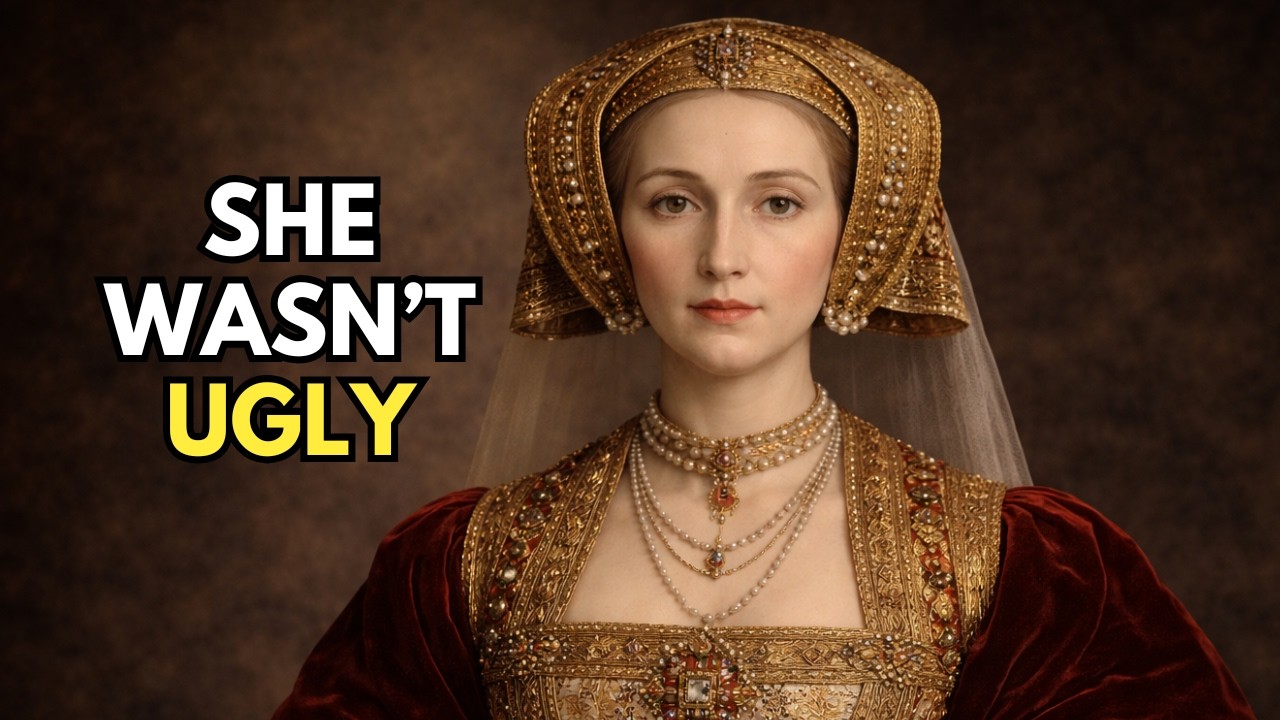
France and the Holy Roman Empire had just signed a truce, meaning the two great Catholic powers of Europe no longer had each other to fight. A joint invasion of England was no longer a distant nightmare but an open topic of discussion in foreign courts. Thomas Cromwell, the king’s chief minister, landed on a single solution: a marriage alliance with the Duke of Cleves, whose territory sat squarely in the buffer zone between the great powers. The Duke’s sister, Anne, was twenty-four, from a respected Protestant-leaning family, and everyone who had met her described her as dignified, healthy, and composed.
Whether Henry would fancy her was not supposed to be the point. But in Henry’s court, the king’s personal feelings did not follow the rules. They made them. To seal the deal, Hans Holbein the Younger, the finest portrait painter in northern Europe, was sent to Cleves to capture Anne’s likeness.
What he brought back was a picture of a calm, clear-skinned young woman with a steady gaze. Henry approved the match, and the treaty went ahead. Later, the court would insist that Holbein had lied, that the portrait was so flattering it amounted to fraud, that the king had been tricked into wedding a woman who looked nothing like the painting. The accusation sounds devastating until you look into it.
Holbein’s entire career depended on accuracy. Royal marriages and diplomatic alliances hinged on whether kings could trust what he painted. If he had been caught making a foreign bride prettier than she was, he would not just lose a commission; he could lose his life. The evidence backs him up.
The French ambassador, with every reason to disparage a rival nation’s bride, described Anne as tall, dignified, and perfectly presentable. Other envoys from other courts agreed. Nobody called her a beauty, but nobody described the repulsive figure Henry later claimed she was either. The portrait was not the lie.
The excuse was. Anne landed at Deal in Kent on a freezing December day and began making her way toward London, stopping at each town as protocol demanded. Henry, deciding to go rogue, rode out to Rochester with a few courtiers to meet her in disguise. The plan was borrowed from the chivalric romances he had loved as a young man.
The king would appear as a nobody, and his true bride would recognize him instantly through some mystical force of connection. It was medieval theater, and Henry had cast himself as the leading man. He expected Anne to play along. She did not.
Anne had grown up in the court of Cleves, where such theatrical nonsense simply did not happen. When a group of strangers burst into her chambers, she was polite, professional, and confused. One of them, an overweight, sweating man in common clothes, tried to grab and kiss her. She pulled back, not because she was horrified, but because she had no idea who he was.
She did not swoon. She did not perform the fairy tale. She simply stood there, bewildered, while Henry’s romantic fantasy collapsed in real time. Henry did not lose control of the marriage at Rochester; he lost control of the moment.
Anne had not rejected him. She had failed to worship him on sight. In a court where the king’s self-image had the force of law, that single failure became her permanent identity within days. His insult became official policy.
His embarrassment became her reputation. Courtiers repeated his disgust as though they had witnessed it themselves, because in Henry’s England you did not offer a second opinion on the king’s feelings. You agreed, or you vanished. The wedding went ahead on January 6, 1540, because the diplomats had moved too far to stop the train.
The Cleves alliance was too important to abandon over a bruised ego. But Henry made it clear from the first night that he did not consider it a real marriage. He told his doctors he could not consummate it. He told his ministers that Anne’s body repulsed him.
What the official version always rushes past is the state of the king himself. Henry had gained enormous weight, his leg required daily dressing, and there is strong evidence he was already dealing with impotence. The question that went unasked then and for centuries afterward is whether the failure to consummate truly was Anne’s fault or whether it was his. If it was Anne’s fault, the annulment was justified and the king’s honor stayed intact.
If it was Henry’s, then the most powerful man in England had publicly destroyed a young woman’s reputation to cover his own physical collapse. One version made it into the history books. The other got buried, and that burial cost a man his life. Thomas Cromwell, the architect of the marriage and the most powerful minister in England for nearly a decade, needed someone to blame.
He had engineered the break with Rome, dissolved the monasteries, and reshaped the English state more radically than any advisor in living memory. His strategic logic for the Cleves alliance had been sound. None of that mattered. He had arranged the marriage, he had talked up the bride, and he had told the king it would work.
That was enough. Within months, Cromwell was arrested on charges of treason and heresy, cobbled together from old grudges that had nothing to do with Anne and everything to do with the court’s need to redirect the king’s rage before it consumed everything. On July 28, 1540, he was led to Tower Hill. The executioner was inexperienced, possibly drunk.
The first swing hit Cromwell’s shoulder, and it took several more blows to finish the job. Witnesses called it one of the most gruesome public spectacles of the reign. Cromwell lost his head. Anne kept hers.
When the annulment was put before her, she stunned the court by agreeing at once. No tears, no desperate letters, no resistance. Everyone assumed it was weakness. It was the most calculated move anyone pulled off in Henry’s court that year.
Anne had watched what happened to women who fought him. Catherine of Aragon had refused the annulment, dragged Henry through six grinding years of conflict, and died in 1536, isolated and broken, stripped of her title and her daughter. Anne Boleyn had schemed and maneuvered, been arrested on fabricated charges of adultery and treason, and was beheaded inside the Tower. Anne of Cleves had studied both women as case studies, and reached the obvious conclusion.
Henry did not want to be challenged or partnered. He wanted agreement, control, and a story he could tell. Every other wife had fought to keep him. Anne let him go.
She removed herself as a problem overnight, giving Henry the opposite of everything he had ever experienced from a wife. The relief was so overwhelming it warped his judgment entirely in her favor. He got generous. Anne was handed Hever Castle, the very estate where Anne Boleyn had grown up, along with Richmond Palace and the Manor of Bletchingley.
Her income made her richer than most aristocrats who had spent their careers scheming at court. She was given a title that served as both shield and message: the king’s beloved sister. Not a disgraced ex-wife shipped back across the channel, but a sister close enough to the crown to be protected by its full weight, and far enough from the marriage bed to never be a target again. Henry kept the narrative.
Anne kept her life. She did not disappear. She lived openly, managed her own estates, hosted visitors, dined with Henry after the divorce, and exchanged New Year’s gifts with the royal family. She attended state occasions.
This was not a discarded woman fading away. This was someone managing a permanent, comfortable, and very deliberate exit. Meanwhile, the court kept eating itself. Catherine Howard, the girl who replaced Anne, was everything the court said Anne was not: young, attractive, willing to perform the adoration Henry craved.
She gave him the fairy tale Anne had refused to enact at Rochester. It kept her alive for exactly twenty months. By autumn 1541, rumors about her past reached the Privy Council. Evidence of relationships before and possibly during her marriage was uncovered.
She was arrested, stripped of her title, and on February 13, 1542, beheaded at the Tower. She was about nineteen. Her body went into an unmarked grave in the Tower Chapel, a few feet from where Anne Boleyn already lay. Catherine Parr, the sixth wife, survived only by outliving Henry, and barely.
She was investigated for heresy and came within hours of arrest, saving herself by throwing herself at Henry’s feet and swearing she had never meant to contradict him. Even the wife who survived had to beg. Anne of Cleves never had to. The list of those who did not make it tells the story better than any chronicle.
Anne Boleyn, executed 1536. Thomas Cromwell, executed 1540. Catherine Howard, executed 1542. Henry VIII, dead in January 1547, his body so swollen it had to be sealed in lead.
According to one account, the coffin burst open during the night. The man who had spent his life controlling the story could not control what happened to his own corpse. Anne outlived them all. She died in July 1557, of natural causes, in her own bed, on her own estate, seventeen years after the annulment that was supposed to finish her.
The myth of the ugly queen survived five centuries not because it was true, but because it was useful. For Henry, the truth was unbearable. It meant admitting his fourth marriage collapsed not because of a flattering portrait or a hideous bride, but because an aging, broken king had expected a foreign princess to fall for him at first sight and could not handle it when she did not. For the court, the lie was safer than holding a mirror up to the king.
For the historians who came after, the ugly wife story boiled a messy political failure into one clean, dramatic moment. It was the easiest story to tell. Every generation found its own use for the lie. Tudor loyalists needed it to make Henry look decisive.
Protestant historians needed it because Cleves was an uncomfortable reminder that the break with Rome was driven by vanity as much as theology. Victorian scholars needed it because a rejected, ugly wife confirmed their assumptions about what women were for. And modern popular histories repeat it because a disgusted king recoiling from a plain bride makes better television. Anne of Cleves was not the failure in this story.
She was the only one who saw the game was rigged and played it anyway. She handed Henry the narrative, the annulment, and the clean version of his own story. In return, she walked away with her head attached and wealth enough to buy half the country. He got his pride back.
She got out alive. And she was the only one who did.






