In the summer of 1892, a pair of walkers near the village of East Haddon in Northamptonshire were stopped by a smell so strong it could not be ignored. It came from a ditch overgrown with grass and nettles. When the vegetation was pushed aside, they found a bundle wrapped in a sack. Inside were the remains of a woman, her head and arms missing.
Maggots had consumed much of the upper body, and the fabric of her clothing was stained with lime. Written on the sack were the words “E. M. Ray, Northampton.
”
The discovery launched an investigation that would pull back the curtain on a carefully hidden double life and end with a man on the gallows. Annie Pritchard was born in 1861 in the market town of Church Stretton, about forty miles from Birmingham. Her early years were marked by instability as her family moved frequently between rented homes. As she grew older, she lost both parents and then a brother to consumption.
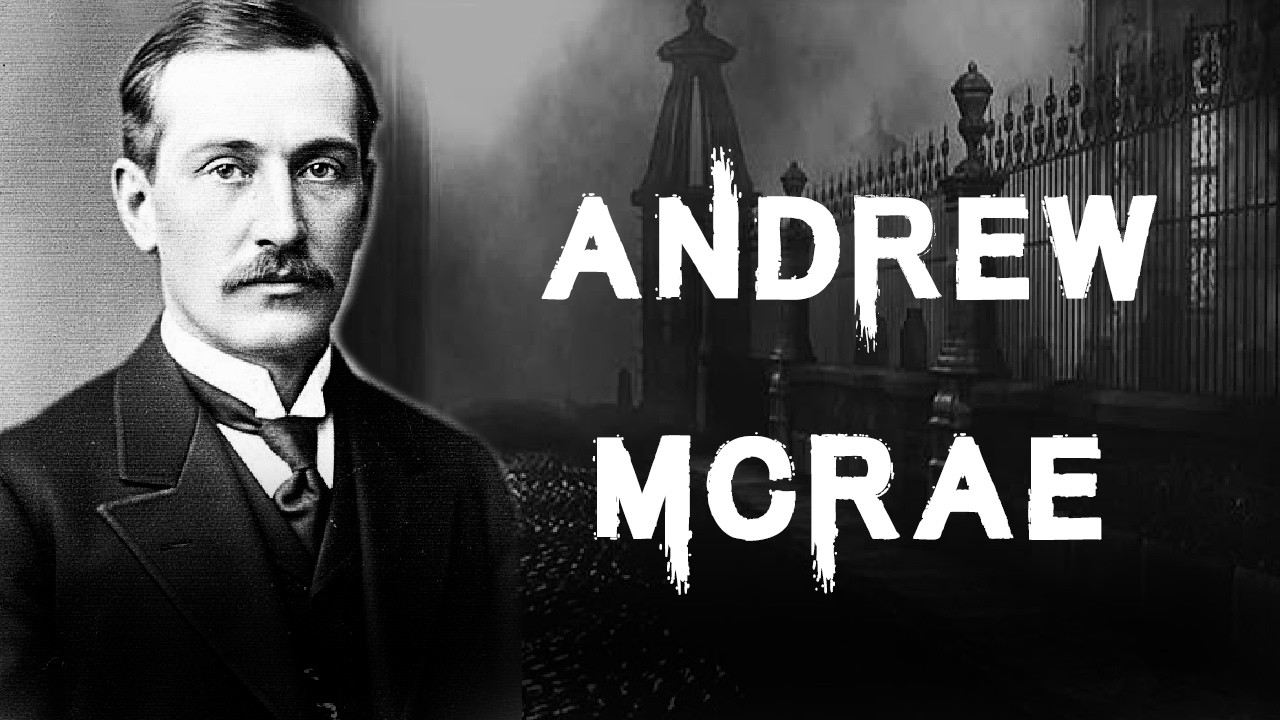
As the eldest child, she took on the main responsibilities for her surviving siblings. The family eventually settled on Highgate Road in the Balsall Heath area of Birmingham, where they lived next door to the McRae family. Annie and her siblings became close to their neighbors, and the connection lasted even after they moved away. Andrew George McRae, born in 1855, had married a young woman named Harriet Williams in 1883.
The Pritchards and the McRaes remained in frequent contact, and Annie often visited the McRae household. She and Harriet became close friends, sometimes spending hours singing together in the parlor. But the relationship had another layer. Even after the McRaes moved to Barrack Street, Annie continued to see Andrew privately whenever Harriet was away.
Annie’s brother John confronted Andrew, accusing him of improper conduct with his sister. Andrew denied it, insisting nothing was happening between them. In February 1892, Andrew McRae moved to the town of Northampton to work in his brother Edward’s grocery business. He left his wife and two young children behind in Birmingham.
In their place, he asked Annie Pritchard to come with him. She arrived in Northampton on the 22nd of March. To hide the true reason for her departure, she told her family she was traveling to Liverpool to marry her former fiancé, a man named Guy Anderson whom none of them had ever met. She arranged to meet Harriet McRae at the station to say goodbye, but never arrived.
Once in Northampton, she had a letter posted from Liverpool so the postmark would support her story, writing that her husband’s job was taking them to America. What her family did not know was that Annie was six months pregnant. In Northampton, Andrew McRae and Annie Pritchard took lodgings at 23 St. John’s Street, passing themselves off as Mr.
and Mrs. Anderson. To the people in the house and the neighbors, they appeared to be an ordinary couple. Annie spoke often of her happiness and of her husband’s kindness.
On the 23rd of June, a local midwife, Mrs. Sarah Pulley, was called in to attend Mrs. Anderson, who had gone into labor. She helped deliver a healthy baby boy.
A week later she returned to check on mother and child and found nothing concerning. On the 20th of July, the couple left their lodgings with the baby, saying they were moving to an address better suited to Annie’s health. Their belongings did not accompany them. At McRae’s direction, everything was sent to the grocery warehouse.
As they set out, a young woman named Elizabeth Elliott helped carry the child as far as Bridge Street, where McRae told her she could go no further. Two days later, on the morning of the 22nd of July, Andrew McRae walked into the Lord Palmerston Inn in Market Square. He looked troubled, his clothes creased, as though he had not slept. When the landlord remarked on his appearance, McRae said his assistant had not arrived and he had spent hours washing bacon.
The landlord replied, half in jest, that McRae looked as though he had committed murder. McRae said nothing, turned abruptly, and left. Later that day he arrived alone at new lodgings on Derby Road, carrying several boxes that had belonged to Annie. The following day, he purchased a quantity of lime.
On the 26th of July, he hired a horse and cart. When anyone asked about Annie or the baby, he said she had returned to Birmingham to rest and improve her health. For weeks, the police struggled to identify the woman found in the ditch. The sack bearing the name E.
M. Ray led them to Edward McRae’s grocery warehouse. Edward acknowledged the sack was one of his but said numerous customers used them for deliveries and that he had recently sold some to a homeless man. The police saw no reason to suspect him.
The breakthrough came from a second-hand clothes dealer named Mrs. Bland. She had read in the newspaper that the name Ray had appeared on the sack. She remembered that a man named McRae had visited her shop weeks earlier, purchased a coat, and mentioned having a parcel of clothes belonging to his sister in Birmingham that he needed to dispose of.
A few days later, a boy brought the clothes in a sack marked E. M. Ray. When McRae returned with more clothes, she asked how he had come by them.
He replied, “They belong to my sister who is in an asylum in Birmingham. A man led her astray and you can guess the rest. ” Mrs. Bland told her husband, and on the 2nd of September, he contacted the police.
Officers spoke to Andrew McRae the following day. He denied any knowledge of the dead woman, explaining he worked for his brother while his wife and children stayed in Birmingham. A thorough search of his workplace and his Birmingham home turned up nothing that linked him to the crime. The Northampton police concluded the matter was closed.
Detective Squires of the Birmingham police was not convinced. He quietly continued his own investigation, finding only that McRae appeared a quiet, respectable man, diligent at work and devoted to his family. Eventually, Squires interviewed Mrs. McRae.
She mentioned that she and her husband had been friendly with a lady named Annie Pritchard, who had often visited their home but had married and gone to live in America. She had never received a letter from her. Squires visited the Pritchard family on Highgate Road. They confirmed the story, but the detective found it odd that none of Annie’s siblings had ever met Mr.
Anderson, and that she had traveled to Liverpool and then America at exactly the same time McRae had moved to Northampton. They had received no letters from her. Squires reported his findings, and officers presented the clothing purchased from McRae to Annie’s sister Lizzie, who immediately recognized them as her sister’s. A second search of the grocery warehouse found fragments of bone, knives, a bacon saw, and traces of brown human hair in a copper boiler matching the color of Annie’s.
Andrew McRae was arrested and charged with murder. Rumors continued. Some claimed Annie Pritchard might still be alive. Another woman named Kate, who had left her home in London in July, had gone missing, and her mother suggested the remains might be hers.
A sack marked E. M. Ray had even been found on a train and collected by a soldier who signed for it in that name. In early October, however, Kate was found alive and well, ending the speculation.
The trial began in Northampton on Thursday, the 17th of November, 1892, but was adjourned when a juror failed to return. It resumed on the 20th of December. A large crowd gathered outside County Hall. Public feeling ran high, and many were angered that McRae would only be tried for the murder of Annie Pritchard, with no reference to the missing baby.
When asked how he pleaded, McRae replied, “Not guilty. ”
The prosecution argued that McRae had deliberately killed Annie Pritchard and their infant son, burning the child’s body to destroy the evidence. They claimed Annie’s body proved too difficult to burn fully, so McRae removed the head and arms before transporting the remains to the wasteland. He then sold off her clothes and belongings.
The defense suggested a vagrant who had recently purchased sacks from Edward McRae could be responsible, adding that the body might not even be Annie’s. They claimed Annie, pregnant and deserted by Guy Anderson, had gone into hiding in Northampton with McRae’s help, and that Anderson had eventually married her and taken her and the baby to America. The argument carried little weight. No woman identifying herself as Annie Pritchard had come forward, and her family had received no letters from her.
Witnesses testified that the skirts found on the body matched those owned by Annie, and that she was the woman who had posed as Mrs. Anderson. Mrs. Sarah Pulley, the midwife, confirmed she had attended Annie at the birth of her baby.
Another witness recalled that when McRae called at her house on the 2nd of July, he was surprised she did not recognize him and said, “I’m Mr. Mack,” before correcting himself to “Mr. Anderson. ” Medical evidence confirmed the body had been dismembered, and Dr.
Robert Mulligan testified that bones found nearby were human and bore marks indicating they had been sawn. The trial concluded on the 26th of December. Mr. Justice Kennedy spent over five hours summing up the case, stressing that the verdict rested on circumstantial evidence and that the jury must base their decision on logical conclusions drawn from the proven facts.
He pointed to difficulties in the case: the unusually rapid decomposition of the body, the absence of blood in the warehouse despite the prosecution’s claim that the dismemberment occurred there, and the timing, noting that if McRae had intended murder from the start, it was strange he did not act before so many townspeople had become acquainted with Annie. Still, he reminded the jury that a not guilty verdict meant only that the evidence was insufficient to convict, not that they had no suspicion. The jury retired at half past seven. After an hour and a half, they returned with a verdict of guilty.
Andrew McRae was sentenced to death. He continued to maintain his innocence, writing letters to his wife and friends declaring he would die an innocent man. On the morning of Tuesday, the 10th of January, 1893, he was hanged at Northampton Prison.






