In the summer of 1942, a Japanese naval salvage diver surfaced from the wreck of an American warship somewhere in the South Pacific with something his commanding officers had not told him to expect. He made his report. Within twenty-four hours, the details of what he had seen were being deliberately suppressed by the Imperial Japanese Navy’s intelligence division, passed up the chain of command to men who understood exactly what the information meant and chose not to share it with the sailors, pilots, and commanders who were still fighting the war based on assumptions those details had just made obsolete. This was not a single incident.
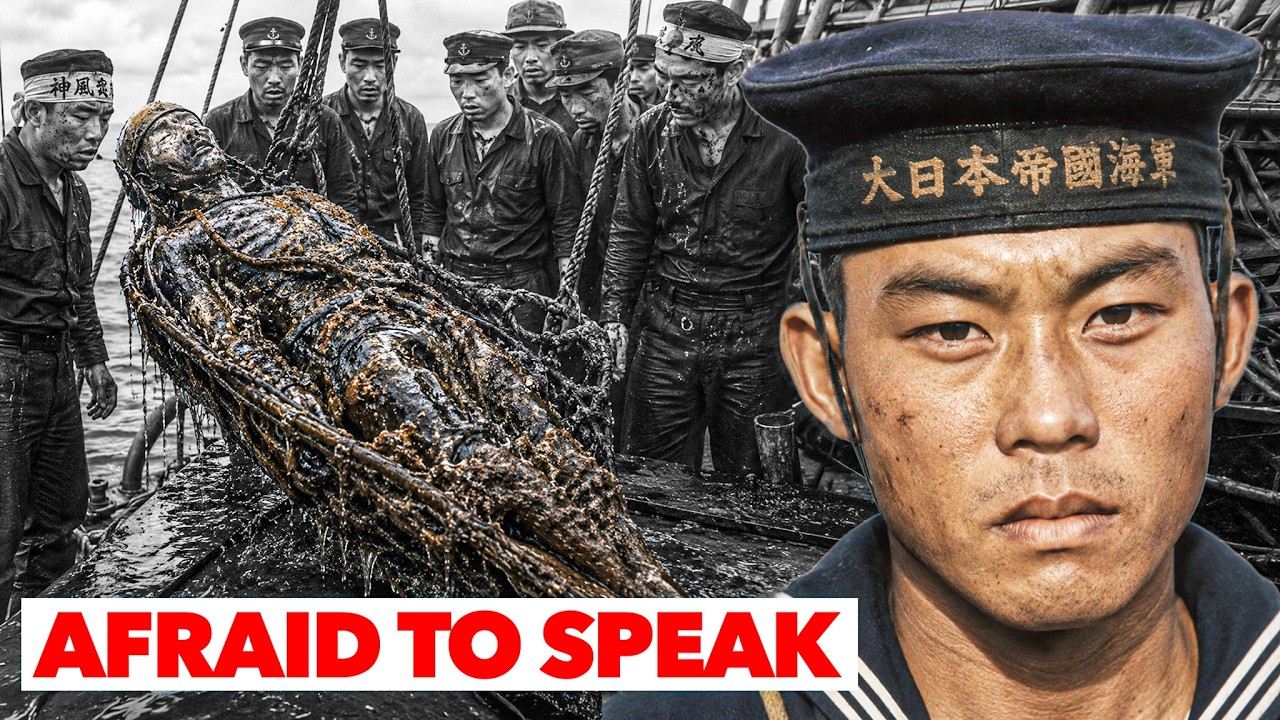
It was a pattern that repeated itself across the Pacific for three years as Japanese salvage teams and intelligence officers descended into sunken American ships, boarded captured American vessels, and inspected American equipment recovered from Pacific battlefields, and found things that frightened them. The reason the reports were suppressed is the same reason they matter today. What Japanese sailors found in sunken American ships was evidence that the United States was winning a war that Japanese high command was still telling its men they were winning. The Japanese officers who directed salvage and intelligence operations against American ships and equipment in the Pacific war were working from a specific set of assumptions about what they would find, and those assumptions were shaped by everything Japanese military culture had taught them to believe about the United States.
The prevailing view inside the Imperial Japanese military establishment in 1941 and 1942 was that the United States was a nation of manufacturers and consumers, not warriors. A country that made automobiles and refrigerators and Hollywood movies. A country whose military had not fought a major war in living memory. A country whose soldiers were recruited from a civilian population that had no tradition of military service, no culture of sacrifice, and no particular reason to fight and die for Pacific islands that most Americans could not have found on a map before December of 1941.
The Japanese military’s institutional self-image was built on the concept of spiritual superiority. Where the American soldier had material abundance, the Japanese soldier had Bushido. Where the American naval officer had better equipment, the Japanese naval officer had willpower, discipline, and a readiness to die that no materialist culture could match or understand. This belief was not cynical propaganda.
It was genuinely held, deeply embedded in Japanese military training, and reinforced at every level by the record of Japanese arms since the Meiji Restoration. Japan had defeated China. Japan had defeated Russia. Japan had taken Korea, Manchuria, and large portions of coastal China against opponents who should, on paper, have been able to resist.
The spiritual superiority doctrine had been validated by decades of results. What Japanese intelligence officers expected to find when they descended into wrecked American ships was confirmation of the story they had been telling themselves: evidence of a military establishment that relied on volume and machinery because it lacked the human quality that Japanese arms possessed. What they found instead began to rewrite the story, and the rewriting was dangerous enough that the men at the top of the Japanese command structure decided it needed to be controlled. The first major opportunity for Japanese naval intelligence to examine American warships in detail came in the aftermath of the battles of the Coral Sea and Midway in May and June of 1942, and from the campaign around Guadalcanal that followed in the second half of that year.
The waters around the Solomon Islands became so littered with the wrecks of both navies that sailors called the stretch of water between Guadalcanal and Savo Island Ironbottom Sound, a name that has endured to the present day. The Japanese naval vessels lost in those waters were accessible to American divers when the war ended, and American naval intelligence conducted extensive surveys of the wrecks. But in the war years, the wrecks that mattered to Japanese intelligence were the American ones, and the waters around Guadalcanal and the surrounding islands contained more American wrecks than Japanese intelligence had ever had access to in one place. What the salvage teams found when they went down into these ships was a picture of American naval capability that was systematically more sophisticated than Japanese briefings had portrayed.
The quality of American fire control equipment recovered from wrecked destroyers and cruisers indicated a level of precision in naval gunnery that Japanese surface commanders had not been accounting for in their tactical planning. The communications equipment was more advanced than anything Japanese naval engineers had assessed the Americans as being capable of producing in wartime. The damage control equipment and procedures that could be read from the physical evidence inside the wrecks told a story of an American naval establishment that had been thinking very carefully about how to keep ships alive and in action after they took hits, a problem Japanese naval doctrine had addressed primarily by trying to ensure that Japanese ships did not take hits in the first place. These were not dramatic revelations in the sense of a single device or a single document that changed everything.
They were an accumulation of physical evidence that, read correctly, described a naval adversary that was better equipped, better trained, and more systematically prepared for sustained combat than the Japanese officers analyzing the evidence had been told to expect. The single most consequential discovery that Japanese salvage and intelligence teams made inside wrecked American ships was not a weapon or a cipher or a document. It was radar. The United States Navy had been developing and deploying shipboard radar since before Pearl Harbor, and by late 1942, American warships carried radar systems that could detect enemy ships and aircraft at ranges and in conditions that Japanese commanders had not fully appreciated until their men started going into the wrecks and finding the equipment.
The Japanese Navy had radar, too, and the technological comparison between the two nations’ systems at the start of the Pacific War is more nuanced than a simple advantage and disadvantage story. But what Japanese intelligence found in the wrecks was not just the existence of American radar. It was the integration. American fire control systems were connected to their radar in ways that allowed American gunners to engage targets at night and in poor visibility with an accuracy that should not have been possible based on what Japanese commanders knew about American capabilities.
The night surface actions in the waters around Guadalcanal in late 1942 and 1943 were devastating to Japanese naval forces in ways that began to make sense to Japanese analysts when the radar integration picture became clearer. Japanese destroyers and cruisers were being hit in conditions where they could not see the American ships that were hitting them. The men in the wrecks found the explanation. American ships were shooting at radar solutions in darkness, engaging targets the Japanese commanders did not realize their opponents could see.
The implications for Japanese naval tactics were severe and immediate, and the implications for Japanese confidence in their ability to conduct the night surface operations on which their Guadalcanal supply strategy depended were worse. The reports that came back from the salvage teams described a capability gap in surface warfare that Japanese naval aviation had been masking, and that the transition to a more surface-centric campaign around Guadalcanal was now exposing with clarity. Understanding why Japanese naval intelligence suppressed or minimized the findings from American wrecks requires understanding the institutional structure of the Imperial Japanese Navy in 1942 and 1943. The Japanese naval command was not a monolithic organization that made unified decisions about what information to share and what to conceal.
It was a complex bureaucratic structure built around the concept of face, around the preservation of institutional reputations, and around a deep cultural resistance to delivering bad news upward through a chain of command that had been built to receive confirmation of expectations rather than challenges to them. When a salvage diver or an intelligence officer produced a report that described American equipment as superior to what Japanese officers had been planning against, that report created problems for everyone in the chain of command between the diver and the flag officers at the top. The officer who transmitted the report upward was implicitly criticizing the intelligence assessments that had shaped Japanese operational planning. The officer who received it was being asked to explain why the plans he had approved were based on incorrect information.
The flag officer at the top was being told that the strategic situation was different from what he had told his superiors. The institutional incentives at every level of the chain pointed toward minimization. The easiest and most professionally safe response to a report that described American capabilities as better than expected was to question the report rather than to question the plans. The officer who raised doubts about American equipment was seen as defeatist, as undermining the spiritual foundation of Japanese military confidence, as a man whose loyalty to the spirit of the Imperial Navy was suspect.
This dynamic was not unique to Japan. It is a feature of hierarchical military organizations under the pressure of war when institutional self-protection and strategic reality pull in opposite directions, but it was particularly acute in the Imperial Japanese Navy because the spiritual superiority doctrine had been elevated from a tactical assumption to a near religious conviction, and challenging it was not just professionally dangerous. It was a form of heresy. What Japanese sailors found in sunken American ships was not limited to weapons and electronics.
The logistical evidence was in some ways more disturbing to the men who understood it. The quantity and quality of spare parts, ammunition, food, medical supplies, and general stores found in American wrecks told a story about American industrial and logistical capacity that was more frightening to Japanese naval planners than any single weapon system. A Japanese destroyer operating in the South Pacific in late 1942 was a vessel of finite and carefully rationed resources. Every shell fired, every liter of fuel burned, every spare part consumed brought the ship closer to a state of reduced capability that could not easily be remedied because the supply chain stretching back to Japan was long, vulnerable to American submarines, and increasingly unable to meet the demand being placed on it by operations across a Pacific theater that now stretched from the Aleutians to the Indian Ocean.
The American wrecks told a different story. The ammunition stores found in wrecked American cruisers suggested that these ships had gone into battle with more shells than a comparable Japanese warship carried as a full combat load. The medical supplies told of a military establishment that expected to sustain casualties and had prepared to treat them at a scale that Japanese medical doctrine had not matched. The food stores told of a military culture that fed its men rather than accustoming them to deprivation as a form of spiritual discipline.
The spare parts told of an engineering culture that expected machinery to break down under combat conditions and had provisioned for repair at sea rather than requiring vessels to return to port for maintenance that Japanese ships increasingly could not receive because the ports were too far away or too heavily burdened. Every inventory taken from an American wreck was a data point in a statistical picture that described an adversary whose logistical foundation was not just larger than Japan’s, but was organized on entirely different principles. It was designed to sustain operations indefinitely. Japan’s was designed to support a short, decisive war.
The pattern of discovering more capability than expected was not limited to the salvage divers working in the wrecks. Japanese aviators who survived engagements with American carrier groups and American land-based air power across the Pacific were reporting the same structural surprise from a different vantage point. The American aircraft that Japanese pilots encountered in 1943 and 1944 were not the same aircraft that had been so badly mauled over Pearl Harbor and in the Philippines in the opening months of the war. They were aircraft that had been developed, tested, refined, and produced in quantities that Japanese aircraft production could not approach.
The F6F Hellcat that replaced the F4F Wildcat as the Navy’s primary carrier fighter was not just better than the Wildcat. It was better than the Zero at the altitudes and in the tactical conditions where most Pacific air combat occurred in 1944, and it was appearing in numbers that Japanese pilots described in their debriefs with a consistency that their intelligence analysts found difficult to process. A Zero pilot who returned from an engagement over the Philippine Sea in June of 1944 and reported that American fighters seemed to be everywhere, that there was no altitude where a Japanese formation could operate without encountering American air cover, was reporting something that his commanding officers had not prepared him to experience. The experience of Japanese naval aviators in the final two years of the war mirrored exactly what the salvage divers had found in the wrecks.
An adversary that was better equipped than expected, present in larger numbers than expected, and operating with a tactical competence that the spiritual superiority doctrine had not predicted and could not explain. There were men inside the Imperial Japanese Navy’s intelligence apparatus who understood, clearly and with documented precision, what the salvage reports and the pilot debriefs and the battlefield intelligence assessments were collectively describing. They were not small in number. By late 1942, the intelligence picture available to senior Japanese naval officers who chose to read it carefully described a war that Japan was losing on the material dimension while it was still possible to argue that Japan was winning on the spiritual and tactical dimension.
These officers faced a choice that was not really a choice at all within the institutional framework they operated in. They could communicate their assessments accurately, which meant telling senior commanders that the plans those commanders had approved were built on incorrect assumptions about American capabilities, which meant implicitly telling those commanders that they had made errors of judgment that had cost Japan ships and men and strategic position. Or they could communicate their assessments in a form that preserved the appearance of accuracy while minimizing the challenge to the prevailing narrative, which meant that the plans would continue to be built on incorrect assumptions and the ships and men and strategic position would continue to be lost. The men who chose the first path found themselves marginalized.
The men who chose the second path found themselves promoted. This is not a uniquely Japanese dynamic. It is the logic of institutional self-preservation in any hierarchy under stress, but the cost in the Pacific War was paid by the sailors and pilots and soldiers who went into battle based on plans that had been insulated from accurate intelligence by the very structure of the command that was supposed to provide them with an accurate picture of what they were fighting. The ordinary Japanese sailor fighting in the Pacific in 1943 and 1944 did not have access to the intelligence reports.
He did not read the salvage assessments. He did not attend the flag officer briefings where the capability gap between the two navies was visible in the aggregate data if not in any single data point. What he had was his own combat experience, and combat experience is its own form of intelligence. Japanese sailors who survived the naval battles around Guadalcanal in late 1942 knew from direct experience that American ships could shoot accurately in the dark.
They did not know about radar integration. They knew that shells were hitting their ships in conditions where they could not see where the shells were coming from. Japanese destroyer crews who ran the Guadalcanal supply route, the operation American sailors called the Tokyo Express, knew that their ships were increasingly vulnerable to American air attack in conditions where Japanese air cover should have been sufficient, but was not. They knew that the American supply and repair system was restoring American naval strength faster than the naval battles were reducing it.
They knew all of this from watching it happen, from surviving it, from counting the ships that did not come back. The ordinary Japanese sailors’ informal intelligence picture converged with the formal intelligence picture that the officers above him were minimizing, and it produced the same conclusion. This was not the war the Japanese military culture had told them they were fighting, and the adversary they were fighting was not the adversary they had been told to expect. The suppression of intelligence about American capabilities by the Imperial Japanese Navy in the Pacific War is not simply a story about institutional failure or bureaucratic dysfunction, though it is both of those things.
It is a story about what happens when a military organization’s self-image becomes more important to preserve than accurate information about the enemy, and about the costs that the men at the bottom of that organization pay when the men at the top make decisions based on a picture of the battlefield that has been distorted to protect institutional comfort. The Japanese sailors who descended into the wrecks and found things that frightened them were doing their jobs. The Japanese intelligence officers who read the reports and understood what they meant were doing their jobs. The institutional pressure that transformed accurate reporting into minimized reporting operated at the level above them, in the space between what was known and what could safely be said.
It operated there because the Japanese High Command in 1942 and 1943 was not primarily organized to receive and act on accurate intelligence about American capabilities. It was organized to pursue a strategic vision that had been set before the war began, validated by the successes of the war’s first six months, and protected from challenge by the same institutional dynamics that shape every large bureaucratic organization under pressure. What is specific to the Japanese case, and what makes the salvage reports particularly poignant as historical documents, is that the men who went into the wrecks knew what they were looking at. They were professional naval officers and technical specialists who could read the physical evidence and understand its implications.
They wrote accurate reports. Those reports traveled upward through a system that was designed to transform accurate reports into comfortable ones, and the comfortable ones were what reached the flag officers who were making the decisions. The sailors paid the cost of the difference. They paid it in the waters around Guadalcanal and in the Philippine Sea and off Okinawa and in every engagement where Japanese commanders planned against an American capability picture that the men in the wrecks had already shown was wrong.
Japanese salvage divers went into American wrecks and found evidence that their commanders were planning against the wrong enemy. The reports they wrote were accurate. The system that received those reports transformed them into something that preserved the plan and the confidence and the strategy, and sent the sailors back to sea with the same assumptions they had gone into the water with. What was found in the wrecks did not change the war while the war was happening.
It changed our understanding of it afterward, when the reports were finally read in full by historians who could trace the line from what the divers saw to what the admirals decided to what the sailors experienced. That line runs through the Pacific from 1942 to 1945, and the men who swam it paid for it in full.






