On the night of February 27, 2025, Rosalinda González Valencia walked out of Cefereso 16, a federal women’s prison in central Mexico, after serving part of a five-year sentence. She was sixty-three years old, a widow in waiting, though she did not know it yet. Less than a year later, her husband, Nemesio Oseguera Cervantes, known to the world as El Mencho, was dead, killed by Mexican security forces in the mountains of Jalisco. The empire he had built from nothing into one of the most powerful criminal organizations of the twenty-first century no longer had a founder.
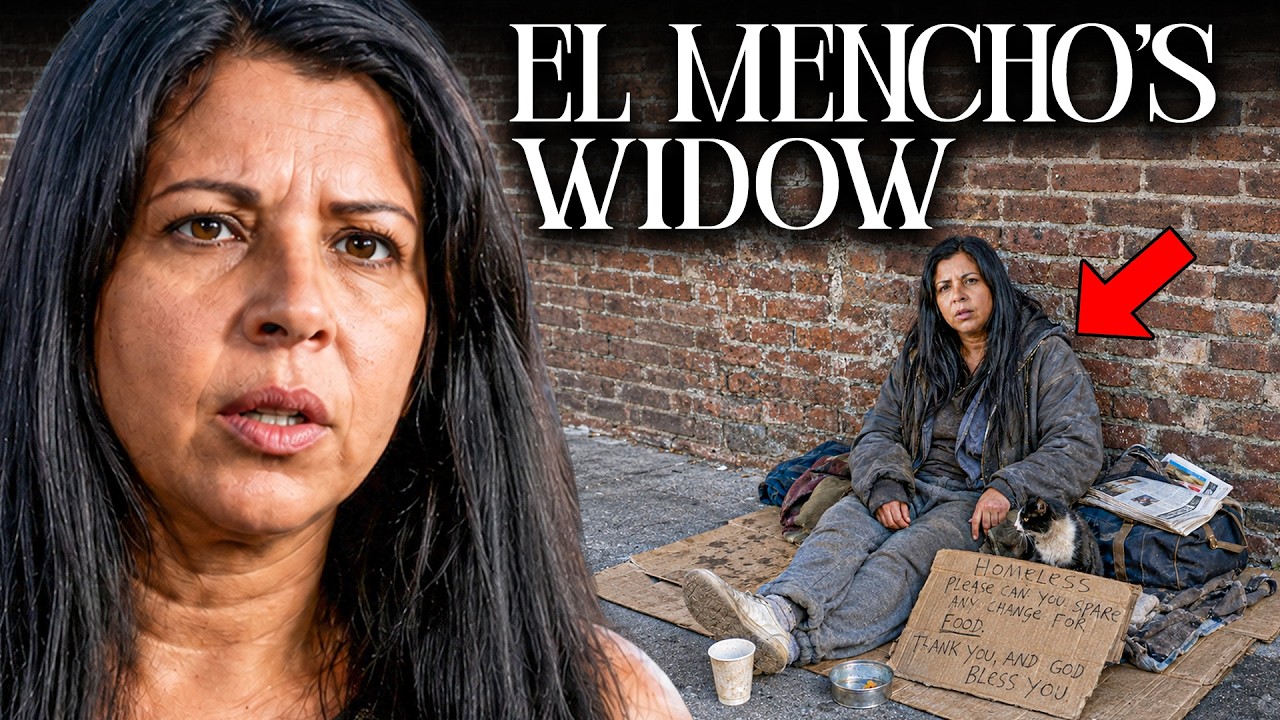
And the woman once called La Jefa, the financial chief of that empire, was left standing in the ruins of a world she had helped construct but could no longer inhabit. Rosalinda was born in 1963 in Aguililla, Michoacán, a small municipality in the mountains of western Mexico that would later become known as a cradle of organized crime leadership. She was one of eighteen siblings. The town sat in the Tierra Caliente, a hot lowland region stretching across Michoacán and Guerrero, where marijuana and poppy plantations had been cultivated for generations.
The economy of the place was shaped by that underground agriculture, and the González Valencia family had developed deep connections to criminal networks long before Rosalinda became a public figure. Her uncle, Armando Valencia Cornelio, known as El Maradona, was a founding figure of the Milenio Cartel, a powerful Jalisco-based organization that operated in the shadow of the larger Sinaloa cartel structure. Her brother, Abigael González Valencia, would eventually become one of the most significant financial figures in the entire Jalisco criminal ecosystem. The family, known as Los Cuinis, would later be described by the US Department of Justice as the cartel’s primary financial support network.
El Mencho was not born into the same family circumstances, but he was born in the same place. He came from Aguililla as well, born on July 17, 1966. Like many young men from the region with limited economic options and proximity to criminal infrastructure, he entered the criminal world early. He worked first as a hitman, protecting figures within the Milenio Cartel, reportedly under the direction of Rosalinda’s uncle, El Maradona.
He was a soldier before he became a commander. That connection is where the two of them reportedly came into each other’s orbit. He arrived from within the same criminal world her family had helped construct. By the 1990s, Rosalinda was already a mother to a son, Juan Carlos, from an earlier relationship.
In 1996, she and El Mencho married. The union has been described by organized crime researchers as a strategic alliance, fusing El Mencho’s operational force with the González Valencia family’s financial networks. They had three children together, all born in San Francisco, California: Rubén, Jessica Johanna, and Laisha Michelle. The three children born there held dual American and Mexican citizenship, a detail that would later become legally significant.
Throughout the late 1990s and 2000s, El Mencho’s trajectory accelerated. The Milenio Cartel had operated under a loose alliance with the Sinaloa cartel through a figure named Ignacio Coronel, known as Nacho Coronel. In July 2010, Mexican military forces killed Coronel in a raid in Guadalajara. That death severed the alliance and opened a power vacuum in Jalisco that El Mencho moved quickly to fill.
Later that year, the Jalisco New Generation Cartel, known as the CJNG, was formally established. It was a reorganization built on a different model: more militarized, more willing to engage in open confrontation with rivals and government forces. Within a few years, it had expanded across multiple Mexican states and established trafficking connections across multiple continents. By the time US authorities designated the CJNG as a foreign terrorist organization in 2025, it had become one of the most consequential criminal organizations of the century.
While El Mencho built the cartel’s territorial reach through force, Rosalinda’s alleged role was quieter and more structural. Mexican authorities described her as the financial nerve center of the network. Following her arrest in 2018, Mexico’s then interior minister said she played a leading role in overseeing the cartel’s financial operations. Former DIA officials described her as holding all the keys, the person El Mencho trusted absolutely with managing the cartel’s wealth while he handled territorial warfare from hiding.
A Mexican court formally accused her of creating a network of seventy-three businesses used to launder billions of pesos: car washes, restaurants, tourist cabin rentals, advertising companies, and other enterprises that looked like ordinary commercial activity. One specific case that appeared in her eventual conviction was a car wash she owned in Puerto Vallarta, through which prosecutors alleged she concealed financial transactions in 2015 and 2016. The principle was consistent: move money through a real operating enterprise, mix illicit proceeds with legitimate revenue, and make it exponentially harder to trace. In May 2018, Mexican authorities arrested her in Jalisco on allegations of money laundering.
The arrest made international headlines. She paid bail of approximately $1. 5 million pesos, roughly $78,000, and was released three months later. The allegations had not disappeared, but the evidence was not sufficient to keep her detained.
Then came November 2021. Mexican National Guard forces arrested her again, this time in Zapopan, Jalisco. Authorities described it as a major disruption to the cartel’s financial network. A federal tribunal ruled that prosecutors had not proven her membership in an organized crime group, but a separate charge, concealing financial transactions connected to the car wash in Puerto Vallarta, produced a different outcome.
In December 2023, a judge found her guilty of failing to disclose those transactions with knowledge that the funds came from illicit activity. She was sentenced to five years in prison. She was held at Cefereso 16, a federal women’s prison in Morelos, far from the Jalisco territory she had spent her life in. The geography of her imprisonment was itself a statement.
She was removed from the networks, the family proximity, the communities, and the physical environment that had defined her life. And her husband, whose empire had made her relevant to authorities in the first place, was still somewhere in the mountains of Jalisco, still evading capture while she served time for a car wash. By January 2025, her lawyers argued that she had served more than half of her sentence and had demonstrated sufficient good conduct to qualify for early release under Mexican law. The judge approved the request.
Mexico’s attorney general’s office challenged the decision and filed an appeal, but the appellate process cleared the way for her release. On the night of February 27, 2025, Rosalinda walked out of Cefereso 16. Her release came with conditions: she was required to report regularly to authorities, maintain a fixed residence, and engage only in lawful activity. Less than a year later, on February 22, 2026, Mexican security forces located El Mencho during an operation in Talpa, Jalisco, a small mountain town in the highlands southeast of Guadalajara.
He had been a fugitive for the better part of two decades. The US government had placed a $10 million bounty on him. The Mexican government had separately offered 30 million pesos. He had evaded capture longer than almost any other figure at his level of criminal prominence in modern Mexican history.
When he was finally located, the operation moved quickly. He sustained gunshot wounds during the encounter and died while being transported by authorities. He was fifty-nine years old. The immediate question after his death was the same question that follows every major criminal organization when its founding leader disappears: who comes next?
Reporting and intelligence assessments identified several possible figures within the fractured structure. Among them was Juan Carlos González Valencia, Rosalinda’s eldest son, known as L03, with some assessments suggesting he had moved to consolidate influence within the organization. These reports should be understood as assessments rather than certainties. What can be said is that Rosalinda’s eldest son has been identified by investigators as a figure of interest in the cartel’s next chapter.
Rosalinda’s children have faced courtrooms on two continents. Rubén, known as El Menchito, was considered the cartel’s second in command before his first arrest in 2014. He was extradited to the United States in February 2020, convicted in September 2024 on murder conspiracy, drug trafficking, and firearms charges, and sentenced in March 2025 to life imprisonment plus thirty years. He is held at ADX Florence, the federal supermax facility in Colorado that also holds El Chapo.
Jessica, known as La Negra, was arrested at a federal courthouse in Washington DC in February 2020 after traveling there to attend her brother’s hearing. She pleaded guilty in March 2021 to violations of the Kingpin Act for conducting financial dealings with blacklisted businesses. She was sentenced to thirty months in prison and released in April 2022. Rosalinda’s brother Abigael, the man described by the DOJ as the architect of Los Cuinis, was arrested in Puerto Vallarta in 2015, fought extradition for nearly a decade, and was transferred to the United States in February 2025, the same month Rosalinda walked out of prison.
Prosecutors assembled more than 76,000 documents and intercepted recordings against him. He pleaded not guilty. El Mencho and Rosalinda reportedly separated around 2018, the same year as her first arrest, though they never formally divorced. By the mid-2010s, his existence had become almost entirely clandestine.
He was living in hiding, moving between locations, communicating through intermediaries. Rosalinda, by contrast, was living in an upscale neighborhood in Zapopan, embedded in urban life, visible enough to be found by the National Guard in 2021. Their worlds had diverged completely, even if their legal relationship had not. The empire is gone.
The family is scattered across prisons, courtrooms, and uncertain futures on two sides of a border. The seventy-three businesses once described as connected to Rosalinda’s network have been systematically disrupted by Treasury Department sanctions, asset forfeiture proceedings, and prosecutions. El Mencho is dead. Rubén will die in ADX Florence.
Jessica carries a Kingpin Act conviction that will follow her for the rest of her life. Abigael faces federal prosecution in Washington DC. And Rosalinda González Valencia is sixty-four years old, living under court-imposed conditions in the country that convicted her, required to report to authorities, restricted in where she can live, and bound to a life of lawful activity. She has maintained an extremely low profile since leaving prison.
No verified public statements, no interviews, no public appearances. She is not in prison, but she is not free in any unrestricted sense either. The nickname La Jefa still appears in news coverage, but the authority it once implied has no foundation left to rest on. What remains is a woman from Aguililla, one of eighteen siblings, born into a world that shaped her long before any of the choices that followed.
Living with the full weight of where that life eventually led.






