In the middle of October 1994, the Sunday Times began to serialize a book that the Prince of Wales had helped to make. Its author was the broadcaster Jonathan Dimbleby. Charles had given him interviews and access to his letters and his journals. The book was due in the shops on the 3rd of November.
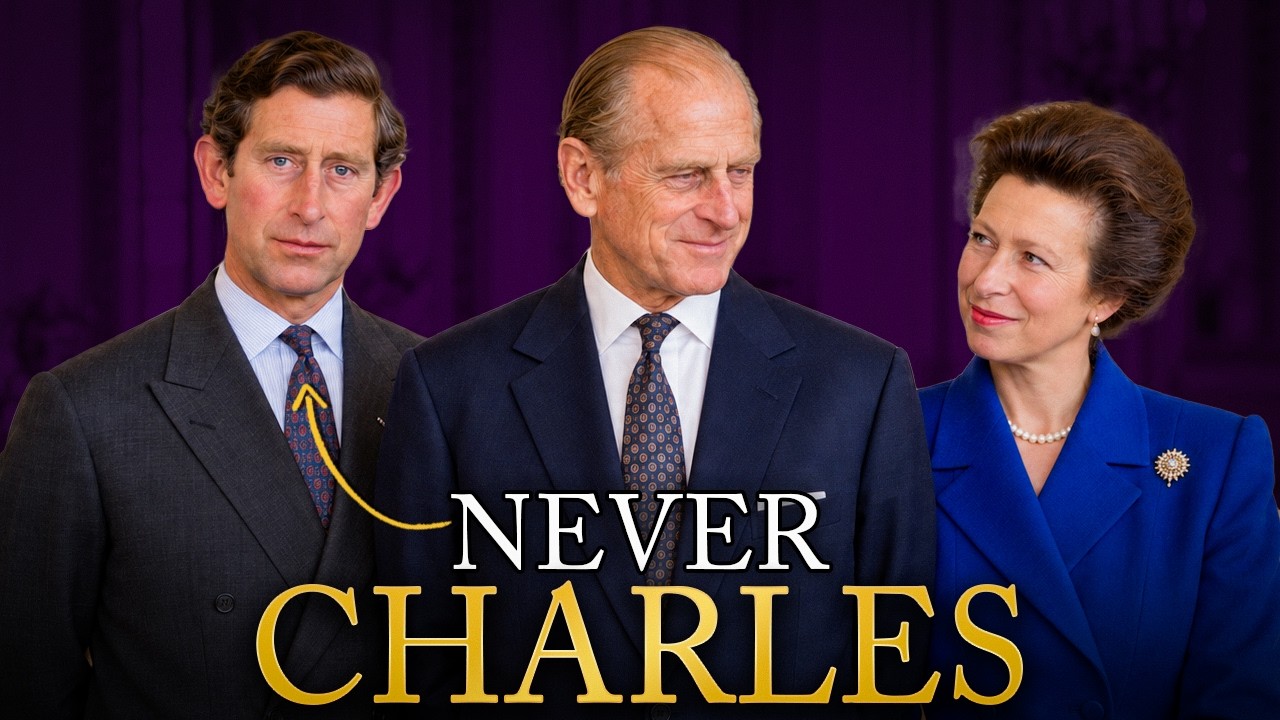
The extracts came first, and by Monday morning they were news around the world. The headlines were about Diana. Charles was quoted as saying he had never loved her and that he had married her because his father had made him do it. But the book went further back than the marriage.
It went back to the nursery and to the man who ran it. The father in those pages was disappointed in his son. He found the boy soft. He thought him a bit of a wimp, no good at games and with no interest in horses.
At family gatherings, the book said, the small boy was frequently brought to tears by his father’s mocking banter. The parents’ apartments at Buckingham Palace were close together, but the child and his father seldom saw each other. The queen appeared as a mother who was not indifferent so much as detached, and who deferred to her husband in anything that concerned Charles. The Times summed up the portrait on its front page on the 17th of October.
The Duke of Edinburgh came out of the book as an authoritarian figure whose forceful intervention had proved crucial while his son was courting Lady Diana Spencer. And in the middle of the extracts was a letter Charles had written as a schoolboy more than thirty years earlier, from a school in the north of Scotland. Its first line was short. “The people in my dormatory are foul.
”
The palace did not dispute the letters. It disputed the word that the newspapers had built around them. The Duke, the headlines said, had issued an ultimatum to his son about Diana. A spokesman answered that there had been no ultimatums, only advice from father to son, delivered in a perfectly normal way.
Philip himself offered almost nothing. He told one reporter that he had never discussed private matters and that he would rather not get involved in it. He was seventy-three, and in nearly forty-seven years of marriage to the queen he had kept his family out of everything he said in public. This book did not change that.
There was a reason he was the one in the dock and not the queen. In that household, the bringing up of the children had been his department. The queen had a country to run, and she left the nursery, the schools, and the plans for her sons largely to her husband. When Charles described the childhood that shaped him, the man he was really describing was the man who had made the decisions.
So the book was a son’s complaint, and it was also a report card on a father, written by the child he had marked hardest. What the newspapers did not ask was where that father had got his standards. The answer was not in Charles’s letters. It was in a sanatorium on Lake Constance sixty-four years earlier, and in a boy, not yet nine, whose family came apart in a single year.
Philip was born on the island of Corfu on the 10th of June 1921. He was a prince of Greece and Denmark, the fifth child and only son of Prince Andrew of Greece and Princess Alice of Battenberg. His four sisters were all much older. Before he was two, his father had been arrested after the Greek army’s defeat in Turkey, tried by a revolutionary court, and banished from Greece for life.
In December of 1922, a British warship took the family off Corfu. The baby was carried aboard in a cot made out of an orange box. The family settled outside Paris at Saint-Cloud, in a house lent to them by a relative. They were royal, but they were not rich.
Alice helped in a charity shop for Greek refugees. Philip went to an American school in Paris, where the headmaster later described him as a know-it-all, but always remarkably polite. Then in 1930, his mother’s mind gave way. Alice had been born deaf and had learned to lip-read.
In the late 1920s, she became intensely religious. In 1930, her behavior became erratic, and she told people she was in communication with Christ and with the Buddha. A psychiatrist who specialized in shell shock diagnosed paranoid schizophrenia, and a second doctor agreed. The diagnosis was confirmed at a sanatorium in Tegel outside Berlin.
Then she was removed from her family by force and placed in the clinic of Ludwig Binswanger at Kreuzlingen in Switzerland, on the shore of Lake Constance. It was a famous institution. The dancer Nijinsky was a patient there at the same time. Both of Alice’s doctors wrote to Sigmund Freud for advice.
Freud concluded that her delusions came from sexual frustration and suggested x-raying her ovaries in order to kill off her libido. Alice insisted again and again that she was sane, and kept trying to leave. Put the dates of that year side by side. While Alice was in Kreuzlingen, her four daughters were married one after another to German princes, in 1930 and 1931.
Their mother did not attend a single one of the weddings. Their father, Prince Andrew, did not go back to family life. He settled on the Riviera, mostly in Monte Carlo. And the youngest child, the only boy, was sent to England to be looked after by his mother’s family: his grandmother, and his uncles George Mountbatten, Marquess of Milford Haven, and Lord Louis Mountbatten.
Alice stayed in Kreuzlingen for two years. After a short stay at another clinic in northern Italy, she was released and began to live incognito, moving around central Europe. She kept in touch with her own mother, but with the rest of her family, including her son, she broke off contact until the end of 1936. Philip described those years only once in a way that stuck, and he described them like a weather report.
“The family broke up. My mother was ill. My sisters were married. My father was in the south of France.
”
His schooling followed the money. In 1933, he was sent to Salem in southern Germany, a school owned by the family of one of his new brothers-in-law, which had the advantage of saving fees. Salem’s founder was a Jewish educator called Kurt Hahn. In the year Philip arrived, Hahn was arrested by the new Nazi government, released after protests from Britain, and forced out of Germany.
He started again in Scotland, on the Moray coast, at a place called Gordonstoun. After two terms at Salem, Philip followed him. Gordonstoun was new and deliberately hard. The boys ran before breakfast and took cold showers.
Philip thrived on it. Hahn wrote later that the boy’s most marked trait was his undefeatable spirit. By his final year, Philip was captain of hockey and of cricket, and he had been made guardian, the school’s name for its head boy. Remember that title, guardian.
It comes back twice in this family. On the 16th of November 1937, his sister Cecilia was flying from Germany to London with her husband, their two young sons, and her mother-in-law. The plane hit a factory chimney in fog at Ostend and crashed. Everyone on board was killed.
Philip, sixteen years old, traveled to Darmstadt for the funeral. It was there that his mother and father met again for the first time in six years. A few months later, in 1938, the uncle who had become his guardian in England, George Milford Haven, died of cancer. By the time Philip was seventeen, the adults responsible for him had been taken away by illness, by distance, or by death.
What was left was a school and a headmaster. When the biographer Gyles Brandreth asked him about all this towards the end of his life, he brushed the subject away. “I just had to get on with it,” he said. “You do.
One does. ”
That sentence is the key to everything that follows. It was not self-pity, and it was not a complaint. It was a rule, and Philip applied it to himself first.
He left Gordonstoun at the beginning of 1939, went to the naval college at Dartmouth, served at sea through the war, and in November of 1947 married the heir to the British throne. His mother sat at the head of his family in Westminster Abbey. Some of her remaining jewels were in the engagement ring. A year later, he had a son of his own.
And for most of that son’s early childhood, the record keeps finding Philip somewhere else. Charles was born at Buckingham Palace on the evening of the 14th of November 1948. Fathers were not present at royal births, and the story told ever since is that Philip spent the evening playing squash. Anne followed on the 15th of August 1950.
Then the king died in February of 1952, and Philip’s life became his wife’s timetable. In November of 1953, the new queen and her husband set off on a tour of the Commonwealth that kept them away for almost six months. Charles was five, Anne was three. The children stayed in Britain with their grandmother and their nannies.
One of them, Mabel Anderson, had joined the nursery in 1949 at the age of twenty-two, and for long stretches of Charles’s early childhood she was the adult he saw most. Three years later, Philip went away again on his own. In the autumn of 1956, he sailed in the Royal Yacht Britannia. He opened the Olympic Games in Melbourne, crossed the Antarctic Circle at the end of the year, and came home by way of the Falkland Islands, South Georgia, and the Atlantic.
It took him the best part of five months. Charles turned eight while his father was at sea. At his side on that voyage was his private secretary and oldest friend, Mike Parker, an Australian naval officer Philip had known since 1942. Parker’s wife, Eileen, knew the royal family well in those years.
When their marriage broke up, the scandal cost her husband his post. In 1982, she published her own account of life around the palace, and her former husband denied some of what she wrote about him and the Duke. So she is not a neutral witness. But one of her observations about the children has been repeated by royal biographers ever since, because it matched what they kept hearing elsewhere.
In her memory, when Philip came to see his son, his manner was cold, and he always had more fun with Anne. Charles was more like the queen, and Anne was very like Prince Philip. Then comes the line that was quoted most of all. “I think Charles was frightened of him,” she said.
The royal writer Ingrid Seward put those words in a book in 1993. On the same page, she recorded something from Philip himself about his daughter. “Perhaps I did spoil her at times. ”
Margaret Rhodes, the queen’s first cousin and one of the people closest to her all her life, described Philip as wonderful with very small children.
The trouble came later. Once a child began to develop a personality of its own, Philip seemed to lose interest. Look at what that description does to the two children. A child who copies you does not need much interest.
A child who is different from you needs a great deal of it. Charles was the different one. He was shy and sensitive. He was not good at games and he had no interest in horses.
Anne was none of those things. Dimbleby’s book would later describe both parents as physically and emotionally distant. Among the people around the family, though, the distance was not felt equally. With one child, it looked like coldness.
With the other, it looked like complicity. It is hard not to connect that with his own childhood. He had been the boy who got on with it, and everything the people around him described suggests he was most at ease with a child who did the same. In the summer of 1962, the question of what to do with Charles landed on his desk.
The boy was thirteen and he needed a senior school. The choice was Philip’s to make. By then, Charles had already followed his father once. In 1957, he had been sent to Cheam, a preparatory school in Hampshire.
Philip had been a pupil there himself in the early 1930s, in the years his family was falling apart. Charles was the first heir to the throne to be sent away to school instead of being taught at home. The next step was the obvious test. The obvious choice was Eton, across the river from Windsor, and the Queen Mother is reported to have wanted it.
Gordonstoun, she warned, would leave the boy terribly cut off and lonely in the far north. Philip chose Gordonstoun. In May of 1962, Charles arrived at the school where his father had been head boy. By the account of Ingrid Seward, Philip sent him there in the hope that he would toughen up.
The school had not softened since 1934. The runs before breakfast were still there, and so were the cold showers. So were the older boys. Charles was ridiculed for his ears.
And here is the rest of the letter that the newspapers printed in 1994, written home by a thirteen-year-old. “The people in my dormatory are foul. They throw slippers all night long or hit me with pillows or rush across the room and hit me as hard as they can. ”
That letter was written to his parents.
Nothing in the record suggests it changed where he went to school. He stayed at Gordonstoun for five years. There is a phrase that almost everyone attaches to those years. Charles is supposed to have called the school “Colditz in kilts,” after the German prison camp for officers who kept trying to escape.
It is repeated in almost every book about him. In 2023, after months of searching its own records, Gordonstoun gave up looking for where the phrase came from, and its principal accepted in public that it was a myth. The myth survives because it is a joke, and a joke is easier to repeat than a letter. A grown man’s quip about a prison sounds like a grievance he has outgrown.
The real words are a child’s, written at night, and they were not a joke. And yet Charles did not fail Gordonstoun. In his last year, he was made guardian, head boy, the same title his father had held before the war. By 1975, interviewed as a grown man, he called the toughness of the place much exaggerated.
He admitted he had not enjoyed school as much as he might have, and credited it with teaching him a great deal about himself, his own abilities, and his disabilities. So, by the school’s own measure, Charles passed. He wore the same title as his father. On paper, the test was over.
The people around Philip did not describe a father who saw it that way. The boy who had been brought to tears at family gatherings had come through the school that made his father, and he was still, in the eyes of the man who sent him there, the one who needed looking after. There was one child in the family who seemed built for Gordonstoun. She was never sent, until 1972.
The school did not take girls. Anne went to Benenden, a girls’ boarding school in Kent. Her own children, years later, went to Gordonstoun. By then it took girls.
What Anne did with her life looks from the outside like a list of her father’s enthusiasms carried further than he took them. Philip had played polo for twenty years, and in 1971, as he gave it up, he took up carriage driving, the sport he would compete in for decades. That same year, his daughter won the individual European championship in three-day eventing at Burghley, on a horse called Doublet. At the end of the year, the British public voted her BBC Sports Personality of the Year.
The horses went higher. From 1964 to 1986, Philip was president of the International Equestrian Federation, the longest-serving president in its history. When he stepped down, the federation’s next president was his daughter. She held the post for eight years.
Off horseback, she behaved the same way. On the 20th of March 1974, a gunman forced Anne’s car to stop on the Mall, a few hundred yards from Buckingham Palace. Ian Ball wanted to take her for a ransom. He shot her bodyguard, her chauffeur, a journalist who tried to intervene, and a police officer who came to help.
Then he opened her door and told her to get out. Anne refused. “Not bloody likely,” she told him. “And I haven’t got £2 million.
” A passer-by and more police drove him off. All the wounded men survived. Two years later, at the Olympic Games in Montreal, Anne rode for Britain in the three-day event, the first member of the royal family ever to compete at an Olympics. In the cross-country, her horse, Goodwill, stumbled and fell.
She was concussed. She got back on and finished the course. Years later, she admitted that the part she would most like to remember was the part she could not. Count the things in that record that Philip did not have to teach her.
The appetite for risk, the impatience with fuss, the refusal to play the part of a victim, the horses. None of it needed a school in the north of Scotland. She treated the trappings the same way. When her son Peter was born in 1977, she and her husband Mark Phillips turned down titles for their children.
Decades later, her explanation was simple. “It was probably easier for them. ”
In the second half of her life, she routinely carried out more public engagements than any other member of the family, around two hundred a year by the counts newspapers made of the court circular in the 2020s. It is easy to see why the people around Philip kept saying the same thing about her.
In 1988, the royal writer Peter Lane put it without any qualification: Prince Philip’s favorite child is Princess Anne. Ingrid Seward later described her as the favorite because she was as tough and fearless as her father. But look at what made her the favorite. It was not that Philip spent more time with her, or that she had an easier character.
It was that she was the only one of his children who never seemed to need him at all. She was the one who got on with it. In 1930, a small boy had been left to get on with it. Forty years later, his daughter did it by choice, and he recognized it.
His eldest son was a different case. And in the first weeks of 1981, Philip sat down and wrote him a letter. Thirteen years later, that letter was a headline. In the summer of 1980, Charles was thirty-one and still unmarried.
He had begun to see a great deal of Lady Diana Spencer, who was nineteen. She came to Balmoral. The press found out, and the photographers began to wait outside the nursery school where she worked. Philip was worried about her.
Dimbleby’s book would say his concern was her frequent visits to Balmoral and what the newspapers would make of a young woman being seen so often with the heir and not engaged to him. Early in 1981, Philip wrote to his son. The message of the letter was that Charles should make up his mind. Either propose to her or end the courtship.
Charles proposed in February. In 1994, that letter became the center of the story. “Marry her or dump her,” the newspapers reported, was the Duke’s message. Dimbleby wrote that Charles had interpreted his father’s attitude as an ultimatum and had gone into the marriage in a confused and anxious state of mind.
Around the world, the summary was that Philip had bullied his son into a loveless marriage. That is the version most people still carry. It does not survive the record. The palace called the letter fatherly advice, which is what a palace would say.
The author is harder to dismiss. Two weeks after the extracts, Jonathan Dimbleby called the claims about Philip bullying his son into the marriage a distortion of his book. What he said, Dimbleby explained, was “make up your mind. ”
Years later, the biographer Sally Bedell Smith reported the reaction of someone who had actually read the letter.
Philip’s cousin, Lady Pamela Hicks, found it measured and sensitive. Charles, by the same account, found it coercive and accusatory; in her reading, he took a careful letter as bullying because psychologically he assumed that his father bullied him. In the same days that Dimbleby’s correction was going out on the wires, Philip was not in London. On the 31st of October, he was in Jerusalem at Yad Vashem, the Holocaust memorial, with his sister Sophie.
They had come to see their mother honored as one of the Righteous Among the Nations. During the German occupation of Athens, Alice had hidden a Jewish widow, Rachel Cohen, and two of her children in her own house. Philip’s own verdict was that it had probably never occurred to her that what she did was in any way special. In the same fortnight the world was arguing about what kind of father he had been, he was standing in front of a plaque for the mother he had barely seen between the ages of eight and sixteen.
So the famous ultimatum is weaker than the headlines, and that makes the truth harder, not easier. It would be simpler if the letter had been cruel. Then there would be a villain, a date, and a document. What the record shows instead is a son who had spent twenty years being measured and who heard a verdict in a letter that did not contain one.
Five years into the marriage, in a letter to a friend, Charles called incompatibility awful, said his marriage had all the ingredients of a Greek tragedy, and asked how he could have got it all so wrong. Here the record turns again against the cold father. As the marriage came apart in 1992, Philip began a correspondence with his daughter-in-law. Diana wrote to him as “dearest Pa.
” He signed his letters “with fondest love, P. ” The letters were read out years later at the inquest into her death. In one of them he told her that if he was invited, he would always do his utmost to help her and Charles to the best of his ability. Whatever else Philip was, he was not indifferent to that marriage, and he tried in writing to hold it together.
What he could not do was understand his son. To Gyles Brandreth, he put the difference simply. “Charles is a romantic,” Philip said. “And I’m a pragmatist.
That means we do see things differently. ”
Brandreth published that in 2001. And that same spring, other people who had spent time with Philip decided to say what the pragmatist really thought of the romantic. They said it to a newspaper, and the heir to the throne read it with everyone else.
Charles and Anne were not Philip’s only children. A decade after Anne, the queen and Philip had two more sons, Andrew in 1960 and Edward in 1964. The younger children arrived into a different family, and part of the difference was a name. In 1952, on the advice of her government, the new queen had declared that her children and descendants would be known as Windsor, not by their father’s name, Mountbatten.
Philip took it hard. Eight years later, eleven days before Andrew was born, the queen made a new declaration in council. Descendants without royal titles would carry the name Mountbatten-Windsor. Charles and Anne had been born into their mother’s house.
The second family, in a small way, carried his name. Both of them were sent to Gordonstoun. Edward did what his father and his eldest brother had done before him. In his final term, he was made guardian, head boy.
It is the third time the title appears in this family, and it means something different each time. For Philip, it was proof that he had survived. For Charles, it was proof that he had endured. For Edward, it was the start of a path that led straight into his father’s world.
It didn’t go smoothly. In 1983, Edward signed up for the Royal Marines. In January of 1987, a third of the way through the commando course, he withdrew. Philip was the Marines’ captain general, and the newspapers reported that he was furious.
Edward’s own account, given years later, was the opposite: no pressure from his father, and his support for the decision. One account in the record goes further and makes Philip the member of the family who was most sympathetic. Put that next to the boy at Gordonstoun crying over his letters. The examiner who was supposed to despise softness let his youngest son walk away from one of the hardest courses in the British armed forces, and stood by him.
Some writers draw the obvious conclusion. Ingrid Seward, in a book about the royal marriage, wrote that for the queen Andrew would always be the favorite, while for the Duke it was Edward. The biographer Matthew Dennison called Edward the favorite of both his parents. So the people who watched the family never agreed on which child Philip loved best.
Some named Anne and some named Edward. In none of their accounts was it Charles. And in May of 2001, a few weeks before Philip’s eightieth birthday, the gap between father and eldest son was put in print by people who knew the father well. The writer Graham Turner published a long essay in the Daily Telegraph, built on conversations with Philip’s friends and former aides.
Through them, the essay described what they presented as the Duke’s view of his son: Charles was precious, extravagant, and lacking in the dedication and discipline he would need if he was to make a good king. The palace insisted at once that the views did not reflect the Duke’s own opinion of the Prince of Wales, and pointed to a speech in which Philip had praised his children. But the palace did not say that Philip’s friends had not spoken, and the damage was done. Newspapers reported that Charles was deeply upset that his father had let his closest confidants talk about their relationship.
Put the two things in the same month. Charles had planned to write a tribute to his father for his eightieth birthday. After the article, he dropped the idea. Then Philip did something the record almost never shows him doing.
He apologized. He wrote his son a letter, and he telephoned him. In both, he denied making those remarks and denied authorizing anyone to speak for him. Charles accepted the apology, and the palace declared the matter closed.
This is the strongest document in the whole relationship, and it has never been published. A father who had never discussed private matters put in writing to his son that the words were not his. The friends who had spoken were people who knew his table talk. The letter was what he was prepared to sign.
Andrew gave his father a different kind of grief. In November of 2019, after his television interview about his friendship with Jeffrey Epstein, Andrew stepped back from public life. By Gyles Brandreth’s account, Philip was heartbroken in his last years that the family had been turned into a soap opera, and that he regretted members of it giving personal interviews. Andrew has always denied any wrongdoing.
The man who had kept his family out of public view lived to see two of his sons discuss their private lives on television: Charles in 1994, and Andrew in 2019. In 1999, on the day Edward married, the palace had announced that he would one day inherit his father’s title, Duke of Edinburgh. It was the title Philip had been given on his own wedding day. The youngest son who walked away from the Marines was the one chosen to carry his father’s name.
Twenty years after the Telegraph article, Philip’s four children walked behind his coffin. Only one of them was a woman. Philip retired from public duties in the summer of 2017, at the age of ninety-six. The next spring, after a hip replacement, the visitor the newspapers recorded at his bedside was Anne, who stayed for about fifty minutes and reported that her father was on good form.
He died at Windsor Castle on the 9th of April 2021, two months before his hundredth birthday. The next day, in a tribute recorded at Highgrove, Charles called his father his dear Papa, a very special person whom the family missed enormously. Months later, in a documentary for the BBC, he chose more careful words. “His energy was astonishing,” he said of his father, “but he didn’t suffer fools gladly, which made one choose your words carefully.
”
Anne put out her own statement. In it, her father was her teacher, her supporter, and her critic. And what she had most wanted to emulate was his example of a life well-lived and service freely given. She had already taken on many of his patronages, following in his footsteps.
The two tributes do not sound alike. The son spoke of love and of caution. The daughter spoke of a teacher and a critic, and of copying him. Go back to the Sunday paper of October 1994 and the boy in it, in tears at family gatherings and writing home about slippers in the dark.
That boy was seventy-two when his father died, and within eighteen months he would be king. The father who had said he would rather not get involved never answered that book in public. The one time the record shows him answering for what was said about his son, he did it in private, with a letter of apology to the son himself. The funeral was held on the 17th of April at St George’s Chapel, Windsor, under the rules of the pandemic.
Philip’s coffin rode to the chapel on a Land Rover he had helped to design himself. Behind it walked his four children. Traditionally, only men follow the coffin in a royal funeral procession. Anne walked anyway, as she had at her grandmother’s funeral in 2002.
Inside, the queen sat alone. There is one more thing the record shows about the boy of 1930. In 1967, after a military coup in Greece, his mother left Athens for the last time. Philip and the queen brought her to live at Buckingham Palace.
Alice spent her last two years there, increasingly deaf and frail, still wearing the grey habit of the nursing order of nuns she had founded in Greece, and died in the palace in December of 1969. She left no possessions. She had given everything away. Her son, who had learned at eight to need nobody, gave his mother a home at the end.
In his own vocabulary, it was simply what one does. Five months after the funeral, there was one more document. In September of 2021, the High Court in London ruled that Philip’s will would be sealed for ninety years, to protect the dignity of the sovereign. The judge who sealed it had not read it.
The value of his estate was kept out of the record, too. Whatever Philip wrote at the end about his children, and how he divided what he had among them, will stay closed for ninety years. Two years later, on Edward’s fifty-ninth birthday, King Charles made his youngest brother Duke of Edinburgh, as their father had wished. The title was given for life only.
It will not pass to Edward’s children. Favorite is the warm word for what the people around Philip saw, and it is the word they used. But the record shows something colder than a father’s love. It shows a standard.
Philip had been a boy of eight when the adults around him began to disappear, and he survived by needing nobody. He built his idea of a man out of that, and he graded his children against it. Anne passed without being examined. Edward was given the benefit of the doubt.
Charles spent fifty years taking a test that had been written in 1930, for somebody else. Asked by Brandreth near the end of his life how he had raised his children, Philip gave the same kind of answer he had given about his own childhood. “We did our best. ”
He was never looking for the child he loved most.
He was looking for the boy who got on with it. And the one who answered was a girl the school would not take.






