The alarm spread through Centriia before the first church bell rang. On a raw December morning in 1871, with snow piling against the wooden storefronts and the sulfurous breath of the underground coal fires curling through the streets, the town assembled outside St. Ignatius Church to witness a wedding that should never have been. Margaret Kelligan, nineteen, stood in a burgundy velvet dress that had belonged to a mother she never knew, her hand resting on the arm of a freed slave named Ruth Washington.
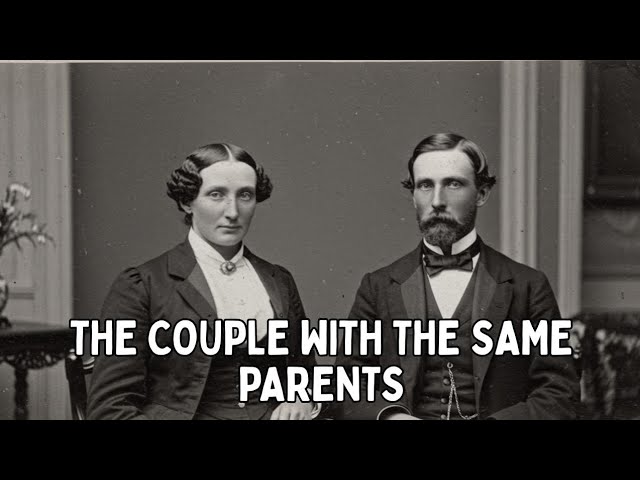
Beside her, Thomas Kelligan, twenty-two, wore his dead father’s best suit, which smelled faintly of coal dust and tobacco. They shared a surname, a father, and a scandal that had torn the community apart for months. What the town did not yet know, what even the bride and groom did not yet know, was that the blood between them was not what they believed. The trouble had begun three years earlier, with a death and a will.
Patrick Kelligan had been a man built for hard labor, shoulders broad enough to carry a full coal car, hands that could work sixteen-hour shifts without complaint. He had arrived in Centriia in 1849 with the wave of Irish immigrants fleeing the potato famine, settling with his wife Sarah in the shantytown known as Irish Hollow, a maze of narrow alleys where laundry hung between leaning wooden houses and coal dust settled on everything like black snow. Sarah was a woman of quiet strength, dark hair, and eyes that seemed to hold depths of sorrow even in moments of joy. She had borne Patrick their first child, Thomas, in 1851, followed by two daughters who died in infancy from the lung fever that claimed so many children in the mining towns.
But Patrick harbored appetites that one wife could not satisfy. Elena Vasquez had come to Centriia from Mexico with her family, part of a small community of miners recruited to work the deeper shafts. She lived in the Mexican quarter, a few streets from Irish Hollow, a world separated by language and custom but connected by the common thread of backbreaking labor. Elena was beautiful in a way that seemed exotic to the Irish and German families who dominated the town, with long black hair braided down her back and skin the color of honey.
More importantly, she possessed a gentleness that Sarah, hardened by loss and poverty, had long since abandoned. The affair began in 1851, the same year Thomas was born, and ended with Elena’s death in 1852. She died as she had lived, quietly, bleeding heavily in the aftermath of childbirth while the winter wind howled through the gaps in the wooden walls. With her last breath, she whispered a name: Patrick.
The midwife, an elderly Mexican woman named Consuela, understood immediately. She had seen the signs for months, Patrick’s visits to the Mexican quarter, always after dark, always when the other miners were drinking at Murphy’s Tavern. When Elena died, Consuela faced a choice that would haunt her for the rest of her life: reveal the truth and destroy two families, or keep the secret and raise the child as her own. She chose silence.
Margaret grew up believing Consuela was her grandmother, that her parents had died in a mining accident when she was too young to remember. The story was plausible enough in a town where mining accidents were as common as Sunday mass. Consuela scraped together a living taking in laundry and mending clothes, keeping Margaret close while avoiding questions about her parentage. But Margaret inherited her mother’s beauty and her father’s stubborn determination, and as she grew, the resemblance to Patrick Kelligan became increasingly difficult to ignore.
She had his dark eyes, his square jaw, his habit of tilting her head when she was thinking. By sixteen, she had caught the attention of every young man in Centriia, including Thomas Kelligan. Thomas was unaware of any blood connection. To him, Margaret was simply the most beautiful girl in town, raised by the old Mexican woman in the quarter where few Irish ventured.
The attraction was immediate and powerful, like two pieces of iron drawn to the same magnet. He began courting her in the spring of 1869, bringing wildflowers from the hills above the mine, walking her home from church on Sundays. Consuela watched with growing dread, knowing she held the power to stop what was happening but lacking the courage to speak the words that would shatter both young hearts. The courtship continued through the summer and into the fall, becoming more serious with each passing week.
Patrick Kelligan died on a Tuesday in November 1868, crushed beneath a timber support in shaft number seven of the Locust Run mine. The accident was sudden and brutal: one moment he was loading coal into a cart, the next he was pinned beneath a thousand pounds of Pennsylvania oak, his spine severed, his life draining into the black earth. The funeral was held three days later, half the town in attendance. But what followed was the reading of Patrick’s will, something most miners never bothered to create.
Patrick had been more thoughtful than most, perhaps driven by a guilty conscience that had grown heavier with each passing year. The will was simple in its main provisions. The house and savings went to Sarah; Thomas inherited his father’s mining tools and his position at Locust Run. Then came a final clause that stopped the room cold.
To the child Margaret Vasquez, residing with Consuela Vasquez in the Mexican Quarter, I bequeath the sum of fifty dollars, and acknowledge her as my natural daughter, born of Elena Vasquez in the year 1852. The silence was complete. Sarah Kelligan’s face drained of color. Thomas stared at the lawyer as if the man had spoken in a foreign tongue.
Consuela began to weep, tears of relief mixed with terror at what would surely come next. Fifty dollars was more money than most families saw in a year, but it was the acknowledgement that mattered. Patrick Kelligan had claimed Margaret as his daughter, making her Thomas’s half sister and Sarah’s unwelcome reminder of her husband’s infidelity. The revelation spread through Centriia like wildfire through dry timber.
Within hours, every family knew that the beautiful Margaret Vasquez was actually Margaret Kelligan, that the courtship between her and Thomas was not just inappropriate but unholy. Neighbors who had smiled at the young couple now whispered behind closed doors. Thomas retreated to his father’s house; Margaret locked herself in Consuela’s small room. Most people assumed that would be the end of it.
They were wrong. For three weeks they stayed apart. Thomas threw himself into double shifts at the mine, working until his hands bled and his back screamed. Margaret helped Consuela with the laundry, scrubbing clothes until her knuckles were raw.
But neither work nor prayer could wash away the feelings that had taken root. The first contact came through a letter passed secretly by Margaret’s friend Anna, a young German girl who worked at the company store. Thomas’s handwriting was crude, but his words were clear: The blood we share doesn’t change what I feel. Meet me at the old shaft house tonight.
Margaret burned the letter, but she could not burn away the longing it had awakened. That night she slipped out and made her way through the narrow streets to the abandoned shaft house at the edge of town, closed for three years after a cave-in killed six miners, avoided by locals who believed it haunted. Thomas was waiting in the darkness, his face illuminated by a single candle. When they embraced, it was with a desperation that bordered on madness.
“They’ll never accept us,” Margaret whispered. “Then we’ll make our own acceptance,” Thomas replied. “Blood or no blood, you’re mine and I’m yours. Nothing else matters.
”
It was in that moment, surrounded by the ghosts of dead miners and the sulfurous smell of burning coal, that they decided to marry, consequences be damned. Father Shaun Omali had been ministering to Centriia for fifteen years, arriving from County Mayo in 1856 with nothing but a worn Bible and an unshakable faith in God’s mercy. Nothing in his experience had prepared him for the request that Thomas and Margaret brought to his rectory on a cold December morning. They appeared just after dawn, hands intertwined in a gesture both tender and defiant.
He had been expecting the visit ever since the reading of Patrick’s will. “We want you to marry us,” Thomas said. “You know what you’re asking? ” Father Omali replied quietly.
“You’re asking me to unite two people who share a father. It’s forbidden by God’s law and man’s. ”
Margaret spoke with steel in her voice. “We share a father’s blood, but we weren’t raised as brother and sister.
We didn’t know until Patrick’s will was read. Our love came first, before we knew about the blood. ”
Father Omali had seen enough of human nature to recognize that telling them no would not end their relationship, only drive it further into shadow. Then Thomas delivered the words that changed everything.
“Margaret is carrying my child. Father, if you won’t marry us, who will? ”
The news of the pregnancy fell on the small room like a stone dropped into still water. Margaret was perhaps two months along, just enough to miss her courses and feel the nausea.
Consuela had been the first to notice. Father Omali rose and walked to the window, staring out at the smoke-shrouded streets, at the headframe of the Locust Run mine where Patrick Kelligan had worked until his death. The irony was not lost on him. The sins of the father were quite literally being visited upon the children.
He pulled down a thick volume of canon law, its pages yellowed and marked with annotations. There was a precedent, he said slowly, for cases where the relationship was unknown at the time of conception, where the alternative would be greater sin. But the path was narrow, fraught with conditions. First, they must undergo full confession and penance: three years of daily prayer, fasting on Fridays, service to the poorest families in Centriia.
Second, they must leave Centriia immediately after the wedding and start fresh where their history was unknown. Third, and most important, they must vow before God to have no more children after this one. “The risk of complications in offspring of such a union is too great to ignore. This must be your only child.
”
Margaret had always dreamed of a large family. Thomas had envisioned teaching sons to work with their hands. Can you accept these terms? Father Omali asked.
If so, I will perform the ceremony in two weeks, just before Christmas. If not, he left the alternative unspoken. Word of the impending marriage spread through Centriia like black damp through a mine shaft, silent, invisible, and deadly. By evening, every household knew.
Sarah Kelligan appeared at the rectory before sunset, her face twisted with rage. “You cannot do this. That girl is a bastard spawn of my husband’s sin. I’ll see this church burn first.
” Behind her came a delegation of the town’s most prominent women, self-appointed guardians of Centriia’s moral fabric. The men were more direct. A group of miners led by Sha Murphy, who ran the town’s only tavern, confronted Thomas at the mine entrance. The confrontation might have turned violent if not for the mine foreman, but the damage was done.
Thomas found himself working alone. Women turned their backs when Margaret walked down the street. Children were called inside when she passed. But an unexpected alliance began to form in the shadows.
The outcasts of the community, those who had themselves faced rejection, quietly rallied to support the couple. Consuela organized the Mexican families who worked the deepest shafts. Father Michael Kowalski, the Polish priest from the next valley, offered his church as an alternative venue and provided moral support. The most surprising ally was Ruth Washington, an elderly freed slave who had escaped via the Underground Railroad.
“Child,” she told Margaret at the well, “I seen what hate can do when good people stay silent. You got more friends than you know. ”
As opposition mounted, the wedding preparations became a battle between tradition and defiance. Margaret’s wedding dress became the first symbol.
Sarah Kelligan refused to lend the family gown. “I’ll burn it before I let that bastard girl defile it with her presence. ” Consuela, however, had her own surprise. From a trunk that had remained unopened since Elena’s death, she withdrew a dress of deep burgundy velvet, simple but elegant, with silver embroidery that caught the light like trapped stars.
It had been Elena’s finest dress, worn to festivals in Mexico before she came north. The dress fit Margaret perfectly, as if Elena had somehow known the measurements of the daughter she would never see grow up. The wedding ring presented another challenge. Thomas had no money for gold.
But Sha Murphy, despite his public opposition, quietly provided a solution. His own mother had died the year before, leaving a delicate gold ring set with a small emerald. “Take it,” he told Thomas privately. “My mother always said love finds a way, even when the world tries to stop it.
”
The night before the wedding, Thomas spent the evening in the abandoned shaft house with three men who had chosen to stand by him: his father’s old mining partner Sheamus O’Brien, a young German miner named Jacob Mueller who had married his own first cousin the year before, and Samuel Washington, Ruth’s son, who had fought with the Union Army and returned with a deep belief in the right of people to determine their own destinies. Margaret spent her final night as a single woman surrounded by the women who had chosen to support her, Consuela preparing the dress, Ruth Washington braiding her long dark hair with silver ribbons, Anna painting her lips with a faint tint of red made from crushed berries, and Elena’s sister Carmon, who had traveled from Philadelphia upon hearing news of the wedding, teaching her the traditional Mexican blessing a bride speaks before walking to the altar. Near midnight, Margaret felt the baby quicken in her womb, the first time she had felt movement, as if the child was announcing its presence, insisting on its right to exist. At ten o’clock on the morning of December 15th, an hour before the ceremony, a delegation from the county seat arrived unexpectedly.
Led by Judge Morrison, a man known for his strict interpretation of both law and morality, they carried a writ of prohibition that could halt the wedding. Pennsylvania, like most states, had statutes governing marriage between blood relatives, and the union of half siblings clearly violated both legal and moral standards. “Father Omali,” the judge announced in a voice that carried across the churchyard, “I am here to inform you that any attempt to solemnize a marriage between Thomas Kelligan and Margaret Vasquez will be considered a violation of Pennsylvania state law and subject to criminal prosecution. ”
Thomas stepped forward.
“What law? Show me the statute that says two people who didn’t know they were related can’t marry when they’re already expecting a child. ”
Judge Morrison withdrew a leather-bound volume. “Pennsylvania Consolidated Statutes, Section 1304.
Marriage between persons related by consanguinity within the degree of half siblings is null and void from the beginning. The law makes no exceptions for ignorance of relationship. ”
Father Omali withdrew a different book. “While civil law may prohibit such unions, canon law provides for dispensation in cases of necessity and prior ignorance.
”
The legal standoff created a moment of terrible tension. Margaret felt the baby move again. But Judge Morrison had not anticipated the document Thomas now withdrew from his pocket. It was a marriage certificate dated December 1st, 1870, bearing the names Patrick Kelligan and Elena Vasquez, witnessed and signed by Father Kowalski.
The crowd fell silent. “This is impossible,” Judge Morrison declared. “Patrick Kelligan was married to Sarah O’Brien in 1850. Bigamy is a felony.
”
Father Kowalski emerged from the crowd, his weathered face grave but determined. “The marriage was performed in secret. Patrick came to me in November 1870, claiming that his first marriage had been invalid because Sarah was already pregnant by another man when they wed. He said he had learned this from Sarah’s confession.
”
Sarah Kelligan pushed through the crowd like an avenging angel. “Lies! I was a virgin when I married Patrick Kelligan. ”
But Father Kowalski withdrew a second document: a sworn affidavit from a midwife in County Cork, dated 1849, attesting that Sarah O’Brien had miscarried a child in October of that year, three months before her marriage to Patrick.
The legal implications were staggering. If Patrick’s first marriage was invalid, Thomas was illegitimate, Margaret legitimate, and their proposed union was not technically incestuous under church law. Judge Morrison studied the documents with growing frustration. But Sarah Kelligan was not finished.
“You want the truth? ” she screamed, her voice carrying across the churchyard with supernatural clarity. She reached into her coat and withdrew a bundle of letters tied with a faded blue ribbon, correspondence she had kept hidden for twenty-one years. “Patrick Kelligan was not Margaret’s father,” she announced.
“These are love letters from Elena Vasquez to Dr. William Morrison, your precious judge’s own father. Elena was carrying Morrison’s bastard when she died. ”
Judge Morrison’s face drained of all color.
If true, Margaret was not a Kelligan at all, but a Morrison, the illegitimate daughter of his own late father. And everyone in the crowd could see the resemblance now, Margaret’s fine features and intelligent eyes, indeed more Morrison than Kelligan. Sarah was not finished. “And there’s more.
Patrick Kelligan knew the truth. He claimed Margaret in his will, not because she was his daughter, but because Dr. Morrison paid him to do it. Twenty dollars a month for three years to keep the secret and raise the bastard as his own.
”
The revelation that Dr. Morrison, the town’s most respected citizen, had fathered a child with a Mexican woman and then paid to cover it up sent shockwaves through the crowd. The affair had begun in the spring of 1851, when Elena had been brought to his clinic suffering from a fever. She was seventeen, beautiful, and unmarried.
Dr. Morrison, then twenty-eight, had found reasons to extend her treatment far beyond medical necessity. When Elena discovered she was pregnant, he could not acknowledge the child without destroying his career, but neither could he abandon her. His solution was to arrange for Patrick Kelligan to claim paternity, a deception that cost him twenty dollars a month but preserved his reputation.
Elena died believing Patrick was Margaret’s father, never knowing that the man she loved had paid Patrick to assume his obligations. Patrick’s will, acknowledging Margaret as his daughter, had not been a confession but a final gesture to maintain the fiction. Judge Morrison found himself staring at Margaret with new eyes, seeing the high cheekbones, the intelligent dark eyes, the way she held her head, unmistakably his father’s traits. His hand moved instinctively to the pistol in his coat.
For a moment, the crowd held its breath, sensing violence in the air. But Margaret stepped forward, her burgundy dress bright against the snow. “I don’t want your family’s guilt,” she said, her voice clear and strong. “I don’t want to be a Morrison or a Kelligan.
I want to be a wife and a mother, nothing more. ”
Judge Morrison studied her face. “If you are my half sister, then I have obligations. ”
“You have no obligations to me.
Your father made his choices. I make mine. ”
Father Omali stepped forward. “The question before us is simple.
Two young people wish to marry and legitimize their coming child. The legal barriers have been removed by these revelations. Will this community witness their union, or will we let our judgment destroy another generation? ”
The crowd split into factions.
The working families, miners, laundry women, shopkeepers, found themselves aligned with Thomas and Margaret. Sha Murphy, who had provided the ring, now stood as their spokesman. “Seems to me the real sin here isn’t two young people loving each other, but rich men thinking they can buy their way out of responsibility. ” The town’s established families found themselves in an impossible position.
Mrs. Henderson, the store owner’s wife, declared, “This changes nothing. These people have brought nothing but scandal and division to our community. ”
Father Omali raised his hands.
“I will perform this ceremony. Any who wish to witness a sacrament of love are welcome. Those who prefer to nurse their hatred may depart. ” Some turned away, backs stiff with disapproval.
Others moved closer to the church steps. At precisely 11:30 on the morning of December 15th, 1871, Father Omali opened the doors of St. Ignatius Church. Margaret walked slowly up the steps, supported by Consuela on one side and Ruth Washington on the other.
Behind came Thomas, flanked by Sheamus O’Brien and Jacob Mueller. The pews told the story of Centriia in stark relief. On one side sat the working families, Irish, German, Mexican, freed slaves. On the other, a handful of the town’s more prosperous citizens, with empty spaces marking the absence of mine supervisors and the self-appointed guardians of moral order.
Judge Morrison chose to enter, though he sat alone in the back pew, his face a mask of conflicted emotions. Father Omali guided them through the ancient ritual. When the time came for the exchange of vows, they had chosen to speak their own words. “Margaret,” Thomas began, his voice clear and strong, “I take you as my wife, not because the world approves, but because my heart demands it.
I promise to love you whether we are rich or poor, accepted or rejected, blessed or cursed. I promise to protect our child and any children who may come. ”
Margaret’s response was equally defiant. “Thomas, I take you as my husband, knowing that our path will be harder than most.
I promise to stand with you against whatever judgment the world may pass. I promise to love you not because we share blood or because we don’t, but because you are the other half of my soul. ”
The ring, Sha Murphy’s mother’s emerald, caught the light from the stained glass windows as Thomas placed it on Margaret’s finger. It was too large, but Margaret closed her hand around it, making it fit through sheer determination.
Father Omali raised his hands over the couple. “By the power vested in me by God and the Holy Catholic Church, I now pronounce you husband and wife. What God has joined together, let no man put asunder. ”
The reception took place not in the church hall but in Murphy’s Tavern, transformed for the afternoon into a wedding hall.
The feast was modest but heartfelt, a blending of cultures: tamales and saffron rice from Consuela, fried chicken and cornbread from Ruth Washington, potatoes prepared a dozen ways by the Irish miners’ wives, sausages from the German families. Toasts were offered in English, Spanish, German, and Polish. Judge Morrison surprised everyone by accepting Sha Murphy’s grudging invitation. Called upon to speak, he rose unsteadily.
“I have spent my life believing that the law and morality were the same thing. Today I learned that sometimes the law serves to hide our sins rather than reveal them. These young people have shown more courage than I have ever possessed. ”
The celebration continued late into the evening, fiddle music and dancing making the rough wooden floor creak and sway.
At midnight the well-wishers departed, leaving the newlyweds to face their first night as a married couple. The weeks that followed brought consequences. Thomas found himself assigned to the deepest, most dangerous shafts, where cave-ins and gas explosions were constant threats. Margaret faced her own form of social exile.
The company store made it clear she was unwelcome; Mrs. Henderson served her only when no other customers were present, then at inflated prices. Anonymous threats began appearing under their door, crude notes warning of God’s judgment and threatening violence against their unborn child. Father Omali faced his own consequences.
A delegation of prominent parishioners formally requested his removal, sending a letter to the bishop in Philadelphia. The priest knew his days in Centriia were numbered, but he showed no regret. Judge Morrison’s situation was perhaps the most complex. The revelation of his father’s secrets had damaged his authority, but it had also begun a process of moral awakening, transforming him from a rigid enforcer of social order into something more thoughtful.
He began making inquiries about Margaret’s welfare, not as a judge, but as a brother. The most unexpected consequence came from outside Centriia entirely. Word of the wedding had spread to other mining towns, where similar stories were playing out. Thomas and Margaret began receiving letters from other couples who had defied convention, people who saw in their struggle a reflection of their own battles.
They were becoming symbols of something larger than themselves. Margaret’s labor began on a cold March morning in 1872, three months after the wedding, nearly nine months after that first embrace in the abandoned shaft house. The baby arrived with the same defiant determination that had characterized its parents’ love story, early, healthy, and beautiful enough to silence even the harshest critics who had whispered about divine punishment. Consuela served as midwife.
The child was a girl with dark hair and eyes that seemed to hold depths of intelligence beyond her hours. Margaret named her Elena, after the mother she had never known, a decision that brought tears to Consuela’s weathered cheeks and seemed to complete a circle that had been broken twenty years before. Judge Morrison was among the first visitors, arriving with gifts that included a silver cup engraved with the Morrison family crest and a banknote that would ensure little Elena’s education. His transformation from rigid moral enforcer to protective uncle had been one of the wedding’s most unexpected outcomes.
Father Omali came to perform the baptism, knowing it would likely be his final official act in Centriia. The bishop’s letter of reassignment was already on his desk, transferring him to a remote mountain parish where his radical tendencies would be less likely to cause scandal. Five years after the wedding, Thomas and Margaret Kelligan had become legend in the coal country of Pennsylvania. They had never left Centriia despite Father Omali’s conditions and the community’s ongoing hostility.
Instead, they had carved out a life on the margins, Thomas working the most dangerous shifts, Margaret taking in sewing. Their small house on the edge of town had become an unofficial sanctuary for other outcasts, unmarried mothers, mixed-race couples, families fleeing persecution. Elena Kelligan Morrison, for Margaret had insisted on including both family names, grew up surrounded by love but also by the knowledge that her birth had challenged the established order of her world. At five years old, she already showed signs of the intelligence and determination that had marked both her parents and her biological grandfather.
Judge Morrison had become a regular presence in her life, bringing books and teaching her to read with a patience that surprised everyone who knew his former severity. Father Omali returned to visit once, traveling from his mountain parish to see the family he had helped create. He found them changed but not broken, their love deepened by the trials they had faced together. Margaret was expecting their second child, a direct violation of the church’s conditions but a testament to their refusal to let others dictate the terms of their marriage.
The mining town itself had been transformed by their story. The rigid social hierarchy that had once defined Centriia had given way to something more fluid and accepting. Other unconventional unions had followed: a German widow marrying an Irish widower, a freed slave finding love with a Mexican immigrant, matches that would have been scandalous before but which the community now grudgingly accepted. Elena and her contemporaries grew up in a world where love was understood to be more complex than their parents had believed, where the boundaries between acceptable and forbidden had been blurred by one couple’s determination to define their own destiny.
As 1876 approached, bringing the centennial celebration of American independence, Thomas and Margaret often reflected on their own declaration of independence from social convention. They had paid a price for their choices, but they had also discovered that love, properly defended, could indeed conquer all. Their story would be remembered long after the coal fires beneath Centriia had finally burned out, a testament to the power of two people who refused to let others define the limits of their hearts.






