On December 11th, 1985, Paul Castellano sat in his usual chair at the Veterans and Friends social club in Brooklyn, wearing an expensive suit, drinking espresso, surrounded by his closest aides. He was 70 years old, boss of the Gambino crime family, the most powerful crime family in America, controlling hundreds of millions of dollars in legitimate and illegitimate operations across New York and beyond. And he was talking about Salvatore Gravano like Sammy was nobody.
"This guy thinks he's something special," Castellano said, his voice dripping with contempt. "Gravano walking around like he's a big earner, like he deserves respect. I got news for him.
He's nobody. He's a construction thug from Bensonhurst who got lucky."
One of Castellano's associates laughed nervously. "He does make a lot of money for the family, boss."
"He makes money because I allow him to make money," Castellano said. "Because John Gotti protects him. But maybe it's time we remind Gravano who's actually in charge here."
"What are you thinking, boss?"
Castellano leaned back in his chair, a small smile on his face. "I'm thinking Gravano's got too many people around him who think they're untouchable. His cousin, Nicholas Scibetta.
The guy's been causing problems, dealing narcotics without permission, disrespecting made men. Maybe we make an example."
"You want to clip Scibetta?"
"I want to remind Gravano that nobody in this family is bigger than the boss. You take out someone's blood, you send a message they never forget."
The conversation continued. Details were discussed. Plans were made.
And nobody in that room understood that by targeting Nicholas Scibetta, Sammy Gravano's cousin, someone Sammy considered under his protection, Paul Castellano had just made the last mistake of his life. Because five days later, on December 16th, 1985, Paul Castellano would be dead, shot to death outside Sparks Steakhouse in Manhattan in one of the most brazen mob hits in history. And one of the men who orchestrated it, who planned it, who made sure it happened, was Salvatore "Sammy the Bull" Gravano.
Salvatore Gravano was born on March 12th, 1945, in Bensonhurst, Brooklyn. By December 1985, at 40 years old, he was one of the most feared and respected members of the Gambino crime family. He was a captain running crews in construction and extortion, generating millions of dollars annually for the family.
He was called the Bull for a reason. He was built like one, five-foot-five but broad across the shoulders, thick-chested, powerful. He'd been a street fighter in his youth, earning respect through violence before he ever became a made man.
When Sammy hit you, you stayed down.
But what made Sammy dangerous wasn't his physical strength. It was his intelligence, his business acumen, his understanding of how to make money in both legitimate and illegitimate operations. Sammy ran construction companies that were actually profitable, not just fronts for money laundering.
He understood unions, contracts, bidding wars. He was a gangster who thought like a businessman.
Sammy was also fiercely loyal. Loyal to John Gotti, his captain and mentor, the man who'd sponsored Sammy's induction into the family. Loyal to his crew, the men who worked for him and depended on him.
And above all loyal to his family, his wife, his children, and his extended family, including his cousin Nicholas Scibetta.
Nicholas Scibetta was Sammy's first cousin. They'd grown up together in Bensonhurst. Nicholas was younger, less disciplined, prone to getting into trouble.
But he was family. And in Sammy's world, family meant everything. Nicholas had been associated with the Gambino family for years, running small-time operations, always on the periphery.
He wasn't a made man, didn't have the discipline or the respect required for that. But he was under Sammy's protection. Everyone knew it.
You didn't touch Nicholas Scibetta because doing so meant answering to Sammy Gravano.
In 1978, Nicholas had been involved in a situation. The details varied depending on who told the story, but the basic facts were these. Nicholas had assaulted the daughter of a Gambino associate.
The associate wanted revenge, wanted Nicholas dead. Paul Castellano, then underboss and soon to be boss, authorized it. Nicholas Scibetta disappeared.
His body was never found.
Sammy found out later, after Nicholas had been dead for months. And when Sammy confronted Paul Castellano about it, Castellano's response was dismissive.
"The guy had it coming," Castellano said. "He hurt somebody's daughter. What did you expect?"
"He was my cousin," Sammy said. "You should have come to me. We could have handled it differently."
"I don't need your permission to handle family business," Castellano said coldly. "Remember who's boss here, Salvatore."
Sammy walked away from that conversation with something burning inside him. Not just anger, something deeper, a fundamental understanding that Paul Castellano didn't respect him. Saw him as useful but disposable.
Saw everyone as disposable except for the small circle of men who shared Castellano's background, his wealth, his view of what the mafia should be.
For seven years, from 1978 to 1985, Sammy carried that resentment, buried it, kept working, kept earning, kept building his reputation. But the resentment never went away. It just waited.
And on December 11th, 1985, when word reached Sammy that Paul Castellano had been talking about Nicholas Scibetta again, using Nicholas's death as an example of Castellano's power, as a way to remind people that even Sammy Gravano's family wasn't safe, that resentment became something else. It became rage. Cold, calculated, murderous rage.
John Gotti was 45 years old in December 1985. He was a captain in the Gambino family, running a crew out of the Bergen Hunt and Fish Club in Queens. He was ambitious, charismatic, intelligent, and absolutely convinced that Paul Castellano was destroying the Gambino family.
Castellano had become boss in 1976 after the death of Carlo Gambino. But Castellano wasn't a traditional mob boss. He was a businessman.
He wore expensive suits, lived in a mansion on Staten Island called the White House, kept his distance from street operations. He made his money through legitimate businesses, construction, food distribution, labor unions, and he looked down on street guys, the men who made their money through gambling, loan sharking, hijacking, men like John Gotti.
Castellano had also implemented a rule that was causing massive problems within the family. No drug dealing. Anyone caught dealing narcotics would be killed.
No exceptions. The rule made sense from Castellano's perspective. Drug dealing brought heavy FBI attention, mandatory sentences, and informants who flipped to avoid time in prison.
Castellano wanted to run a clean operation, relatively speaking. But for street guys like Gotti and his crew, the rule was impossible to follow. Drug dealing was the most profitable racket available.
Telling street guys they couldn't deal drugs was like telling them they couldn't earn.

Several of Gotti's closest associates, including his brother Gene and his friend Angelo Ruggiero, were involved in heroin trafficking. When the FBI caught wind of it, when they started building cases, when they brought Angelo Ruggiero in for questioning, Castellano's response was clear. Cut them loose.
Let them face the consequences of breaking the rules.
To John Gotti, this was betrayal. These were his men, his brother, his closest friends, and Castellano was willing to sacrifice them to protect himself. Gotti had been thinking about moving against Castellano for months, maybe years.
But you don't kill a boss lightly. You need support. You need other captains who agree.
You need a moment when the move makes sense, when it can be justified, when it won't spark a civil war.
On December 12th, 1985, the day after Paul Castellano's conversation about Nicholas Scibetta reached Sammy Gravano, John Gotti received a phone call.
"We need to talk," Sammy said. "In person. Tonight."
They met at a diner in Brooklyn, sat in a back booth, ordered coffee. Neither of them drank.
"He's talking about Nicholas again," Sammy said without preamble. John knew immediately who Sammy meant. "Castellano using it as an example of his power, reminding people that he can touch anyone, including my family."
John was quiet for a moment. "What are you thinking?"
Sammy looked at John. "I'm thinking we've been talking about this for a year. Talking about how he's bad for the family.
How he doesn't respect the old ways. How he's willing to sacrifice made men to protect himself. I'm thinking talking doesn't accomplish anything."
"What accomplishes something?"
"Action," Sammy said quietly. "Permanent action."
John understood. "You want to move against him."
"I want him gone. And I think you do, too."
John leaned back, thinking. This was the moment, the decision point. Once they committed to this path, there was no going back.
If they succeeded, they'd control the Gambino family. If they failed, they'd be dead.
"How many captains can we get?" John asked.
"Frank DeCicco's with us," Sammy said. "Joe Armone, Eddie Lino. Maybe more if we present it right."
"The Commission won't authorize it."
"Then we don't ask the Commission," Sammy said.
"What?"
"We do it ourselves. Deal with the consequences after."
John studied Sammy. "You're sure about this? Once we start, we can't stop."
"I've been sure since 1978," Sammy said. "Since he killed Nicholas and didn't have the respect to tell me first. Since he showed me that family doesn't matter to him, only power.
I'm done waiting."
John nodded slowly. "All right. We do it.
But we do it smart. We plan it. We make sure it's clean, and we make sure everyone understands why it had to happen."
"When?"
John thought. "Soon. Before Christmas.
Before he makes any more moves against our people."
"Where?"
"Somewhere public," John said. "Somewhere that sends a message. This isn't some alley hit.
This is the old boss getting replaced. It needs to be seen."
They talked for another hour. Details, logistics, who would pull the trigger, how they'd get away, how they'd handle the Commission afterward, how they'd justify what they were about to do. By the time they left the diner, the plan was set.
Paul Castellano had four days left to live.
Over the next four days, John Gotti and Sammy Gravano worked with a precision and focus that would have impressed any military strategist. They recruited the shooters, four young associates, loyal and expendable, who understood that carrying out this hit would either make their careers or end their lives. They chose the location, Sparks Steakhouse on East 46th Street in Manhattan.
Castellano had a reservation for 5:00 p. m. on Monday, December 16th.
He'd be there with his newly appointed underboss, Thomas Bilotti. They planned the escape routes, positioned lookouts, made sure everyone understood the timing. The hit had to be fast, in and out.
Castellano and Bilotti dead before anyone could react.
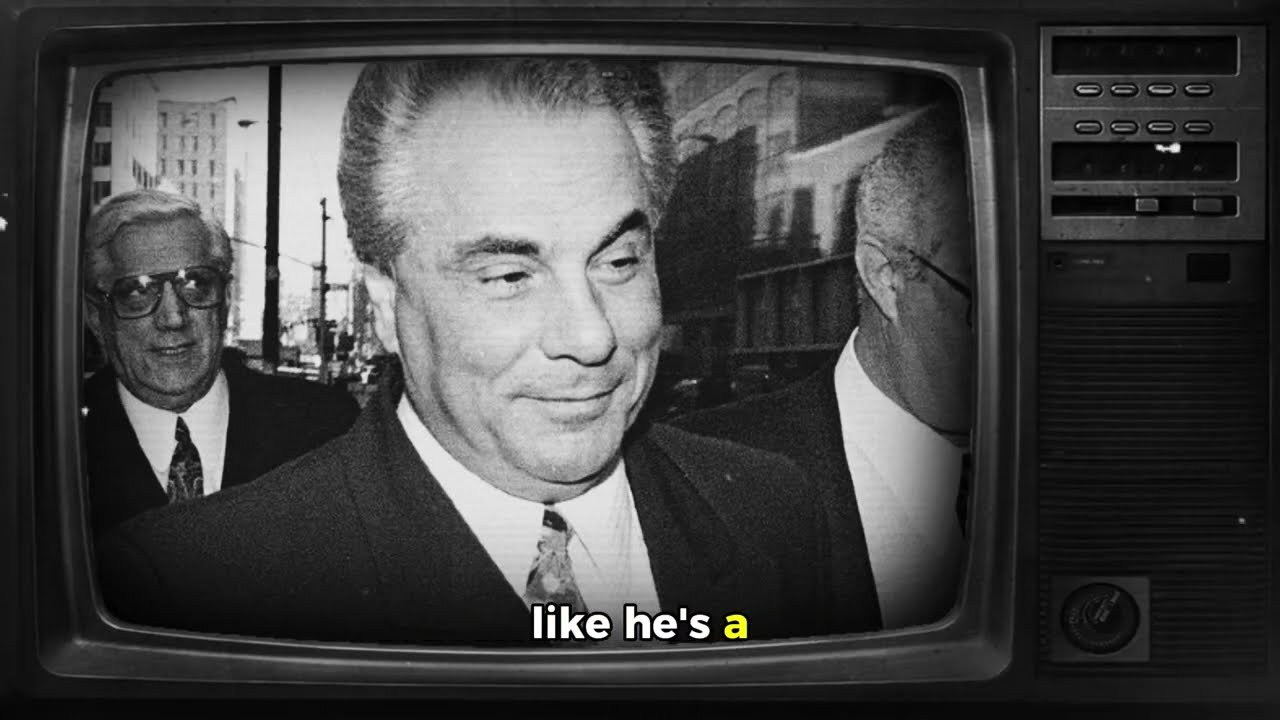
And most importantly, they made sure that when it was over, when Castellano was dead, they had the support of enough captains to claim legitimate succession. Frank DeCicco, one of the family's most respected members, agreed to become the new underboss under Gotti. That gave the move credibility, made it look less like a coup and more like a necessary change in leadership.
Sammy's role was critical. He wasn't one of the shooters. He was too valuable for that, too recognizable.
But Sammy was the tactical mind, the one who thought through every detail, every possibility, everything that could go wrong.
On the morning of December 16th, 1985, Sammy went about his normal routine. Went to his construction office, made calls, appeared in public, establishing his alibi for later. At 3:00 p.
m. , he met with John Gotti at a location in Queens. They went over everything one more time.
"The shooters are in position?" John asked.
"They've been there since noon," Sammy said. "Dressed like businessmen, blending in with the Christmas crowds."
"Bilotti is going to be a problem. He's Castellano's bodyguard."
"We take them both," Sammy said. "Simultaneously. We don't give Bilotti a chance to react.
And after, we let Frank DeCicco call the meeting. He announces that there's been an unfortunate incident, that Paul is dead, that the family needs leadership, that you're stepping up."
"The other families won't like it."
"The other families will adapt," Sammy said. "Once it's done, once you're boss, they'll deal with reality. They always do."
John looked at Sammy. "No regrets?"
"None," Sammy said. "He killed my cousin. He disrespected you.
He was bad for the family. This isn't personal. It's business."
But they both knew it was personal. Very personal. The most personal thing either of them had ever done.
At 4:30 p. m. , John Gotti and Sammy Gravano drove to Manhattan.
They parked two blocks from Sparks Steakhouse, got out of the car, walked to a spot where they could see the restaurant entrance but remain hidden in the crowd of Christmas shoppers, and they waited.
Paul Castellano arrived at Sparks Steakhouse at 5:26 p. m. , 26 minutes late for his reservation.
His driver, Thomas Bilotti, pulled the black Lincoln Town Car to the curb directly in front of the restaurant entrance. Bilotti got out first. He was a big man, over six feet, heavily muscled, always alert.
He walked around the car to open the passenger door for Castellano.
Paul Castellano stepped out of the car. He was wearing an expensive overcoat, perfectly tailored. His hair was styled, his shoes polished.
At 70 years old, he still carried himself like a man who owned everything he saw. He took one step toward the restaurant entrance.
That's when three men emerged from the crowd of pedestrians on the sidewalk. They were wearing identical outfits, long trench coats and fur hats that obscured their faces. They pulled out semi-automatic pistols and opened fire.
The first shot hit Castellano in the head. He went down immediately, collapsing on the sidewalk. The shooters kept firing.
Six shots total, all of them hitting Castellano. Thomas Bilotti reacted fast, reaching for his own weapon. But a fourth shooter appeared from the opposite direction.
Four shots hit Bilotti before he could draw. He fell beside Castellano's body.
The entire hit took 15 seconds. Fifteen seconds from the first shot to the moment when the four shooters calmly walked away, disappearing into the crowd of Christmas shoppers who were screaming, running, diving for cover.
Two blocks away, standing in the doorway of a clothing store, John Gotti and Sammy Gravano watched the whole thing. They saw the shooters approach, saw the muzzle flashes, saw Castellano fall, saw Bilotti drop beside him, saw the shooters walk away.
"It's done," Sammy said quietly.
John didn't respond. Just stood there watching the chaos on the street, police sirens already starting in the distance. They turned and walked in the opposite direction, got into their car, drove away.
By the time the first police officers arrived at Sparks Steakhouse, John Gotti and Sammy Gravano were already in Queens, already establishing their alibis, already preparing for what came next.
Paul Castellano was pronounced dead at the scene. Thomas Bilotti was dead before the ambulance arrived. Two of the most powerful men in the Gambino crime family dead on a Manhattan sidewalk during rush hour in front of dozens of witnesses.
And nobody saw anything useful. Nobody could identify the shooters. Nobody remembered anything except the trench coats and the fur hats.
The hit was perfect.
News of Paul Castellano's death spread through the underworld within hours. By midnight, every crime family in New York knew. By morning, the story was on the front page of every newspaper in the city.
Mob boss slain in Manhattan. Castellano gunned down outside steakhouse. Gangland execution in Midtown.
The FBI immediately launched an investigation. They knew this wasn't a random shooting. This was a planned execution, a hit on a sitting boss, something that hadn't happened in decades.
The question everyone was asking: who ordered it?
John Gotti and Sammy Gravano had prepared for this moment. On December 18th, two days after the hit, Frank DeCicco called a meeting of all Gambino family captains and senior members. The meeting was held at a social club in Brooklyn.
Twenty men attended.
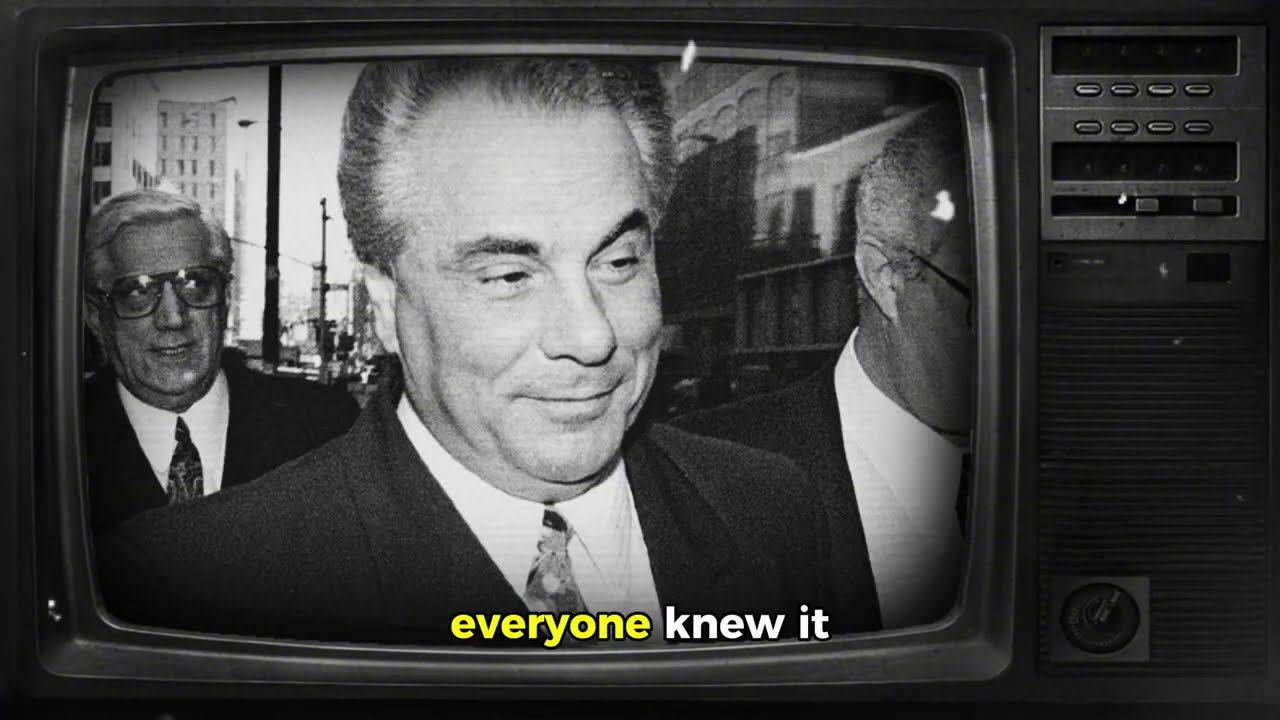
Frank stood at the front of the room. "Paul Castellano is dead. Tommy Bilotti is dead.
The family needs leadership. We need to move forward quickly or we'll have chaos."
Everyone was silent, waiting.
"John Gotti is stepping up as boss," Frank continued. "I'm stepping up as underboss. Sammy Gravano remains as captain.
This is the new structure. Anyone have a problem with that?"
Nobody spoke. What were they going to say? Castellano was dead.
Someone had to take over. And Gotti had the support of the most powerful captains in the family.
One of the older members raised his hand. "What about the Commission? They didn't authorize this."
"The Commission will be informed," Frank said. "We will explain that Paul's leadership was causing problems, that the family was splitting, that this move was necessary to prevent a civil war. And if the Commission doesn't accept that…"
Frank looked at the man steadily. "Then we'll deal with the Commission. But I don't think it'll come to that.
The other families understand reality. They'll adapt."
And they did. The Commission, the governing body of New York's five families, was not happy about Castellano's death. But they were pragmatic.
Gotti was already boss. Undoing that would require a war nobody wanted. So they accepted the new reality, warned Gotti that future moves like this wouldn't be tolerated, and moved on.
John Gotti was now the most powerful mobster in America, boss of the Gambino family. The newspapers called him the Dapper Don for his expensive suits and public appearances. They called him the Teflon Don because he beat every case the FBI brought against him.
Sammy Gravano became Gotti's underboss in 1988. The two men who'd planned Castellano's death now ran the most powerful crime family in the country.
For a while, everything worked perfectly. But every action has consequences. Every move creates ripples.
And the assassination of Paul Castellano created ripples that would eventually destroy everyone involved.
The FBI never stopped investigating Castellano's murder. They knew Gotti was responsible. They just couldn't prove it.
So they kept investigating, kept building cases, kept looking for ways to bring Gotti down. In 1990, they got their chance. They bugged the Ravenite Social Club in Little Italy, Gotti's headquarters.
They recorded hours of conversations, conversations in which Gotti talked about murders, about rackets, about everything the FBI needed to finally convict him.
But the most damaging evidence came from inside, from someone Gotti trusted completely. Salvatore "Sammy the Bull" Gravano.
In 1991, facing life in prison, Sammy made a decision. He became a government witness, agreed to testify against John Gotti in exchange for a reduced sentence. When John heard the news that Sammy had flipped, had agreed to testify, he was in a holding cell in Manhattan.
According to people who were there, John didn't scream or rage or break things. He just sat down, looked at the floor, and said quietly, "Sammy. After everything, Sammy."
At trial, Sammy testified for nine days. He described the planning of Castellano's murder in detail. He explained how he and John had met at the diner, how they'd recruited the shooters, how they'd watched from two blocks away, how they'd driven back to Queens afterward, already planning their next moves.
The jury convicted John Gotti on all counts. He was sentenced to life in prison without possibility of parole. He died in prison in 2002 at the age of 61 from throat cancer.
Sammy served five years in prison, was released in 1995, entered witness protection. He later returned to crime, was arrested again in 2000 for running an ecstasy trafficking ring in Arizona, served another 17 years, was released in 2017.
Frank DeCicco, the underboss who'd helped legitimize the transition, was killed by a car bomb in 1986, just four months after Castellano's death, killed by the Genovese family as retaliation for his role in Castellano's murder.
The four shooters who'd actually pulled the triggers were either killed in unrelated mob violence or went to prison on other charges. None of them lived long enough to enjoy whatever rewards they'd been promised.
Everyone who participated in Paul Castellano's murder paid a price. Some paid immediately, some paid years later, but everyone paid.
In interviews decades later, after his release from prison, Sammy Gravano was asked if he regretted killing Paul Castellano.
"No," Sammy said. "Paul disrespected me, killed my cousin without telling me, treated me like I was nobody. That's not something you forgive.
That's not something you move past."
"But look what it cost. Your friendship with John, your freedom, years of your life in prison."
Sammy was quiet for a moment. "Yeah, it cost a lot. But what was I supposed to do?
Let him get away with killing Nicholas? Let him continue disrespecting me? In that life, in that world, respect is everything.
You lose respect, you might as well be dead."
"Was it worth it?"
Another pause. Longer this time. "Ask me when I'm older," Sammy finally said.
The question at the heart of this story isn't whether Paul Castellano deserved to die. In the world of organized crime, where violence is currency and respect is survival, deserving doesn't mean much. The question is whether disrespect, even profound disrespect, even the murder of a cousin, justifies the chain of events that followed.
The death of a boss, the elevation of a new regime, the eventual betrayal that destroyed them all.
Paul Castellano insulted Sammy Gravano. Five days later, he was dead. But in dying, Castellano set in motion something none of them could control, a cascade of consequences that would eventually consume everyone involved.
The man who ordered the hit would die in prison, betrayed by his closest friend. The man who planned it would lose everything he'd built, spend decades in prison, live the rest of his life looking over his shoulder.
Paul Castellano died on a Manhattan sidewalk on December 16th, 1985. But the real story isn't his death. It's what happened to everyone who survived him, and how the very act that elevated them eventually destroyed them all.






