The first rays of dawn were just beginning to color the sky over San Antonio when the sound of cannon fire split the quiet of March 6, 1836. On the southwestern corner of the Alamo, Davy Crockett and a handful of defenders shouldered their rifles and loosed volley after volley into the Mexican soldiers scrambling up wooden ladders propped against the mission walls. Men began to fall to his left and to his right as he reloaded. Looking down from the parapet, he could see the hordes of Mexican troops surging toward the small compound.
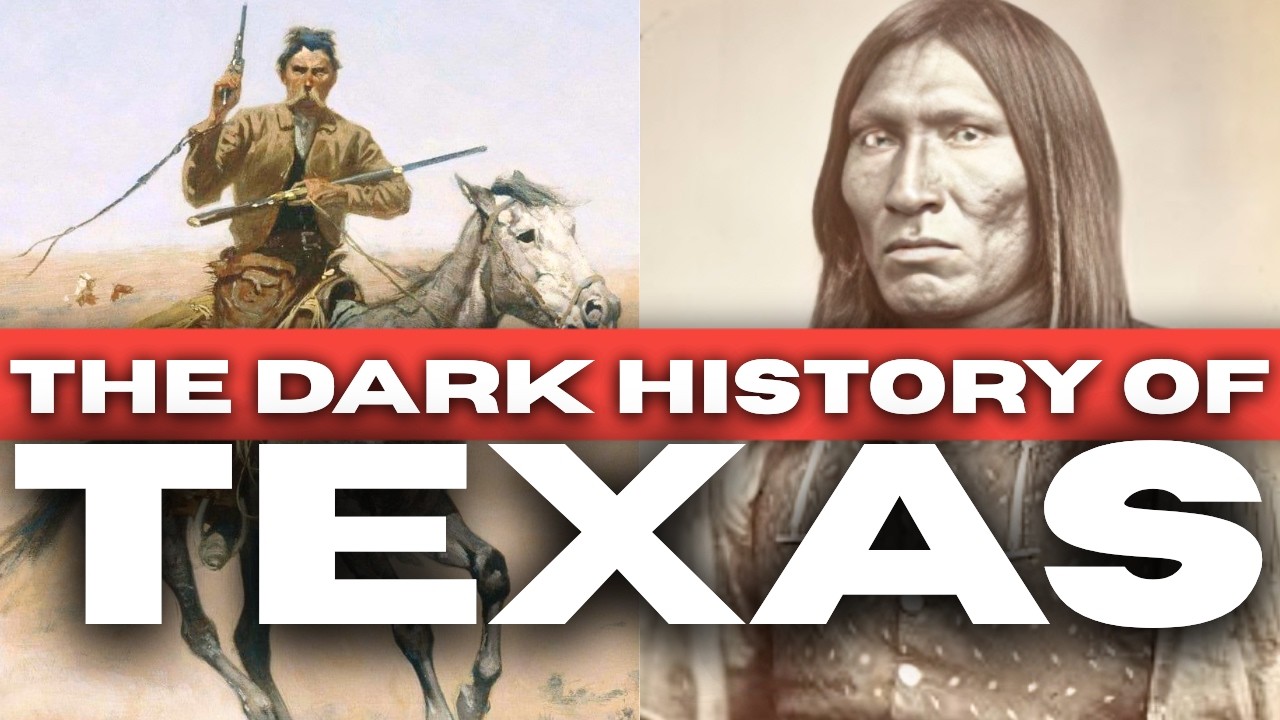
He and his men were vastly outnumbered, and they knew, in no uncertain terms, that this was a fight to the death. Cannonballs crashed into the thick adobe walls, bludgeoning a larger and larger breach for the attacking troops. Crockett and his comrades had hardly slept for days. Many had labored into the night fortifying weak points in their defenses, piling up stones and soil.
Most had spent the previous hours restlessly turning under their blankets, hoping for rest before the coming battle. Most had found little. Now the fight was here. The shrieks of the wounded on both sides joined the horrific din of battle.
Crockett shouldered his rifle again, fired again, as did his comrades. There was no time to mass their fire. Each man simply did his best to load and shoot as quickly as possible. Soon the first line of attackers poured over the walls, met by Crockett and his men in a ferocious close-quarters fight with knives, pistols, and anything else they could find.
The Mexican troops were themselves resigned to a vicious struggle, and they waged a ferocious counterattack as a life-or-death street fight took place just inside the parapet. Most of the defenders were American citizens who had moved to Texas seeking a better life and had decided to fight for Texas’s right to secede from Mexico. But contrary to popular belief, many were not Americans at all. They were immigrants from Ireland, Scotland, Germany, and Denmark, along with a number of native-born Mexicans who sided with the Texian cause, known as Tejanos.
No man at the Alamo, be he American, Tejano, or Dutchman, was as well known as David “Davy” Crockett. Even in 1836, Crockett was a national celebrity, renowned as a legendary hunter and frontiersman, a master storyteller, and a backwoods statesman. In the previous decade he had met presidents and foreign dignitaries, attended high-society parties in New York and Washington, served in the halls of Congress, and been the subject of a Broadway play. Now it seemed his story would end here, on the hard, dusty ground of Texas.
But this was not where his story began. Crockett’s legend had started in the hills of what was then considered the state of Franklin, in the region that would eventually become Tennessee. He was born in Greene County in 1786 to John and Rebecca Crockett, the fourth of five boys and the seventh of nine children. He had grown up on the frontier, tracking, hunting, and fishing.
His father had turned him out as labor to pay off family debts. He had served in the War of 1812 under Andrew Jackson, working mostly as a scout and hunter but gaining a reputation for skill and endurance. He married Polly Finley in 1806, and the couple had three children: John Wesley in 1807, William Finley in 1809, and Margaret Finley in 1814. Polly passed away in 1815, likely from complications during childbirth or a related illness.
That same year, as was common for widows and widowers, Crockett remarried, taking Elizabeth Patton as his wife. Elizabeth brought three children from a prior marriage, and together they had three more: Robert, Rebecca, and Matilda. Soon after remarrying, Crockett’s political career began to advance, propelled by his ability to captivate an audience with a simple but enthralling storytelling style. In 1817 he was elected justice of the peace of Lawrence County, then lieutenant colonel of the local militia, and finally a state legislator in the Tennessee House in 1821.
Throughout this time, Crockett and thousands of other Tennessee migrants moved their families ever westward to less populated areas of the territory. There, on the fringes of the frontier, his popularity grew among constituents who saw him as a trustworthy, plain-spoken representative who could be counted on to act in their best interests. That reputation spurred his election to Congress in 1827. There he famously broke ranks with his former commander, now President Andrew Jackson, vehemently opposing the Indian Removal Act of 1830.
His opposition so endeared him to the Cherokee people that in January of 1831, Cherokee Chief John Ross sent Crockett a letter expressing gratitude for the Tennessean’s steadfast support. But the stance cost him his seat. Opposing Jackson had alienated him from a state largely populated by ardent Jackson supporters, and in the 1831 election he lost to William Fitzgerald. His political career was not finished, nor was his celebrity.
In 1831, The Lion of the West, a loosely biographical play starring the character Nimrod Wildfire as Crockett, became a smash hit with New York audiences. Crockett attended a performance and received a standing ovation after being pointed out to the crowd. In 1833 he regained his office, defeating Fitzgerald and returning to Congress, where he served until 1835. That year he was again defeated, this time by another Jacksonian politician named Adam Huntsman.
Growing frustrated with the fickle nature of his constituency, and having already exchanged letters with friends in Texas, Crockett famously declared to his fellow Tennesseans: “They may all go to hell. I’m going to Texas. ”
In 1835, Texas was a tinderbox of political upheaval and an increasingly dangerous place for Anglo-American settlers. The Mexican government had until then permitted relatively unfettered settlement rights to Americans seeking homesteads in what is now central Texas.
This policy was in large part seen as a preventative measure, creating a human buffer between the larger settlements of northern Mexico, and even Mexico City itself, from attack by the actual reigning power of Texas: the Comanche. But the laissez-faire immigration laws were radically reformed with the Law of April 6, 1830, which severely restricted further Anglo incursion. Special taxes and tariffs were levied on citizens living in Texas, stoking a collective sense of injustice. This frustration was nothing new to the Texas frontier.
Tejanos, citizens of Mexico who already inhabited the area, had borne the burden of ferocious native attacks for decades, only to be largely seen as secondary concerns by their representatives in Mexico City. At the beginning of the 1830s, their shared indignity had been ratcheted up further when Mexican General Santa Anna ordered troops to occupy towns in northern Mexico, including Anahuac, Velasco, and San Antonio, then known as Béxar. This caused more unrest and solidified the shared interests and loyalties of Anglo-Americans and Tejanos. One sizable point of contention between the two parties was slavery.
Many Anglo settlers, especially those in eastern Texas with roots in the deep south, saw it as indispensable to their culture. Though Mexico had officially abolished slavery in 1829, many settlers who already owned slaves failed to abide by the new policy. Many Tejanos were either reluctantly tolerant or tacitly disapproving of the practice, which had never been central to their culture. Still, in the interest of gaining independence from a Mexican government that had failed them for so long, most Tejanos saw fit to overlook their disagreements.
By October of 1835, tensions erupted at the Battle of Gonzales. Mexican officials demanded that the town surrender a pair of cannons that had been loaned to them for defense against the Comanche and other local tribes. The Texans refused, hiding the cannons until the morning of October 2nd, when they filled them with scrap metal and met the Mexican army on the banks of the Guadalupe River under a flag that read “Come and take it. ” They fired upon the soldiers, and after a brief skirmish the Mexicans retreated, yielding the Texans an unlikely and morale-boosting victory.
This skirmish effectively marked the beginning of the Texas Revolution. A week later, on October 9th, the Texans moved to seize the Presidio La Bahia at Goliad in order to cut off the Mexican army’s supplies to San Antonio. Attacking under cover of night, they seized control of the Presidio with one Texan wounded and one Mexican soldier killed. This gave the rebels control over a vital strategic point and further boosted their confidence, perhaps to the point of hubris.
On October 28th they won another decisive victory at the Battle of La Concepción, and again in December at the Siege of Béxar, wresting control of San Antonio from Santa Anna’s army. By this point the vast majority of Texans sensed that victory was within reach, if not already assured. They took control of the old mission known as the Alamo and began to fortify it for use as a defensive position when Santa Anna inevitably returned with his army. For many of the roughly 200 Texans now firmly in control of San Antonio, this was an opportunity they looked forward to.
They believed they would not only defeat the much-hated general but force him to surrender. When Davy Crockett and a band of his close friends began making their way to Texas, all believed they were on their way to a great victory. Their main concern was simply that they might miss out on the fighting. By the time they arrived, command of the Texan forces had changed hands several times.
Original commander Edward Burleson had resigned, and Francis Johnson had taken his place. Johnson proved unpopular and lost confidence among his men after an ill-advised expedition into Mexico left those in San Antonio short of ammunition and supplies for weeks. James Clinton Neill replaced Johnson in January of 1836 but was forced to resign and return home after receiving word that family members had become critically ill. In his stead, joint command fell to two men.
One was a 26-year-old Alabama lawyer who had fled severe debt, leaving his wife and two young children, and moved to Mexican-held Texas. He had quickly become politically involved, gaining local renown as a firebrand revolutionary and an immovable supporter of Texas independence. His name was Colonel William B. Travis.
The other was a 42-year-old frontiersman, entrepreneur, and real estate speculator of questionable repute. He was a celebrity himself, though of a more regional nature than Crockett. He had gained renown after a knife fight on a small island in the Mississippi River in 1827, in which he used a massive knife given to him by his brother to eviscerate his opponent in a brawl over a duel. Though wounded several times, his name rose to that of a frontier legend and gave birth to one of the Old West’s most famous weapons.
In the preceding months he had been stricken with a deadly illness, most likely typhoid pneumonia. Despite his reputation, it was evident to him and to all who saw him that he was a man quickly succumbing to his illness. His name was Jim Bowie. When Crockett and his contingent of roughly 30 volunteers arrived at the Alamo on February 8, 1836, he was met and warmly welcomed by Bowie and Travis.
To all three men, victory seemed surely at hand. But over the following two weeks, the situation rapidly deteriorated. Even as Crockett made his way south, Santa Anna, fuming at having been forced to cede control of San Antonio, was marching north from Mexico City with thousands of troops. A polarizing figure in his own country, Santa Anna believed his tenuous hold on power could not withstand the shame of a defeat against the ragtag militias of Texas.
He pushed his army to return to San Antonio as quickly as possible and retake the city. On February 23rd, only two weeks after Crockett’s arrival, sentries inside the Alamo spotted Mexican cavalry in the hills near San Antonio. None could believe Santa Anna had returned so quickly. Now, roughly 1,500 to 1,800 Mexican troops surrounded a force of about 180 men.
For Crockett, Bowie, Travis, and the rest, it was immediately clear that the fight had been brought to their doorstep, and they would have to make their stand much sooner than anticipated. Travis and Bowie ordered every Texan in San Antonio to make their way immediately to the Alamo, their only refuge within the city. The rebels had been caught off guard, and Santa Anna knew it. The Mexican army quickly took control of the city and surrounded the mission, trapping the defenders within its walls.
Several of the Texans had their wives and children with them. They were cut off from escape and in dire need of reinforcements. For 13 torturous days the Mexican army laid siege, pounding the main adobe wall with artillery and destroying the wooden walls that encompassed the compound. Santa Anna sent several envoys to negotiate surrender, but all were soundly refused.
On February 24th, the second day of the siege, Travis wrote a letter sent out by way of Captain Albert Martin, who volunteered for the incredibly dangerous task of skulking out of the city at night and delivering the message 75 miles east to his hometown of Gonzales. The letter read: “I am besieged by a thousand or more of the Mexicans under Santa Anna, and I shall never surrender or retreat. Then, I call on you, in the name of liberty, of patriotism, and of everything dear to the American character, to come to our aid. Victory or death.
”
Captain Martin and 31 other intrepid men from Gonzales would make their way into the Alamo as reinforcements, but their number was but a fraction of what Travis had hoped for. On the same day, Santa Anna ordered the black flag of no quarter raised above his headquarters, signifying to the Texans that none of them would be spared should they fail to surrender. Whether Travis drew a line in the sand with his sword and asked those willing to give their lives to step over it, as legend holds, it was quite clear to Crockett and all his fellow defenders that those who did not surrender would pay with their lives. Save for Louis Rose, the one man who chose to escape, the men inside the Alamo all chose to remain and pay the ultimate price.
Now, after two weeks of siege, Santa Anna ordered the attack that was flooding inside the walls. Within minutes, Colonel Travis, defending the north side of the compound, was shot dead with a musket ball through the forehead. Jim Bowie lay inside a small room, bedridden and so stricken by illness that he was unable even to stand. As the battle raged outside, Mexican soldiers barged into the room where he lay and quickly ended his storied life with their bayonets.
Crockett, one of the few remaining combatants in the latter stages of the fight, continued to pour fire into the attacking soldiers until he ran entirely out of ammunition. He and his fellow defenders then used their rifles as clubs and slashed and stabbed with their large hunting knives, fighting with anything at their disposal to the bitter end. All among them knew these were their last moments. Exactly how Crockett met his end is not entirely clear.
Some accounts hold that he was shot and killed in the latter stages of the battle; others say he and a small number of surviving defenders were taken prisoner and summarily executed under the watchful eye of General Santa Anna. Whatever his exact cause of death, the ultimate fate of the Alamo defenders was the same. Mexican troops laboriously stacked the bodies into piles and lit them on fire, denying the dead both funerals and proper graves. The Battle of the Alamo had ended in a resounding defeat for the Texans, but their resolve soon gave birth to renewed fury among their countrymen.
Santa Anna had expected his victory to break the will of the Texans. Instead, it produced the opposite result. The example of the Alamo defenders renewed the fury of the rebels, leading to several key defeats for the Mexican army as cries of “Remember the Alamo! ” resounded across the battlefields.
With his defeat at the Battle of San Jacinto in April of 1836, Santa Anna was forced to surrender, and Texas gained its independence. Without the sacrifice of the men at the Alamo, that victory may never have occurred. In modern American culture, Crockett has become a pop culture figure, the man who was born on a mountaintop in Tennessee and killed a bear when he was only three. The truth behind the man is arguably far more unbelievable and consequential than even contemporary lore credits.
The frontier exploits of Davy Crockett, from the hunting woods of Tennessee to his service in the Creek War, are other stories for other times. In the middle of the night on June 27, 1874, in the tiny settlement of Adobe Walls in northern Texas, James Hanrahan stood outside the sod-roof saloon he owned and operated. He was alone, cloaked in darkness and clutching a revolver. He was visibly nervous and exhausted from lack of sleep.
More than anything, he wished he could go inside, pour himself a stiff drink, and drift off until dawn brought the oppressive heat of another Texas summer day. But he knew he could not. He knew what he must do. He aimed the pistol into the air and squeezed the trigger.
The settlement, comprised of only four buildings, was suddenly awash in activity as the 27 men present, mostly recent arrivals tired from long journeys, were snapped out of their long-awaited slumbers by the report of the pistol. The shot sailed harmlessly skyward as Hanrahan hurried back into his saloon and tucked the weapon away. As the small crowd gathered outside, questioning the source of the noise, Hanrahan stumbled back out, breathlessly informing them that the sound had come from the cracking of a ridgepole holding up the heavy roof of his building. If true, this was a serious problem.
A cracked ridgepole was a relatively common occurrence in the Old West, and the men knew it would have to be removed and replaced immediately. As compensation for their efforts, the bartender offered free drinks to all who pitched in. As the hours dragged by and the men labored and drank, Hanrahan continually cast nervous glances at the door. He knew the ridgepole was not, in fact, cracked.
But he knew that in the dimly lit building, in the middle of the night, even experienced repairmen would struggle to spot a small crack in a sizeable ridgepole. His intention was not to oversee repairs but to keep the men awake. Hanrahan had received reports in the preceding days from informants he kept in the territory that a large war party was gathering nearby. Not wanting to drive away business, he had chosen not to share the reports with anyone else.
Out on the open plains of North Texas, reliable patronage was such a rarity that withholding news of an attack to ensure a steady flow of income was simply the cost of doing business. His clientele were not exemplary of the typical American citizen of the time. Even among the rebellious and rowdy population of Texas, the regulars who indulged in gambling and hard liquor at his establishment were rare in their capacity to endure danger and violence. The bulk of the not-quite-thirty-strong population of Adobe Walls was mostly comprised of buffalo hunters and skinners, otherwise known as hidemen.
They were an unusually hardened and hearty lot, born from the boom in demand for buffalo hide. That boom had come after enterprising tanners on the East Coast developed a way to soften the hide, making it suitable and in many ways ideal for everything from boots to coats to the leather straps used in the machinery becoming ubiquitous in major urban centers with the advent of the Industrial Revolution. The buffalo hunters, once employed by local army forts to harvest the mighty beasts for meat to feed the troops, had over the last several years grown their trade into an industrialized operation. Their quarry, the imposing American bison, presented not only an enticing target but an easy one for hunters familiar with their habits.
The hulking animals clustered in large herds and did not flee until the lead animal among them was shot down. Over the decade from 1870 to 1880, the buffalo population of North America was utterly decimated. In 1870 there was thought to be more than 12 million buffalo roaming the plains. By 1880 there would be fewer than 400,000.
After the animals were killed, teams of men set about the tedious, tiresome, and outright filthy task of skinning the massive animals, salting the hides, and harvesting the tongues, which were prized delicacies on the Eastern Seaboard and in Europe. The carcasses were left to rot by the thousands on the open, sun-soaked plains. This practice increased in pace and scope, beginning in Kansas and rapidly expanding southward and westward into territory belonging to tribes like the Comanche, the Kiowa, the Cheyenne, and the Arapaho. By the mid-1870s, these once powerful tribes, having forfeited large swaths of territory to the United States government, found themselves in increasingly dire straits.
As their territory receded and the once expansive buffalo herds were reduced exponentially year after year, the tribes of the Central and Southern Plains grew increasingly angry and increasingly desperate. Their ire was drawn in particular by the teams of buffalo hunters who roamed their lands and cut down the animals they depended on almost entirely for survival. The Comanche had been hit particularly hard. Though still the most powerful tribe on the Southern Plains, their numbers had been decimated by outbreaks of dysentery, smallpox, and cholera over the preceding decades.
Though once a mighty culture nearly devoid of formalized religious practices, they had recently begun to adopt an odd and rather ad hoc adaptation of the Sun Dance, a ritual performed by tribes with more developed religious practices like the Kiowa and the Cheyenne. They had spent much of the past few years being perpetually pursued by the US Army and intermittently wreaking havoc on Texan and Mexican settlements as they struggled to recover from the ravages of white man’s diseases. Though still feared throughout all of Texas, the Comanche knew they were, as a whole, ailing. Many sought solace in medicine men who claimed to have spiritual solutions to temporal problems.
Foremost among them was a 23-year-old, heavy-set, broad-faced man named Isatai. Though not a warrior, with no experience in tactics, strategy, or logistics, he had convinced the struggling and weary Comanche that he possessed great power. Throughout the spring of 1874 he fostered his own legend. Comanche camps all over the Southern Plains buzzed with tales of the young medicine man who, it was said, could stop bullets by casting spells, could fly into the sun to spend time with the spirits of the other world, and could belch up literal wagonloads of bullets to supply the Comanche in their fight against the whites.
Now was the time, Isatai insisted as he traveled from camp to camp, for the Comanche to rise up, join with their allies in the Kiowa, Cheyenne, and Arapaho, and finally, once and for all, drive the American invaders from their lands. Many among the Comanche would likely have dismissed the young Isatai out of hand had he traveled alone. It was his close friend, the legendary warrior Quanah Parker, whose endorsement lent great credence to his claims. Quanah, the half-white son of captured Texan Cynthia Ann Parker and Comanche chief Peta Nocona, had risen to prominence as a respected warrior and leader after being effectively orphaned when his father was killed and his mother recaptured by the Texans in a raid a decade prior.
His opinions held great sway among his people. In May of 1874, when the Comanche bands gathered on the Red River for their attempt at a Sun Dance, Quanah and Isatai beseeched their ailing people to listen and follow them into the fight. Isatai promised to make the warriors invincible and render the Texans helpless with his powerful magic. They recruited warriors from the Kiowa, Cheyenne, and Arapaho.
After much speech-giving and testimony, they convinced many of their fellow Comanche to take the warpath. Estimates place the size of the total force at between 250 and 1,000 warriors, with most experts airing toward the lower end of those numbers. With their band in tow, Isatai and Quanah had the force they had long dreamed of. They consulted with chiefs from all the tribes, and it was a near universal conclusion that the biggest single problem facing the tribes of the Southern Plains was the buffalo hunters.
Their incessant slaughter of the lifeblood of the tribes must be stopped at any cost. The war party, after much secretive preparation, now made their way toward Adobe Walls, the headquarters of the buffalo trade in North Texas. Meanwhile, the buffalo hunters inside Hanrahan’s saloon were just finishing their laborious task of replacing the supposedly cracked ridgepole, thoroughly plied with whiskey for their efforts. Many were ready to return to their bedrolls for much-needed sleep.
But Hanrahan, ever watchful of the eastern horizon as he awaited sunrise, insisted they continue to stay and drink free of charge, hoping their senses were not too dulled by alcohol to fight off their attackers. Finally, at around 4:00 a. m. , the party of Comanche, Kiowa, Cheyenne, and Arapaho, led by Isatai and Quanah, arrived atop the ridgeline overlooking Adobe Walls.
Isatai was completely naked and painted head to toe in yellow, the color of invincibility. Many of the warriors, as well as their horses, were also completely covered in yellow paint. Ten years earlier, in 1864, the legendary mountain man Kit Carson had led a US Army contingent in search of Comanche raiders in a battle that occurred in the Adobe ruins that gave the place its name, about a mile from where the buffalo hunters now made their homes. Carson and his men had seen a sight eerily similar to this, and it was only through Carson’s inexorable leadership and coolness under fire that he and his men survived.
But the buffalo hunters here in 1874 not only lacked discipline and leadership, they were also largely half-drunk on rotgut whiskey, and most had been kept up all night performing hard physical labor. They were, in short, in less than ideal condition to fight a pitched battle against a highly experienced and incredibly motivated attacking force. However, these hunters did have one thing their countrymen in the US Army a decade earlier did not: the Sharps buffalo rifle. The imposing firepower of the weapon, combined with the experience and combative nature of the buffalo hunters, would prove to be their only hope of survival.
As the morning sun began to crest the eastern horizon, the imposing force of native warriors, with the exception of Isatai and a few select elders, charged down the hill, sweeping upon the small settlement with startling skill, speed, and ferocity. William Dixon, better known as Billy Dixon, a 23-year-old buffalo hunter who had come to Adobe Walls from Leavenworth, Kansas by way of West Virginia, gave the following account of the initial charge:
“There was never a more splendidly barbaric sight, and in after years, I was glad that I had seen it. Hundreds of warriors, the flower of the fighting men of the southwestern plains tribes, mounted upon their finest horses, armed with guns and lances, and carrying heavy shields of thick buffalo hide, were coming like the wind. Over all was splashed the rich colors of red, vermilion, and ochre on the bodies of the men and on the bodies of the running horses.
Scalps dangled from their bridles. Gorgeous war bonnets fluttered their plumes. Bright feathers dangled from the tails and manes of the horses, and the bronzed half-naked bodies of the riders glittered with ornaments of silver and brass. Behind this headlong charge stretched the plains, on whose horizon the rising sun was lifting its morning fires.
The warriors seemed to emerge from this glowing background. ”
The cry went up among the buffalo hunters that an attack was fast approaching. All those who were awake raced to grab their weapons and barricade themselves inside the adobe-walled buildings. The walls were two feet thick, providing ample cover even from native rifle fire.
However, outnumbered by at least 20 to 1, the buffalo hunters were well aware of their predicament. They were also well aware of the vitriol the plains tribes carried for them. They knew that the only thing worse than being killed would be to be captured alive by the Comanche and their allies. Tales of unthinkable tortures wrought upon prisoners of war had circulated on the frontier for decades, and those stories helped steel the resolve of the buffalo hunters.
The attack happened in a flash, leaving two buffalo hunters, the Shadler brothers, who had been asleep in one of the covered wagons, stranded away from the cover of the adobe structures. They were quickly cut down, their cries drowned out in the din of gunfire and war cries. Their beloved dog, a large sweet-natured Newfoundland, was also shot down in his efforts to defend his masters. All three were scalped.
The attack roared on, within range of the adobe buildings in a matter of moments. Another resident, a man named Billy Tyler, was shot through the lungs as he attempted to rush into one of the buildings in a futile dash for safety. The attacking tribesmen whirled in a cyclone of violence around the defenders ensconced in the buildings, who desperately fired out of portholes cut into the walls. Quanah Parker, in the lead of the furious attack, attempted to batter down the door of Hanrahan’s saloon by backing his horse up to the door and using the animal’s powerful legs to kick it down.
After a number of earnest attempts, he was forced to abandon the ploy amid gunfire pouring out from the buffalo hunters inside. The warriors then attempted to set fire to the buildings, but the adobe walls and sod roofs made poor fuel for flames, and the attackers were unable to accomplish much in the way of consequential damage. Finally, after suffering heavy losses at the hands of the buffalo hunters and their powerful rifles, a fate they had been assured was impossible by the medicine man Isatai, the attacking forces pulled back to regroup on the northern ridge. For the rest of the day, intermittent attacks rained down on the besieged defenders.
Time and again the warriors were repelled, much to their confusion and consternation. The attacks dragged into a second day. Between defending against charges, the defenders did their best to bury not only their dead but veritable heaps of their own horses and oxen that the warriors had killed in frustration when unable to breach the defenses of their human targets. Hope came in the way of reinforcements when two more hunters came into camp from the surrounding area.
One was sent out to ride to Dodge City for reinforcements, leaving the total number of the defending force at 30. Despite their disadvantages in mobility, numbers, and position, the buffalo hunters were able to stop the native forces from overrunning them. The attack continued into a third day. A number of frustrated warriors, along with Isatai, congregated on a hill later estimated to be between 1,000 and 1,500 yards from Hanrahan’s saloon.
The warriors and medicine man sat atop their horses, presumably well outside rifle range even for the powerful buffalo guns, and quarreled over what to do next and over who was to blame for their difficulties. Isatai, defending himself against accusations of fraud and cowardice, claimed that the Cheyenne had killed and eaten a skunk on the eve of the attack, effectively nullifying his medicine. As the group squabbled, Billy Dixon, the 23-year-old hunter who despite his youth had already built a considerable reputation as a crack shot, eyed them from nearly a mile away while standing in the doorway of Hanrahan’s saloon. After a few moments of sizing up the distance and conditions, he took up his rifle and braced himself against the doorjamb.
“I was admittedly a good marksman,” Dixon later recalled, “yet this was a shot that one might call a scratch shot. ”
Seconds after Dixon squeezed the trigger of his Sharps rifle, one of the native horsemen in the group berating Isatai suddenly slumped over and fell to the ground lifeless. Dixon’s shot had miraculously struck one of the warriors from a distance thought by nearly everyone, including Dixon himself, to be impossible. The group on the hill scattered instantly, having incurred yet another fatality and with their nerves irreparably shaken.
Throughout the day more attacks were made. Quanah Parker marveled many of the buffalo hunters with his strength and martial prowess as he fearlessly charged again and again, even managing to lift a wounded comrade off the ground with one hand while sitting atop his horse. Finally, his horse was shot out from under him at a distance of nearly 500 yards. He took cover behind a hulking, rotting buffalo carcass only to receive a bullet wound of his own between his neck and right shoulder blade.
Ultimately he escaped to safety, and while his wound proved largely superficial, the damage incurred by his forces was rapidly becoming unmanageable. The once prophetic Isatai now had no answers. As dissension grew among the ranks of the Comanche, Kiowa, Cheyenne, and Arapaho, more buffalo hunters from the surrounding area poured into Adobe Walls to assist their brethren. Several of the more experienced older chiefs berated Isatai for causing such losses, beating him about the head and torso with their riding quirts.
Though he could provide no solutions and still refused to ride forth and fight the hunters himself, Isatai maintained his innocence. Soon the native forces were rife with division and discouragement, and on the fourth day they disappeared into the expanse of the plains. After fighting for their lives for the better part of a week, the defenders holding up inside the buildings at Adobe Walls were elated. By August of that year, more than a month after the battle, a troop of cavalry arrived to find a dozen buffalo hunters still resolutely surviving in the remote outpost.
Outside the saloon, each impaled on a post, were the skulls of several vanquished warriors. The Americans’ fight for expansion and the tribes’ fight for survival would not end here. Though Isatai would go on to be held in great contempt by his people, Quanah Parker would become a seminal figure in the tribe’s history and a pivotal force in leading the Comanche forward into the 20th century. Billy Dixon, the hunter who made the nearly impossible shot, would go on to be awarded the Medal of Honor as a civilian for his actions in a fight against the Comanche and Kiowa only months after this battle.
Also present at the fight was a young 20-year-old hunter and skinner named Bat Masterson, who would go on to become one of the Old West’s most legendary figures, serving alongside the likes of Wyatt Earp and working as a newspaper correspondent in his later years. The second battle of Adobe Walls shaped the lives of virtually all who fought there and survived. It was a pivotal moment in the history of the Old West, unofficially marking the beginning of the end for the way of life of the plains tribes. Never again would the buffalo range in such numbers, and never again would tribes like the Comanche, the Kiowa, the Cheyenne, and the Arapaho roam with such freedom.
They would all go on to carry out retributive raids on homesteads and farms from Mexico to Colorado, but never again would they hold martial superiority over their homelands. The accounts of those many raids, as well as the remarkable lives of figures such as Quanah Parker, Billy Dixon, and Bat Masterson, are other stories for other times. At 5:00 a. m.
on September 28, 1874, in northern Texas, the men of the US Army’s 4th Cavalry and their horses nervously peered down a nearly vertical embankment. After a few tense moments, the riders dismounted and led their horses over the edge. The angle was so steep that the animals’ hind legs nearly touched their stomachs. In the darkness, the men could not even see the bottom of the embankment but could only trust in the orders of their officers and resolve themselves to complete the seemingly impossible task.
As every one of them well knew, this would be only the first of many such tasks asked of them on this day. They were under the command of one of the Army’s most promising, most aggressive, and most demanding young leaders, Colonel Ranald Mackenzie. Mackenzie had been charged with completing a mission that had plagued the US Army for decades: finding and defeating the Comanche. This had been made even more difficult by the fact that the band they were searching for had joined forces with their long-time allies the Kiowa and their new allies the Cheyenne and Arapaho.
And, to make all of this even more complex, Mackenzie would have to find them in the midst of the labyrinthine confines of Texas’s massive Palo Duro Canyon. After weeks of searching with his Tonkawa native scouts, Mackenzie had finally located the village of the Comanche and their allies. Now he sought to make his attack. Time was of the essence, and Mackenzie drove his men hard.
This was nothing new to them. It was well known that their commander was not only a strict disciplinarian but absolutely unrelenting in his pursuit of his enemy. Though his irascible reputation was well accepted fact among his men, it was also well accepted that his bravery was indisputable. Mackenzie, born to a prominent naval family that included legendary naval officer Commodore Matthew C.
Perry, graduated first academically in his class at West Point. Graduating in 1862, his class was among the first newly minted officers to see combat in the Civil War. For his part, Mackenzie saw some of the most violent, brutal fighting in the entirety of the war, distinguishing himself at the Second Battle of Bull Run, the Battle of Antietam, and the Battle of Gettysburg. By war’s end, Mackenzie had been seriously wounded a staggering seven times.
Nearly a decade later, his body bore testament to what he had endured, with his right hand so severely mangled that the Comanche had taken to calling him Bad Hand. It was also increasingly rumored among his men and commanders alike that Mackenzie’s mind may also bear the scars of the horrors he had survived, as his behavior was becoming increasingly volatile and erratic. Still, at this time he was considered one of the most revered combat officers in the whole of the United States Army and had been entrusted with this task for good reason. After ascertaining the location of the Comanche camp, Mackenzie ordered an attack at first light.
He knew, as did all his men, that the element of surprise would be critical. If the Comanche and their allies detected their presence, they would simply melt into the canyon’s infinite confines and carry on to fight another day. As far as Mackenzie was concerned, this was a wholly unacceptable option. His men continued to pour down the impossibly steep incline before congregating at the bottom on the canyon floor.
Many found the descent more terrifying than any battle they had yet fought and struggled to regain control of their nerves before the upcoming attack. Just before 6:00 a. m. , Mackenzie’s native scouts pointed out the direction of the village.
This large village had gone undetected to virtually everyone but the Tonkawa scouts. It was only roughly a mile away. The soldiers continued to lead their horses over the rocky ground of the canyon floor, deliberately moving toward the village with the Tonkawa scouts leading the way. The trek was slow and cautious, and it was nearly 7:00 a.
m. before the soldiers were within striking distance. Even at this range, miraculously, the inhabitants still seemingly had no idea the cavalry was present. With every step closer, Mackenzie and his men were more heartened that they had managed to get so close, still completely unnoticed.
Then, just as the sun began to peek over the canyon walls, the sharp retort of barking dogs cut through the morning air. The soldiers had been discovered. Only a few short moments after the first dog began sounding the alert, the entire village seemingly exploded into a fury of activity, with mothers and children bursting out of their lodges and running for the confines of the canyon. Mackenzie ordered his men to mount a head-on attack into the village, hoping to strike when the Comanche and their allies were at their weakest.
This village, Mackenzie well knew, was under the leadership of some of the fiercest, most legendary chiefs of the Comanche, the Kiowa, the Cheyenne, and the Arapaho, ones he had spent years pursuing, such as Lone Wolf, Poor Buffalo, and Quanah Parker. The warriors would likely be more concerned with defending their families than mounting offensive attacks, but they were largely highly capable, very experienced warriors. The soldiers’ best chance for success lay in striking hard and immediately. As the men charged into the village, they were met by relatively few defenders, ones seemingly intent on creating a distraction for their escaping comrades more than mounting a serious defensive stand.
This did not diminish the ferocity of the soldiers’ charge, especially for those at the forefront of the attack, the Tonkawa scouts. The sight of the oncoming Tonkawa perhaps caused more terror in the hearts of the Comanche mothers than did the soldiers. In the decades-long intertribal warfare between the Comanche and the Tonkawa, there had been countless instances in which entire villages of both sides had been slaughtered. Virtually every woman and child in the village now fled in terror as their warriors defending the village began to fall.
For all the fighting spirit of the warriors on the canyon floor attempting to fight off the soldiers and scouts, they were quickly overrun. By 9:00 a. m. , the fighting was over, and roughly 60 defenders lay dead on the ground.
But the vast majority of the Comanche had managed to escape further into the canyon under the leadership of their chiefs. Quanah Parker in particular stood out as an unshakable leader during the retreat, guiding his people to safety and away from the chaos of the battle site. For all of Quanah’s vaunted leadership, he and his people faced one seemingly intractable problem. They were all now on foot.
The Comanche’s entire way of life was based around the horse. They were perhaps the finest horsemen on the plains and far and away the richest tribe in terms of pure horse flesh. Now, virtually the entirety of their thousand-plus head lay under the control of Colonel Ranald Mackenzie and the 4th Cavalry. While it might seem that the sudden influx of such a number of horses would be an unmitigated blessing to an army cavalry officer, the newly gotten herd presented a sizable problem.
Mackenzie’s forces numbered roughly 400 men, with feed and supplies for several hundred horses but no more. Taking the entire herd with them would be virtually impossible. Turning them loose would also be a problem, as most would likely soon be recaptured by the Comanche, instantly negating any advantage Mackenzie had just gained and making the Comanche and their allies a viable threat across the Southern Plains again. In the midst of such a dilemma, Mackenzie saw great possibility.
No force in army history had been in such a position to issue such a devastating blow to the Comanche by depriving them of their most critical resource. He issued a command that would haunt his legacy forever. He ordered the troopers to select a small number, estimates range from 300 to 400, of the best, most suitable horses for cavalry use. Then he ordered the rest, over 1,000 horses, to be shot.
For the following hours, nearly until sundown, the cavalry soldiers herded the horses into smaller ravines branching off from the main canyon and summarily annihilated them. Many of the men found themselves deeply horrified by the order, and contemporary accounts gravely remark on haunting memories of gunfire and horse screams echoing about the canyon walls in a macabre symphony. By nightfall, the deed was done. Mackenzie, for his part, seemed pleased that his orders had been carried out.
It seemed to the veteran officer that the days of the Comanche and their allies on the open plains were numbered. Without their horses, they would be all but helpless. But the Comanche would not surrender immediately. Under Quanah Parker’s leadership, they fled even further into the confines of the canyon, evading army incursions throughout the fall.
The coming winter of 1874 to 1875 proved to be one of the harshest in decades, and little by little, many Comanche trickled into the nearest fort, Fort Sill, in order to simply survive. It would not be until the summer of 1875 that Quanah Parker led his band of the final remaining holdouts into Fort Sill, officially surrendering to US Army forces and resigning themselves to life on the reservation. While this new lifestyle was devastating to many of the Comanche and other plains tribes, Quanah Parker, himself the half-white child of a revered Comanche chief, adapted well and largely thrived in his new life. He worked for the equitable treatment of his tribe, became a successful businessman, and owned an expansive homestead in Oklahoma known as Star House, where he hosted such esteemed guests as Geronimo and Teddy Roosevelt.
He became a transitional figure, a warrior of the plains who was now the proud owner of a 1900s luxury car. He ultimately died in 1911 at the age of 62, his life becoming the stuff of Old West legend. For Colonel Ranald Mackenzie, a far different end awaited. After his exploits at Palo Duro Canyon, his already formidable reputation quickly rose to the point where he was considered the finest field officer on the entirety of the American frontier.
In 1876 to 1877 he was called north by the army to combat the Utes and the Lakotas in other successful campaigns. By 1882 he was held in such high esteem that he was promoted to Brigadier General at the age of 42, making him one of the youngest men to ever hold the rank. He was then given command of the entire jurisdiction of Texas, a massive responsibility and a clear indication of the faith his commanding officers had in him. However, by the early 1880s, his symptoms of physical and mental decline were becoming more and more evident.
In addition to his numerous wounds suffered throughout the Civil War, he had also suffered several concussions while in service on the frontier. By 1883 and into 1884, his condition was beginning to severely affect his job performance. Incidents of his issuing contradictory orders, suffering violent mood swings, being unable to focus, and falling into periods of paranoia and despair were reported by several contemporary sources. By mid-1884, Mackenzie was officially declared unfit to serve and forced into retirement.
Varying accounts point to the root cause as epilepsy, brain damage, or perhaps deterioration from a long-suffering syphilis infection. Whatever the cause, after his discharge Mackenzie was brought home to New York by his family and placed into an asylum on Staten Island. There he spent his final years falling into a state of deeper and deeper disconnection from reality before finally passing away in 1889 at the age of only 48, with the cause of death listed as dementia. He was laid to rest in the West Point Cemetery, fittingly interred where his journey had begun.
Ranald Mackenzie presents one of the most complex, ruthless, and tragic figures in the history of the Old West, one whose impact on history is rivaled by few others. For all of his military accomplishments, it is his ordering of the slaughter of the horses at Palo Duro Canyon that has left the most indelible mark on his legacy. It deeply influenced Comanche culture, viewed even today as a great tragedy not only physically but spiritually, as the horse is held in great reverence by a culture that depended on it so greatly for survival. Depending on who you ask, the tragedy may have left an indelible mark on the location of the village itself, as many accounts claim the hoofbeats and whinnies of the massacred herd can still be heard on quiet nights even today.
However horrifying, this story is but one instance of the inhumanity and brutality that riddled the history of the Red River War. The accounts of brutal combat between the US Army and the Comanche, the Kiowa, the Cheyenne, and the Arapaho are virtually endless. Those are other stories for other times.






