The rule that governs the basin was never written down anywhere. Every man who wintered here kept it without being told twice: no one rides his herd in the high pastures at dusk, and the few who have no choice but to go up go armed. I kept that rule my whole life. My father kept it, and the man who taught my father kept it before a road worthy of the name was ever cut through this country.
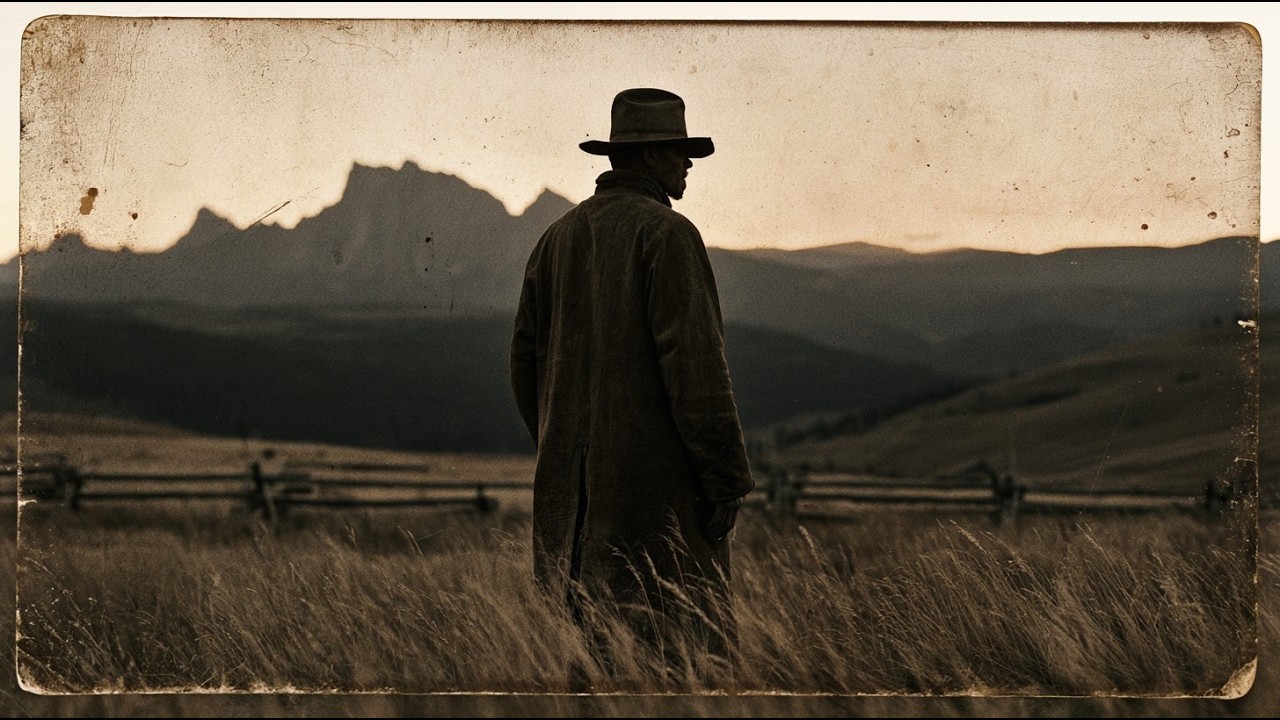
So before you judge that I am just an old cowhand acting foolish in the dark, let me tell you where that rule came from, because I knew the man who broke it. What I am about to tell you happened in the summer of 1911, in a place the people here still call the Merrick Basin, in the high country of Montana, where the grass grows sweeter the higher you climb, and the reason for that is something no one likes to say out loud. Let me describe the place first, so you see it as I see it when I close my eyes. The basin is a wide valley of rich pasture surrounded by mountains on three sides, so far from anywhere that mail in those days arrived twice a month if the passes were open, and never at all if they were closed.
There was a town, if you could call it that: a cluster of buildings at the lower end of the basin where the wagon road came in; a feed store; a church used for everything else; a place to buy coffee and nails and cartridges, and to hear the news, which was mostly about weather and stock prices and who had married whom. The people were scattered along the valley floor with their holdings, and in the long winters they would go for weeks without seeing a face that was not a relative. That kind of country makes a certain kind of people: quiet, wary, slow to trust and slower to explain. The basin folk did not talk much about the high country with strangers, and when a newcomer asked why half the good summer grass up there went unused, in a country hungry for grass, the answer he got was a shrug and a change of subject.
The truth was not something handed to a passing man. The truth was something you learned by surviving, the way you learn where the ice is thin, by hearing it once, harshly, from someone who loves you enough to frighten you. The man this happened to was named Ransom Teal. He was forty-six that year, and if you had met him you would not have taken him for a man who came down pale-faced from a mountain.
He was taller than most, broad-shouldered from thirty years of throwing ropes and mending fences, with a jaw like a fence post and hands cracked and brown as saddle leather. He listened with patience and great attention, as if he had already heard the end of what you were saying and was only being polite. Ransom ran the biggest spread in the basin, close to two hundred head in a good year, and the best summer grass was up in what we call the upper benches, long green shelves of pasture that rise on the mountain above the timber. Cattle put on weight there like nowhere else.
Everybody who ran stock in the basin drove their herds up to those benches when the short grass burned in July, then brought them down before autumn. That was the way of it. You worked the heights by day, then dropped below the timberline before the light went in the evening. And whatever you did, you went up with a rifle on the saddle, loaded, and you kept it there.
Not because the rifle would do any good, though no one said that openly in those days, but because an armed man walks differently, thinks differently, keeps part of himself awake while an unarmed man lets it go slack. The man who set this rule for all of us was Onslow Pruett. Onslow was in his seventies that summer, and he had run cattle on those heights longer than any living man, longer than the county had kept official records. He was a thin man, bent like a question mark, with pale eyes the color of dishwater and a voice you had to lean in to understand.
And when Onslow Pruett told you something about the high country, you did not argue, because Onslow had buried more good men than he cared to count. He would tell you that every one of them had broken the rule slightly, and thought nothing would come of it. He said it plainly the first time I heard him, sitting on a fence outside the feed store with a cup of coffee going cold in his hand. Stay in the low country when the light turns, son, he said.
And if a voice calls you from above the trees, do not answer it. Do not go to see who it is, not even if the voice sounds like your mother. I was young and I laughed at that, as the young do, and Onslow did not laugh. He only looked at me until the laugh dried in my throat, then looked away toward the benches, and that was worse.
There was a story Onslow told only once in my hearing, and I could never forget it. Years before I was born, there was a man in the basin, skilled, very careful, who went up one autumn evening to fetch a horse that had slipped its tether. His wife watched him ride toward the timberline in the last of the light. She watched him stop, and sit there for a long while, as if someone in the high timber was speaking to him.
Then she watched him take off his hat, the way a man does out of respect or love, and ride into the trees, away from the world. He was found nine days later, high up on a bare rock where no horse could climb, sitting with his back to a stone, boots worn through, looking down at the basin spread below. He was alive. He did not speak a word.
And when he finally spoke, weeks later, all he said was that he had gone to see his father, and his father had been very glad. His father had been dead eleven years. There were others, and Onslow counted them the way some men count their watch, always aware of its weight. He told Ransom about a hand who went up after a stray mule one September day and came back three days later walking the wagon road barefoot, carrying his boots, smiling at everyone he passed and answering no question put to him, and lived in the basin for years afterward, mild and quiet, a man everyone fed and no one could reach.
He told the story of two brothers who went up together against the rule, certain that two men were safe where one was not, and how only one came down, and how he never spoke his brother’s name again, and left any room where it was mentioned. Onslow told these stories not to frighten. He told them the way a man explains which of the hands are safe and which will take your wagon. Simply, without drama, because the drama had been spent long ago, and only the accounting remained.
Eleven men in his time, and more before him, and every one of them, he said, was perfectly certain until the moment the dawn broke and they heard the voice, that it would not happen to them. Ransom Teal heard that same warning a hundred times, and Ransom was not a superstitious man. He kept the rule because it was good practice, and because a man does not last long in cattle country if he disregards those who came before him, but I do not think he believed in his heart that there was anything up there but weather and wolves and the usual cruelty of the high country. He would have said so gently, so as not to offend Onslow.
He would have said that maybe the high places had swallowed a few careless men over the years, and people had spun a story around it, as they always do. And for a long time, nothing happened to prove him wrong. The summer of 1911 began like any other. The snow lingered late in the heights, the grass grew thick and green, and in the first week of July Ransom drove the herd up to the benches himself.
He had three men with him that summer. There was Harlan Rowe, twenty-eight, a quiet man who did not speak ten words in a day. There was a younger fellow named Cassius, twenty-five, new to the basin, come from the East with more boldness than sense, the kind who has to touch the stove to be sure it is hot. And there was the most important man in this story, a lean, quiet fellow named Orrin Sisk, thirty-two, quick with horses and quicker with jokes, the kind every outfit wants and few can keep.
Orrin grew up in the basin and knew the rule as well as he knew his own name, and he kept it because he was cautious, and because he wanted to grow old, which is what cautious men want. For three or four weeks, the summer was ordinary. The cattle fattened. The days were long and hot, smelling of dust and crushed grass and warm pine in the sun.
The men worked the benches by day and came down to the cow camp in the timber by night, playing cards, trading lies, sleeping, and doing it all over again. I have always imagined those first weeks as wonderful, and Orrin confirmed that they were, some of the best of his life, which is what made the rest of the season so hard. A summer cow camp in the high mountains is a fine place. The work is honest and hard and done by noon most days, the afternoons long and blue, the evenings smelling of coffee and pine smoke, and the stars up there are something you never see in the cities, thick and close and turning slowly over the peaks.
The four of them got along well. Harlan cooked badly and took the teasing in good spirit. Cassius told stories about the East that grew more magnificent every night. Orrin played the mouth harp badly, and Ransom sat a little apart, back against a tree trunk, listening to it all with his head tilted in that familiar way, a big quiet man content among his companions.
And if one of them woke some nights in the black dark with the feeling that the camp was being watched from among the trees, that something stood behind the light of the fire watching them sleep, the only man in the mountains feels that now and then, so he said nothing and went back to sleep, and only learned later that every other man around that fire had felt the same thing on the same nights, and said nothing either. Then, near the end of July, the first strange thing happened. It was so small that Ransom almost never heard of it. One evening Orrin came down off the benches later than he wanted, later than the rule allowed, because a bunch of cattle had gone up higher than they should have, past the last bench where the good grass fades and the rock begins, and he had to ride behind them and push them down.
Cattle do not go up there. There is nothing for them there. The grass withers, the ground turns rough, and any sensible animal stays on the lush green slopes below. But there they were, forty head, strung out along the high edge of the timber where the trees give way to bare rock, standing motionless, all facing the same direction, toward the rock, not grazing, not moving, just staring.
Orrin said later the strangest thing was how quiet they were. Cattle are not quiet animals. A herd that size makes a low constant noise of bawling and movement, the creak of bell cows. But these forty stood utterly silent in the last of the daylight, not one turning its head even when Orrin rode in behind them.
He had to shout and slap his coiled rope against his chaps before one broke and started down. And even then they came down slowly, stiff-legged, looking back the whole way, as if they had left something up there they meant to go back for. And there was something else, something Orrin only told me years later, because he was ashamed of what he felt. While he sat on his horse behind those forty silent cattle in the failing light, he was seized by a strong conviction that he was not looking at the cattle so much as they were a screen, and that the real thing, the thing worth looking at, stood on the rock looking at him from behind the herd, and had been for some time.
He did not see it. He felt it, the way you feel someone enter a room behind your back. Orrin told Ransom about the forty head at supper and made a joke of it, said the herd had gone up and joined a religious order on the high rock. Ransom laughed.
But I have thought about that supper many times since. I believe Ransom did not sleep well that night, because the next morning he rode up to the benches himself, early, before the heat. And he took his rifle, which was not something he always did on a bright clear morning when he was only riding to look at the grass. On the heights, everything seemed fine.
The grass was good. The water in the little springs was clear and cold. The cattle that had come down the night before were grazing easily and naturally, as cattle should. Ransom rode along the high timberline on that upper edge where Orrin had found the forty head standing, and he found nothing.
No sign of wolf or bear or big cat, no carcass, no blood, no trace at all. But in the place where the cattle had stood, where the grass thinned and turned to rock, he found one thing he had no name for. The grass there was pressed down in a wide flat ring, the way grass is when a large animal has slept on it overnight, except animals do not sleep in a ring. And no animal of that size had left any track coming or going, and the ring was very large.
Inside it, the grass was not just pressed down, it was withered, gray and wilted, as if the green had been drawn out of it. He sat his horse a long time looking at that ring, and he told me later the only other thing he noticed, the only other thing at all, was that his horse did not want to face the trees. It was a good steady horse, a chestnut gelding he had raised from a colt and trusted blindly on rough ground. It kept turning its head away from the timber, kept trying to put its tail to it, and its ears never went forward the whole time they were there.
Onslow used to say, when a horse will not look at something, it is because it has already looked and decided once was enough. There was something else Ransom did in those days that he never spoke of. I only knew because Orrin saw him. Ransom kept an old cow dog, a blue heeler, named Job, a strong, smart, brave animal that had worked cattle all its life and feared nothing that walked or crawled in that country.
One day Ransom took Job up the hill toward the timberline, meaning, I think, to use the dog the way a dog is used, to tell him what his eyes could not see. Because a dog knows things a man has forgotten how to know. And Job, who would face down a bull or a badger eye to eye without hesitation, reached about forty yards from the high timber and stopped. Stopped dead.
Would not go on. Did not bark, did not growl. Lay down in the grass with his ears back, his whole body trembling, and looked at Ransom with a look Orrin said he had never seen on an animal and hoped never to see again. He would not be coaxed or called or pushed one step closer to the trees.
Ransom stood there a while, looking from the dog to the timber and back. Then he picked the dog up in his arms as if it were a gentle lamb, that old tough dog that had never been carried in its life, and carried it back down the slope, and never took it up again. Ransom came down and did not talk much about it, but he began sending the hands out in pairs after that, never one man alone. And he began calling them down early, an hour before the light went, instead of at the last minute.
If any of them wondered at it, they did not show it. A good boss is a careful boss, and only a fool of a hand complains. For a week or so, that was the end of it. Then the calling began.
Now, I want to be careful in telling this part, because it is the part that makes those who were not there laugh, and the part that never makes those who were there laugh. Let me put it to you plainly, and you may make of it what you will. It started with Orrin. He was sitting on the middle bench late one day, alone for a few minutes because his partner had gone down to the creek to fill the canteens, and he heard someone call his name.
Just his name. Orrin, clear as daylight, coming from the upper timber, from that high edge where the trees meet the rock. And he swore to me himself, years later when he was an old man with no reason left to lie, that it was his brother’s voice. His brother Deverel, who had left the basin at twenty to go work the copper mines out west, and died in a shaft the year before, three hundred miles from the Merrick Basin, buried in a town Orrin had never set foot in.
That voice, his dead brother’s voice, calling his name from the upper timber, warm and easy, the way Deverel used to call him for supper when they were boys. And Orrin, God help him, Orrin had swung half down out of the saddle, turning toward the trees, before he even understood he had moved. His body wanted to go. Every part of him yearned to climb into those trees toward that voice.
Because the voice was glad to see him, do you understand? The voice loved him. And he had grieved so long that he had never gotten to say goodbye. Then his partner came riding back from the creek whistling, the water bottles clinking, an ordinary day.
And the voice stopped. Stopped mid-word, as if a door had closed. And Orrin stood there, one foot in the stirrup and one on the ground, his heart hammering. He did not tell his partner what he had heard.
The two of them came down off the benches in the last bright light, and Orrin was silent the whole way, and he did not sleep that night at all. But he told Ransom the next morning, because he was too shaken to keep it. And here is the secret of Ransom Teal that you must understand to understand the rest. He believed Orrin.
He did not laugh. He did not tell the man he had heard the wind. He did not offer any of the comforting explanations a boss might reach for to settle a hand. He looked at Orrin for a long while with his head tilted in that patient way of his, and then he said, easy now.
Onslow had warned him of precisely this, word for word, twenty years before, and he was ashamed to admit he had not truly believed it until he saw Orrin’s face. There was another person in the basin who knew that voice for what it was, and I must tell you about her because she is part of my knowledge that this story is true, that it is not merely a superstition dreamed up by two frightened men. Her name was Verity Ostrander, and she was fifty-eight that summer, a widow running a small operation on the other side of the basin with two hands and a will hard as fence wire. Verity had lost her husband years before, not to the mountain but to an ordinary winter fever.
But she had lost something else to the mountain, and everyone in the basin knew it, and no one spoke of it in her presence. A few years earlier, she had ridden up to her high pasture one evening to fetch a milk cow, and had come back without the cow, white-faced, and never went up again, not once, not even in full daylight, not for any reason. She told me near the end of her life, the same way Orrin told me his story, as something she wanted to hand on to someone before she went. She said she heard her husband call her from above the trees.
She said he called her by a name no one else ever used, a private name, his name for her, and no one knew it, so she was certain it was not chance or a joke from someone in the pine woods. And she said the terrible thing, the thing that kept her off the heights all her life, was not fear. She said she was not afraid at all. She said she wanted so badly to go that she bit her lip and rode her horse down the mountain with blood running off her chin, because she knew if she allowed herself to feel how much she wanted it, she would go and never come back.
She told me something else about that night, and it is what I think about most. She said in the weeks that followed, she kept expecting to feel glad she had come down. After all, she had a life to return to, an operation to run, people who needed her, years of good work still ahead. And she said she was glad, as the mind is glad, but there was another part of her, a part she did not want to look at, that grieved for what she had fled, that mourned it like a lost love, that woke her at night with the little name he called her still ringing in her ears, and a terrible sweetness in her chest, and a longing so deep she was afraid of herself.
She told me, that is the real heart of it. Not fear, and not longing. The mountain did not need to chase you or catch you or frighten you to have you. All it had to do was show you once the face of the thing you had lost, then leave you to spend the rest of your life knowing it was still there, still calling, still glad, still waiting, and that all you had to do to go to it was stop holding on to staying alive.
She stayed off the heights for fifty years out of pure stubbornness, and she told me near the end that she still was not sure she had made the right decision, and then she laughed. So I thought she was joking, and I could never quite tell whether she was or not. Ransom Teal went to see Onslow Pruett that same day. Orrin had told him about the voice.
He sat with the old man on his porch until sunset, and Onslow told him everything, all the parts of the story that never made it into the county records, because the county did not want them there. Onslow had come to the basin as a young man in the 1870s, and even then the rule was already old, handed down from men older than him, from back countries too remote for anyone to track. And in Onslow’s own time, in the fifty years he had run the high country, he knew of eleven men taken, eleven. Not by wolves, not by falls, not by exposure.
Every one of them had ridden up into the high pasture near dusk, or stayed out late, and every one of them had done the one thing that is always forbidden. They heard a voice they loved calling from above the timberline, and they answered it, and they went up to see. Some were never found. Some were found days later, miles from where they had disappeared, in back country a man could not reach on foot in that time, sitting on a bare rock with their boots worn through, staring at nothing, unable or unwilling to speak a word about where they had been.
And Onslow said the ones who were found, the ones who survived, were not right afterward. They were hollow, as if something had reached in and pulled out the part of them that laughed. What came back from the mountain wearing their faces was not the same man who had gone up. Onslow told him something else that day, something Ransom repeated to Orrin, and Orrin repeated to me, and it is the closest thing to an explanation anyone in the basin ever got.
Onslow said that thing up there was old, older than the rule, older than the first white man to run a cow into the basin, and that the people who had been in the country before, the ones who were there when Onslow was young and were mostly gone by the time he was old, knew it too, and had a way of speaking of it that was not exactly fear, more like the careful respect you give a hard winter or a river in flood, something not evil, but not on your side either, something that was simply there and always had been, and took what came to it. They did not go up in the evening either. They had their own rule, older than ours, and Onslow said the wisest thing a man in the basin could do was keep it without needing to understand it, the way you avoid thin ice without needing to understand its physics. When the county had to write something down, they wrote strayed, or met with accident, or lost in a storm, because those were words a coroner could write and still go home to his supper.
But Onslow himself had helped bring some of those men down, and he knew the right word, and it was none of the words the county used. He would not speak the word he thought fit. Some words are a door, he said, and you do not open a door in the dark just to prove you are not afraid of the hall. That evening Ransom Teal came down off Onslow’s porch changed in one respect.
He believed. But belief did not make him afraid, not in the way it should have. And that is the flaw in a strong man who knows who he answers to. Ransom decided the answer was not to stay off the benches but to master them, to work them cautiously, armed, in daylight.
To keep his men safe by keeping the rule with a strictness it had never known. To bring his herd down and his crew home whole at the end of the summer, and prove that a sensible man could share the mountain with whatever lived on it, and come out ahead. It was a proud idea. It was the idea of a man who had never been beaten.
And for two weeks, it seemed to work. He drew a line, a real one. He rode his men along it below the high timber, and told them nothing on this earth was worth crossing that line after mid-afternoon. He pulled the herd down to the lower slopes.
He doubled the hands. And the calling continued, but from farther now, from above, because the cattle and the men had pulled back. And a voice that calls you closer does no good if you will not come. Orrin heard his brother twice more, faint from the high rock, and both times he was already down off the mountain and gone before the voice could work on him.
The other hands began to hear things too. Cassius, the bold young man from the East, heard a woman he had courted back home and lost singing in the woods, a song she had sung for no one but him. Cassius went white as a dead man, refused to speak of it, and asked for his wages two days later and left the basin. I do not think he ever came back to Montana.
And Harlan Rowe, the quiet one, heard a dog he had raised and buried barking in joy, the way it barked when he came home. And Harlan, who did not speak ten words a day, said later the worst of it was how much he wanted to answer. How a grown man could stand there in broad daylight and ache to climb the mountain toward the memory of a dog. Every man in that crew, before the summer was out, heard the one voice that could have called him up the mountain.
But every man, because Ransom had drawn the line and tightened the rule, kept his feet in the low country and did not answer. And I think Ransom believed he had won. I think he sat at his supper table in August, looked at his crew and his fat herd, and thought the old man had simply lacked the nerve to face the thing head-on, and that he had faced it and beaten it with wit and grit. And that, precisely, was his place on the heights, because something patient for a hundred years is not beaten by a proud man in a single summer.
It only waits for you to make one mistake, the eternal mistake of pride. In the last week before it happened, the thing changed its method. This is the part Orrin swore to, and I believe him. The voices stopped coming from above.
They began coming from close by. A hand would be riding the low bench safely below the line in full golden afternoon light and hear his name called softly from inside the nearest stand of pine. Not up the mountain, but right there beside him, almost. As if the thing had come down off the rock and was walking the timberline alongside them, tracking them, closing in.
Ransom found tracks one morning below his line, in a place tracks had no business being, pressed into the soft earth at the edge of the timber. He never said what they looked like. Orrin saw his face when he found them, and said it was the only time all summer he saw his boss afraid, and that Ransom smoothed the tracks over with his boot and told the men it was nothing, just a deer, and did not believe it himself. After that, a gloom settled over them that none of them could describe.
The cattle would not calm. They clustered at the lower end of the slopes, away from the timber, and stood at night in tight bunches with heads up, the way cattle stand when there is a big cat about, except there was no cat and no sign of one. And no cat on earth keeps a herd restless for a week without taking a single calf. The horses were worse.
They did not want to be caught in the morning, and they were lathered on cool days. One evening a horse, a good young mare, spooked at absolutely nothing, hit a fence and cut her chest, and they had to walk her home slowly. The voices came closer and closer, and no longer made any secret of coming from nearby. A man would hear his name from the near timber three or four times in an afternoon.
Patient, unhurried, the way you call to a friend who is only pretending not to hear you. A little game between people who love each other. Orrin said the worst of it was how reasonable it seemed at first. How by the end of that week, part of you began to think it would not be so hard to ride over and look, just once, to settle it.
And he understood then, he told me, exactly how the eleven men had done it, and he stopped thinking of them as fools, and began praying in earnest every morning that the summer would end before the last of his good sense wore through. The mistake came at the end of August, on an evening I have heard described so many times I feel as if I was there myself. A storm was coming, a real one, the kind that rolls off the peaks in high summer, with green in the heart of the cloud and lightning walking the ridges. The herd was restless, as cattle are before a storm.
When the first thunder hit, a bunch of them spooked and ran. In the running, twelve head went the wrong way, across Ransom’s line, into the dense timber, panicked. They went up into country no cow should ever be in, at the hour the light was failing and the storm was closing the sky early and darkening it. Now, the sensible thing, the thing the rule demanded, was to let them go.
Cattle are worth money, but no cow is worth a man, and losing twelve head to a storm is a bad night, not a disaster. Any man in that crew would have told you to let them go and gather them in the morning. But Ransom Teal owned two hundred head, and a reputation for not losing any, and a summer of pride that had convinced him he knew everything about that mountain. And when he saw that cattle pushing for the heights, he did the one thing that should never be done.
He rode up after them. And Orrin Sisk, because he was a loyal man and could not let his boss ride into that alone, rode up after Ransom. Two men at dusk, in a rising storm, riding their horses across the line into the dense timber, armed, yes, both of them were armed, but a rifle is no answer to a voice, and the thing that lives up there had not been stopped by a bullet in a hundred years. What happened up there?
I can only tell you as Orrin told me, an old man to a young one on a winter night long after, with the fire low and his hand shaking, and he made me promise not to speak of it while he lived, and I kept that promise. Now he is gone, so here is the story. They rode into the trees in the last gray light, thunder rolling and rain falling cold and hard. They heard the cattle crashing ahead of them through the timber, so they pushed their horses after the sound, up the slope, into ground that grew steeper and darker and stranger with every step.
Then, Orrin said, the storm went silent. Not stopped. Gone, as if someone had taken the whole roaring world and put it behind a thick wall. The thunder faded to distant.
The rain kept falling, but he could no longer hear it hitting the leaves. The air went cold, colder than the storm, a deep still cold that came up out of the ground and did not move. And in that muffled silence, quiet as water, in the dark wood, a voice began to call. It called Ransom.
And Orrin swore to me it was Ransom’s own father, a man dead twenty years, a hard old cowhand Ransom had loved and feared, and spent his whole life trying to make proud. The voice came down through the black trees, warm and glad, calling Ransom’s name. Calling him son, telling him he had done well, telling him to come up here where I am. Come and let me look at you.
I have waited so long to tell you. And Orrin, riding directly behind him, saw Ransom Teal stop his horse. Saw the big man’s shoulders drop from where he carried them. Saw him lift his face toward that voice, the way a man lifts his face to the sun after a long winter.
And Orrin knew, in that moment, that Ransom was going to go. That every hard, proud year of the man’s life was about to carry him into those trees toward the voice of his dead father’s love. And that if he went up, he would not come down. Or that the thing that came down would not be him.
So Orrin had only one choice. He did not reach for his rifle, because he understood then it was useless. He spurred his horse up alongside Ransom’s, seized the big man by the collar of his coat with both hands, and screamed in his face. He screamed that it was not his father.
He screamed that his father was dead and buried in the low country twenty years. And that the thing in the trees was wearing his voice like a coat. And for one long, terrible moment, Ransom looked at him. And there was nothing in his eyes that Orrin knew.
The man he had worked for, joked with, respected, was not looking out through those eyes. Something else was. Something that had come down off the rock to look out through Ransom Teal’s eyes. Orrin said it was the coldest, oldest, most patient thing he had ever felt turn its attention on him.
And it was not angry at his interference. It was amused, the way you are amused by a small dog that thinks it is protecting you. And here I must stop to tell you the one image Orrin carried out of those trees and could never forget. Because in the blackness between two pines, up the slope, at the edge of what the eye could take in, there was a shape.
It was tall, taller than a man, taller than it should have been, and pale. And it stood the way a person stands when they are about to step forward and embrace you, arms slightly open, waiting. But it did not step forward. It stood there in the dark and the muffled rain, patient, glad, wearing the darkness like a coat.
And it kept calling in the voice of Ransom’s father, soft, full of love. Come up, son. Come up. And the terrible thing, the thing Orrin could never forgive the world for, was that it was beautiful.
The wanting of it was beautiful. Every man who had answered that voice, Orrin finally understood, had not been dragged up that mountain. He had gone gladly. Gone the way you go toward the one thing you have wanted all your life and given up ever having again.
That is the horror of the high country. It does not chase you. It offers you what you miss most, in the voice of the one you miss most. And it waits for you to run to it.
Orrin grabbed the bridle of Ransom’s horse, wrenched its head around, and dug in his spurs and dragged them both, all four animals now, down the slope away from that shape and that voice, and Ransom fought him. The big man fought him the whole way, silent and strong, trying to turn back, while Orrin held on and rode and prayed and did not let go. And the voice followed them through the trees, growing sweeter, growing more pained, asking Ransom why he was leaving, saying it had waited so long, saying it would not ask again. Then they broke out of the timber onto the open bench, and the storm hit them all at once, deafening.
Thunder and wind and cold rain, the whole roaring world back in place. And Ransom went slack in his grip. He came back to himself like a man surfacing from deep water, gasping. He looked around at the storm and the dark benches, at Orrin clinging to his horse beside him.
And he did not say a word. They rode down off the heights in the dark and the rain, and they did not gather the lost cattle, and they never went up after them. In the morning, when the storm had passed and the sun came up clear and gold over the peaks, as it does after mountain weather, some of those lost cattle straggled back on their own, ordinary and hungry and fine. Some never came back, and were never found.
No bones, no bell. And no one in the basin was fool enough to ride up looking for them. That same week, they brought the rest of the herd down off the heights, early, weeks before anyone else in the basin. People noticed, because Ransom Teal was not a man who came in early, or spooked, or left good grass uneaten.
He offered no explanation. He simply brought his cattle down to the low country, put them behind the home fences, and sat on his porch of an evening with his rifle across his knees, looking at the mountains. The hands who rode for him drifted off one by one to other outfits. Not because he let them go, but because a camp where the boss has seen something he will not speak of is a heavy place, and the young do not like heavy places.
Harlan Rowe ran cattle in two neighboring valleys, I was told, did well, and died an old man. Cassius had gone east long before. Orrin stayed with Ransom longer than any of them, out of loyalty, and because the two of them shared something that could not be shared with anyone else. They never spoke of it, not once, in all those years.
But it was present between them at every meal and on every ride, like a third man no one named. That is a particular kind of friendship, built on something too deep to be said, and it is stronger than easy friendship and lonelier. I asked Orrin once why he never left, why he stayed all those years in a place that had shown him the dark side of the world. He was silent a long time.
Then he said a man who has stood where he stood, and felt what he felt, and had to cling to another man’s collar and drag him back from the edge of giving himself to death, that man does not go back to what he was before. He said the mountain had not taken him, but it had changed his shape, made a place in him that would always stand a little turned toward the heights, tilted a little like Ransom’s head, always half listening. And the only cure he found, the only thing that let him sleep, was to stay near the one soul who understood, and to keep the rule strictly every day, and to reassure himself each night that one more day had passed without answering. He said keeping the rule is no hardship of a life.
But he said some rules are the only wall between the living and a door that should not be opened, and a man could spend worse years than standing guard on such a wall. Ransom Teal was not the same after that night. He was not hollow, as Onslow said of those who answered and came back empty. Orrin had pulled him back before he could go up, before whatever waited could finish.
But something in Ransom had seen past the voice, had stood at the edge of the fall, and a man does not look over that edge and come back whole. That autumn, he sold the high pasture, gave up the upper range without a broker, and contented himself with fencing the line he had drawn. He set the fence himself, set the posts, and told every man who worked for him and every neighbor who would listen that the herd would never cross that line, not for grass, not for strays, not for any reason. He ran a smaller spread in the low country after that, did well enough, and lived to a great age.
But he was quieter than he had been, and he stayed armed to the end of his days, even in the low country, even in full daylight, and he never told anyone in thirty years what he had seen among those trees, except Orrin, who had been there, and me, long after they were both gone. The rule held after that, stricter than ever, because there was now a man everyone knew and respected who had gone up and nearly not come back. That is worth more than any story a hundred old men could tell. I have thought long over the years about why the mountain let Ransom go, when it had never before let a man who had gone up and turned toward the voice go.
Orrin thought he had simply caught him in time, and perhaps that was all it was. But I have another idea, and I will share it with you for what it is worth. I think the thing up there does not like to be denied a man it has already counted as its own, and I think it did not forget. Because in the later years, down on the flats, in the safety of full day, Ransom still heard his name.
Not often. A few times a summer, always from above, always in his father’s voice, always gentle. And always, Orrin said in a new tone now, something almost fond, the way you love a debt you know will be collected in its time and not before. Ransom never answered.
He grew old, and his hair went white, and his hearing failed, and people thought his deafness a mercy. But I do not believe he ever stopped hearing that particular voice, as clear as the day it first called him into the heart of the storm. I believe he heard it on the morning of the last day of his life. And I believe many of us will hear it.
No one rides the high pastures at dusk. Only the locals go armed. We drive the cattle up in July and bring them down in the cold of afternoon, and we are off the heights and below the timberline before the daylight turns copper, every one of us, every summer. And we do not speak of the reason to outsiders, because they laugh, as I laughed at Onslow on that fence years ago, before he looked at me until the laugh dried in my throat.
I will tell you the last of it, and then I will leave you. Onslow Pruett died in the winter after Ransom sold the high pasture, peacefully in his bed, a very old man, and I helped dig his grave in the frozen ground, in the low country, where the dead belong. Verity Ostrander lived to a great age, strong and clear-eyed to the end, and handed me her share of the story as I have handed it to you. Orrin Sisk lived to old age, and told me the whole story one night by the fire as I have told it to you, and made me carry it until he was gone.
Ransom Teal I knew as an old man, patient, quiet, armed, kind to me when I was young, and I did not know his story then, only that he was a man other men lowered their voices around. And that he would sometimes stop in the middle of an ordinary afternoon, and turn to listen to something up the mountain that the rest of us could not hear. Then he would shake it off and go back to work. I asked him once, when I was too young to understand, whether he had ever heard anything strange on the benches.
He looked at me with his head tilted in that patient way for a long while. Then he said, only this. If you are in a high place, and the light is going, and you hear someone you love call your name from above the trees, do not be glad. Everything that loves you is here in the low country where you left it.
Anything that calls you, he said, is wearing love the way a hunter wears the scent of what it means to kill. Then he went back to mending his fence. And he never spoke of it again, nor did I, until now. So that is where the rule came from, and that is why we keep it.
Some of you will think it is only a story. I hope you are right. I hope you never learn otherwise, on a high green shelf of grass, with the light turning gold, and a voice you have grieved for years calling your name from above the trees. But I will tell you one last truth before I go, and you may make of it what you will.
Last summer, on the low bench in full daylight, safely below the line, mending that same fence that has stood since Ransom Teal ran the place, I heard someone call my name from the upper timber. Just my name. And it was a voice I had missed for a long time. A voice I would give much to hear again in this life.
I did not turn, and I did not answer. I mounted my horse and rode down to the low country, where the living are supposed to stay. But I will tell you the truth: it is a hard thing to keep riding away from a voice like that. It is the hardest thing I have ever done.
And I think of the men who could not do it, and I do not think they were weak. I think they were more loved, and more lonely, than the rest of us. And the high country knew it, as it always knows. And you, out there in the dark, wherever you are, have you ever heard your name called from a place where no living person could be?
If you have, I hope you did what I did and rode away. If you have such a story, a place near you that the old folks tell you to stay away from after dark, and they will not explain why, tell me about it. Stay off the heights when the light goes. Go armed if you must go at all.
And whatever calls you from above the timberline, no matter how much you love it, no matter how much you miss it, do not answer, and do not go to see. The low country is where the living belong.






