Jean Kennedy Smith spent her life as the diplomatic heart of the Kennedy family, serving as United States Ambassador to Ireland and quietly building the arts organization Very Special Arts. But her four children carried a heavier burden than public service. Raised under the glare of the Kennedy name, they inherited both its privileges and its traumas, from the assassinations that marked their youth to a nationally televised scandal that nearly consumed one of them. Steven, William, Amanda, and Kim Smith each found a different way through that inheritance, and their separate paths tell a larger story about survival inside America’s most watched political dynasty.
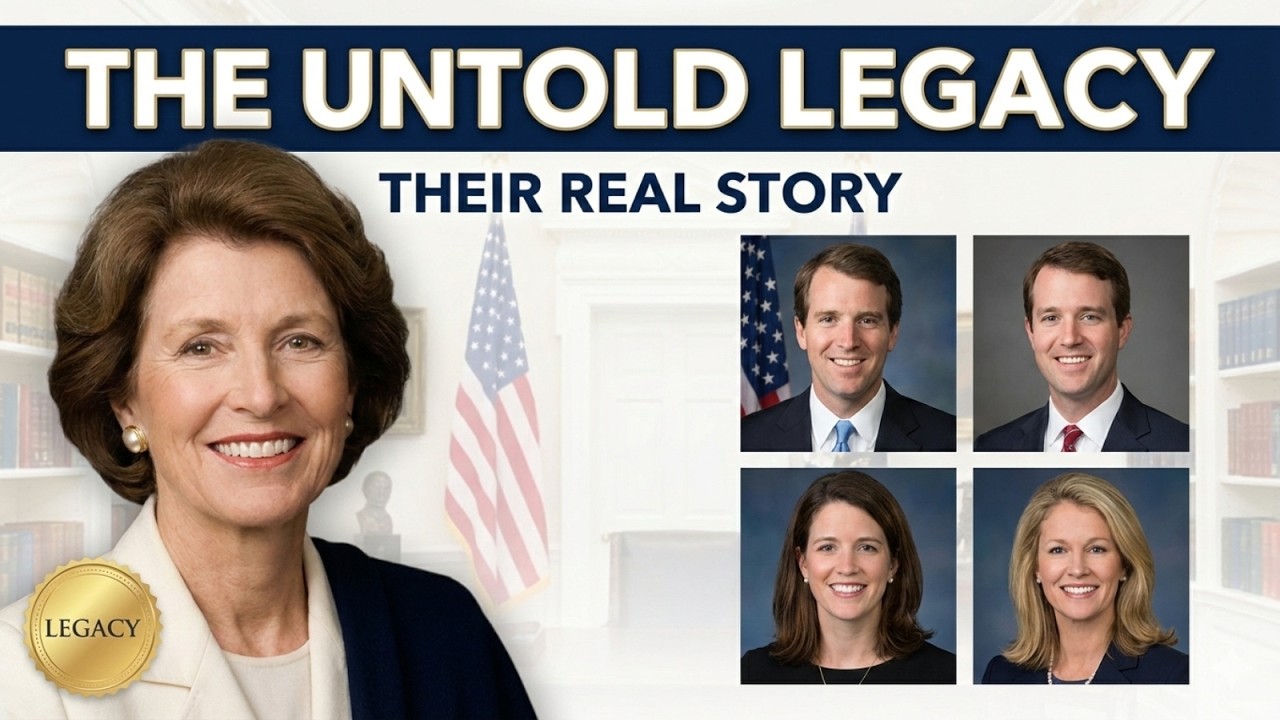
The eldest son, Steven Kennedy Smith, was born on November 28, 1957. He grew up inside the contradictions of Camelot, surrounded by glamour and power while witnessing the assassinations of his uncles, President John F. Kennedy and Senator Robert F. Kennedy.
From an early age, the message was clear: public service was not a choice but a destiny. Steven educated himself at Harvard University and Columbia Law School, arming himself with legal and strategic training. But unlike many of his cousins, he did not pursue political office. Instead, he redefined what service could mean.
His most significant achievement came through co-founding World T. E. A. M.
Sports, an organization dedicated to demonstrating the capabilities of disabled athletes. The group organizes demanding athletic events, including cross-country cycling that brings together disabled and able-bodied veterans. The work was a direct extension of his mother’s mission with Very Special Arts, translating her belief in human potential into physical action. Steven served as a family spokesperson on issues of veterans affairs and service history, cultivating a public image of competence and dignity.
He avoided scandal almost entirely, using his education and the power of the Kennedy name to build a twenty-first century model of philanthropic entrepreneurship. His story was one of strategic redirection, turning inherited trauma into constructive innovation. The second son, William Kennedy Smith, born on September 4, 1960, took a more traditional professional route. He attended Duke University and Georgetown Medical School, dedicating himself to medicine and public health with a focus on marginalized communities.
The promise of that career collided with catastrophe in 1991. After an incident at the Kennedy family compound in Palm Beach, Florida, William was charged with rape. The trial became an instant national phenomenon, broadcast across television screens and dominating news cycles for months. His uncle, Senator Ted Kennedy, was pulled into the scandal alongside him, and the entire family endured intense hostile scrutiny.
William was acquitted of all charges, but the public judgment never fully subsided. His name became permanently linked to the trial, a cultural shorthand for what many called the Kennedy curse. The psychological weight of that acquittal was immense. Cleared by law but condemned by public opinion, William retreated into quiet global health work, focusing on HIV and AIDS prevention and treatment in Africa and other developing regions.
His career became methodical, behind the scenes, and deeply committed, a personal answer to the catastrophe that had marked his life. He achieved professional results of real consequence, but the scar of 1991 never faded. His story became one of translating personal and public disaster into sustained humanitarian effort. The adopted daughters took a different approach.
Amanda Kennedy Smith, born in 1967 and adopted into the family after Robert Kennedy’s assassination, chose deliberate obscurity. Raised with a sharp awareness of the price attached to the Kennedy name, she built a life centered on social work and community activism, fields aligned with the family’s service mandate but far removed from Washington politics and television studios. Her success lay in her anonymity. In a family defined by public ambition, Amanda proved that the commitment to service could be fulfilled quietly, without office or fanfare.
She became the psychological success story of the four siblings, demonstrating that it was possible to live a full life while actively rejecting the relentless public gaze. Kim Kennedy Smith, the youngest, born in 1972 and also adopted, grew up in the shadow of the 1991 trial and the decline of her mother’s health. She was acutely conscious of how fragile the family’s public image had become and how essential its humanitarian mission remained. Her career centered on artistic and nonprofit community work, carrying forward the creative core of her mother’s legacy.
She worked with art and creative expression for social good and disability advocacy, supporting Very Special Arts from the community level upward. Like her sister Amanda, she maintained an extreme level of privacy, avoiding the political and media failures that had defined her cousins’ generation. Her quiet achievements stood as evidence that the Kennedy legacy was not confined to the political power of its men, but rested equally on the enduring humanitarian work of its women. Across four very different lives, a single pattern emerged.
Steven turned the family’s service mandate into entrepreneurial innovation. William turned scandal into medical mission. Amanda and Kim turned the pressure of public life into chosen invisibility. None of them escaped the weight of their name, but each found a way to carry it.
The collective result was a transformation of the Kennedy burden into positive action. The children of Jean Kennedy Smith did not inherit a political dynasty so much as they inherited a set of obligations, and they fulfilled those obligations in ways their relatives could not have predicted. The lawyer built programs for disabled veterans. The doctor treated the sick in Africa.
The daughters served their communities far from the cameras. In the end, their story was not about scandal or tragedy, though both marked them deeply. It was about what the next generation does with what it has been given, and how four people from the same family found four different ways to keep the promise alive.






