On the night of April 14, 1912, the largest and most luxurious ship ever built struck an iceberg in the frigid waters of the North Atlantic. Aboard it was John Jacob Astor IV, great-grandson of the family’s founder, one of the wealthiest men in the world, and the living embodiment of everything the Astor name had come to represent. He was reported to have secured his pregnant young wife a place in one of the limited lifeboats, then stepped back, reportedly requesting permission to accompany her given her condition. The request was denied under the strict women and children first protocol.
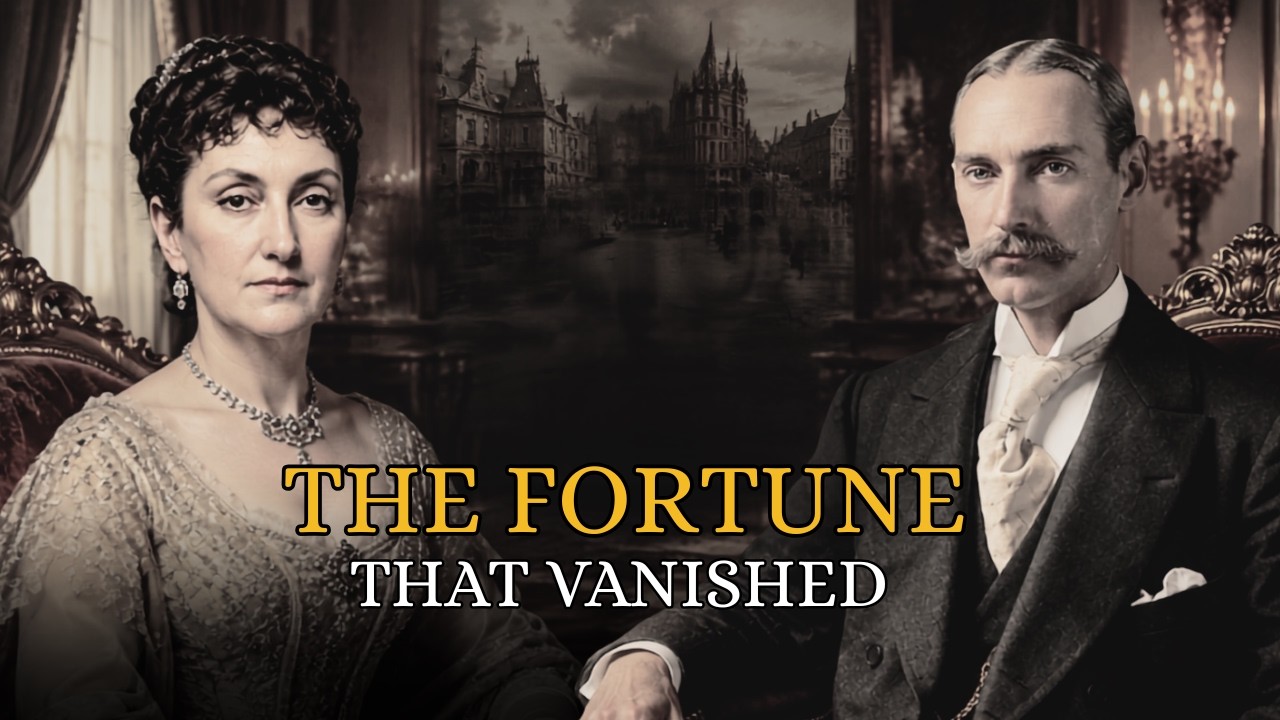
He accepted his fate with quiet, dignified resignation, remaining on the doomed vessel as it slipped beneath the surface. When his body was recovered days later, he was found still dressed in formal evening wear. The sinking delivered a blow to the Astor family from which its public identity would never fully recover. Yet the story of how that name came to mean so much, and then so little, began more than a century earlier, with a young German immigrant stepping off a ship in New York Harbor with almost nothing but ambition.
His name was John Jacob Astor, and he had arrived from the town of Waldorf, a name that would later echo almost too poetically in the walls of one of the most famous hotels in the world. He came from modest beginnings, the son of a butcher. It was in London, working briefly for his brother, that he first encountered the fur trade and saw how raw material from the edge of the known world could be transformed into wealth in the parlors of Europe. By the time he reached America, a plan was forming, built not on speculation but on supply chains, patience, and control.
The fur trade in early America was cold, dangerous, and deeply entangled with the lives of indigenous trappers and traders who understood the land in ways no European immigrant ever could. Astor did not attempt to conquer the wilderness himself. He positioned himself as the connective tissue between it and the markets that craved its goods. He began small, buying furs directly, learning the routes, the seasons, the relationships that made the trade function.
Where other men saw a business, Astor saw an empire waiting to be organized. By 1808 he had incorporated the American Fur Company, an enterprise that grew into an industry across an almost unimaginable stretch of the continent, a system of trading posts, transportation routes, and financial arrangements stretching from the Great Lakes to the Pacific Northwest. He understood that true wealth was built not on a single transaction, but on control of the entire chain, from the trapper in the forest to the merchant in the city to the buyer across the ocean. This ambition came at a cost that history has not always been eager to examine.
The fur trade as Astor built it relied heavily on the labor, knowledge, and land of indigenous peoples, often under terms far more favorable to Astor than to those doing the trapping. Competition was crushed where it could be crushed. Rivals were bought out, undercut, or simply outlasted. By the 1810s his reach had become staggering.
He established Fort Astoria at the mouth of the Columbia River, an outpost meant to anchor American commercial interests on the Pacific coast. The venture faced political turmoil, especially during the War of 1812, when British forces effectively seized control of the post. Yet even in setback, his ambitions did not shrink. He had already begun to understand that the fur trade, however lucrative, had a horizon.
Animal populations could be depleted, fashions could change, markets could shift. What could not shift, what could only grow in value over time, was land. While competitors chased the next trapping season, Astor began quietly funneling his profits into plots of land on an island most people considered unremarkable, undeveloped, and unworthy of serious investment. That island was Manhattan.
By the time the fur trade began its inevitable decline in the 1820s and 30s, he had positioned himself far ahead of the curve. He was no longer merely a fur trader. He was becoming something new, a man whose wealth was tied not to a fluctuating commodity but to the very ground beneath one of the fastest growing cities in the world. His strategy was deceptively simple and devastatingly effective.
Astor bought land, often in large, undervalued parcels, and then did something almost nobody else was doing at scale. He waited. He did not build extensively. He did not flip properties for fast profit.
Instead, he leased the land to others, allowing tenants and developers to construct buildings, shops, and homes on ground that Astor still legally owned. As the city expanded and demand for space skyrocketed, he collected steadily rising rents on land he had often purchased for a fraction of its eventual worth. Where other wealthy New Yorkers sought visibility and prestige, Astor operated with deliberate quietness. He was famously frugal in his personal habits.
His genius was not in spending money, but in refusing to let it sit idle. As the 1830s and 40s unfolded, New York expanded exactly as he had predicted. Streets were laid out, neighborhoods rose out of what had once been open fields, immigration surged, fueling relentless demand for housing, commerce, and infrastructure. By the time of his death in 1848, John Jacob Astor was widely regarded as the wealthiest man in the United States, a title made almost entirely possible not by furs, but by dirt, by patience, and by a bet on a future most of his contemporaries could not yet imagine.
Yet the gamble came with consequences. As a landlord he was known for being firm, occasionally ruthless, in collecting rents from tenants who often lived in far more precarious circumstances. Some of the properties under Astor ownership, particularly in the city’s poorer districts, later became notorious for overcrowding and neglect. The same discipline and detachment that made him a brilliant investor also made him, in the eyes of many, an indifferent one, more concerned with the steady flow of income than with the conditions of the people generating it.
What he left behind was not simply a fortune. It was a system, a self-sustaining engine of wealth built on land that would only become more valuable as New York grew into one of the most important urban centers on Earth. His heirs would not need to replicate his ingenuity. They would only need to hold on, to manage, to avoid catastrophic mistakes.
His fortune, estimated at the time at around twenty million dollars, an almost incomprehensible sum for the era, was not simply divided and spent. It was consolidated, protected, and passed forward with discipline. The responsibility fell first to William Backhouse Astor Sr. , John Jacob’s son, a man who lacked his father’s pioneering hunger but possessed restraint.
Where the elder Astor had built through aggressive expansion and calculated risk, William understood that his role was to consolidate, to manage, to ensure the vast real estate holdings continued to appreciate without falling into mismanagement or division. Under his stewardship, the family’s Manhattan land grew even more valuable as the city’s population surged past half a million and kept climbing. The second generation was less interested in expanding the empire’s reach than in protecting its foundation. In doing so, they inadvertently began the next crucial phase of the Astor story, the transformation from mere wealth into social power.
Money alone, even extraordinary amounts of it, was not enough to secure a family’s position at the top of American society in the 19th century. The Astors began cultivating not just wealth but visibility, respectability, and eventually dominance within New York’s emerging high society. Marriages were arranged with careful attention to lineage. Homes were built not merely for comfort but as statements, as physical proof of permanence and taste.
By the 1860s and 70s, the family had achieved something rare. A fortune that had not only survived the transition from founder to heir, but had grown stronger, more entrenched, and more socially significant in the process. The stage was set for the family’s most theatrical era. By the 1870s, money itself had ceased to be the family’s most interesting asset.
What mattered now was influence. And it was into this vacuum of undefined social power that Caroline Webster Schermerhorn Astor stepped. She had married William Backhouse Astor Jr. , securing her place within the family’s financial empire, but her true ambition lay elsewhere.
She was not content to simply be wealthy. She wanted to be essential, to become the singular authority on who belonged within the highest tier of American society and who did not. In a country without inherited titles, without dukes or duchesses, she recognized an opportunity. If America had no natural aristocracy, she would simply build one and place herself at its absolute center.
The instrument of her power became a number: the 400. The figure referred to the supposed capacity of her Fifth Avenue ballroom, but its real meaning ran far deeper. To be included among the 400 was to be certified as belonging to the uppermost class of American society. To be excluded was social death.
Caroline Astor did not simply host parties. She curated a hierarchy. She worked closely with Ward McAllister, a social strategist who helped formalize the unofficial rules of admission into her circle. Old money was valued far above new money.
Lineage, manners, discretion, and a carefully cultivated sense of taste were treated as more important than raw wealth alone. Astor mansions along Fifth Avenue became stages, meticulously designed environments meant to project permanence, taste, and unassailable status. Ballrooms were built to precise specifications, filled with imported art and architectural details borrowed from European palaces. And yet, even at the height of this golden era, cracks were beginning to form.
As new industrial fortunes grew even larger than the Astors’ own, families like the Vanderbilts and Rockefellers began challenging the old guard’s authority, slowly eroding the absolute control the Astor name had once commanded. If Caroline Astor had built the family’s social empire out of guest lists and ballroom etiquette, the men of the family were determined to build something even more permanent: structures of stone and steel. In the final decades of the 19th century, that ambition arrived in the form of a rivalry so petty, so theatrical, and so consequential that it would ultimately reshape the American hospitality industry forever. The feud began with wounded pride.
William Waldorf Astor, grandson of the original John Jacob, had long harbored resentment toward his aunt Caroline, who was widely regarded as the true social queen of the family, despite William believing that title should rightfully belong to him. Frustrated by her dominance, he tore down his mansion on Fifth Avenue, directly beside his aunt’s own residence, and in its place constructed a towering, opulent hotel named the Waldorf. By replacing a private home with a commercial hotel positioned right next to Caroline’s house, he was disrupting her carefully controlled environment, introducing noise, strangers, and commercial activity directly into the heart of an exclusive residential enclave. Caroline, unwilling to be driven out, initially considered relocating.
But it was her son, John Jacob Astor IV, who ultimately transformed the conflict into one of the most consequential decisions in hotel history. Rather than retreating, he chose escalation, tearing down his mother’s mansion after her passing and constructing an even larger, even more magnificent hotel directly adjoining his cousin’s Waldorf. The two structures, built out of rivalry and competing claims to the family legacy, were eventually connected by a shared corridor and combined to form the Waldorf Astoria. What began as petty family warfare accidentally produced architectural genius.
The hotel introduced private bathrooms in every guest room, electric lighting throughout, and elaborate public spaces designed to rival the grandest palaces of Europe. Presidents, foreign dignitaries, industrial titans, and cultural icons passed through its doors. The Waldorf Astoria symbolized the transformation of the Astor fortune from private wealth into public spectacle. Yet even in this triumph, there were barely perceptible warnings.
The very act of turning private residences into commercial ventures signaled a shift in the family’s relationship to its own wealth. Buildings, unlike land, depreciate. They require oversight to avoid slipping into obsolescence. In building monuments meant to last forever, the family had also created assets that would demand relentless attention simply to preserve their value.
Empires rarely collapse all at once. They erode slowly, through decisions so small they barely register as significant at the time. By the final years of the 19th century, the first crack was structural. Where John Jacob Astor had built his fortune on a single, unified vision, later generations had begun dividing that fortune across increasingly distant branches of the family tree.
Each generation produced more heirs, more marriages, more competing claims. Wealth that had once flowed through a narrow, tightly controlled channel was now spreading outward, diluting in coordination, unity, and long-term strategic vision. This fragmentation was compounded by personal rivalry disguised as business decisions. The feud between William Waldorf Astor and John Jacob Astor IV was never fully resolved.
It merely found new outlets. William Waldorf, deeply embittered by what he viewed as America’s inability to properly recognize his branch of the family, made a decision that would have been unthinkable to his ancestors. He renounced his American citizenship, relocated permanently to England, and began pursuing a British peerage, eventually becoming Lord Astor. The family that had spent nearly a century building its identity around uniquely American ambition now had one of its most prominent branches formally abandoning that identity.
Meanwhile, the practical challenges of managing such an enormous real estate portfolio were straining. The city was growing more complicated, more regulated, more competitive. New industrial fortunes built by the Rockefellers, Carnegies, and Vanderbilts were investing aggressively in modern industries: banking, oil, steel, railroads. The very model that had made the family wealthy, patient land ownership and steady rental income, was beginning to look increasingly conservative.
There was also a quieter, more human dimension to the unraveling. The generation now managing the fortune had been raised in extraordinary privilege. Where John Jacob had personally negotiated trading routes and calculated land values, his descendants increasingly relied on professional managers, lawyers, and financial advisers. It was a shift from active ownership to passive inheritance, from builders to caretakers.
On the night of April 14, 1912, all of these tremors were tested by a single catastrophic event. John Jacob Astor IV had spent his life as a walking symbol of Gilded Age ambition. An inventor, a businessman, a builder of half of the legendary Waldorf Astoria. Yet his personal life had become a source of public scandal in the years leading up to his death, particularly his controversial divorce and subsequent remarriage to a woman decades younger.
It was in part to escape this controversy that Astor and his young wife had spent an extended honeymoon abroad in Europe and Egypt before deciding to return home aboard the newest, most technologically advanced ocean liner in the world, a ship widely and fatally described as unsinkable. The public reaction to his death was immediate and intense. Newspapers covered the story with obsessive fascination, not simply because of the scale of the disaster, but because of what his death symbolized. Here was a man who possessed more resources and influence than almost anyone alive, and none of it had been enough to save him.
The Titanic disaster became a morality tale for the era, a stark reminder that no fortune could ultimately purchase safety from forces beyond human control. For a family that had spent nearly a century constructing an image of permanence and invulnerability, this was a devastating contradiction. Beyond the symbolic weight, his death created immediate practical complications. He had been one of the primary stewards of the real estate holdings, and his sudden death threw questions of inheritance and succession into chaos.
His young widow, pregnant at the time, gave birth to a son shortly afterward, further complicating negotiations over how the fortune would be divided among competing heirs, including children from his first marriage who had resented his second union. In the years following the disaster, the family entered a phase no previous generation had experienced: a slow, methodical scattering of both wealth and identity. The fortune that had once flowed through a narrow, tightly controlled line of succession now began splitting into countless smaller streams. His son from his first marriage, Vincent Astor, inherited the bulk of the fortune and the responsibility of managing the real estate holdings, while his young second wife and their infant son received a smaller, though still substantial, portion.
This division planted seeds of resentment that would echo through subsequent generations. Vincent Astor attempted to modernize the family’s approach. He sold off significant portions of the family’s more notorious properties, including tenement buildings that had become symbols of exploitative landlord practices, and reinvested in new ventures including hotels, aviation, and philanthropy. He forged a close friendship with President Franklin Delano Roosevelt.
Yet even his efforts could not counteract the broader structural challenges. The 1920s favored new dynamic industries in which the Astors had little presence. The family’s wealth remained heavily concentrated in real estate. Then came the Great Depression.
Property values plummeted. Rental income became far less predictable. The fortune survived, but it emerged diminished, both in raw financial terms and in cultural significance. Rising inheritance taxes made it increasingly difficult for wealthy families to pass on fortunes intact.
The Astor name no longer represented a singular unified center of power. By the middle of the 20th century, the fortune had become something fundamentally different from the singular empire John Jacob had envisioned. It was scattered, divided among competing branches, diminished by economic upheaval, and increasingly disconnected from the dynamic new industries reshaping American wealth. By the middle decades of the 20th century, the name still carried weight, but it had begun to carry something else as well: a growing undertone of scandal and public scrutiny.
Perhaps no episode captured this decline more vividly than the story of Brooke Astor, the widow of Vincent Astor, who for decades served as the family’s most visible public figure. Celebrated for her extensive philanthropic work, she had in many ways successfully revived a version of the family’s old social authority, funding libraries, museums, and public spaces across the city. But in the final years of her extraordinarily long life, that carefully cultivated legacy became overshadowed by one of the most sensational scandals in the family’s history. As her health declined, reports began surfacing that she was being neglected and financially exploited by her own son, Anthony Marshall, who was accused of manipulating his elderly, cognitively declining mother into altering her will in his favor while allegedly allowing her living conditions to deteriorate.
Marshall was ultimately convicted of fraud and other charges related to her exploitation. A family whose entire identity had been built around projecting flawless respectability was now the subject of lurid headlines detailing elder abuse, greed, and internal betrayal. The very concept of a single family serving as the ultimate arbiter of social status, the role Caroline Astor had once occupied, no longer had any real place in modern American culture. Today, the Astor name survives mostly as an echo, scattered across street signs, building facades, and library placards.
Astoria, the Queens neighborhood named after the family’s early ambitions, continues to bear their name, its residents largely unaware of the fur-trading fortune and Gilded Age dynasty that once made it synonymous with the pinnacle of American wealth. The Waldorf Astoria still stands, still evokes a certain old-world elegance, but it operates now as one luxury hotel among many, its ownership long since passed out of Astor hands into corporate hospitality conglomerates. Institutions across New York still quietly carry traces of Astor philanthropy, the New York Public Library, various museums, cultural foundations that benefited from Vincent and Brooke Astors’ generosity, but these connections exist mostly as historical footnotes. The buildings still stand.
The street names remain. The philanthropic institutions continue their work, quietly funded by fortunes accumulated generations ago. But the living dynasty that once dictated the rules of American high society, that once decided who belonged among the elite 400 and who did not, that once built the grandest hotels on earth purely out of competitive family pride, has essentially dissolved into history. The family achieved almost everything a fortune could achieve: staggering wealth, immense social influence, monuments built to last centuries.
And yet, despite every careful calculation across multiple generations, the Astor name has still slowly faded from the center of American cultural consciousness. Having it all, in the end, was simply not enough to make it last forever.






