In October 1889, on the hallowed ground of Gettysburg, Joshua Lawrence Chamberlain rose to dedicate Maine’s memorial monuments. A professor of rhetoric at Bowdoin College, a major general who had commanded the 20th Maine Infantry with extraordinary distinction at Little Round Top, and a former governor of his state, Chamberlain brought more than ceremonial gravity to the occasion. He had lived the history he was about to describe. His five-thousand-word address, delivered with the authority of a man whose actions had matched his words on that same field twenty-six years earlier, fell into two broad movements.
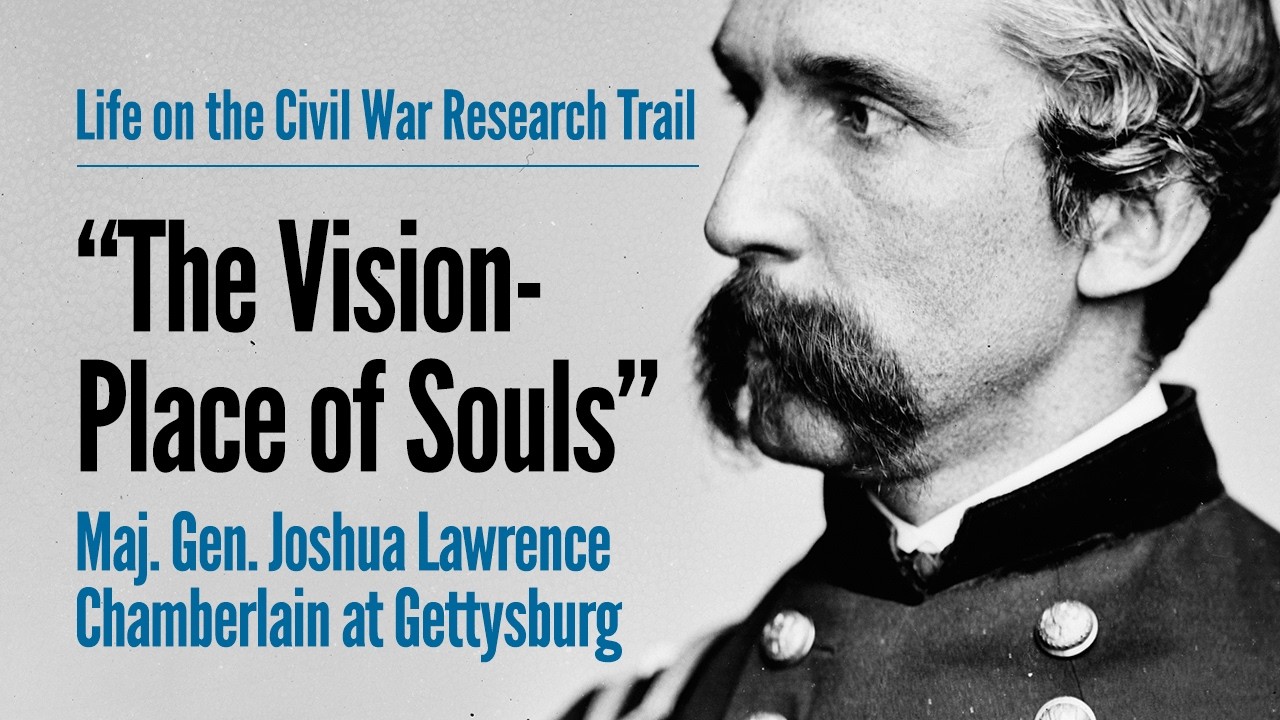
The first reflected on the meaning of the Civil War and the nature of the Union. The second, prompted by a subscriber’s lingering memory of a single poetic phrase, turned toward the responsibilities that followed victory and the enduring significance of service, sacrifice, and memory for generations yet unborn. That phrase, which Chamberlain placed near the end of the second movement, called Gettysburg a place where souls could see. Chamberlain began the heart of his address by placing politics at the center of human endeavor.
Politics, in his belief, was the organization of human elements and forces for the promotion of right living and the attainment of the noblest ends possible in human character. At its highest level, it recognized not only rights but integrity, human worth, and a nobility that carried moral and divine ideals. Politics, he argued, was the highest field of thought and action, the broadest arena of practical ethics offered to the human mind in its earthly journey. The cause that had been fought for, though rooted in reason and morality and the perfectibility of humanity, had been at bottom a question of positive and practical law.
It had been a cause, as the North believed, of enforcing constitutional obligations freely and deliberately undertaken, sworn with promises that expressed the deepest convictions of the people’s mind and conscience. If the North was right, an entity existed on earth called the people of the United States of America. If wrong, no such people existed at all, only a chaos of discordant elements and conflicting interests. The forces of the nation had aligned along that dividing line.
This had become the test of what was called loyalty. It was the practical and decisive question, and the answer had to be final. It was answered at a costly price of effort and money and blood and tears. The people had constituted themselves the interpreters of their own Constitution.
The decision was accepted through clear constitutional and legal legislation, affirmed by the highest courts of the land, and, Chamberlain sincerely believed, sealed with the blessing of the Almighty. The nation was one people, and the law of its spirit rose above the law of its individual members. Great victories, however, brought grave responsibilities. The danger, Chamberlain believed, came not from new attacks by the defeated but from the tendencies of power among the victors.
It had to be kept clearly in mind that the North had not been fighting the principle of local self-government. The victory had been for the whole people, with full appreciation of the value of a political system that recognized local centers of influence and rule. What had been lost in the war was not liberty or the right of self-government. What had been lost was the enslavement of human beings and the domination of the states over the Union.
The Union had to be saved. In the intensity of the conflict, the government had been forced to marshal every central power to its utmost, leaving to the later wisdom of the people the task of restoring the balance and ensuring that the extraordinary necessities of war did not become precedents for the law of life and growth. Necessity was a dangerous argument for privileged power, especially when the only judge of that necessity was the power claiming it. In peacetime, when the free faculties of the people advanced according to natural and spiritual laws of growth, the powers of government must be jealously guarded and kept close to the thought and purposes of the people.
The national authority proved by war meant, in the final analysis, that Congress was the sole judge of its own powers and the sole executor of its own will. That was a tremendous trust. Chamberlain prayed that this power would not be exercised with the tyranny of force or the strength of a transient majority, nor in the service of private or partisan interests, but with a searching and comprehensive vision, with a profound sense of constitutional obligation, and for the public good. To that end, the place of the state in the political system was of vital importance.
The interaction of local and national capacities was a unique and unmatched feature of the American system, poorly understood abroad and liable to be misappreciated at home. The nation rightly relied on the separation of powers between the executive, legislative, and judicial branches of government, but it depended even more on the lines drawn between state and national authority. Local self-government alone could not have built the American people, but without it as an instrument of the representative system, neither government nor people could have held together. The generative and formative forces lay in the local centers.
These vortices of living energy touched and overlapped to form a single unity, bound together by a deep central consciousness of mutual service and common destiny. Local traditions, sentiments, needs, and aspirations had shaped the composite and powerful character of the country. As long as people in every local center felt their freedom secured by the institutions, laws, and policies of the great people who formed their larger life, and as long as their ideas and interests were represented, they would remain bound by a central attraction of vital power. The strongest guarantee of all lay in personal participation in directing the nation.
Government was not aristocratic nor a plural monarchy. It was not administered for the benefit of classes. The people of the several states, in their responsible character and mature convictions, working through representative political organizations, extended their reach to wider borders and administered the great trusts of the nation. Just as the scope and function of the state were the surest protection of liberty, so it was the authority of the people themselves, through their state bodies, to elect to national office only those who understood the delicate principles that kept liberty alive, who had the courage to reject the false maxim that the law cared only for the great and not the small, and who represented not the momentary will of a majority but the heart and conscience of the manifold people whose voice was the voice of God.
Chamberlain recalled the words of the martyred president, standing on that very sacred ground at the dedication of the cemetery, declaring that government of the people, by the people, for the people should not perish from the earth. Lincoln had not meant a government of mobs or majorities, nor a slogan for revolutionaries who a century before in France could not overthrow tyranny without overturning the foundations of society. He had meant a people who preserved their liberty under law, exercised sovereignty through deliberation and delegation, respected their minorities, restrained their whims, deliberated on great questions, and moved forward as one body toward the common good. An integral part of that political entity was the state of Maine.
On those hills and slopes, on the first, second, and third days of the battle, whether on the right flank torn by the scissor blades of two hostile armies, or on the left that yielded before a hurricane of fierce assault, or in the center that faced an attack of terrible and sublime desperation, wherever the front was, Maine’s guns roared and her flags were raised. When the long, dense, and furious fighting ended, and the men who had drawn the line of honor were buried where they fell, the name of Maine echoed across those ridges and banks, across the fields of the cavalry and the hills of Wolf and Caleb, down through the cemetery and the Peach Orchard and the Wheatfield, to the Devil’s Den and the rocks of Little Round Top, in a painting of noble blood. Now, the state had gathered those bodies. Their names were placed on headstones, surrounded by a wreath of proud state mourning.
They were fixed on the ground they had defended. There they would remain, not buried but in transfigured form, part of the soil they had glorified and part of the glory to come. No chemistry of frost or rain, no layers of mold from the succession of seasons, could separate the lifeblood that had mingled and interpenetrated so deeply with the earth of those sacred fields. The monuments, however, were not merely to commemorate the dead.
Death had been but a divine acceptance of a life each man had freely given. Service was the essential fact. That truth and that reality were what the memorials honored. Those who fell here, and those who fell before or after, and those who survived a little longer only to follow soon, were all gathered into one great constellation on the bright heights of life, bearing the star of Maine’s emblem on their foreheads forever.
In great deeds, something remained. In great fields, something remained. Forms changed and passed, bodies disappeared, but spirits endured to consecrate the ground as a place where souls could see. Revered men and women would come from afar, generations that knew neither them nor those who fought, drawn to see where and by whom great deeds were done for them.
They would come to this immortal field to reflect and dream, and the shadows of a solemn presence would envelop them, and the power of vision would pass into their souls. That was the great reward of service: to live long and extend into the lives of others.






