On the evening of May 11, 1979, a silver BMW sat parked at the curb of a residential street in Queens, New York. The driver’s seat was soaked in blood. In the back lay the body of a 28-year-old man in expensive clothes and a gold chain, shot five times in the head. He was known on the streets as Chris DeMeo, though his birth name was Harvey Rosenberg.
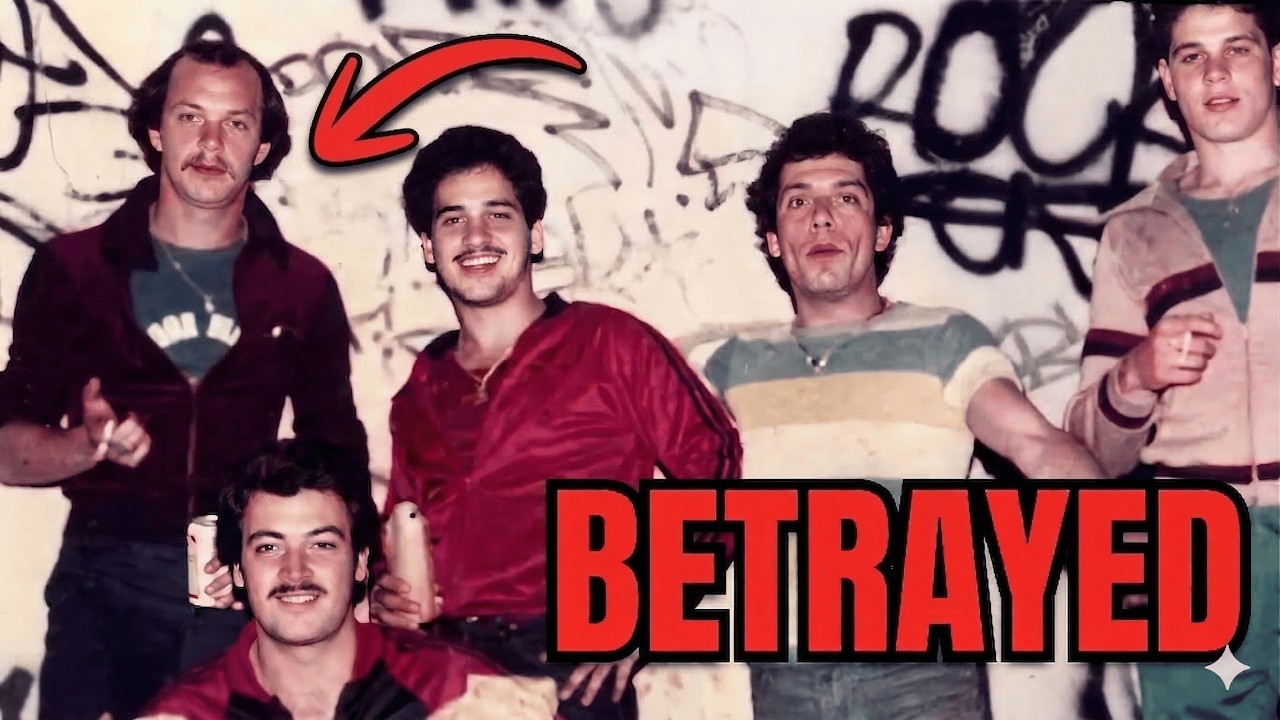
Before the night was over, every major crime family in New York would understand exactly why he had been killed, because the man who fired the first shot was the same man who had called him a son for thirteen years. Chris Rosenberg was not a low-level soldier who had stepped out of line. He was Roy DeMeo’s original recruit, his most trusted associate, the man who had helped build a criminal empire from nothing. And when the order to kill him came down, it did not come from a rival family or from an informant.
It came from the very people he had made rich. The killing of Chris Rosenberg marked the moment Roy DeMeo began to come apart, setting off a four-year spiral that would end with DeMeo himself dead in the trunk of his own Cadillac. The story begins far from any courtroom or social club, at a gas station in Canarsie, Brooklyn, in the summer of 1966. Harvey Rosenberg was sixteen years old, a Jewish kid growing up on a block that was almost entirely Italian-American.
He hated his own heritage, considering it a weakness, and went by Chris because Harvey sounded too Jewish. He looked at the Italian men on his block and saw not criminals but the men he wanted to become. By thirteen, he was already dealing marijuana on the street. By sixteen, he had a reputation as someone tough, reliable, and hungry.
Roy DeMeo was twenty-six in 1966, a stocky, direct former butcher’s apprentice from Flatlands, Brooklyn, who had been running loan-sharking operations since high school. He had already caught the attention of Gambino capo Anthony Gaggi, known as Nino, who recognized in DeMeo the same qualities DeMeo would later recognize in Chris Rosenberg: raw ability and zero hesitation. When Roy met Chris at that gas station, he did not recruit a foot soldier. He recruited a partner.
Roy began investing in Chris’s drug operation, and Chris became the first member of what would become the most murderous crew in the history of the American Mafia. In the late 1960s, the crew’s first major enterprise was car theft. Roy had connections at Canarsie junkyards where stolen vehicles could be stripped or resold with falsified documents. Chris would identify the cars, the crew would take them, and money flowed with no witnesses and no heat.
It was a business, not a smash-and-grab, pulling in four to seven vehicles a night. Chris ran a repair shop called Car Phobia Repairs as a front, a legitimate-looking auto service business that in reality processed stolen vehicles for the crew. By 1974, when Chris was twenty-three, he had added cocaine and Quaaludes to his portfolio and was distributing across Brooklyn under the name Chris DeMeo, even adopting his wife’s Italian surname as an alias. He was not just working for Roy.
He was becoming Roy. But the car theft operation was only half of what made the DeMeo crew notorious. The other half was the killing. The Gemini Lounge sat at 4021 Flatlands Avenue in Canarsie, a neighborhood bar on the surface.
Behind it, through a back entrance, was an apartment rented by crew member Joseph Guglielmo, known as Dracula. They called it the Horror Hotel, and it was where the Gemini method was born. The process was clinical. A target would be lured through the side entrance, often under the pretense of a meeting or a deal.
Inside, DeMeo or another crew member would appear with a silenced pistol and a towel. One shot to the head. The towel went immediately around the wound to control blood spatter. Then, before the target’s heart stopped pumping, a second crew member would drive a knife into the chest to stop the blood flow from the inside.
In the early years, that job belonged to Chris Rosenberg. Court witnesses later testified that Chris would strip down to his boxer shorts before performing the stabbing, unwilling to stain his expensive clothing. The body would be left to drain in the bathtub, then moved to a plastic swimming pool liner on the living room floor, where it was dismembered. The pieces were wrapped in plastic, placed in cardboard boxes, and taken to Brooklyn’s Fountain Avenue dump.
No body, no crime. That was Roy DeMeo’s operating philosophy. Between 1975, when investigators believe the crew committed its first murder, and 1983, the DeMeo crew is believed to have killed up to two hundred people. Roy DeMeo personally killed approximately thirty-seven.
Federal prosecutors would eventually describe what happened behind the Gemini Lounge as wholesale murder. And Chris Rosenberg was there for all of it, as Roy’s enforcer, his drug operation manager, his most trusted earner, the man Roy treated like a son. In early 1979, Chris traveled to Florida to negotiate a cocaine supply arrangement with a Cuban drug organization connected to a man known only as El Negro. The deal involved two kilograms of cocaine as a test run.
Chris handled the negotiation and gave the Cubans the name they would use to reach him back in New York: Chris DeMeo. Four individuals made the trip to New York to finalize the transaction, including two men named Charles Padnick and William Serrano, as well as the cousin and girlfriend of El Negro himself. Within hours of landing, all four were dead. Chris Rosenberg and members of the DeMeo crew shot them and dismembered their bodies using the Gemini method.
The motive, based on accounts from crew insiders, was simple. Chris did not intend to pay for the cocaine. He intended to take it and eliminate the witnesses. Two kilograms of product, four lives, zero payment.
The problem was that El Negro’s organization knew enough to be dangerous. They knew the meeting was in New York, and they knew the name Chris DeMeo. Their contacts in the city began asking questions, quietly at first, then with growing urgency. Within weeks, those questions reached the Gambino family, and within days, they reached Paul Castellano, the boss of the family, and Nino Gaggi, DeMeo’s own capo and mentor.
The message from El Negro was direct: produce Chris DeMeo, kill him, or face an all-out war with the Gambino family. Castellano and Gaggi called Roy in and told him what had to be done. Roy was ordered to kill his own man. Roy had killed close to forty people and ordered dozens more killed, and none of it had touched him emotionally.
But this was different. This was the kid he had found at a gas station, the man who had taken his name. Roy stalled. He pushed back.
He tried to find another way out. He did not find one. Then something happened that made the timeline impossible to ignore. In his growing paranoia, convinced that Cuban operatives were surveilling his home on Long Island, Roy spotted a young man sitting in a car near his property.
He confronted him, the man tried to drive away, and Roy chased the car for seven miles through Amityville and Farmingdale, shooting the driver dead on the road. The driver was Dominic Raguchi, an eighteen-year-old door-to-door vacuum cleaner salesman with no criminal ties whatsoever. He had simply parked near the wrong house at the wrong time. The murder was committed in broad daylight in front of witnesses and made headlines.
Castellano was furious. Gaggi called Roy directly. There was no more stalling. Chris Rosenberg had to die now.
Roy went home after that call. His son, Albert, later wrote that his father sat in silence for a long time. The man who had killed without emotion his entire adult life was being asked to put down the most loyal person in his world. On the evening of May 11, 1979, the crew gathered at the Gemini Lounge for its regular weekly meeting.
Chris Rosenberg walked in with no idea anything was wrong, sitting at the table with his associates as he had hundreds of times before. Roy was there. Anthony Senter was there. The evening was routine.
Then Roy DeMeo reached into a brown paper bag on the table and pulled out a pistol. He pointed it at Chris and fired once. The bullet struck Chris in the head but did not kill him. Chris fell, struggled, got up off the floor, and stumbled onto one knee.
The room went still. Roy DeMeo stood there and did not fire again. The man who had killed without hesitation at dozens of people could not pull the trigger a second time on the man who had taken his name. Anthony Senter, twenty-four years old, stepped forward and fired four shots into the back of Chris Rosenberg’s head.
Chris died on the floor of the Gemini Lounge. It was over in seconds. The crew loaded Chris’s body into his BMW and drove it to a visible street in Queens. Before walking away, crew member Henry Borelli opened up on the car with an automatic weapon, firing multiple rounds into the vehicle and the body.
They needed El Negro’s people to find the car. They needed it to be obvious the debt was paid and the war was over. Roy DeMeo went home that night, walked into his study, and closed the door. He did not come out for two days.
Albert DeMeo described his father in his 2002 memoir For the Sins of My Father as a man changed by what he had done that night, not in a clean way but in a broken way. Within weeks, Roy was hiding in a safe house near 42nd Street in Times Square, having grown a beard and wearing a baseball cap and sunglasses in public. Officially, it was precaution against retaliation. But people who knew Roy said the paranoia had shifted in quality.
It was no longer tactical. It was something else. The man who walked out of that room in May of 1979 was not the same man who walked in.






