Francisco Franco ruled Spain for nearly four decades, but his bloodline did not spread into a dynasty. He had exactly one child, a daughter, María del Carmen Franco Polo, and everything about her life was shaped by that single fact. Franco married Carmen Polo Martínez Valdés in October 1923. He was thirty years old, a military officer with a growing reputation.
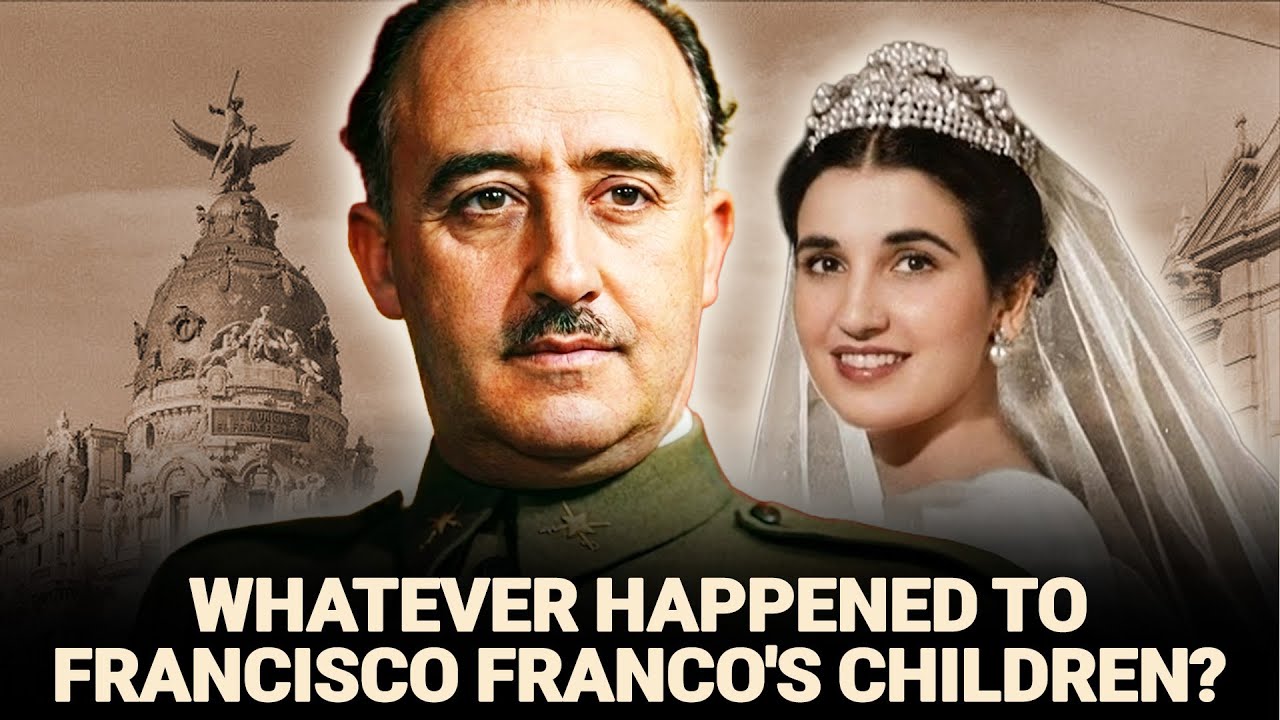
She came from an established Asturian family. For the first three years of the marriage, there were no children. In Spain’s conservative Catholic society, that absence carried weight. Whispers circulated about Franco’s masculinity and the couple’s ability to produce an heir.
Carmen Polo faced particular scrutiny. Then, on September 14, 1926, she gave birth to a daughter in Oviedo. They named the child María del Carmen after her mother. Franco was not yet the dictator he would become.
He was a lieutenant colonel stationed in Oviedo, his career promising but uncertain. The birth satisfied family expectations, but no second child followed. The reasons remain undocumented with certainty, but the result was clear: Franco’s entire genetic legacy rested on this one person. Carmen Franco’s early years were spent in military households as her father’s postings required frequent relocations.
Her mother managed the domestic sphere entirely, maintaining strict Catholic observance and overseeing her daughter’s education. Franco himself was often absent, consumed by military duties and ambitions. The household was formal and hierarchical, emphasizing order and discipline. She had no siblings to share the burden.
Spain entered a period of intense instability in the early 1930s. King Alfonso XIII abdicated in 1931, and the Second Spanish Republic was proclaimed. The country polarized rapidly. Franco, now a general, navigated the turbulence carefully.
For young Carmen, these were formative years marked by the anxieties of a military family in an unstable state. On July 17, 1936, military officers launched an uprising against the Republican government. Franco joined the rebellion. He was forty-three.
His daughter was nine. The uprising triggered a civil war. Carmen Franco’s childhood ended abruptly. Republican authorities viewed the families of rebel officers as legitimate targets.
Arrest, imprisonment, and execution were real possibilities. Carmen Polo and her daughter fled Spain shortly after the uprising began, traveling with false identities to reach nationalist-controlled territory. For a nine- and ten-year-old, this was a period of displacement and fear. Her father was fighting a war; her mother was managing their survival.
Once Franco consolidated control over significant territory, his family returned. In October 1936, he was named head of state of nationalist Spain, holding both military and political authority. When the nationalists won the civil war in 1939, Franco established his dictatorship and moved his family into the Palacio de El Pardo, a royal palace northwest of Madrid. The Franco family would reside there for the next thirty-six years.
Carmen Franco, now a teenager, lived within those walls, entirely separate from ordinary Spanish society. She did not attend public schools. She did not interact with common citizens. She received private education at the palace, with a curriculum emphasizing Catholic doctrine, traditional Spanish values, and subjects deemed appropriate for an elite woman.
Daily mass attendance was mandatory. The family’s Catholicism was fundamental to the regime’s ideology, and Carmen absorbed these lessons completely. Despite her father’s prominence, Carmen Franco remained largely invisible to the Spanish public. Franco did not use his daughter for propaganda purposes.
He maintained a strict separation between public persona and family life. Carmen Polo wielded enormous power within the household, managing all domestic affairs and controlling access to Franco. Mother and daughter were close by necessity and by design. Franco as a father was emotionally reserved and formal, his affection expressed through traditional patterns of authority and provision.
He was not nurturing in a modern sense. His attention was divided by the demands of running a dictatorship. Carmen saw her father briefly, at meals and formal gatherings. She revered him, absorbed his worldview, and never questioned his authority.
By the late 1940s, Carmen Franco was in her early twenties. Marriage was the expected next step. Potential suitors required appropriate social status and political reliability. Cristóbal Martínez-Bordiú emerged as the acceptable candidate.
He was a physician from an aristocratic family, his father the Marquess of Villaverde. The engagement was announced in early 1950, and the wedding took place on April 10, 1950, at the chapel of El Pardo. Spain’s elite and foreign diplomats attended. Franco himself gave away his daughter.
She was twenty-three years old, having lived her entire conscious life under her father’s dictatorship. The marriage granted her a new title. She became the Marchioness of Villaverde. In December 1951, Carmen Franco gave birth to her first child, a daughter, María del Mar, Franco’s first grandchild.
The birth meant the continuation of his bloodline. Carmen Franco and Cristóbal Martínez-Bordiú would have seven children in total, born between 1951 and 1966. The children were raised at El Pardo, attended private schools, and lived lives of extreme privilege. Carmen Polo remained involved as a grandmother wielding significant influence.
Franco’s grandchildren grew up knowing their grandfather as both family member and absolute ruler. Photographs from the 1960s show him relaxed, smiling, engaged with the children. He allowed them proximity and tolerated their energy, a side of Franco that contrasted sharply with his public image. By the late 1960s and early 1970s, Franco’s regime was aging.
His health declined. Economic development had created a new middle class, tourism had exposed Spaniards to outside influences, and underground opposition persisted. Carmen Franco witnessed these changes from within the palace. Her father’s designated successor was Juan Carlos de Borbón, grandson of Spain’s last king.
The monarchy would be restored, but the role the Franco family would have remained unclear. Francisco Franco died on November 20, 1975, at age eighty-two. His daughter was forty-nine years old. She had never known Spain under any other leader.
The dictatorship officially ended as Juan Carlos became king and Spain began its transition to democracy. Carmen Franco inherited the bulk of her father’s personal fortune as his only child, including properties, art collections, and financial assets. But she lost the protective shield of absolute power. In 1978, a new constitution was adopted, and the Franco era became history.
For Carmen Franco, the transition was traumatic. The values she had absorbed were being rejected. She withdrew from public life initially, but she never accepted the new narrative. She remained loyal to her father’s memory and rejected all criticism of his rule.
In July 1978, Carmen Franco was detained at Madrid’s Barajas airport. Customs officials discovered she was attempting to transport valuable items out of Spain, including art pieces and historical artifacts that may have belonged to the Spanish state. The incident became a scandal, suggesting the Franco family had appropriated state property. Legal disputes followed.
Some items were returned to the state; others remained in family possession. In 1976, shortly after Franco’s death, the National Francisco Franco Foundation was established to preserve and promote his legacy. Carmen Franco became involved in its leadership, providing funding and participating in its activities. As democratic Spain grew more critical of Franco, she became more vocal.
She gave interviews, wrote articles, and defended her father’s legacy without qualification. She denied the regime’s brutality, minimized the repression, and emphasized stability, order, and economic development. She described him as a good man, a loving father, a devout Catholic, and a patriot. Later, she wrote a memoir titled Franco, mi padre, presenting an intimate portrait of the dictator that critics argued whitewashed history.
Carmen Franco saw it as her duty. She was the only person who could tell these stories. As she aged, Carmen Franco withdrew increasingly from public view. She spent time with her children and grandchildren.
Spain moved further from the Franco era, and new generations emerged with no memory of the dictatorship. Carmen Franco died on December 29, 2017, in Madrid, at age ninety-one. Her death received significant media coverage, and buried with Catholic rites, she was the last living direct connection to the dictator himself. Her seven children survived her, and Franco’s bloodline continues into the twenty-first century through numerous grandchildren and great-grandchildren.
They retain wealth and aristocratic titles but hold no political power. They are private citizens in democratic Spain. Franco’s political legacy belongs to history alone.






