The magistrate from Charleston set down his pen and stared at the words he had just written. Before him lay the depositions of the survivors, the medical notes of Dr. Thornton, the testimony of the enslaved witnesses, and the physical evidence recovered from the kitchen pantry of the Hammond Plantation. Nine people were dead.
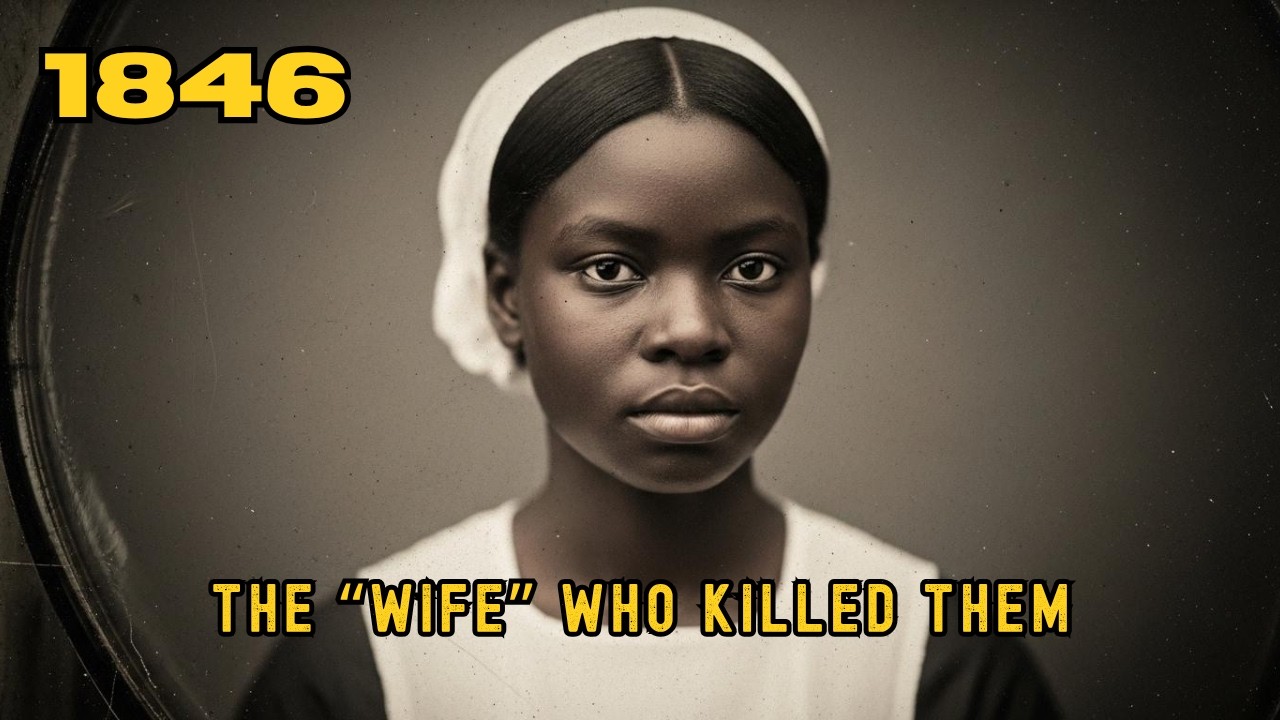
Eight more would carry the damage to their graves. And the woman who had done it, a twenty-year-old enslaved girl named Celia, had vanished into the low country darkness without a trace. The magistrate wrote of calculation, of patience, of a depth of hatred that defied comprehension. Then he added something that he knew would never be allowed to stand in the official record.
He wrote that the subject demonstrated capacities that challenged the prevailing understanding of the Negro intellect, and that accepting this fact would call into question the fundamental justifications for the institution of slavery itself. A county official read those words and scribbled warnings in the margins. Too inflammatory. Must not be widely circulated.
It provides argument for abolitionists and could inspire other slaves to similar actions. The passage was quietly removed, and the full story of what happened at the Hammond Plantation during Christmas 1846 was sealed in the courthouse basement for more than a century. To understand how it came to this, one must go back to the oppressive summer heat of 1844, when Charleston County represented both the pinnacle of Southern prosperity and the depths of its moral corruption. The low country plantations stretched for thousands of acres, their fields thick with rice and cotton, their profits built entirely on the bodies of enslaved human beings.
Among these estates, the Hammond property stood as one of the most profitable, placing the family among South Carolina’s elite. The main house rose three stories, its white columns gleaming in the brutal sun, its interior cooled by the constant work of enslaved servants wielding palmetto fans. Marcus Hammond had inherited the plantation from his father in 1838. Under his management, the estate had grown to include over two hundred enslaved people.
He was a man of forty-three in 1844, respected among his peers for his business acumen, and feared by those he enslaved for his cold efficiency. Unlike some planters who indulged in visible cruelty, Hammond preferred a system of absolute control maintained through calculated reward and punishment. He kept meticulous records of every aspect of plantation operations, from crop yields to the births and deaths in the slave quarters. These records, preserved in the South Carolina Historical Society, provide a chilling window into the methodical dehumanization that characterized his enterprise.
His son Thomas was twenty-two years old in the summer of 1844, educated at the College of Charleston, well-versed in classical literature, and completely comfortable with the system of bondage that funded his gentleman’s lifestyle. Thomas was being groomed to eventually take over the plantation, and his father had specific ideas about how that transition should occur. Marcus believed that a planter’s wife should be molded from youth to understand her place in the household hierarchy, to manage domestic slaves efficiently, and to produce heirs without the troublesome opinions that girls from other planter families might bring to a marriage. In July 1844, Marcus Hammond traveled to a slave auction in Savannah, Georgia.
Among the people sold that day was a sixteen-year-old girl named Celia, described in the auction records as of mixed heritage, literate, trained in household service. The literacy was unusual and suggested she had been raised in a household where someone had violated the laws against teaching slaves to read. Perhaps the child of an enslaved woman and her owner, educated before being sold away. Hammond purchased her for the substantial sum of nine hundred dollars, a price that indicated specific intentions.
The other planters at the auction assumed Hammond needed a new house servant, or perhaps a personal maid for his wife. They were wrong. Hammond had purchased Celia as a future bride for his son. The practice, while not openly discussed, was not unheard of among certain planters who viewed it as a way to maintain absolute control over their heirs’ marriages while simultaneously ensuring that any mixed-race children born of the union could legally remain enslaved.
South Carolina law followed the principle of partus sequitur, the child follows the condition of the mother. If the mother was enslaved, her children were enslaved regardless of the father’s status. By purchasing a young enslaved woman and designating her as his son’s wife in a ceremony that held no legal standing but served his purposes, Hammond could ensure both his son’s loyalty to the plantation system and the continuation of the family’s wealth through enslaved descendants. Celia arrived at the Hammond estate in chains, transported in a wagon with three other newly purchased people.
The head housekeeper, an elderly enslaved woman named Ruth who had served the Hammond family for decades, was instructed to train Celia in the specific ways the household operated. Ruth’s diary, discovered in 1923 during renovation work in the former slave quarters and now held in a private collection, provides one of the few direct accounts of Celia’s first months on the plantation. Ruth wrote that Celia was quiet and watchful, with eyes that took in everything but revealed nothing. She learned the household routines quickly, too quickly, Ruth noted with concern.
The child moves through these halls like she’s memorizing every door, every window, every face. She asks questions about things a new girl shouldn’t care about. Which rooms Master Hammond uses, what foods the family favors, when supplies are ordered from Charleston. Celia was indeed memorizing everything.
She learned that Thomas Hammond suffered from a nervous stomach that required careful dietary management. She discovered that Marcus Hammond was exceptionally proud of his wine collection, particularly a set of bottles imported from France. She observed that the family physician, Dr. Edmund Thornton, visited the estate only when summoned and relied heavily on the descriptions provided by family members when diagnosing ailments.
She also learned the full extent of what Marcus Hammond intended for her future. Three months after her arrival, in October 1844, Marcus Hammond informed his son of the arrangement he had made. According to Thomas Hammond’s personal correspondence, letters discovered in a trunk in an attic in 1978 and subsequently donated to the South Carolina archives, the young man’s reaction was initially one of confusion, then reluctant acceptance. In a letter to a college friend, Thomas wrote, Father has procured for me a wife of his choosing, though she is not of the class one might expect.
He insists this arrangement serves multiple purposes, ensuring both my establishment as master of my own household and the continuation of our prosperity. I confess the situation is irregular, yet I trust father’s judgment in matters of estate management. The girl is comely enough and has been trained to proper domestic obedience. The wedding, if it could be called that, took place on November 15th, 1844, in the plantation’s small chapel.
No legal marriage license was filed, no minister from Charleston was summoned. Instead, an enslaved preacher named Samuel, who occasionally conducted services for the enslaved community, was ordered to perform the ceremony. Samuel’s account, given years later to abolition activists after he escaped to the north via the Underground Railroad, describes a surreal and nauseating event. Master Hammond had me stand before them in my Sunday clothes and speak the words of Christian marriage over his son and that poor child, Samuel recalled.
She wore a white dress that the seamstress had sewn, and she stood there silent as stone, while Thomas Hammond took her hand. I could see she was shaking, but her face showed nothing. When I pronounced them husband and wife, according to the master’s command, her eyes met mine for just a moment. I saw something in that look that chilled my soul.
Not fear, not resignation, but a cold calculation that seemed wrong in one so young. It was the look of someone planning something. Celia was moved from the slave quarters to a small room adjacent to Thomas’s chambers, close enough to serve his purposes but separate enough to maintain the appearance of propriety before visitors. The door to her room was locked from the outside.
For the next two years, Celia lived in a state of captivity within captivity, forced to serve as wife to a man who owned her as property. The accounts of what transpired during those years are difficult to piece together, as the primary sources are fragmented and often euphemistic. What is clear from household records is that Celia became pregnant twice during this period. The first pregnancy ended in a miscarriage in the spring of 1845, documented in Dr.
Thornton’s medical notes as a spontaneous termination, not uncommon in slaves of nervous disposition. The second pregnancy, in 1846, resulted in a stillborn child, noted in the plantation records simply as female negro deceased at birth. Ruth’s diary entries from this period grow increasingly concerned. The girl has changed, she wrote in April 1846.
Where once she watched and learned, now she moves through the house like a ghost. But I’ve noticed something troubling. She has begun asking the kitchen servants about herbs and plants. Specifically, she wants to know about the medicinal plants in the garden, which ones ease pain, which ones purge the stomach, which ones Master Hammond’s late mother used to use for various ailments.
Old Josiah, who tends the garden, told me she’s been collecting seeds and dried leaves, saying she wants to learn healing arts. But there’s something in how she asks the questions. Too focused. Too deliberate.
In the fall of 1846, Marcus Hammond announced that the family would host a grand gathering for Christmas, inviting extended family members from across South Carolina and Georgia. His two brothers, his sister, their spouses and children, and several cousins were expected to descend upon the plantation for a week of celebration. Thomas’s new position as a planter in his own right would be formally recognized, and the gathering would serve as his introduction to the wider family network. For the first time since her arrival, Celia was given expanded responsibilities.
She would assist in food preparation and service during the festivities. Ruth protested this decision. I told Master Hammond that Celia isn’t ready for such responsibility, that we should use the more experienced girls, but he insisted. He wants Thomas’s wife to be visible, to serve the family she’s now supposedly part of.
It’s a cruel mockery, and I fear it will end badly. Ruth’s instincts were correct, though even she could not have imagined how catastrophic the consequences would be. The Christmas gathering of 1846 began on December 20th, when the first relatives arrived by carriage from Columbia. Over the next two days, the plantation house filled with seventeen members of the Hammond extended family.
There were Marcus Hammond’s brothers, Robert and William, with their wives and a total of six children ranging in age from seven to nineteen. Marcus’s sister Catherine arrived with her husband and three adolescent daughters. Several cousins completed the party, along with a handful of guests from neighboring plantations. The head cook, an enslaved woman named Flora who had served the family for twenty years, supervised meal preparations with the assistance of four other kitchen workers.
Celia was assigned to prepare the preserves, pickled vegetables, and special sauces that would accompany the main courses. She was also responsible for serving the wine and preparing after-dinner cordials. According to depositions given after the events that followed, Celia performed her duties with unusual efficiency during the first two days of the gathering. Several family members commented on the quality of the meals and specifically praised a particularly delicious plum preserve that accompanied the roasted fowl served on December 22nd.
The family’s children enjoyed a special sweet cake that Celia had prepared, and Marcus Hammond repeatedly refilled his glass from a decanter of spiced wine that she had placed in his study. On the evening of December 23rd, the family gathered for their largest meal yet, a feast that included roasted pig, venison, oysters brought from Charleston, and an array of side dishes and desserts. The meal stretched over three hours with multiple courses and generous servings of wine. Everyone ate heartily except Celia, who stood in the corner of the dining room with the other serving staff, ready to refill glasses or clear plates as needed.
By midnight, the first person fell ill. Marcus Hammond woke his household with violent retching. Within an hour, his wife was similarly afflicted. By dawn on December 24th, all seventeen family members were experiencing severe gastrointestinal distress.
Dr. Thornton was summoned urgently from Charleston. His initial diagnosis, documented in his medical notes, was food poisoning, perhaps contaminated oysters or spoiled meat. He prescribed purgatives and bed rest, assuring the family that the illness would pass within a day or two.
But the symptoms did not improve. Instead, they worsened dramatically. By the afternoon of December 24th, the younger children were crying inconsolably, their small bodies racked with painful cramping. The adults fared little better, with several losing consciousness periodically.
Blood began appearing in their vomit. Dr. Thornton, now deeply concerned, expanded his diagnosis to include possible cholera, though he noted the absence of the disease in surrounding areas made this unlikely. What he couldn’t have known, what he couldn’t have known without toxicology knowledge that wouldn’t exist for another fifty years, was that the Hammond family members weren’t suffering from disease or contaminated food.
They were being systematically poisoned. On Christmas morning, as the family lay suffering in their beds, the overseer discovered that Celia was missing. Her small room was empty. Her few possessions were left behind except for one item.
The white dress she had worn at her forced wedding was laid carefully on the bed, along with a single sheet of paper. The note, written in the careful script that revealed her forbidden literacy, contained only one sentence. I pray that God grants them the mercy they denied me. The discovery of Celia’s disappearance transformed the household’s understanding of what was happening.
Marcus Hammond, despite his severe illness, demanded that the enslaved workers be gathered and questioned. The overseer, a brutal man named Collins who handled discipline on the plantation, began interrogations immediately, using methods that the historical record only hints at through euphemistic phrases like intensive questioning and forceful examination. But the enslaved community, when questioned, provided no information about Celia’s whereabouts. Many claimed they had barely known her, that she had kept to herself during her time on the plantation.
Ruth, when questioned, admitted she had noticed Celia’s interest in medicinal plants but insisted she had seen nothing suspicious in the girl’s food preparation. Dr. Thornton, upon learning of Celia’s flight and seeing the note she’d left behind, began to reconsider his diagnosis. On December 26th, he wrote in his medical journal, I am beginning to suspect a deliberate act of poisoning, though I cannot determine the agent used.
The symptoms, severe gastric distress, bloody emesis, progressive weakness, and the peculiar timing of the onset, suggest a toxic substance rather than natural disease. If this girl possessed knowledge of poisonous plants, she may have introduced something into the family’s food over several days, allowing the toxin to accumulate in their systems. His revised analysis was tragically correct, though he lacked the medical knowledge to provide treatment even with this understanding. By the evening of December 26th, Marcus Hammond’s youngest nephew, a seven-year-old boy named Edward, became the first to die.
His small body simply gave up after three days of unrelenting suffering. The deaths came swiftly after that. Two more children died on December 27th. Marcus Hammond’s brother Robert succumbed on December 28th, followed within hours by Robert’s wife.
By the morning of December 29th, five members of the family were dead, and the survivors were too weak to leave their beds. Local authorities were summoned, and a magistrate arrived from Charleston to investigate what was now clearly a mass murder. Slave catchers were hired to track Celia, with rewards posted throughout the low country for her capture. The magistrate ordered that all food stores on the plantation be examined, and the kitchen workers were detained for questioning.
What the investigators discovered in the kitchen shed new light on the methodical nature of Celia’s revenge. Hidden behind a loose board in the pantry was a small cloth bag containing dried plant material. A botanist brought in from Charleston identified the contents as seeds and roots from several plants, including white snakeroot, water hemlock, and what appeared to be oleander leaves, all of which contain toxins that can cause the symptoms the family experienced. Further investigation revealed traces of these substances in the preserves that had been served throughout the Christmas gathering, in the spiced wine decanter in Marcus Hammond’s study, and in the special cake that had been given to the children.
Most damning was the discovery that the concentrations were carefully graduated. The adults received doses that would sicken them severely, while the children received amounts calculated to be fatal within days. The magistrate’s report, preserved in the Charleston County Courthouse records, describes this as the most calculated act of murder witnessed in this region, demonstrating planning and execution that suggests both intelligence and a depth of hatred that defies comprehension. The investigation revealed that Celia had been collecting and preparing her materials for at least six months before the Christmas gathering.
She had dried oleander leaves, gathered water hemlock roots during autumn foraging trips with other enslaved workers, and carefully harvested white snakeroot that grew in the wooded areas of the plantation. She had tested small amounts on the plantation’s rats, a detail confirmed when investigators found several dead rodents near where she had stored her materials. What made her plan particularly devastating was her understanding of how to use these substances without immediate detection. Rather than introducing a single, obviously poisonous substance that would cause instant death and immediate suspicion, she used a combination of toxins that created symptoms resembling natural illness.
The oleander primarily affected the heart, causing irregular rhythms and weakness. The water hemlock attacked the nervous system, causing tremors and convulsions. The white snakeroot produced the severe gastrointestinal symptoms that Dr. Thornton initially mistook for food poisoning.
She had introduced these substances gradually over the course of several days before the Christmas gathering, building up levels in the family members’ systems. The preserves, served at multiple meals, contained the oleander. The spiced wine that Marcus Hammond favored was infused with water hemlock extract. The sweet cake served to the children contained white snakeroot.
By the time the acute symptoms manifested on December 23rd, the toxins had been accumulating for nearly a week. The discovery of her methodology led investigators to examine the plantation’s medical records more carefully. Dr. Thornton’s notes from the previous year revealed that she had consulted him twice about stomach ailments, claiming she suffered from digestive problems.
During these consultations, she had asked detailed questions about the symptoms of various illnesses and the remedies he prescribed. At the time he had thought nothing of these questions. In retrospect, he realized she had been learning to mimic disease symptoms and understand how physicians diagnose different conditions. Even more revealing were notations in the plantation supply records.
Flora, when questioned extensively by the magistrate, recalled that Celia had volunteered to take inventory of the kitchen stores multiple times over the autumn months. She had shown particular interest in the spice cabinet, asking about which seasonings the family preferred and how different spices affected the taste of foods. Flora had been pleased by this attention to detail. Instead, Celia had been determining which strong flavors could mask the bitter taste of the plant toxins she intended to use.
The magistrate’s investigators also discovered that Celia had cultivated relationships with several enslaved workers from neighboring plantations during Sunday gatherings, when limited movement between estates was permitted for religious services. One woman from the neighboring Singleton Plantation recalled that Celia had been particularly interested in hearing about a recent incident where several pigs had died after eating plants near a creek. When shown samples of water hemlock, this woman confirmed it was the same plant that had killed the pigs. Dr.
Thornton’s later analysis, written after he understood what had happened, expressed a mixture of horror and reluctant admiration. The precision of this crime is extraordinary. The perpetrator demonstrated knowledge of pharmacology that would be impressive in a trained physician. She understood dosing, accumulation effects, and how to disguise the taste of bitter compounds in sweet and savory foods.
The depositions taken from survivors revealed the psychological horror of their realization. Catherine Hammond, Marcus’s sister and one of the survivors, described the moment she understood what had happened. We had eaten together, laughed together, praised the food that this girl prepared. When I learned what she had done, I felt not only the physical agony of the poison, but the deeper agony of betrayal.
Yet in the nights that followed, as I lay weak and suffering, I could not escape a terrible question. What had we done to her that would drive her to such an act? Catherine’s deposition continued with disturbing details. She recalled that on December 22nd, during the family’s evening gathering in the parlor, Celia had served them all a special cordial she claimed was a traditional recipe for the season.
The cordial had a slightly unusual taste, which Celia explained was due to a rare spice she had obtained from a merchant in Charleston. Everyone had complimented the drink, and Marcus Hammond had specifically praised Celia in front of the assembled family, saying she was becoming an asset to the household. Catherine remembered the look on Celia’s face during this praise, a slight smile that didn’t reach her eyes. William Hammond, another survivor and Marcus’s younger brother, provided testimony that revealed Celia’s psychological manipulation extended beyond simply poisoning the food.
He recalled a conversation on December 21st where he had complimented Celia’s service and asked how she was adjusting to life on the plantation. She had responded with apparent humility, thanking him for his kindness and saying that the Hammond family had been generous to her. She had specifically mentioned how grateful she was for the opportunity to learn so many skills, cooking, preserving foods, understanding the medicinal plants in the garden. Only later did he realize she had been, in essence, confessing her crimes before they fully manifested, secure in the knowledge that he would never suspect her true meaning.
The most haunting testimony came from Thomas Hammond himself. Unlike the other survivors, Thomas initially refused to provide a formal deposition. The magistrate had to compel his testimony through legal means, and even then Thomas spoke only reluctantly. His statement, preserved in the court records, reveals a man shattered by guilt and horror.
Thomas described the evening of December 23rd in painful detail. Celia had served him personally during the dinner, refilling his wine glass several times and bringing him portions of each dish. At one point she had leaned close to place a plate before him, and he had smelled the scent of lavender soap, the same soap the household provided for the enslaved workers. He had thought nothing of it at the time.
He described how she had stood in the corner of the dining room throughout the meal, her hands folded, her expression neutral, watching as the family ate. Near the end of the meal, his father had called her over to praise the plum preserves, asking her to prepare more for the remainder of the holiday week. Celia had simply nodded and said, Yes, master. As you wish.
Those were the last words Thomas heard her speak. What Thomas couldn’t have known was that Celia had already picked the lock to her room months earlier, using a thin piece of metal she had fashioned from a broken kitchen utensil. She had practiced the skill repeatedly, waiting until the household was asleep to silently open her door, move through the house, and return before dawn. She had used these nighttime excursions to hide her collected plant materials, to test locks on other doors and windows, and to plan her escape route.
On the night of December 23rd, after Thomas locked her door, she had waited two hours before picking the lock one final time and disappearing into the darkness. The magistrate’s investigation traced her likely escape route through examination of the plantation’s layout and interviews with patrollers who had been on duty that night. Celia had apparently left through a window in the kitchen house, crossed the plantation grounds under cover of darkness, and reached the river that bordered the eastern edge of the property. From there, she could have followed the river south toward the coast, where Underground Railroad networks operated among the free black communities and sympathetic whites who opposed slavery.
The timing of her escape revealed another layer of her planning. By leaving on the night of December 23rd, before the most severe symptoms appeared but after the toxins were already in the family members’ systems, she ensured that no one would be well enough to immediately organize a pursuit. The patrollers who might have tracked her were instead summoned to the house to help care for the sick. By the time anyone realized she had fled and that her disappearance was connected to the family’s illness, she had a head start of nearly two full days.
As December turned to January, the death toll climbed. Marcus Hammond died on January 2nd, 1847, having lived long enough to know that his carefully constructed dynasty was collapsing around him. His wife followed on January 4th. By January 10th, nine members of the Hammond family were dead, and the eight survivors were permanently damaged, several suffering from ongoing organ problems that Dr.
Thornton predicted would shorten their lives significantly. Thomas Hammond, Celia’s forced husband, was among the survivors, though he was never the same. According to later accounts from family friends, he suffered recurring nightmares and health problems for the remainder of his life. He never remarried, never had children, and died in 1863 at the age of forty-one from what his death certificate listed as chronic gastric disease and failure of general health.
The manhunt for Celia intensified as the deaths mounted. Slave catchers combed the low country with dogs, checking every road leading north, every dock, every known station on the Underground Railroad. Rewards were increased to one thousand dollars, an enormous sum that indicated how desperately the authorities wanted to capture her, both to prosecute her and to make an example that would deter other enslaved people from similar acts of resistance. But Celia had vanished completely.
Despite the massive search effort, no trace of her was found. The prevailing theory among the investigators was that she had likely died while attempting to escape, perhaps drowning in one of the many rivers and swamps that crisscrossed the low country, or succumbing to exposure and starvation in the wilderness. However, documents discovered in the 1960s during research into Underground Railroad networks tell a different story. Letters exchanged between abolitionists in South Carolina and Philadelphia contained cryptic references to the South Carolina bird who flew north on wings of justice, and the young woman whose terrible action speaks to the desperation of her situation.
While no names are mentioned explicitly, the timing and context strongly suggest these references were to Celia. One particularly intriguing letter, dated March 1847 and written by a Quaker abolitionist named Jeremiah Wright, describes meeting a young fugitive woman who had committed an act of violence against her enslavers after enduring circumstances too horrific to detail in writing. Wright notes that he helped arrange passage for this woman to Canada, where she would be beyond the reach of American slave catchers. He describes the woman as young, perhaps twenty, of mixed heritage, and bearing the marks of harsh treatment upon her person.
She was remarkably composed for one who had endured such trials and committed such acts. Most significantly, Wright mentions that the woman possessed literacy and expressed knowledge of medicinal plants that Wright himself, an amateur herbalist, found impressive. Wright’s letter concludes, I have helped many souls escape bondage, but this woman troubles me in ways others do not. She killed nine people, including children.
Yet I cannot bring myself to condemn her when I consider what drove her to such extremity. Is she a murderer or is she a prisoner of war who struck back at her captives with the only weapons available to her? I leave such judgments to God, but I know I would do the same in her position, and probably with less patience and planning than she showed. Some historians have theorized that a woman matching Celia’s description appears in Canadian census records from the 1850s and 1860s.
The 1851 Canada West Census includes a Cecilia Harris, listed as a twenty-three-year-old widow living in the Buxton settlement, a community of fugitive slaves near Lake Erie. This woman’s occupation is listed as midwife and herbalist. She appears again in the 1861 census, still in Buxton, now thirty-three years old, still a widow, still working as a midwife. The name change from Celia to Cecilia would have been a natural choice for someone attempting to leave her past behind while maintaining continuity with her original identity.
The surname Harris was common enough to provide anonymity. The occupation makes sense for someone with her knowledge of plants and medicines. The listing as a widow provided a socially acceptable explanation for her unmarried status and lack of family connections. If this Cecilia Harris was indeed Celia from the Hammond Plantation, she built a quiet life in Canada, helping to bring new life into the world after having taken lives in her escape from bondage.
A notation in the Buxton settlement records from 1863 mentions that Cecilia Harris provided invaluable service during a cholera outbreak, using her knowledge of herbs to ease suffering when medical doctors were unavailable. Another notation from 1871 describes her as a respected elder of our community, sought out for her wisdom and her skills in healing. The woman believed to be Celia appears one final time in official records in the 1881 Canada Census, listed as fifty-three years old, still working as a midwife. After that, the trail goes cold.
Church records from Buxton’s African Methodist Episcopal congregation include a burial notation from January 1889 for a Cecilia Harris, aged approximately sixty-one years, died of pneumonia. The brief eulogy notes that she lived a quiet life of service to her community, never married, and left no known descendants. She will be remembered for her healing skills and her kindness to those in need. If this was indeed Celia, she survived for more than forty years after her escape, living nearly twice as long after fleeing the Hammond Plantation as she had lived before that desperate Christmas.
She would have carried the memories of what she had done, the nine people who died because of her actions, for all those decades. Whether she found peace, whether she felt her actions were justified, whether the freedom she gained was worth the price she paid for it, the record does not say. Other researchers believe Celia never made it out of South Carolina, that she died during her escape attempt and her body was never found. The swamps and rivers of the low country are unforgiving, and countless fugitives perished in their attempts to reach freedom.
A third possibility raised by some scholars is that Celia was captured and killed by slave catchers who chose not to report it. The reward for her capture specified that she be taken alive for trial, but slave catchers were not known for their adherence to legal niceties. If they found her and killed her during the attempt to capture her, they might have simply disposed of her body and claimed they never located her. What is certain is that Celia’s act of poisoning the Hammond family represented one of the most successful acts of resistance by an enslaved person in American history.
She struck at the heart of a system that treated human beings as property, and she did so with a precision and planning that demonstrated the very humanity that system sought to deny. The Hammond Plantation never recovered from the tragedy. Without Marcus Hammond’s management, and with most of the family dead or incapacitated, the estate fell into disarray. Thomas Hammond, the nominal heir, proved incapable of managing the operation.
The enslaved workers at Hammond estate became troublesome and resistant to discipline, with frequent work slowdowns, tools mysteriously breaking, and a general atmosphere of defiance. Ruth’s diary entries from this period describe a shift in consciousness among the workers. They speak of the girl who flew away in whispers. Ruth wrote in March 1847, They don’t say her name aloud, but everyone knows who they mean.
Some condemn what she did, especially the killing of the children. Others see her as someone who refused to accept the unacceptable. There’s a new kind of silence in these quarters now, not the silence of submission, but the silence of people keeping their own counsel. Master Thomas feels it, too.
He’s afraid of us now, all of us. Thomas’s fear manifested in increasingly erratic behavior. Workers reported that he would appear suddenly in the kitchen house at odd hours, watching the food preparation without explanation. He fired Flora in 1848 despite her decades of loyal service because he convinced himself that she must have known about Celia’s plans.
He began taking his meals alone in his study and eventually started preparing some of his own food, an unthinkable breach of social protocol for a man of his class. The plantation was sold in 1851 to satisfy mounting debts. The buyer, a merchant from Charleston named Reynolds who intended to divide the property into smaller parcels for resale, paid forty-seven thousand dollars for land and buildings that had been worth over one hundred fifty thousand dollars in 1846. The sale included the enslaved workers, who were to be sold at auction to maximize Reynolds’ profit.
The auction, held in September 1850, scattered the enslaved community that had existed at Hammond Plantation for generations. Ruth, by then in her seventies, was purchased by a local farmer who needed an experienced house worker. Josiah, the gardener, went to a plantation near Georgetown. Flora, despite having been fired by Thomas, was sold to a family in Columbia.
The younger workers were sold to buyers from as far away as Mississippi and Alabama, torn from everyone they had known and sent to places they had never seen. Ruth’s diary contains a final entry about the Hammond Plantation dated the day before the auction. Tomorrow we will all be scattered like seeds on the wind. The place where we lived our lives, where we loved and suffered and died, will become just a memory.
They think they’re erasing what happened here by breaking us apart and selling off the land, but memories don’t die so easily. Every one of us who leaves here carries the story of what that girl did. We’ll carry it to new places, new quarters, and people there will hear it and remember it. They tried to make her story end with her disappearance.
Instead, her story is just beginning to spread. Ruth’s prediction proved accurate. Over the following years, variations of Celia’s story appeared in slave narratives collected by abolitionists throughout the South and in free states. The details were often changed to protect those who shared them.
The location would shift to Georgia or Virginia. The names would be altered. But the core story remained recognizable. An enslaved woman driven to desperate action by intolerable abuse who struck back with careful planning and deadly effect.
One such account appears in an 1855 narrative collected by William Still, the Philadelphia abolitionist who documented hundreds of fugitive slave stories. A woman identified only as Sarah from South Carolina described escaping her enslavement after witnessing a terrible vengeance on a neighboring plantation. Her account doesn’t name Celia or the Hammond family, but describes a young enslaved woman who used her knowledge of herbs and plants to settle accounts with those who had wronged her beyond forgiveness. Sarah told Still that this woman’s actions had inspired her own escape, showing her that enslaved people possessed power even in powerlessness.
The broader impact of her actions rippled through low country society in unexpected ways. Several documented cases exist of planters treating their enslaved workers with slightly more caution in the years immediately following the Hammond tragedy. A letter from 1848 written by a plantation owner to his son explicitly references the Hammond case. The terrible events at Hammond’s place have taught us all a lesson about the dangers of pushing our people too far.
I am not suggesting we soften our discipline, but we must be mindful that extreme cruelty breeds desperate acts. Marcus Hammond thought he could bend that girl to his will completely, and the result was the destruction of his entire family. Within weeks of the deaths, neighboring plantations implemented new protocols for food preparation. Kitchen workers were subjected to increased supervision, with overseers or trusted house slaves required to taste all food before it reached the master’s table.
Some planters went so far as to hire white cooks despite the considerable expense. Others simply refused to eat anything that hadn’t been prepared under direct observation. These paranoid measures created tension and additional suffering in slave communities across the region. Enslaved kitchen workers faced increased suspicion and harsher punishments for any perceived errors in food preparation.
Several documented cases exist of enslaved cooks being severely beaten or sold away based on nothing more than a master’s stomach ache after a meal. A Charleston newspaper from January 1847 contains a brief notice about a tragic illness that struck a prominent family, but provides no details about poisoning or murder. This careful language reflected the desire of local authorities to prevent panic among the planter class and avoid giving enslaved people ideas about resistance. More revealing are private letters and diaries from other planter families.
A letter from Sarah Middleton, wife of a plantation owner in a neighboring county, written to her sister in February 1847, describes the Hammond tragedy in coded language. We have heard disturbing news from Charleston County. You remember the Hammond family, quite prosperous and influential? They suffered a terrible tragedy during the Christmas holiday.
Nearly the entire family struck down by a mysterious illness that proved fatal for several. The circumstances are hushed, but whispers suggest it was no natural illness. Martha, I confess this news has made me uneasy. I find myself watching our servants more carefully, wondering what thoughts move behind their placid expressions.
We like to believe they accept their station, but what if we’re wrong? What if they’re simply waiting for their moment? This letter captures the psychological impact of Celia’s actions on the planter class, the seed of doubt she planted about whether the system they benefited from could truly be maintained indefinitely. The physical plantation house where these events occurred burned in 1852 under suspicious circumstances, possibly arson by enslaved people being sold away as the estate was liquidated.
Today, nothing remains except crumbling foundation stones overgrown with vegetation. The site is unmarked, forgotten except by historical researchers who know what to look for in county records. Ruth’s diary, discovered in 1923 during renovation work in what had been the slave quarters, provides a fitting epitaph for Celia and the impossible choice she faced. In her final entry about the case, dated January 1847, Ruth wrote, They will call her a murderess, and perhaps she was, but she was first a victim forced into circumstances no human should endure.
She chose to fight back in the only way available to her, using the knowledge she had gained and the patience she had cultivated. Nine people died because one girl refused to continue dying slowly herself. God will judge whether her choice was right, but I cannot bring myself to condemn her.
She did what she felt she had to do to be free, and in this country we call those who fight for freedom heroes, unless they are slaves fighting their masters.






