The young couple sat at the kitchen table, a pencil hovering over a small notebook. They had been married for two years, maybe three. They were both working, or perhaps only the husband was, but it hardly mattered. They were adding up the numbers, and the numbers were working in their favor.
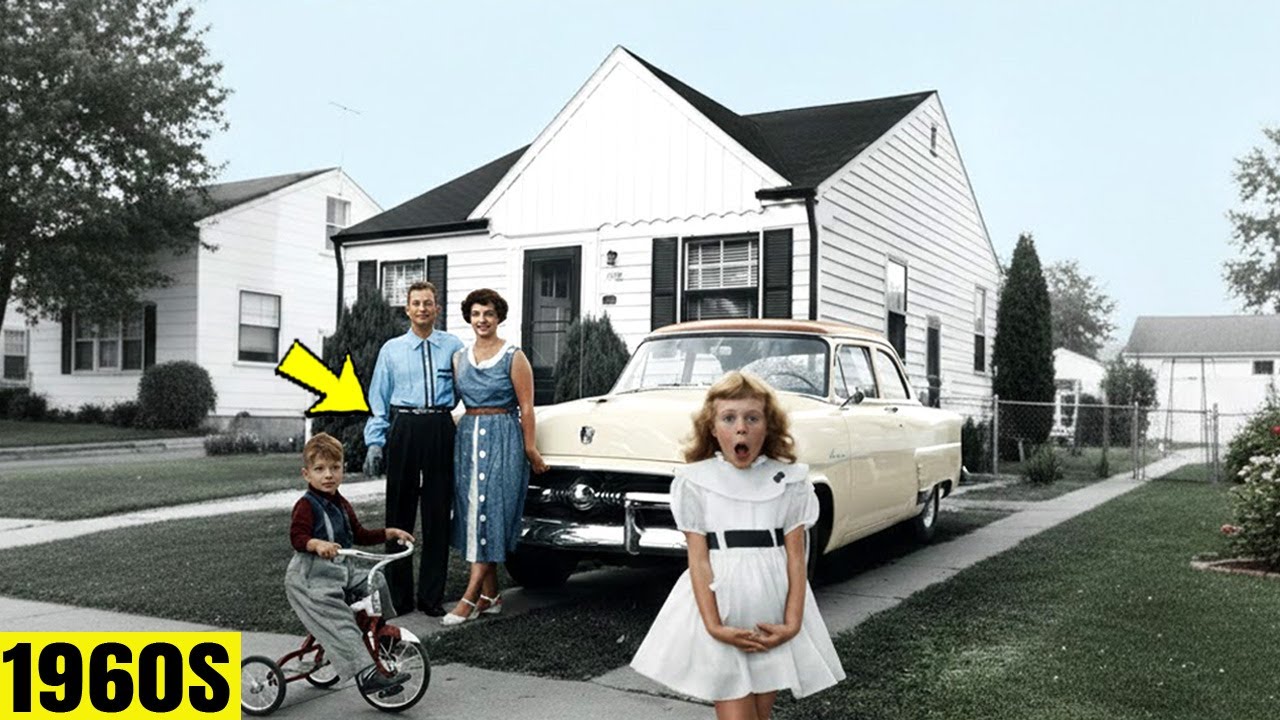
A house. A real house, with a lawn and a driveway, could be theirs within a few years of saving. Not decades. Not a lifetime of debt.
Just a few years. That arithmetic, so astonishing to a modern ear, was the quiet engine of the American Dream in the 1960s. To understand how it worked, one has to begin with the money itself. In 1960, the median family income in the United States was about 5,600 dollars a year.
On its face, that figure sounds impossibly low. But the dollar of 1960 was not the dollar of today. Its purchasing power was vastly greater, and it was growing. That year, median income rose by 4 percent compared to 1959, and even after a slight uptick in consumer prices, the real purchasing power of American families increased by about 2 percent.
Year after year, working people saw their living standards climb. That steady growth was not an accident of the market. It was shared. Working-class and middle-class families genuinely benefited from the productivity gains of the era.
For the first time since 1941, a comprehensive survey of urban non-farm households and rural farm households painted a full picture of American spending habits. It gathered detailed information on more than 200 types of expenses, including the big ones: real estate, cars, major appliances, rent, utilities, and insurance premiums. Families could cover their basic needs at a reasonable rate, far from the financial pressures that would later grip their descendants. The reality of annual increases in purchasing power planted a sense of optimism and long-term financial security in the population.
Consider a factory worker. He could earn about 130 dollars a week. The federal minimum wage was just one dollar an hour in 1960, yet the median family income was enough to keep them from worrying about daily expenses or major purchases. And the trend only continued.
By 1965, the median family income had climbed to roughly 6,900 dollars. The economy of the sixties was not merely growing; it was distributing income effectively, laying a strong foundation for middle-class stability. That foundation was the springboard for the decisive step: buying a home. The key figure, the one that made all the difference, was the ratio of house price to income.
A healthy ratio, the one that makes homeownership achievable, is when about 2. 6 years of family income can buy a house at the median price. In 1960, the median home value in the United States was approximately 11,900 dollars, against a median family income of 5,600 dollars. The ratio was right at that ideal mark.
Even when incomes rose to 6,900 dollars by 1965, the median price of a new home was 20,000 dollars, keeping the ratio close to healthy. A young couple, both working, or even with a single stable breadwinner, could realistically save for a house in less than three years. This was not a theoretical possibility. New homebuyers in the fifties and sixties were mostly first-time buyers in their twenties, often relying on just one income.
This affordability was the very basis of middle-class wealth and stability. When the primary asset, housing, was within reach, families could build assets, accumulate equity, and pass that wealth to the next generation. The stable period lasted until the 1990s, when the ratio ceased to be healthy. The imbalance became particularly severe in the West, in places like California, Hawaii, and Oregon, where home prices rose 7.
5 times faster than family incomes grew since the nineties. In the sixties, by contrast, the price-to-income ratio in western states was only 2. 1. The American Dream did not die because of the price of coffee or postage stamps.
It died because of an imbalance in the largest expense of life. The cheapness extended beyond the big-ticket items and into the daily rhythm of life. Take gasoline. In 1960 and 1961, the average price of a gallon of gas was about 31 cents.
It remained stable at an average of 30 cents a gallon in 1964. Many remember that filling a 20-to-25-gallon tank cost only about two to five dollars. Even a 1962 Chevrolet Impala had a fuel tank of about 20 gallons. This low price turned gasoline into an affordable consumer good, making driving a carefree activity.
Cheap gas fueled the boom of American car culture. The massive, fuel-hungry cars of the era were not a financial strain. In 1960, 78. 5 percent of households owned a car, while only 2.
5 percent owned three or more. Driving was a basic part of life and a symbol of individual freedom. Adjusted for inflation, a gasoline price of 33 cents in the mid-sixties would be about 3. 13 dollars today, but the comparison misses the point.
Filling a 20-gallon tank cost at most five dollars, an amount a factory worker earning 130 dollars a week could regard as trivial. The car was not just transportation; it was a gateway to suburban jobs and community connections. Cheap gasoline fed the growth of the suburbs, reinforcing the middle-class model of private car commuting. A cup of coffee offered the same ease.
In 1965, you could buy a cup for about 35 cents. If you bought coffee to brew at home, it was even more attractive: in 1960, the average cost was 75 cents a pound, rising only to 91 cents by 1970. With a minimum wage of one dollar an hour in 1960, or 1. 25 dollars an hour in 1965, a worker needed to labor just 15 to 20 minutes to afford a cup.
Small expenses for daily entertainment and services did not strain family budgets, even for those with lower incomes. The real difference between a 1965 coffee and a modern one was not inflation-adjusted price, but its place in the consumer budget. At the time, coffee consumption was a simple necessity, part of inexpensive food costs at home or out. Whether you were an office worker, a housewife shopping, or a factory worker, buying a hot cup of coffee or a can for the home was something you did without financial thought.
The postage stamp carried the same lightness. In 1965, sending a first-class letter cost just five cents. It was one of the smallest fixed costs in the personal budget, yet it carried enormous social and cultural significance. At that price, people could maintain family, work, and social relationships without worrying about accumulating costs.
For a person with an average weekly income of 130 dollars, five cents was a tiny fraction of earnings. Even at the minimum wage of 1. 25 dollars an hour, five cents was negligible. In the cultural context of the sixties, stamps were an important bridge.
Families corresponded heavily, exchanging news, sending congratulations, or sorting out financial matters. The consumer expenditure survey of 1960 and 1961 highlighted the importance of small recurring expenses like stamps, utilities, and insurance that households had to track and report. A housewife writing to her child away at college, or sending a letter to relatives in another state, was buying not just physical transport services but a piece of social connection for five cents. Food prices reinforced the sense of security.
In 1959 and 1960, food expenditures consumed only a small portion of disposable income for everyone, and the proportion had fallen noticeably compared to the 1947–1949 average. Food was becoming increasingly affordable as incomes rose. Prices for food consumed at home rose only 1. 6 percent from December 1958 to December 1960.
In fact, prices for some important items tended to fall. Specifically, the prices of meat, poultry, and fish declined during that same period. Both pork and beef prices fell, helping to make family meals more abundant and allowing households to buy more meat and enjoy higher per capita consumption. In 1965, a dozen eggs cost about 53 cents, and the average price of a half-gallon of milk was 52 cents.
Low food costs acted as a safety net, ensuring basic nutritional needs were met even when other expenses arose. As disposable income increased, consumers shifted to buying more expensive foods like meat, fruits, vegetables, and partially processed foods. Not all food costs fell or rose slowly, though. The cost of eating out rose faster, because a restaurant meal includes not just food but operating, labor, and service costs, which rise steadily.
This confirmed an important economic principle: labor-intensive services like restaurants, healthcare, and education tend to increase in price faster than mass-produced goods. Cars themselves were startlingly accessible. In 1965, the average price of a new car was about 2,650 dollars. Some classic and more affordable models, like the legendary Volkswagen Beetle, cost only about 1,595 dollars.
This price level showed that cars were designed to serve the working class. Returning to the factory worker earning about 130 dollars a week, he could buy a new Chevrolet Chevelle, a popular sporty car of the time, and pay installments of about 98 dollars a month. That payment, representing less than 25 percent of monthly income, was entirely possible. The car was a practical and accessible tool, not a heavy burden of debt.
This affordability was reflected in purchasing habits. In 1960, 47 percent of car buyers paid in full with cash. People could easily save up the money for a major asset without relying on complex loans. Cars were also marketed to the young.
The 1964 Ford Mustang targeted teenagers and young people. The vehicles of the time also lacked most modern safety and technology features. They had manual windows, basic radios, and often no air conditioning. This simplicity meant low production costs, though it also meant much lower safety levels.
But for buyers, the car was a key to entering the middle class, and affordability was the most important factor. Yet not everything was cheap. The television set, the glowing centerpiece of the American living room, was a stunning luxury. In 1965, owning a color television was a symbol of wealth, not a basic necessity.
A typical example was the 21-inch self-assembly color television kit. If calculated in today’s money, that television was worth more than 4,000 dollars. And this was the kit version, often produced by companies like Heathkit. If you wanted a comparable ready-made color television from a major company, the cost was much higher.
Color TVs were so expensive that many families studied the decision very carefully before purchasing. A ready-made color television from a major brand was a luxury item, requiring the entire family to save for a long time before daring to spend the money. Even the self-assembly kits, sold for the technically minded or hobbyists, were costly. Though buying a kit might be slightly cheaper, completing it required enormous effort.
Fathers in the sixties would spend dozens of hours or more carefully installing components, connecting internal wiring, and then placing the whole system in a formal wooden cabinet. For many, the pleasure of owning a color television was not just in watching the programs but in the experience of building it with their own hands. These kits were considered a course in home electronics, and many people, from engineers to doctors, bought them for the learning, exploration, and challenge. Television prices did not begin to fall and become more consumer-friendly until the late seventies and early eighties, with the development of semiconductor technology and increased competition from foreign companies.
But in the sixties, the color television was still a symbol of the technological dream, a commodity that represented a family’s status. Though its price was not at all easy, the relatively light burden of all other living costs made it possible for many families to gradually save up for that dream technology. The color television in the living room became a source of pride, the center of every evening gathering, and living testimony to the progress of that era. Rents were another pillar of this stability.
In many states, especially the southern region, monthly rent was so cheap that it equaled the cost of a few grocery shopping trips in modern times. Even crowded places like the Northeast or the West Coast, now known for expensive housing, had rent levels light enough for the average family to live comfortably. With the average income of the time, workers did not need to set aside more than a small portion to pay the monthly rent. This created an important economic buffer.
After paying rent, they still had enough money to save, cover living expenses, raise children, and even set goals for buying a future home. Housing was an affordable, stable, and truly accessible necessity. This feeling was very different from the modern reality where rent is often a burden that makes it difficult for many families to save. For those who lived in the sixties, low rent costs were a major advantage that helped them get closer to the dream of owning a home and building a more stable life.
There were cracks in the picture even then. Healthcare was one. In 1960, national health spending was only 5 percent of GDP. But by 2013, that figure had rocketed to 17.
4 percent of GDP. Even in the early period from 1961 to 1965, before the enactment of major programs like Medicare and Medicaid, national health spending had a higher average annual growth rate, one that significantly exceeded the GDP growth rate during the same period. Healthcare costs were rising faster than the general economy even before major government intervention. Rising medical costs were not just due to price inflation.
Non-price factors, including changes in the use and intensity of services as well as population growth, played a key role. Moreover, new technological and medical advances brought better outcomes, but they came with exorbitant costs. In the sixties, although the total cost was still low compared to today, it was already a troubling area because of its rapid growth rate. This growth laid the foundation for later major reforms like the introduction of Medicare and Medicaid, which aimed to address the financial burden on families.
But even these programs could not prevent the increase in total national health spending. The responsibility for healthcare also shifted dramatically. In the early part of that period, individuals had to bear the brunt of the costs themselves when seeking care or treatment. Every illness represented a real financial risk.
A fall, surgery, or chronic illness could throw a middle-class family into turmoil because they had to pay most of their medical bills directly. But government programs began to emerge, gradually expanding and intervening more forcefully in the healthcare sector. With this support, the share of costs that families had to pay directly declined. Many elderly, middle-income, and vulnerable people suddenly gained an important layer of protection.
Instead of facing every bill themselves, they got participation from the national budget. This made the financial anxiety of illness less acute and reduced the risk of a medical event collapsing a family’s finances. However, this change had a less pleasant downside. When the government took on a greater role in paying, the total cost of the entire system rose much faster than before.
New medical technologies emerged. More modern treatment methods were used more frequently. Healthcare services became more powerful, but also more expensive. Step by step, the entire system inflated to a size incomparable with the early sixties.
If families once worried about their own medical bills, the concern today is on a grand scale. It is a matter of the national budget, of citizens’ taxes, and of the ability to sustain a system that is increasingly costly. Higher education showed a similar dynamic. The phenomenon economists call cost disease was already at work.
In the sixties, college costs were still relatively low. For example, in the academic year 1963 to 1964, tuition, fees, room, and board at four-year public universities were, on average, enough for each student to cover their living expenses. It was an affordable amount even with a lower family income. However, the rising price trend had started long ago.
The nature of cost disease lies in technological progress that increases productivity and lowers costs in goods-producing sectors. In contrast, in personal service industries like teaching, you cannot cut the professor’s time without lowering the quality of education. If a university tries to increase the number of students per professor, the quality of education will decline. Therefore, service sectors with productivity growth rates below the national average will see their costs rise faster than the general inflation rate.
Higher education is a classic example. The cost of higher education has seen annual price increases exceeding the general inflation rate in 52 out of 64 years, indicating a trend that has persisted for decades. This applies not only to education but also to many other labor-intensive service sectors like dental services. Universities simply cannot return to older, cheaper teaching methods, as students and parents expect quality to be maintained or improved.
Although the real cost of attending college rose for most families, affordability did not decline significantly until around the early 2000s because average incomes also rose during this period. While costs increased, middle-class earning power helped them cope until incomes began to stagnate. The rising cost of higher education was also tied to the high qualification requirements of the workforce in this sector. Universities employ highly qualified staff.
Nearly 70 percent of university employees hold a bachelor’s degree or higher. As the income gap between college graduates and non-graduates widened over time, the cost of paying highly qualified employees in the education sector also increased. To attract and retain talent, universities must compete with salaries in other industries for highly qualified staff, driving up tuition fees. This cost growth reflected a larger economic change.
From 1947 to 1973, labor productivity and real wages increased almost in parallel. Most of the national productivity growth was converted into higher wages for workers. This helped families see rapid income increases, allowing them to absorb the rising costs of services like education and healthcare. However, the picture changed significantly around 2000.
Although productivity continues to increase, the real wages of the vast majority of the population have remained stagnant. While productivity increased by 2. 5 percent annually from 2000 to 2009, real wages increased by only 1. 1 percent.
This unequal distribution of income is the main driver behind the growing calls to ensure college affordability. In the sixties, despite rising education costs, strong income growth helped ensure that affordability was not significantly affected for the middle class. Today, that model no longer works. We have a high-cost, high-subsidy model where even higher-income families are beginning to feel real difficulty.
Entertainment, however, was a bright spot of affordability. While a color television was an expensive luxury, other forms of entertainment, especially the cinema, were perfectly accessible. The average movie ticket price in 1965 was just one dollar. This price allowed every family member to easily participate in out-of-home entertainment activities.
For comparison, someone earning the minimum wage of 1. 25 dollars an hour in 1965 needed to work less than an hour to buy a ticket. This contrasted sharply with the current average price in the United States of 10. 53 dollars in 2023, which could reach 28 dollars depending on the theater and seat location.
Although one dollar in 1965 equates to about 9. 70 dollars after inflation adjustment, the essential point is that the financial barrier to entertainment was very low. The sixties produced many beloved classic films. The highest-grossing film of 1965 was The Sound of Music.
Going to see these films was a community activity and a family habit whose costs did not affect saving for major expenses like buying a house. Ticket prices were even lower in the early sixties. In 1960, the average ticket price was just 60 cents. It was 69 cents in 1961 and 70 cents in 1962.
The increase to one dollar by 1965 kept group entertainment within everyone’s reach. The affordability of entertainment was one aspect of the overall balance in sixties living costs. Cheap fuel, food, and entertainment freed up disposable income for middle-class families, enabling them to focus on saving for or buying expensive goods like a color television or, more importantly, homes. These small costs highlight the key difference between the past and the present.
Small expenses are not the problem. The problem lies in the big expenses. Today, we have cheaper technology, but the fundamental costs of housing and healthcare have become unbearable burdens. The sixties were not a paradise where everything was cheap.
Color televisions were very expensive, and rural or urban life had its own difficulties. But the biggest and most important difference was the balance between income and the major costs. The cost of a college education remained affordable for the middle class until the early 2000s because average income was growing enough to compensate for rising prices. But everything changed around 2000.
Real income for the majority of the population has stagnated since then. Productivity growth is no longer shared in the form of higher wages as it once was. The fundamental costs of building a stable life, housing, healthcare, and education, have risen at a frightening pace that has outpaced most people’s ability to earn. Housing prices have risen four times faster than income growth.
National health spending has increased, and higher education suffers from cost inflation that makes tuition rise faster than inflation. In short, we have cheaper smartphones and flat-screen televisions today. But we face a deeper problem. The American Dream did not die because of the price of coffee, but because of the imbalance in life’s big expenses.
The fifties offered a different kind of memory, a vivid snapshot of an America whose small, simple moments still make people smile when they look back. Every photograph required a dazzling one-time flash bulb. Keeping the house warm meant shoveling coal by hand. Driving meant no seat belts.
Step into that world of memory, and a host of things long vanished come back to life. The old film cameras our parents used had no built-in automatic flash like modern digital cameras. Instead, they used disposable flash bulbs. Each time you pressed the shutter button, a brilliant flash of light exploded.
It was a magical moment followed by an immediate reaction from those temporarily blinded by the light. Photography in the fifties was not a spontaneous or thoughtless act as it is with today’s smartphones. It was a deliberate, careful process. You had to think about the scene, arrange everyone, and make sure you were ready, because each bulb could be used only once.
These bulbs, though a minor nuisance, were a technological marvel at the time. They allowed families to capture intimate, warm moments indoors for the first time. At Christmas photos, birthdays, or family reunions, everything was lit up brilliantly by a dazzling flash, leaving a thin layer of smoke and a deep memory of a documented moment. The excitement of removing the used bulb and installing a new one was a small ritual we no longer see today.
After the arduous washing process, the next step was drying the clothes. In the fifties, automatic dryers were not as widespread as they are today. The standard drying method was the outdoor clothesline. Almost every home had one or more clotheslines stretched across the backyard.
Every piece of clothing was secured with wooden or plastic clothespins and hung to dry in the sun and open air. The clothesline was practical, but it was also part of the idyllic image of the suburbs. The sight of bright white clothes fluttering in the wind gave a feeling of cleanliness and order in the home. Ironing clothes after they dried was necessary because they often wrinkled after being hung.
Housewives would spend the day washing, ironing, and folding clothes to ensure the family had clean, fresh clothes every week. The outdoor clothesline required cooperative weather and constant vigilance against sudden rain. Replacing the clothesline with automatic dryers saved time and effort significantly, a major step forward in housework. In many homes in the fifties, especially older ones, the main source of heat was a coal furnace.
These massive cast-iron stoves were often nicknamed octopus furnaces because of their complex systems of pipes. Operating a coal furnace was not a simple task. It was arduous, dirty, and required constant attention, especially from the head of the household. The task involved manually shoveling coal into the furnace to maintain the temperature and cleaning out the ashes regularly.
These furnaces, though reliable, caused coal dust that was an unavoidable part of life inside the home. However, coal furnaces provided a distinctive kind of warmth, strong and stable, unlike modern gas or electric heating systems. The sound of burning coal and the warmth emanating from the pipes were part of family memories. The transition to cleaner, automatic heating systems based on oil, natural gas, and electricity in the fifties and sixties gradually eliminated coal furnaces.
The coal furnace represented an era when keeping the house warm required continuous manual labor, but it also provided a sense of security and self-sufficiency. Picture the distinctive sound of a summer morning in the fifties suburbs. It was not the roar of a gas engine, but the steady mechanical clicking of a manual lawn mower. The manual mower was a simple, efficient tool that relied entirely on human effort.
It required no gasoline, emitted no fumes, and made almost no noise. Mowing the lawn with this machine required patience, a steady rhythm, and significant muscle power. It was a common ritual for fathers or older sons in the family. The pleasure of watching the blades spin and cut the green grass with precision was part of the experience.
The manual mower is a nostalgic symbol of simpler days when technology had not yet fully replaced manual labor. The arrival and popularity of gasoline-powered lawn mowers in later years made the manual mower obsolete. Gas mowers offered speed and less effort, but they brought noise and maintenance complexities. Manual mowers still exist in some small gardens, but their role as an essential tool for cutting grass has faded.
With the flourishing of car culture in the fifties, drive-in restaurants and drive-in movie theaters became important social centers. Outdoor cinemas, in particular, offered a unique experience combining entertainment and privacy. The audience did not sit in a dark movie hall, but in their cars in total comfort. However, to hear the sound of the film, technology needed a solution.
The solution was small metal speakers on a wire that hung on the car window. Viewers would lower the car window, hang the speaker, and the sound would transmit directly into the car. This created a unique experience of intimacy and privacy. Drive-in theaters were the perfect place for dating couples or family gatherings to watch a film in the summer.
These wired speakers were an integral part of that experience. The advent of FM radio technology and wireless sound transmission systems in later decades made these wired speakers obsolete. Although many drive-in theaters still exist today, they have replaced the old speakers with modern technology. Life in small towns and cities in America during the fifties followed a completely different social and religious rhythm.
This was most evident on Sundays. Most shops along Main Street, the town’s commercial center, were closed. This was a strict social rule designed to allow people to attend church services and have a day of rest. Sunday was a day dedicated to family and religion.
So, if you ran out of milk, bread, or any essential ingredient, going to the store by car was not an option. Instead, it was common and perfectly acceptable to knock on a neighbor’s door to borrow some. This practice fostered a spirit of community and mutual dependence among neighbors. This culture changed significantly with the gradual repeal of restrictive laws and the beginning of large stores operating around the clock.
Today, it is rare to find a commercial area completely closed on Sunday. The fifties were a period of significant medical changes. On the one hand, the fear of polio cast a heavy shadow over society. The development of the polio vaccine in 1955 was a milestone that led to mass vaccination of millions of American children.
This event ended the fear of public gatherings, especially during the summer months. It was a scientific triumph and a moment that changed the course of life. On the other hand, medical service remained highly personal. In small towns, doctors still made house calls as a matter of routine.
The local doctor would often come directly to the home to care for patients and prescribe medication. Although this practice peaked in the thirties, it continued into the fifties. The family doctor was an integral part of the community, fostering a relationship of trust and closeness between patient and physician. The combination of great medical advances and personal house calls was a hallmark of this decade.
Today, home doctor visits are almost non-existent due to the development of modern hospitals and clinics. Before electric refrigerators became widespread and reliable, many families depended on iceboxes to keep food fresh. For an icebox to work, they needed large blocks of ice. This is where ice delivery services became essential.
The ice man would drive a truck to each home to deliver large blocks of ice. The ice man was part of daily life. Families would put a sign outside their homes to indicate how many pounds of ice they needed. The ice man was a familiar sight in the community, a person housewives met often.
This job was not just about delivery; it was about keeping food fresh in hot weather. Ice delivery services gradually disappeared as electric refrigerators became affordable and widely available, a change that represented the complete modernization of the American kitchen. Although it has faded forever, the story of the ice man and the icebox remains a reminder of the simplicity and the necessity of outside help in family life back then. The soda fountain was another unforgettable classic icon of the fifties.
These gathering places were often located inside pharmacies or small shops. The soda fountain was not just a place to order a cold drink or share a milkshake. It was the center of social life in many communities. It was where teenagers went on dates and where adults met friends to chat.
It created a fun and lively atmosphere. However, as car culture boomed and drive-in restaurants spread, soda fountains began a sharp decline. Fast food became a major competitor, and, most importantly, soda and ice cream began to be sold on a large scale in grocery stores. Convenience trumped uniqueness.
Although soda fountains were no longer common after the fifties, they still evoke strong memories of the sweetness and simplicity of a bygone era of informal public entertainment. Walking into a shoe store in the fifties, you would find not only polished leather shoes but also a strange, large machine emitting an eerie green light. This was the X-ray shoe fitting machine, or fluoroscope. From the thirties to the fifties, this device was a familiar item in shoe stores across America.
Advertisements of the time praised it as a new and excellent way to check shoe size. It was believed that seeing the bones of the foot inside the shoe guaranteed absolute comfort. It was even thought to help children’s shoes last longer because the fit was so precise. For children, seeing their foot bones glowing inside the shoe was a captivating, almost magical experience.
However, a potential danger lurked behind this appeal. In the early fifties, professional medical associations began issuing strict warnings about the risk of radiation exposure. Manufacturers became concerned, and states began banning their use. Finally, shoe store owners phased them out by the end of the decade, ending an era in which the allure of technology overshadowed health caution.
The home darkroom was the secret space of photographers, both amateur and professional. Often located in the basement or a dark corner of the house, it was a sanctuary under a safe red light. It was a place where art met science. Transforming an exposed roll of film into a tangible photograph was a complex process.
It required patience, precision, and a touch of artistic flair. One had to precisely control the temperature of chemicals and measure the time for developing, printing, and fixing the image. The distinctive chemical smell was part of the memory. For a child, passing by the parent’s darkroom was a mysterious experience.
It was a place where adults did important things, where an invisible object was transformed into a preserved moment. The existence of the home darkroom reflected an era when creating an image was a deliberate, slow, and highly skilled process, in contrast to today’s fast photography. The transition to color film and then digital photography made the home darkroom a thing of the past. In the fifties, recording not just still images but living motion was exceptional.
The 8mm home movie reel brought this possibility to ordinary families. This compact film format made recording birthdays, holidays, or everyday moments possible and affordable. Remember those family evenings when father or grandfather would bring out the projector. The room would darken, the projector would spin, and your blurry, slightly shaky childhood image would appear on a white wall.
Although the image quality was not perfect by today’s standards, those 8mm films contained undeniable emotion and honesty. They allowed families to become documentarians of their own lives. The 8mm reels required careful preservation, stored in round metal canisters to avoid damage. Their presence in a closet or basement was a promise of memories waiting to be shown.
The advent of easier-to-use video formats, and later smartphones, made 8mm films obsolete technology. But those clips still exist as precious relics. The world of telephone communication once depended on a central figure: the telephone operator. Many telephone companies used manual switchboards where calls were not connected by machines but by human hands.
In the exchange room, there was a wall with thousands of jacks, and the operator would sit there, ready to intervene in the telephone circuit. When a jack lit up, it was a signal that someone had picked up the phone. The operator would ask for the name or phone number, then connect a pair of jacks into the appropriate slots to complete the circuit. This process of connecting calls allowed the operator to participate in the call and hear both ends.
This created a sense of familiarity, but it was also a personal intrusion into the privacy of communications. Throughout the fifties, everything changed as phones fully transitioned to self-service rotary dialing. This shift allowed callers to dial directly without the help of an operator. The elimination of manual switchboards was a milestone in the automation and privatization of personal communications.
It ended an era in which every phone call was a small social interaction with a stranger. The fifties were a symbol of the rise of classic cars, and the 1957 Chevy Bel Air was the icon of that decade. This vehicle was designed to look like a work of art rolling down the road. It quickly became a symbol of post-war optimism and American prosperity.
The 1957 Bel Air, with its distinctive rear fins and shiny chrome grille, became one of the most beautiful cars ever made. It was every young man’s dream and every family’s pride. Some called it the poor man’s Cadillac, referring to the luxury it offered at a reasonable price. Yet even a Cadillac could not compare to this unique car whose design transcended its time.
The car’s popularity is undeniable, making it one of the most sought-after classic cars even today. The Bel Air’s image is frequently used in films, television, and music, cementing its place as an indelible automotive icon. The Bel Air represented the spirit of the fifties: freedom on the road, bold style, and boundless optimism. In the fifties, washing machines were still a luxury in many homes.
For those who owned one, many had to use the labor-intensive wringer washers of the era. This type of machine was completely different from today’s automatic washers. It was a huge machine with a wringer device on top. The wringer washer used a pair of heavy rollers to press and squeeze excess water out of the clothes after washing.
Doing laundry in the fifties was often described as a full-body workout. Even with a wringer machine, the task still required patience and significant muscle power. Clothes had to be carefully fed through the rollers. Although electric models significantly reduced the effort, the task remained hazardous.
If you were not careful, the machine could damage the clothes or, worse, catch your fingers. The sight of a housewife spending her entire day washing, ironing, and folding was familiar. Although eventually replaced by modern automatic washers, the wringer washer represents the tireless effort of fifties housewives to provide clean clothes for the family every week. For children who grew up in that decade, the red Radio Flyer wagon was an indispensable item.
This wagon was not just a toy. It was a multi-purpose tool that gave children more independence in their neighborhoods. Owning a red Radio Flyer made transporting everything easier. Children used it to collect bottles, deliver newspapers, carry supplies, or simply pull friends around the neighborhood to play.
It was the primary means of transport and a symbol of a childhood spent outdoors. The Radio Flyer wagon represented an era when children lived most of their lives outside. They invented their own games and ran their own activities without constant adult supervision. Although wagons are still sold today, their role has changed.
In the fifties, they were essential tools and an integral part of daily life. The Radio Flyer wagon is a vital part of the suburban image of that time, evoking a sense of adventure and freedom. During these years, college students and teenagers often engaged in silly challenges for entertainment. One of the shortest and most distinctive fads of the late fifties was phone booth stuffing.
This game began from a rumor or legend that spread quickly. It was rumored that a group of 25 students from South Africa managed to cram themselves inside a single phone booth. When news of this feat spread across America, young Americans could not resist trying it. The goal was simple: find out how many people could cram inside a public phone booth.
The rules of this challenge varied by location. Some required everyone to be entirely inside the booth, while others allowed limbs to stick out. A special reward was given if someone managed to make a phone call while everyone was crammed inside. Phone booth stuffing was evidence of the rebellious spirit and attention-seeking nature of youth at that time.
However, like many fads, it lost momentum and disappeared within a year. The disappearance of this game coincided with the disappearance of the public phone booths themselves. The fifties were a golden age of classic and iconic cars, but they were also the last decade in which new cars were sold without seat belts. Imagine the feeling of absolute freedom while driving without anything restraining you to the seat.
The sensation of the wind blowing through your hair as you drove down the road, unencumbered by any safety device, was part of the driving experience back then. However, as the number of injuries and deaths from car accidents grew significantly, researchers and the government began experimenting with seat belts as a way to make cars safer. Gradually, safety awareness changed. Although seat belts did not become mandatory standard equipment until later decades, this shift represented the end of an era of freedom where drivers and passengers completely lacked even the simplest form of protection.
The absence of seat belts in fifties cars is clear evidence of the change in industrial safety standards and the trade-off between the feeling of personal freedom and public safety. The Fuller Brush man was another iconic figure in the door-to-door sales culture of the fifties. These salesmen traveled from house to house, traversing their assigned neighborhoods to sell specialized cleaning tools and brushes. They were more than just salesmen.
They often engaged in friendly conversations with the housewives who spent the day at home and even helped them clean by demonstrating the effectiveness of their brushes and tools. This sales approach made the Fuller Brush man an iconic part of the American past. This personal interaction was part of social life. It was natural for a stranger to enter a home to offer products.
The disappearance of the Fuller Brush man reflects the change in shopping habits as housewives began to work and large stores offered more options. Yet the story of the polite salesman, always carrying a bag full of cleaning tools, remains a warm memory of community interaction in those days. Before modern electronic cash registers, grocery stores, pharmacies, and small businesses in the fifties used mechanical cash registers. These heavy machines were part of the shopping process.
Their distinctive sound was the satisfying ching that rang out after every purchase. This sound was a clear signal that money had been exchanged and the transaction was complete. Mechanical cash registers were essential for tracking sales and reducing employee fraud by mechanically recording every transaction. The checkout process often required the clerk to enter the price using large keys before pulling a lever.
Although slower than modern registers, they provided clarity and reliability. The mechanical cash register represented an era when office and retail equipment still relied on physical mechanisms. The ring of the cash register was not just the sound of a business transaction; it was the sound of small-scale economic prosperity. In the booming economic and scientific context of the fifties, large-scale data processing became crucial.
The punch card machines developed by IBM were essential tools for entering data on punched cards. These machines were not computers in the modern sense, but they were vital tools for encoding information. Punched cards were widely used in business records, government statistics, and scientific research. Operating a punch card machine required great precision, as a single error could ruin an entire data card.
Data entry was a common office job. Large companies would rent rooms full of these machines, and the rental cost could be very high. The punch card machines symbolized the early computing era before computers had direct data entry interfaces. The transition to magnetic tape and then floppy disks made these bulky machines obsolete, but they paved the way for the later information revolution.
The typewriter was indispensable office equipment in the fifties. With its distinctive tick-tick-tick sound and the bell announcing the end of a line, the typewriter shaped communications and official texts of that era. Using a typewriter required intense concentration and precision. There was no automatic delete button.
A mistake could mean reaching for correction fluid or having to retype the entire page. This machine was used mainly in offices, but many families also owned one for household tasks or for students. The presence of a typewriter in the home reflected the need for printed, clear texts. The typewriter represented an era when creating a document was a tangible, physical labor.
The practice of handwritten blackboard work was replaced by the efficiency and consistency of printed texts from the machine. Yet the sound and feel of typing remain a nostalgic memory that modern computers cannot simulate. After the gradual disappearance of the manual switchboard system, the rotary dial phone took over and became the standard. In the fifties, this phone turned communication into a self-service format.
Instead of calling an operator, the caller had to perform a slow, deliberate dialing process. Each rotation of the dial was a small mechanical pulse accompanied by a clicking sound or the whir of the dial returning to its original position. The sound of dialing a number was a familiar part of family life, the sound of communication. This process required patience.
If you dialed a wrong number, you had to start all over again. This process was the complete opposite of today’s fast touch-typing on keyboards. The rotary dial phone forced people to slow down and focus on the act of dialing. Although it became completely obsolete with the advent of touch-tone phones, the memories of the heavy wall-mounted phone and the slow dialing sound remain a powerful symbol of that era of communication.
Gold Bond stamps, or green stamps, were one of the most popular loyalty programs of the fifties. These small stamps were given to customers at grocery store chains and service stations based on the value of their purchases. After every purchase, you would receive a handful of stamps, and the next household task was to paste them into a collection book. Children especially enjoyed helping their mothers lick and paste these stamps into the booklets.
It was a simple family activity that gave a sense of accomplishment as each page filled up. Once enough stamps were collected to fill a book, they could be redeemed for products from reward catalogs, ranging from kitchen tools to toys. This program was a clever form of marketing that encouraged customers to return to the store. Gold Bond stamps represented a form of saving and reward that has faded with time.
As society developed, loyalty programs became mostly digital, but the green stamps brought tangible, real pleasure to daily shopping. In the fifties, before the internet, the Encyclopaedia Britannica was the ultimate source of knowledge. Owning a set of these books was a symbol of social status and a mark of culture in American families. It was a significant investment, and many families had to pay in installments over a long period to own the complete set.
For children who grew up in that decade, it seemed you could find the answer to everything between the pages of this huge library of information. The image of a boy or girl sitting at a desk, flipping through the heavy pages of Encyclopaedia Britannica looking for information for homework, is a deep memory. Ironically, just when a family almost finished paying the last installment, a new edition was often published, starting the cycle of investment anew. The Encyclopaedia Britannica represented an era when knowledge was packaged and stored in books, and finding information was a deliberate, slow process.
The transition to digital information sources made these book collections obsolete, but their symbolic value remains. The popularity of the Encyclopaedia Britannica created a specialized sales force. It was not uncommon to see a Britannica salesman knocking on every door on the street. These salesmen played a crucial role in promoting the purchase of knowledge and pride in education.
They were skilled persuaders who often targeted young families who wanted to provide the best foundation for their children. Selling an encyclopedia set was a personal process, often conducted at the kitchen table. They had to overcome skepticism about the large investment by emphasizing the long-term educational value of the books. The image of these salesmen, though sometimes annoying, was an integral part of the economic landscape of the fifties.
Their disappearance coincided with the disappearance of the product they were selling. This is evidence of an era when door-to-door sales was a common and effective form of commerce. There was one very important skill during that period that everyone absolutely had to master. They considered it a rite of passage into maturity.
Many remember practicing those elegant cursive letters on the blackboard at school. For students, learning cursive writing, especially upon entering third grade, made them feel more grown-up. The art of penmanship was a necessity in life and a respected social skill. The best way to practice was standing in front of the class to demonstrate a single skill on the blackboard.
It was a moment of personal expression. However, as typewriters and then computers became more efficient means of communication, the practice of cursive writing on the blackboard became a distant memory. Currently, the teaching of cursive writing has declined significantly in many schools. Cursive writing on the blackboard represented an era when precision, patience, and personal style in handwriting were still valued more than speed.
The young couple at the kitchen table, pencil in hand, did not know how fortunate they were. They added up the numbers for a house, a car, a tank of gas, a stamped letter to a relative, a movie ticket. Every number fell into place. The dream was not a distant fantasy; it was a plan, a budget, a few years of steady work.
That arithmetic, that balance between income and the major costs of life, was the quiet engine that made the post-war decades a golden age of affordability. It was an age when the middle class felt prosperity clearly, thanks to the ease of securing basic needs and long-term assets. Today, that ease has faded, replaced by an economy where fundamental costs squeeze the ability of younger generations to save and settle down. The coffee was never the problem.
It was always the house, the healthcare, the education. And the numbers that once worked so beautifully for that young couple no longer add up the same way.






