The young mother lay on the bedroom floor, covered in blood, a massive wound across her neck. In the crib nearby, her baby daughter slept, unharmed. On the wall above the scene, invisible to the naked eye until investigators aimed a special light at it, someone had written words that would haunt this case for more than three decades: “I was here. ” The apartment held other messages too, erased and then rediscovered on the refrigerator door.
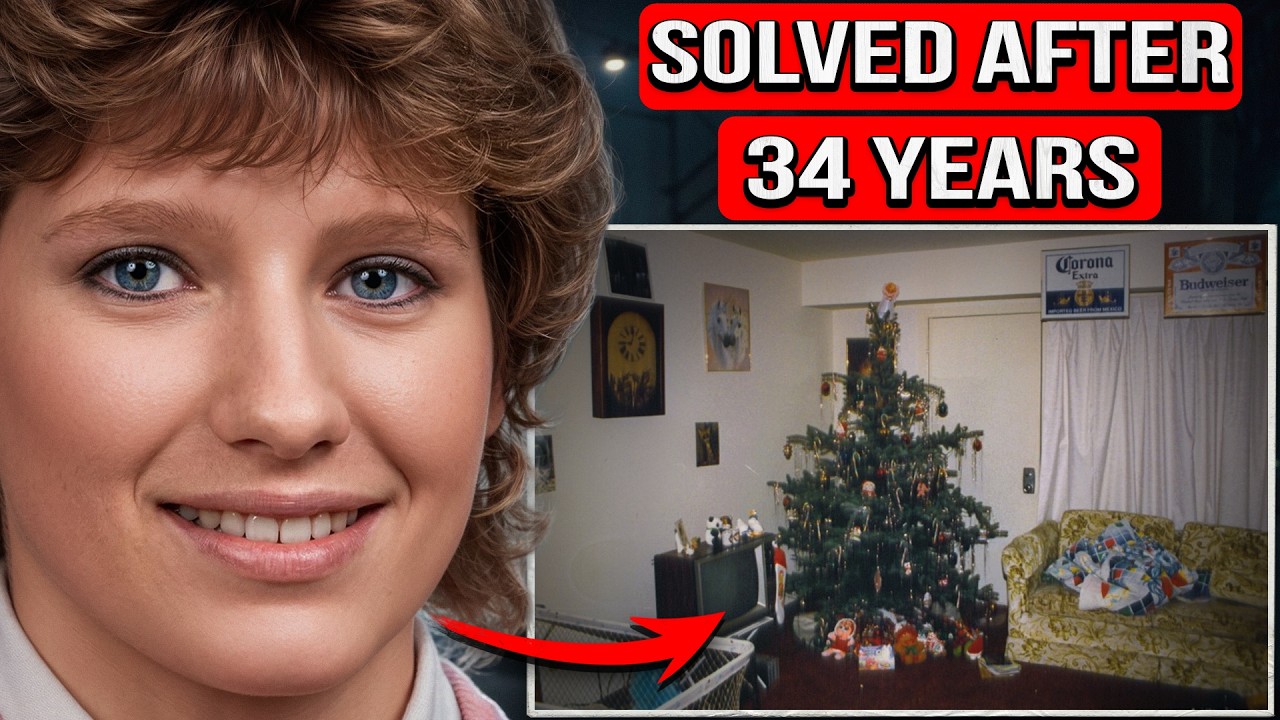
One read “Metallica. ” Another read “Harley was here. ” Whoever had done this had spent time in this small apartment on the edge of Three Rivers, Michigan, and had left behind a trail of questions that would take nearly thirty-five years to answer. Cathy Swartz was born on May 24, 1969, in Michigan.
She grew up on a farm with her parents and younger brother, surrounded by horses she loved. When she was eight, her parents gave her a pony of her own. She was active in the Girl Scouts, loved running, and was generally a lively kid. When she reached middle school, her family moved to the small town of Three Rivers.
There she met a boy named Michael Howard, and the two began dating. After Cathy turned eighteen, she became pregnant, but the relationship did not last, and the two went their separate ways. The pregnancy put her senior year of high school on hold, and she never finished it. At the end of March 1988, she gave birth to a daughter, Courtney.
From that moment on, her world revolved around caring for the baby. Her parents helped however they could, but Cathy wanted to stand on her own. She rented a small apartment on the edge of town and moved there with her daughter. A few months later, she started dating a man named Mike Warner.
They had known each other for several years, and just four months into the relationship, they became engaged. Mike moved in, and they planned to marry soon. He worked at a local paper mill, while Cathy spent most of her time at home with Courtney. On December 2, 1988, when Cathy was nineteen, she stayed home with her daughter as usual while Mike left for his morning shift.
He returned around 3:30 in the afternoon and immediately noticed something strange. Small drops in the hallway looked like blood. At first, he thought Cathy might have had another nosebleed, since that happened often, so he did not panic right away. But when he reached the staircase leading to the second floor, he saw something far more disturbing.
The walls were splattered with red stains, and so was the kitchen floor. Mike ran upstairs and found Cathy lying on the bedroom floor. She was covered in blood, with a massive wound across her neck, and he quickly realized she was most likely dead. He also saw Courtney in her crib, unharmed.
Mike ran out of the apartment and went to the neighbors, telling them what he had seen. They called the police. Officers confirmed Cathy was dead and began processing the crime scene. It was obvious immediately that they were dealing with an extremely violent murder.
They suspected the killer had sexually assaulted her, based on the fact that her clothing had been pulled down. They also believed the body may have been deliberately placed near the doorway, so it would be visible from Courtney’s room. The water in the bathroom was still running, and blood was everywhere, suggesting the killer had most likely taken a shower. Given how much blood covered the apartment, police believed he would have been soaked in it from head to toe, and they considered the possibility that he had changed clothes before leaving.
The blood had splattered at different angles, and investigators began wondering whether some of it might belong to the killer himself. It seemed possible he had cut himself during the attack. Every sample was collected and sent to the lab. There were also several bloody fingerprints inside the apartment.
Two prints were found on the phone in the victim’s bedroom, and one belonged to Cathy herself. It looked like she had tried to call the police, but the killer stopped her and cut the phone cord. There were also bloody impressions from men’s boots, along with barefoot prints. That supported the theory that the killer had taken a shower and then walked around the bathroom barefoot.
Another detail suggested the killer had stayed in the apartment for quite a while. The radio was still playing when police arrived. Mike confirmed that he and Cathy usually kept the radio on, but said it had been set to a different station. The killer must have switched the frequency, most likely after the murder.
The strangest piece of evidence was still ahead. Crime scene technicians used a new device that, with the help of light, made it possible to see traces of biological material, fibers, and other evidence invisible to the naked eye. When they shined it on the victim’s body, they saw the words “I was here” written on her leg, with an arrow pointing toward her intimate area. The message had been written with a marker or something similar and then wiped away so it could not be seen.
As they continued examining the apartment, investigators found several more erased messages on the refrigerator door. One said “Metallica. ” Another read “Harley was here. ”
From the very first hours, police suspected this murder had been committed by someone who knew the victim well.
There were no signs of forced entry anywhere in the apartment, which suggested Cathy may have let the killer in herself. And nothing valuable had been taken, which cast doubt on the idea that this had been a robbery. Medical examiners determined that Cathy had died sometime between 11:00 a. m.
and 2:00 p. m. Investigators noticed one especially strange detail. By the time they removed Courtney from the apartment, the baby’s diaper was clean, even though Kathy had been killed at least several hours earlier.
That led detectives to wonder if the killer had changed the child’s diaper. Whoever did this had brutally murdered the mother but then taken care of the baby. As for Cathy’s injuries, examiners found signs that someone had tried to strangle her, though that had not killed her. In their view, she died from wounds inflicted with something like a pair of scissors or a very sharp knife.
Her body was covered in abrasions and scratches, suggesting the killer had spent a significant amount of time committing the crime. Experts confirmed that she had been sexually assaulted, and they recovered the attacker’s biological material. But back then, DNA testing was still in its early stages, and detectives could not request that kind of analysis yet. They were forced to work with what they had.
The first person detectives looked at was Mike, the victim’s fiancé. Police quickly confirmed he had been at work and could not have committed the crime. The bloody fingerprints and boot prints found in the apartment did not match his. He was crossed off the suspect list almost immediately.
After speaking with Cathy’s neighbors, detectives got a few new leads. None of them had heard screams or sounds of a struggle, but all the apartments closest to hers had been empty at the time because their residents were at work. Several other neighbors said they had seen an unfamiliar man in a red jacket around the complex. According to them, he had been walking near Cathy’s building and kept looking around.
They described him as a tall white man with a mustache, and some witnesses added that he had arrived in a white pickup truck. While talking to neighbors, detectives came across a man who had a large knife on his belt. They thought it strange that he was walking around with a knife in his apartment, so they asked him to turn it over for testing. Experts found traces of blood on the blade and concluded it belonged to a human, but there was one problem.
Cathy had a different blood type. The man explained that he had recently been in a car accident. The knife had been strapped to his belt, and during the crash, the blade had stabbed him in the leg. Police spoke with the officers who responded to that accident, and they confirmed the man had in fact been injured by his own knife.
Another lead came from the neighbors who lived right next to Cathy. When they got home from work, they found signs that someone had tried to force their front door open, but the door was still locked and no one had gotten inside. Detectives began to suspect that Cathy’s killer may have deliberately staged it to look like he had also tried to break into another apartment, in order to make the whole thing seem like a random burglary instead of a planned murder. With Mike cleared, detectives turned to the people closest to Cathy, trying to figure out whether anyone else might have wanted to hurt her.
Given that the killer had not touched Courtney, and the possibility that he had even changed her diaper, their next suspect became the child’s father, Michael Howard. Cathy’s best friend told detectives that Michael had put his hands on her several times when they were dating. He denied being the father of her baby and had taken no part in her life at all. Even so, Michael still moved in the same circles as Cathy and her fiancé, and had even been inside their apartment with other friends.
When police dug deeper, they learned that after Courtney was born, things between Cathy’s family and Michael’s had become extremely tense. He kept denying he was the father, so Cathy had gone to court and managed to get a paternity test ordered. That had happened just days before her death, and the results came back only after she was killed. The test confirmed that Michael really was Courtney’s father.
Police also found a letter in Cathy’s apartment addressed to Michael, sitting in the trash. In it, Cathy asked him to come see his daughter. That was enough to bring him in for questioning. He denied having anything to do with the murder, but he did tell detectives something interesting.
According to him, about a month earlier, he and Cathy had slept together while her fiancé was out of the house. At the same time, he insisted they had no plans to get back together. Michael also gave them an alibi. He said he had been at work until around 1:30, then met up with his girlfriend, and later went out with his mother to take care of some errands.
Detectives checked every part of his story and confirmed he simply could not have committed the murder. His fingerprints and footprints did not match the killer’s either. With all that in mind, they stopped seeing him as a likely suspect and turned elsewhere. Cathy’s best friend told them she had another ex named Troy, someone who had also repeatedly beaten her.
Detectives began looking into him and learned that he and Cathy had broken up about a year before her death. According to people who knew them, Troy had a terrible temper and obvious problems controlling his anger. Police also found out that he was a big Metallica fan, and that exact word had been written on the refrigerator door in the victim’s apartment, then completely wiped away. By that point, experts had examined all three messages, including the one written on the victim’s leg, and concluded that all of them had been written by the same person.
The message on Cathy’s refrigerator said “Harley was here. ” Yet there was no one in her circle with that name. However, Troy was obsessed with Harley-Davidson motorcycles, and his friends were so used to that obsession that some of them actually called him Harley. Detectives had a hard time believing all of that was just a coincidence.
On top of that, they learned Troy had been inside Cathy and Mike’s apartment at least once before, during a party with other friends. They brought him in for questioning, and he admitted that he had written those two messages on the refrigerator with a marker and then wiped them off. But he insisted that had happened at that party, and that he had nothing to do with the message written on the victim’s leg. Detectives did not buy it.
By then, they already had a handwriting expert’s opinion stating that all three messages had been written by the same person. Police kept pressing Troy, and eventually he gave in. He admitted he had written the message on Cathy’s leg too. But according to him, it had nothing to do with the murder.
Troy claimed that even after they broke up, he and Cathy had continued sleeping together regularly, including after she got engaged to Mike. He said he had written the message on her leg during one of those meetings at her apartment, not long before her death. According to Troy, Cathy washed it off right away so her fiancé would not see it. Detectives felt his story was too weak and that he could very well be the killer.
Given his violent temper and the fact that he had beaten Cathy more than once, Troy quickly became their main suspect. As for the day of the murder, he had an alibi for the morning and for later that evening, but between 10:00 a. m. and 2:30 p.
m. there was one big gap. According to Troy, he had been at home, but no one could confirm that. And that was exactly the time window the medical examiner had established for Cathy’s death.
Police got a warrant to search his house and car but found nothing. Even so, they were so convinced he was involved that they obtained a warrant for his arrest on suspicion of first-degree murder. After Troy was taken into custody, investigators sent his fingerprints and footprints to the lab, and that is where things took an unexpected turn. None of them matched the prints left by the killer.
As a result, detectives had no choice but to release him. Even so, they still believed he was directly connected to the murder. They could not ignore the fact that the bloody prints at the crime scene belonged to someone else, so a new theory began to take shape. Maybe Troy had an accomplice who helped him commit the murder or clean up afterward.
Before long, detectives had a possible candidate for that role: Troy’s father. They began suspecting him because he refused to answer their questions or give his prints, but they did not have enough to get a warrant, and no other useful leads turned up. There was nothing they could do. After that, detectives kept digging into everyone Cathy knew, but it was not getting them anywhere.
They were convinced the victim knew her killer, so they started checking absolutely anyone who might have had some connection to her. They collected fingerprints and footprints from her former co-workers, her neighbors, students at the local high school, and even her own father and brother. None of it led anywhere. They even requested prints from the friends and co-workers of Cathy’s ex-boyfriends, hoping sooner or later they would get lucky.
That went nowhere. Another angle of the investigation focused on an incident that at first seemed completely unrelated to Cathy’s murder. On the day she was killed, one of her neighbors left town with her daughter, heading toward a nearby village. She was driving way over the speed limit, lost control, and the car went into a river.
Her daughter was rescued, but the woman died. Because it happened almost at the same time as Cathy’s murder, detectives began to wonder whether the neighbor could somehow have been involved in the crime, or whether she might have seen something so frightening that she panicked and tried to get as far away as possible. Detectives obtained her fingerprints, but they did not match the killer’s either. Even so, police never fully ruled out the possibility that the two events were connected in some way.
Police also considered the possibility that Cathy had been killed by a serial murderer who was suspected in the deaths of several other young women. Those crimes had happened in very similar ways, and in those cases too, scissors had been used as the weapon. In the end, though, detectives came to believe the odds of a real connection were low. From that point on, there was almost no progress in Cathy’s murder investigation.
Detectives kept looking for new leads, but they still saw Troy and his father as the most likely suspects. Murders like this were extremely rare in their small town, so the local department was determined to solve it no matter what. In the first three years alone, they checked more than a thousand people but still could not find the killer. At one point, rumors started spreading around town that the murderer might be someone in law enforcement, and that was why the case could not be solved.
As a result, every officer gave their prints, but none of them matched the killer. After that, the case saw almost no progress at all, and eventually it went cold. That went on for nearly twenty-four years, until 2012. By then, every detective in the local department had changed, and a new team decided to reopen Cathy’s case.
As they went through the old files, they immediately ran into a major problem. Some of the evidence had simply been lost, and a lot of the records were missing. The original detectives had kept part of the case in their heads instead of properly writing everything down. Even so, the phone with the bloody fingerprint was still sitting in evidence, so it was sent to the lab.
Experts determined that the blood did not belong to Cathy but to an unknown man. That meant police now had the DNA profile of her killer, but there was one problem: the man was not in the FBI database. Even so, detectives started comparing that sample to every major suspect they had, including the victim’s fiancé and both of her exes. To the detectives’ surprise, none of them matched the killer’s DNA, which finally ruled all three of them out once and for all.
Up to that point, investigators had still believed Troy could have been the killer, but now that theory was completely dead. For a while, detectives tried to collect DNA samples from the other suspects too, but their options were extremely limited. There were more than a thousand possible names on the list, and checking every single one of them was impossible. That is where the case sat for another ten years.
When detectives reopened it in 2022, they were still staring at the same problem. The killer’s DNA was not in the FBI database. This time, they decided to try forensic genetic genealogy and sent the sample to a company called Authurm. Experts began searching public genealogy databases for distant relatives of the killer, building out his family tree piece by piece.
In the end, they narrowed it down to one specific family that had been living in the same town as the victim at the time of the murder. There were four brothers in that family, and by all indications, the killer had to be one of them. Police learned that two of the brothers were still living in Three Rivers and went to ask them for DNA samples. The men agreed to provide them voluntarily, and the lab determined that the killer’s DNA did not match either one of them, but that both were very close relatives of the offender.
A third brother was already in the FBI database, and his DNA did not match the killer’s profile either. That left police with the most obvious suspect of all: the fourth brother, fifty-four-year-old Robert Waters. Detectives spoke again with one of Robert’s brothers, and this time he gave them a lot of interesting information. First, police noticed that all four brothers’ names were in the case file, but for some unknown reason, no one had ever actually questioned them.
Most likely, the problem was simple. Police had collected several thousand names, and there was no realistic way to interview every single one. According to the brother, Robert had grown up near Three Rivers, and as a teenager he had already had problems with the law. He ended up in a juvenile correctional facility, and after that he moved to another state.
That had happened before Cathy was murdered, but detectives uncovered something else too. Robert had been a childhood friend of the victim’s fiancé. And just a month before Cathy was killed, he and his girlfriend had come to visit them. By that point, detectives believed there was a very high chance Robert was the killer.
Early on a Sunday morning in April 2023, they went to talk to him. At the time, he was living in South Carolina with his wife and two children. He had a successful plumbing business, a nice house in a quiet neighborhood, and what looked like a model life. Police told him they were investigating an old murder and asked him to come to the station for questioning.
Robert said he would come by later, but instead he stayed home and hired a lawyer. Even so, the lawyer eventually convinced him that avoiding detectives would only make things worse. Robert finally agreed to go in. Once he got there, police handed him a warrant for a DNA sample and fingerprints, and he had no choice but to comply.
During the whole process, Robert seemed calm and made small talk with the detectives about unrelated things. He talked about his successful business and mentioned that he had once owned six trucks. He also complained that he had broken his back a few years earlier, and that since then his mobility had been limited. Right after that, his fingerprints were sent to the lab, since those could be compared much faster than DNA.
It did not take long for experts to confirm that Robert’s prints matched the bloody fingerprint left on the victim’s phone. The moment detectives got that result, they placed him under arrest. The only thing he said was a short, quiet “Okay. ”
Later, experts confirmed that Robert’s DNA also matched the killer’s sample, along with the footprints left at the scene.
For Robert’s family and the people who knew him, the arrest came as a complete shock. To them, he had always been a respected, successful man who lived a decent, orderly life. His daughter, who was born just a month after Cathy’s murder, refused to believe her father could have done something like this and thought the detectives had made some kind of mistake. After moving to another state, Robert had never drawn police attention again and had lived as a law-abiding citizen.
But the forensic results left no room for doubt. They confirmed that Robert was the man who had committed the murder thirty-four years earlier. The day after his arrest, detectives called Cathy’s daughter, who had spent her entire life wondering what had happened to her mother. When she learned who the killer was, she could not come to terms with the fact that he had gone on to live a quiet life with a family, loving children, and a successful business after doing something so horrific to her mother.
Even so, Courtney immediately told detectives that she planned to attend the court hearings and wanted to see Robert get the harshest punishment possible. As for Mike, Cathy’s fiancé, he had never expected Robert to be involved and had never once suspected him. He admitted that what happened had shattered his life. After Cathy’s death, he developed serious problems with alcohol, and for years he struggled to hold down a job.
By 2023, when detectives informed him of Robert’s arrest, Mike was unemployed and living with his mother in the same town, where he collected bottles and cans. Troy, who had spent years as the main suspect in the case, had also lived a hard life. People saw him as a killer and refused to hire him. Under all that pressure, his health began to deteriorate.
By the time Robert was arrested, Troy was living in his mother’s basement. In the end, the real killer had been the one living the far easier, more comfortable life, while the people who had nothing to do with the murder were the ones left to suffer. According to the investigators’ version, Robert committed the murder when he came back to town to visit relatives. Since there were no signs of forced entry, they believed he most likely just knocked on the door and Cathy let him in.
Given that he was a childhood friend of her fiancé and had been to their apartment only a month earlier, she almost certainly would have recognized him. He may have come up with some excuse to get inside. Once he was in, he attacked Cathy and put her through a prolonged, horrifying ordeal. Prosecutors were confident they had enough to secure a conviction against Robert, and they were preparing to move the case forward.
But five days after his arrest, something unexpected happened. Robert was found dead in his single cell. On the nightstand beside him were cut-out passages from the Bible about forgiveness. Even so, detectives said that with all the evidence they had, the case is officially considered solved, and no one has any real doubt that Robert was the killer.
The one thing that still haunts investigators is the possibility that he may have been connected to other murders. Based on everything they had uncovered, they believed Robert may have killed Cathy simply because he wanted to, which raised the possibility that there were other victims. But as of now, there is no evidence pointing to that.






