In 1997, a mid-budget crime film slipped into theaters with little fanfare, yet it would go on to challenge the biggest blockbuster of the decade and redefine an entire genre. L. A. Confidential pulled audiences into the shadowy heart of 1950s Los Angeles, where corruption wore a badge and justice came with a price.
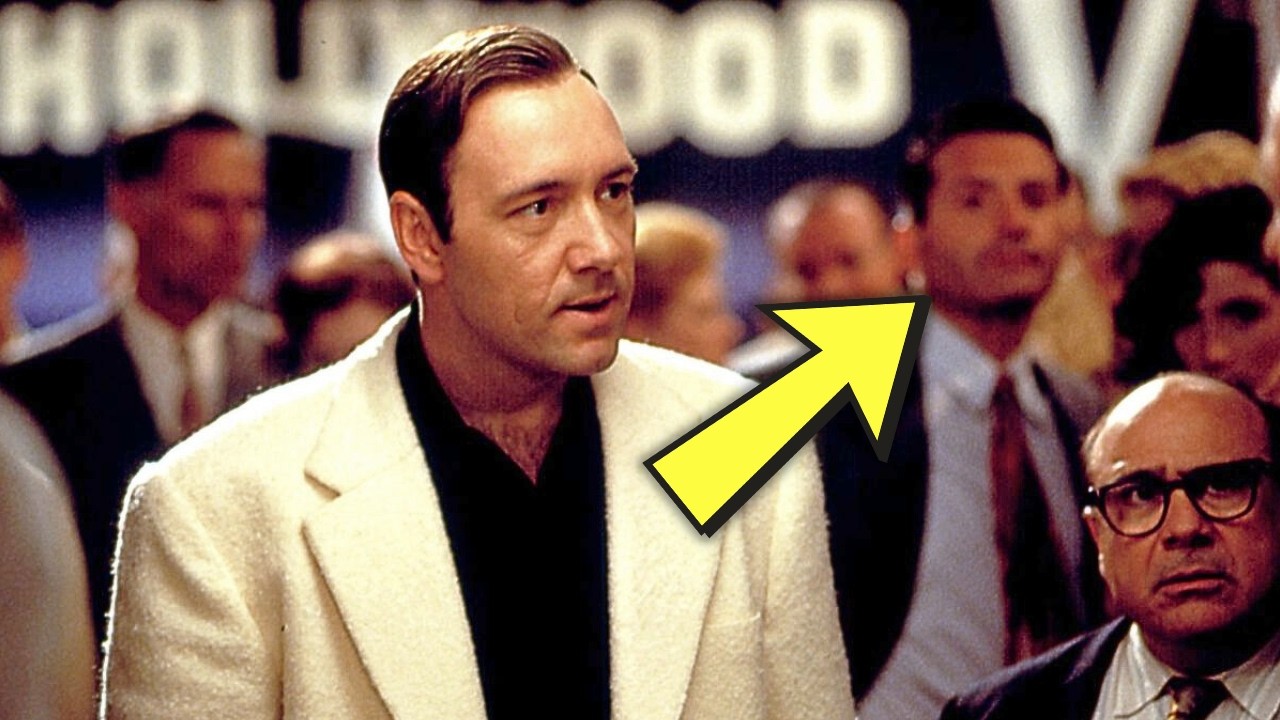
The path to the screen was anything but smooth, marked by studio battles, a novel considered unfilmable, and casting gambles that nearly destroyed the project before it began. Kevin Spacey, building the character of Detective Jack Vincen, immersed himself in the world of 1950s police television, studying vintage shows and analyzing how glamorized media shaped public perception of cops. He visited working sets and observed how officers behaved when cameras were rolling versus when they were not. The research revealed something darker: men who craved attention often paid a steep price for it.
Spacey shaped Vincen as someone addicted to the spotlight, a detective more concerned with his image than his badge. Every gesture carried the weight of a man performing his own life, giving the character a tragic dimension that went beyond the script. Adapting James Ellroy’s sprawling novel seemed impossible from the start. The author initially rejected early screenplay attempts with brutal honesty, judging them chaotic and unfaithful to his vision.
Everything changed when Curtis Hanson and Brian Helgeland took a radically different approach. Instead of cramming every subplot into the script, they restructured the entire story around three intertwined character arcs, stripping away excess and tightening the focus. Their disciplined method eventually won Ellroy over, transforming an unfilmable novel into a masterclass in adaptation. Warner Brothers executives faced a nightmare scenario when casting decisions came down.
Russell Crowe and Guy Pearce were virtually unknown in the United States, with no proven box office track record. The studio pushed hard for established American stars, fearing financial disaster if audiences rejected unfamiliar faces. Hanson refused to compromise, insisting that authenticity mattered more than celebrity. He believed the film needed actors who could disappear into 1950s Los Angeles without bringing modern star baggage along.
The gamble ultimately defined the film’s fresh and unpredictable energy. Russell Crowe prepared for the role of Bud White by studying real LAPD officers, focusing on those who had experienced trauma and carried it silently. He researched trauma psychology to understand how some men internalize their anger instead of expressing it openly. Crowe focused on the quiet habits of people who live with contained violence: the controlled movements, the watchful silence, the sudden eruptions.
Rather than playing an angry brute, he crafted a damaged protector whose violence had purpose and pain, making the potentially one-dimensional character someone audiences feared and sympathized with simultaneously. Guy Pearce transformed into Edmund Exley by erasing everything familiar. He had to remove all traces of his Australian background and rebuild his character through posture, vocal control, and rigid mannerisms. Pearce studied interrogation procedures to understand how strict adherence to rules could define a personality.
He shaped Exley’s moral precision through physical choices, the way he sat, the controlled tone of his voice, the measured responses to chaos. He created a man who used procedure as armor, someone whose rigidity masked deeper insecurities. Spacey personally selected many aspects of Vincen’s style, from the slicked-back hair to the tailored wardrobe. He drew inspiration from rat pack swagger and the celebrity cop clichés that dominated 1950s culture.
Every element screamed calculated cool, the look of someone who knew cameras might be watching. Spacey understood that style was substance for a character like this, creating a detective who seemed to glide through crime scenes while hiding desperation beneath his carefully constructed image. Historical research went far beyond basic fact-checking. The filmmakers dug into real corruption cases from the 1940s and 1950s Los Angeles police, uncovering documents that revealed institutional rot beneath the polished surface.
These files showed how police misconduct could be systematically buried under carefully managed public relations. The documents influenced everything from dialogue to character motivations to the overall atmosphere, giving the fiction moral weight it could not have achieved through imagination alone. Visual symbolism ran through every scene with deliberate precision. Hanson used mirrors, doubles, and reflective framing to emphasize themes of identity, deception, and fractured morality.
Characters constantly saw themselves in reflective surfaces, forcing audiences to question who these people really were beneath their facades. Many scenes intentionally echoed earlier moments, creating visual parallels that showed how the three detectives were reflections of one another, representing different responses to the same corrupt system: violence, ambition, and compromise. Kim Basinger crafted her character Lynn Bracken as a modern reinterpretation of Veronica Lake, focusing on subtle gestures, tone, and facial control rather than simple imitation. She studied how classic Hollywood actresses used restraint to project mystery and allure.
Basinger brought old Hollywood glamour into a grounded environment, creating a character who used her resemblance to a movie star as both armor and commodity. The performance earned the film’s only acting Oscar. The film’s explosive opening drew on documented history. The true 1951 Bloody Christmas incident saw police officers brutally assault several Mexican-American men in custody, creating a scandal that exposed deep institutional problems.
The event became national news and forced uncomfortable conversations about police accountability and racial violence. The filmmakers used it to establish the moral stakes immediately, showing how corruption and violence were woven into the department’s fabric. Behind the scenes, a major creative battle threatened the film’s entire structure. Warner Brothers executives pushed hard for simplifying the story around a single protagonist, specifically Bud White, urging the writers to eliminate Exley and Vincen entirely.
Hanson and Helgeland fought to preserve all three characters, understanding that their intertwined stories were essential to the film’s power. Meetings became tense as executives demanded safer choices, but the writers’ refusal to compromise saved the movie’s essential structure. Production designer Janine Opaw stuffed the sets with historically accurate props, magazines, decor, and signage from the period. Many items were authentic antiques sourced from collectors and archives.
Background newspapers featured real headlines, products matched historical packaging, and even small decorative items reflected authentic mid-century taste. Actors could pick up any object and find something genuine, helping them inhabit the world more completely. The production filmed in preserved art deco buildings, vintage hotels, and neighborhoods untouched by contemporary construction, giving the film a tangible connection to the actual era it depicted. A former Los Angeles police captain reviewed scenes to verify realism in police procedure and mid-century departmental culture.
He confirmed that the script’s depiction of corruption and internal politics resembled historical realities within the department, helping refine dialogue and clarify procedural details. His firsthand knowledge grounded the film in lived experience. One of the story’s most powerful emotional anchors did not come from the original novel. Rolo Tamasi, the name that haunts Exley throughout the narrative, was created specifically for the screenplay.
The writers invented him as a symbolic representation of injustice, giving Exley a deeply personal reason to pursue truth at any cost. The addition strengthened the climax significantly, making Exley’s final confrontation feel cathartic on multiple levels. Method preparation extended beyond rehearsal into daily life. Crowe intentionally lived in a cramped apartment during production to heighten his physical presence in small spaces.
The confined environment affected how he moved, making Bud White’s intimidating silhouette feel natural when cameras rolled. He even adjusted his drinking habits to match the character’s lifestyle. Ellroy’s original conclusion offered no satisfying resolution, with Dudley Smith surviving and maintaining control. The filmmakers re-engineered the finale to deliver a more explosive, morally charged confrontation, creating a shootout that forced characters to choose sides and face consequences.
Ellroy initially disliked the alteration but later praised its effectiveness for cinema. The film contained countless references to noir’s golden age, from specific lighting choices mimicking 1940s cinematography to camera angles borrowed from genre masterpieces. A poster glimpsed in the background might reference a classic film, or a shot composition might mirror an iconic moment from decades earlier. These tributes enriched the experience without demanding recognition.
Composer Jerry Goldsmith blended jazz and orchestral tension to evoke 1950s Los Angeles while keeping the score emotionally modern. His themes underscored moral complexity, making audiences feel character’s internal struggles without dialogue. The score never called attention to itself, yet its absence would have left emotional holes throughout the narrative. During the 1998 awards season, one film emerged as a genuine rival to the year’s biggest phenomenon.
While Titanic dominated box office records, L. A. Confidential became the critical favorite that sparked serious debate about whether spectacle or craft should define excellence. Though Titanic ultimately won best picture, the competition elevated both films, proving that different types of excellence could coexist.
The late 1990s saw noir largely relegated to pulp status. Then this film arrived and reminded everyone why the genre mattered. Its blend of classic style with modern storytelling influenced a generation of filmmakers, proving the genre could still deliver sophisticated adult drama. Noir returned as a serious prestige category rather than genre exercise.
Television tried twice to capture the story’s magic in episodic form, with both attempts failing to compress the novel’s complexity into sustainable series structure. The failed adaptations revealed why some stories resist serialization. The film’s strength came from compression and focus, qualities that long-form television undermines. Time has been remarkably kind to the film.
Critical appreciation has climbed steadily, with many now considering it one of the greatest crime films ever made. Its reputation has grown precisely because it avoided trends and focused on timeless storytelling. L. A.
Confidential overcame studio doubts, adaptation challenges, and risky creative choices to become one of cinema’s defining crime dramas, proving that when craft, courage, and clarity align, the result can resonate for generations beyond its initial release.






