Jim Miller stood on the dusty street of Pecos, Texas, in the spring of 1893, a man who had built his reputation on the barrel of a shotgun. He was the field marshal of the town, a lawman by title, but the men who knew him understood that his badge was merely a convenient cover for a much darker trade. Bud Fraser, the county sheriff, had left town on business, and with him gone, Miller saw an opportunity. He gathered his closest allies—his brother-in-law Manny Clemens and a sharpshooter named Martin Q.
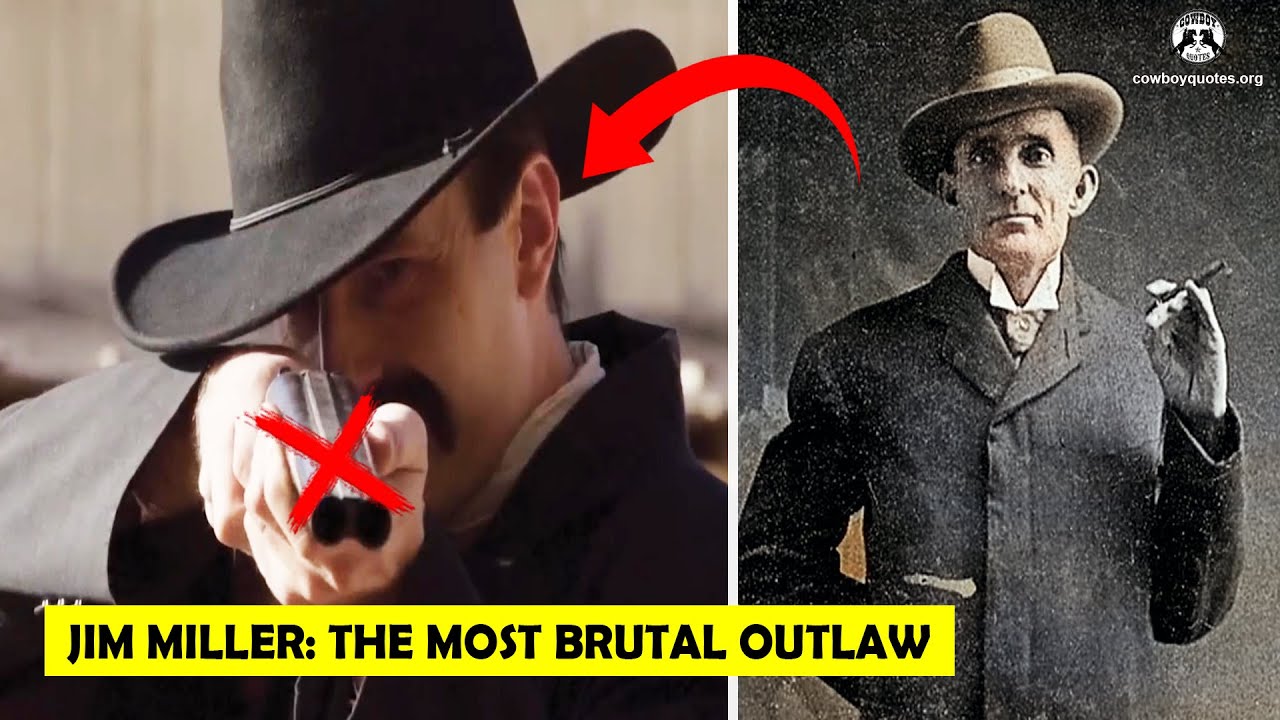
Harden—and laid out a plan that would remove Fraser from the equation permanently. The scheme was cold and clinical: they would wait for Fraser to return, stage a mock gunfight on the platform, and have a third man fire the killing shot, making the murder look like a stray bullet from the exchange. It was a plan built on deception, the kind of work that had made Miller the most feared assassin in the West. But word of the plot leaked.
A local man named Con Gibson overheard the conspirators talking in a pub and carried the news straight to Sheriff Fraser. Fraser, now warned, did not wait to be ambushed. He reached out to the Texas Rangers, and when he finally rode back into town, he was escorted by Captain John R. Hughes, a man whose name carried its own weight in the borderlands.
The confrontation never happened. Instead, Miller, Clemens, and Harden were arrested for plotting to kill the sheriff. The case was moved to El Paso for trial, and for a moment it seemed that justice might finally catch up with Jim Miller. But Gibson, the key witness, fled to Eddy, New Mexico, and without his testimony the prosecution had nothing.
The prisoners walked free, and Miller returned to Pecos with his reputation intact and his grudge against Fraser burning hotter than ever. Born on October 25, 1861, in Van Buren, Arkansas—though some records list October 24, 1866—Jim Miller had moved to Texas with his family when he was just a year old. His father, Jacob, was a stonemason who helped build the first capitol structure in Austin, but he died when Jim was only eight. Even before that, the boy had earned a reputation as a bad seed.
Rumors circulated that he was responsible for the deaths of his own grandparents, though the allegations were never proven. What was proven, over time, was that Jim Miller had a talent for violence. In 1880 he was living with his mother and siblings in Coryell County, and four years later his sister Georgia married a man named John Coupe. Jim could not stand his new brother-in-law, and on July 30, 1884, Coupe was found dead in his bed, about eight miles northwest of Gatesville, his body torn apart by a shotgun blast.
The community knew about Jim’s grudge, and he was arrested, tried, found guilty, and sentenced to life in prison. His lawyers appealed, and the Texas Court of Appeals overturned the verdict on a technicality. Miller walked out of court a free man and went straight back to the life he knew best. He joined an outlaw gang in San Saba County, taking part in robberies and arson that often ended in death.
He bought into a local tavern with half the profits, a front for his real work. Because Jim Miller’s true talent, the one that made his name feared from the Panhandle to the border, was assassination. He was quick and efficient, favoring shotguns for ambushes at night. He would kill anyone for the right price, his fees ranging from $150 to $2,000 depending on the difficulty of the job.
What made him so dangerous was the mask he wore. Miller was always impeccably dressed, polite to a fault, and never used profanity, smoked, or drank. He attended church regularly, which earned him the nickname Deacon Miller. But beneath that gentle exterior was a short-tempered killer who never hesitated to reach for his gun.
He was also a notorious poker player, and his gambling habit had dragged him into more than one deadly bar fight. Even as an outlaw, Miller managed to make connections that would serve him well. In 1882, he was arrested and disarmed by the young San Saba deputy sheriff D. H.
Gary, a man who would later become one of the West’s most prominent lawyers. But Miller did not stay in San Saba long. He drifted to McCulloch County, where he worked as a cowboy for Emanuel Mannon, a cousin of the infamous John Wesley Hardin. Miller befriended Mannon’s son and daughter, and in time he married the daughter, Sally.
They had four children together. After the marriage, Miller traveled to southeastern New Mexico and West Texas along the Mexican border, where his activities remained largely unknown. He would later brag about killing Mexicans at the border, a confession that added another layer of blood to his legend. By 1891, Miller was living in Pecos, Texas, where Sheriff George A.
Frazer—who had been in office for less than a year—found himself desperately in need of a deputy for the border town. Unconcerned with Miller’s past, Sheriff Frazer hired him on the spot. The following year, Miller ran for sheriff against Bud Fraser and lost, but the defeat did not stop him from being appointed field marshal of the city. As field marshal, he brought in his brother-in-law Manny Clemens as deputy and surrounded himself with other skilled shooters, including Bill Earhart, John Denson, and Martin Q.
Harden. Both John and Martin Harden claimed to be cousins of John Wesley Hardin, though they shared no blood with the gunslinger. Miller’s rise to power in Pecos was driven by his willingness to use violence to achieve his goals. His relationship with the Hardens hinted at criminal activities that went well beyond his official duties.
The failed plot against Bud Fraser did nothing to cool the tension between the two men. On April 18, 1894, Fraser confronted Miller on the street. “You’re a murderer and a plucker,” he shouted, then opened fire. The bullet lodged in Miller’s arm near the shoulder.
Miller tried to return fire, but the only casualty was a local storekeeper named Joe Cross, who was grazed by the bullet. The situation turned worse for Miller when Fraser shoved his pistol into his chest and knocked him to the ground. Done, Bud quickly left, believing the hired killer was finally finished. But when Miller’s wounds were examined, something odd was discovered: a metal breastplate under his jacket had stopped the shot.
It was then clear that Miller always stayed one step ahead, which was exactly why he favored those loose-fitting shirts. The man came prepared for the possibility that someone might try to kill him. In late 1896, despite knowing that Jim Miller intended to kill him, Bud Fraser made a fatal mistake. He traveled to Toyah, Texas, to visit his family.
On the morning of September 14, Fraser was playing cards with friends in a local pub when Miller kicked open the door, drew both pistols, and fired straight into Fraser’s head. Fraser’s sister was present, and Miller turned to her with a cold warning: “You’re just like your brother. I’ll shoot you in the face. ” Then he walked out.
Law enforcement was more determined than ever to bring him to justice, but Miller was cunning. At trial, he argued that Fraser had done no better than him, a defense that somehow held. He escaped punishment for the murder. A man named Joe Her, who had testified against him, became Miller’s next target.
Miller reportedly shot him down and then rode a hundred miles overnight to establish an alibi. It was not the first time he had used such tactics to evade justice. His ability to manipulate the legal system made him a dangerously untouchable figure in the Wild West. The years rolled on, and Miller’s legend only grew.
Pat Garrett, the man famous for killing Billy the Kid, was himself killed on February 28, 1908, near Las Cruces, New Mexico. The shooting was allegedly over a land dispute. Jim Miller was initially charged with Garrett’s murder, but the reliability of the charges was questioned for years. The confession of Jesse Wayne Brazel, who claimed he killed Garrett in self-defense, complicated the case and eventually led to Brazel’s acquittal.
Whether Miller was truly behind Garrett’s death remained a mystery in Western history, just one more shadow in a life full of them. Miller’s final contract came from ranchers Jesse West and Joe Allen, who hired him to commit murder in Ada, Oklahoma. The intended victim was Allan Augustus “Gus” Bobbitt, a cattle rancher and former U. S.
deputy marshal. The motive was said to be Bobbitt’s land, or perhaps a personal grudge. The price was $1,700. On February 27, 1909, Miller ambushed Bobbitt near his ranch.
When Bobbitt and his tenant Bob Ferguson arrived from town in their supply wagons, Miller coldly pulled the trigger, firing two shots into Bobbitt’s ribs. Bobbitt fell from the lead wagon, and Miller fled the scene on the road to Fort Worth, passing Ferguson before Bobbitt had even died. Bobbitt’s wife claimed Miller was the one who assaulted her husband. The murder had been witnessed by Oscar Peeler, a nineteen-year-old cowboy who had been offered $50 to lead Miller to Bobbitt.
The Texas Rangers captured Miller in Texas, and he was extradited to Oklahoma to stand trial alongside West, Allen, and a man named Burl. The town of Ada watched the proceedings with growing concern as it became clear the evidence against the four suspects was thin. There was a real chance they would be acquitted. But some of the townspeople had already decided that the law would not be enough.
On April 19, 1909, an angry mob—estimates ranged from thirty to two hundred people—broke into the jail and dragged the four suspects out of the abandoned state prison. Jim Miller, known for his ruthless calm, remained composed while the others begged for mercy. He made two final demands: that his diamond ring be given to his wife, and that he be allowed to wear his black hat when hanged. The mob approved both requests but declined his further wish to die in his black cloak.
With a defiant shout of “Let ‘er rip,” Miller voluntarily stepped off the box and hanged himself. The bodies of the other three were hung beside him. The gruesome scene lasted for hours, with the four bodies left on display until a photographer was dispatched to capture the moment. Those haunting photographs were sold to tourists in Ada for years afterward.
The violent end of Jim Miller and his accomplices served as a stark reminder of the dangers of vigilante justice and the consequences of taking the law into one’s own hands. The Deacon, the well-dressed assassin who prayed on Sundays and murdered any night of the week, was finally gone, hoisted by a rope in a town that had decided the law had failed them. The man who had killed so many, whose face never betrayed a flicker of remorse, met his end not in a courtroom, but at the hands of a mob that had simply had enough.