Brigitte Bardot was born on September 28, 1934, in Paris’s privileged 16th arrondissement, raised by a conservative Catholic mother and an industrialist father. She trained diligently at the Conservatoire de Paris, dreaming of a career in ballet. Everything changed in 1950 when, at just fifteen, her face appeared on the cover of Le magazine. That single photograph captivated assistant director Roger Vadim, who immediately arranged a screen test.
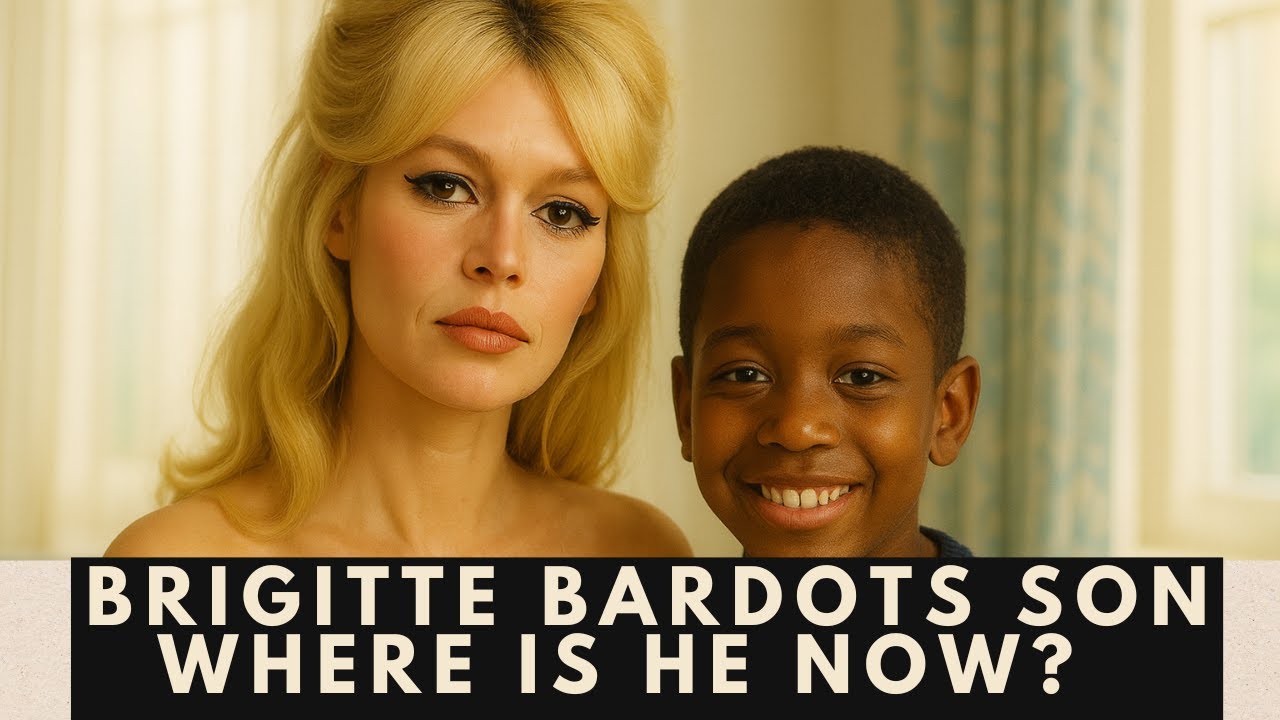
Two years later, she made her film debut in a modest comedy, but it was enough to ignite public curiosity. Stardom detonated in 1956 with Vadim’s And God Created Woman. Shot in sun-soaked Saint-Tropez, the film unveiled Bardot’s uninhibited charisma and turned her into a lightning rod for postwar sexual liberation. Censors balked.
Audiences could not get enough. Over the next decade, she headlined a string of influential films, including the courtroom drama La Vérité in 1960, Jean-Luc Godard’s arthouse classic Contempt in 1963, and the adventurous comedy Viva Maria in 1965. Fashion magazines raced to keep up. Her off-the-shoulder BB neckline, dramatic eyeliner, and ballerina flats set trends from Vogue and Paris Match to Harper’s Bazaar and Life.
But the glare of adoration came at a price. A whirlwind marriage to Vadim, publicized affairs, and relentless paparazzi frayed her nerves. By 1959, panic attacks landed her in hospital after a highly publicized breakdown. Just as the frenzy peaked, Bardot discovered she was pregnant.
Fear eclipsed excitement. She worried pregnancy would end her career and, more urgently, her freedom. In private letters, she called the baby a lump and spoke of feeling trapped inside her own body like an incubator. To meet social expectations and quiet scandal, she married the child’s father, actor Jacques Charrier, that June.
Paris society framed the wedding as a fairy tale, but the bride felt closer to despair than bliss. In her memoir, she later wrote that she contemplated abortion at a time when it was illegal and dangerous in France. On January 11, 1960, Bardot gave birth to a son, Nicolas-Jacques Charrier. Photographers camped outside the clinic.
Newspapers declared the arrival of France’s royal baby. Inside, Bardot recoiled from motherhood. Exhausted and depressed, she refused publicity photos with the infant and insisted the nurses keep him in the nursery as often as possible. During the first months, she oscillated between brief, uneasy visits and long stretches on film sets.
Friends recalled that when scripts arrived, her energy returned. When feeding time approached, she wilted. Bardot later admitted she felt no bond, writing that she wanted to scream from the horror of seeing this tiny being attached to me. By 1962, the marriage had collapsed.
In the divorce, Charrier obtained full custody, and Nicolas was moved to his paternal grandparents’ country home, far from the Paris limelight. Bardot resumed her career and rarely saw her son, telling reporters she was not cut out for domestic life. The separation marked the first crack in their fragile relationship, a fracture that would widen as Nicolas grew older and began to understand both his mother’s fame and her absence. Nicolas spent his childhood with his father and the Charrier grandparents, protected from paparazzi, while his mother returned to film sets and, after retiring in 1973, devoted herself to animal rights activism.
Bardot’s public comments on motherhood grew ever more painful, culminating in her 1996 memoir Initiales B. B. , where she recalled viewing her unborn son as a cancerous tumor and admitted punching her own stomach in an attempt to end the pregnancy. The book triggered a final rupture.
In 1997, Nicolas, then thirty-seven, joined his father in suing Bardot for invasion of privacy and hurtful remarks. A French court sided with them, ordering her to pay damages of about £28,000 and to print a legal disclaimer in future editions. After the verdict, Nicolas chose anonymity over notoriety. He moved to Norway, built a quiet career in engineering, married, and became a father himself, granting no press interviews and keeping contact with Bardot minimal.
The world still idolized Brigitte Bardot the icon. But Nicolas Charrier wanted no part of her spotlight or the mother who had rejected him so publicly. After the 1997 lawsuit, mother and son occupied different worlds. Bardot, then in her sixties, withdrew to La Madrague, her villa in Saint-Tropez, devoting every waking hour to animal rights causes.
She founded the Brigitte Bardot Foundation, lobbied governments, staged headline-grabbing protests, and published increasingly controversial essays that drew fines for hate speech. The spotlight she once courted now burned in political scandal rather than cinematic glamour. Nicolas settled comfortably into anonymity in Norway. He married Anelina Bjkin, pursued an engineering career, and raised two daughters, Anna Camila and Thea Josephine, far from French tabloids.
By all accounts, he built the ordinary private life his mother never wanted and never managed to keep. A brief thaw came in 1999 when Bardot invited her granddaughters to Saint-Tropez. The visit was polite but chilly, and no lasting reconciliation followed. Occasional birthday cards and holiday messages crossed borders, but the distance, emotional and geographical, remained intact.
Today, Bardot, approaching ninety, still issues fiery press statements from Provence. Nicolas, now in his mid-sixties, declines interviews and shields his family from reporters. Their paths rarely intersect, yet each continues to live in the shadow of the other: Bardot defined by the son she could not love, Nicolas by the mother he chose to leave behind. Bardot once embodied the promise that a woman could live entirely on her own terms.
She kept that promise, but the cost was a relationship she could never repair. Her films remain in retrospectives. Her foundation still campaigns for animal welfare. And every so often, a headline revives the debate over her incendiary political views.
Yet the deeper question that lingers is not about cinema or activism. It is about the son who grew up in her absence. Nicolas Charrier continues to live quietly in Norway, an engineer, husband, and father who grants no interviews and declines all invitations to revisit the past. His daughters are adults now, free to decide how much, if anything, they wish to inherit from the Bardot legacy.
For Nicolas, distance has proven the surest protection against the glare that once consumed his mother. Bardot remains in Provence, railing against cruelty to animals, while rarely speaking of the child she once called a stranger. Reporters occasionally ask if a reunion is possible. She answers with a shrug or a change of subject.
The silence between mother and son has lasted longer than their time together ever did. The story closes on two lives moving in opposite directions: one still attracting flashes of notoriety, the other wrapped in deliberate obscurity. In the end, Nicolas Charrier’s greatest act of rebellion was to choose the ordinary over the extraordinary, trading the world’s fascination for a privacy his mother never tasted.






