The Kaduri family controls 35 percent of Hong Kong’s electricity supply, owns some of the city’s most iconic hotels, and presides over a business empire valued at more than twelve billion dollars. They have survived the collapse of the Ottoman Empire, the Japanese occupation, British colonial rule, and the return of Hong Kong to Chinese sovereignty. For 140 years, through upheavals that destroyed most rival dynasties, they did not merely endure. They grew stronger.
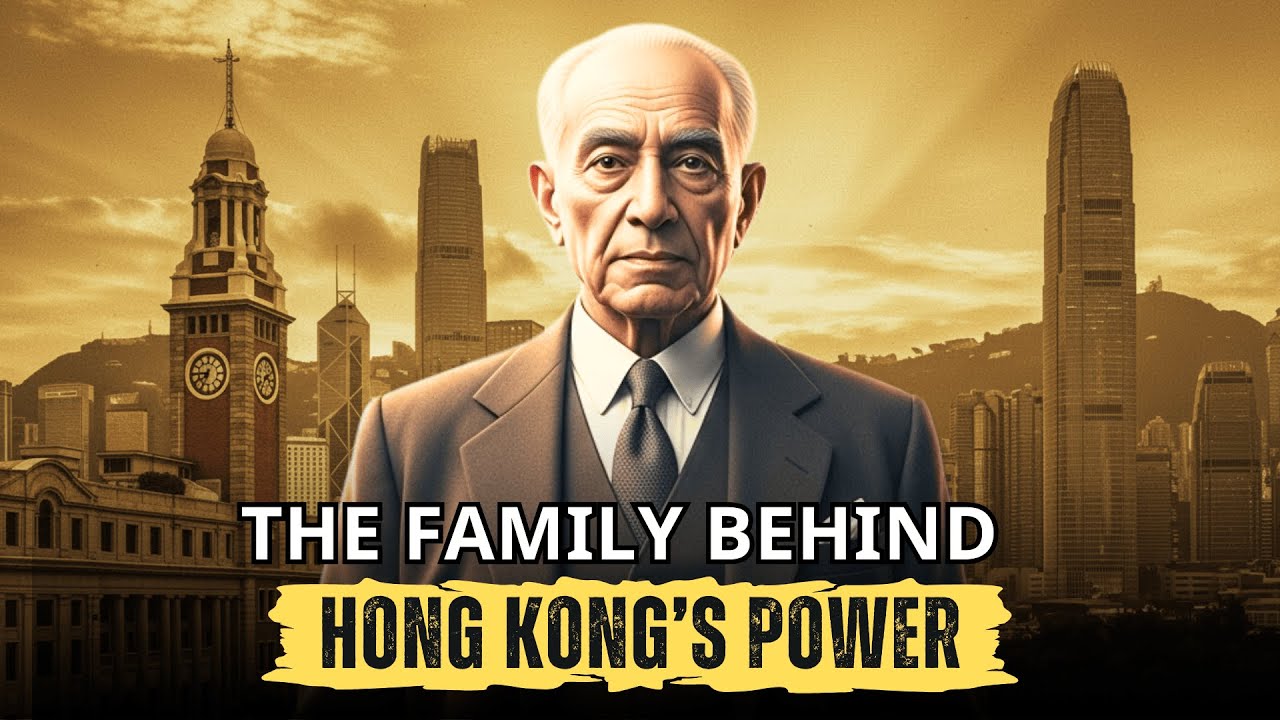
Yet their story begins not with inherited wealth, but with Jewish refugees fleeing religious persecution in Baghdad, arriving in Asia with nothing but determination and a sharp eye for opportunities others dismissed. In 1880, Hong Kong was widely regarded as a malarial rock with a population of roughly 160,000. Most investors considered it a colonial backwater without economic promise. The Kaduris saw something different: a future gateway between China and the wider world.
That foresight proved prophetic. Today Hong Kong is a major global financial center, and the Kaduris control key infrastructure underpinning its economy. China Light and Power delivers electricity to 80 percent of Hong Kong’s population, serving 2. 5 million customers.
The Peninsula Hong Kong, their flagship hotel, has hosted world leaders and celebrities for nearly a century. Their real estate portfolio includes some of the most valuable property on earth. The family’s roots trace to Eli Kaduri, born in Baghdad in 1865 into a Sephardic Jewish community with deep commercial traditions. Baghdad’s Jews controlled significant regional trade, linking Ottoman territories with Persia, India, and Europe.
But the late Ottoman Empire turned increasingly hostile toward minorities. Economic decline, political instability, and rising nationalism created dangerous conditions for Jewish merchants. Young Jewish men faced forced conscription, punitive taxation, and exclusion from government positions. Eli Kaduri concluded that his family’s future lay beyond the empire.
While most Jewish refugees headed to Europe or America, he chose Asia, where opportunities were unprecedented but risks immense. Asia in the 1880s was transforming. European powers were building trade networks and infrastructure. Shanghai was emerging as China’s main international gateway.
Hong Kong was developing into Britain’s central Asian headquarters. Disease was rampant, politics unstable, and regulations minimal. Success demanded the exact skills Middle Eastern Jewish merchants had cultivated for centuries: linguistic ability, cross-cultural navigation, and long-term relationship building. Eli Kaduri had these advantages.
His education in Arabic, Hebrew, and Persian helped him acquire new languages. His family’s commercial background gave him an understanding of trade and finance. His Jewish identity connected him to Sephardic networks stretching from London to Bombay. His path to independence began with a dismissal.
Working as a clerk for the powerful Sassoon family, known as the Rothschilds of the East, Eli was reportedly fired because his ambitions were deemed too great for a subordinate. The rejection compelled him to bet on himself. Arriving in Shanghai in 1880, he found a city experiencing explosive growth. While dominant trading houses focused on traditional commodities like tea, silk, and opium, Eli identified emerging markets in manufactured goods and consumer products.
His first major success came from importing kerosene and building distribution networks for Standard Oil across southern China. The business required minimal capital but demanded extensive travel and patient relationship building with Chinese retailers. It generated steady cash flow and provided invaluable insight into Chinese consumer behavior. By 1890, Eli was involved in real estate, financial services, and manufacturing, establishing himself as one of Shanghai’s most successful immigrant entrepreneurs.
But he was already looking beyond Shanghai to Hong Kong, still dismissed by most investors. He saw a British colony offering legal stability, a strategic position, and a concentrated population ideal for infrastructure monopolies. In 1901, he founded China Light and Power, initially supplying electricity to a small clientele in central Hong Kong. Electrification was still nascent, but Eli recognized it was inevitable.
By building capacity ahead of demand and offering superior customer service, the company achieved a dominant market position. His sons, Lawrence and Horus, inherited the business in the 1920s. China Light and Power served 15,000 customers with 12 megawatts of capacity. By 1950, it served over 200,000 customers with more than 100 megawatts.
The brothers understood that a utility in a small territory could become a natural monopoly through superior infrastructure, customer service, and regulatory relationships. The company invested in capacity five to ten years ahead of demand, making competition virtually impossible. When Hong Kong authorities eventually introduced utility regulation, China Light and Power already operated at such high standards that new entrants could not compete. The company became indispensable, and every political authority that controlled Hong Kong protected it.
The Peninsula Hong Kong opened in 1928 and became the cornerstone of a global hotel empire. The Kaduris understood that luxury hospitality was more than a business. It was a way to build relationships with the most powerful people in Asia. The hotel was strategically placed beside the Star Ferry terminal in Kowloon, making it the natural arrival point for international visitors.
Lawrence Kaduri secured landing rights for the Pan American Clipper, transforming the Peninsula into the gateway for trans-Pacific flights. The hotel’s service standards blended European luxury with Asian hospitality, and its staff were trained to anticipate guest needs. The famous fleet of green Rolls-Royces provided more than transportation; drivers were trained to discreetly gather information about guests’ business activities and connections. The guest list read like a who’s who of twentieth-century leadership, giving the Kaduris access to intelligence and opportunities unavailable through conventional business.
The Japanese occupation of Hong Kong, beginning on Christmas Day 1941, was the family’s greatest trial. The Japanese dismantled most European businesses in the colony. The Kaduris chose to remain. They maintained technical control of China Light and Power, presenting themselves as indispensable specialists rather than political collaborators.
The Japanese needed electrical infrastructure for military and civilian administration, and the company’s expertise was irreplaceable. The Peninsula was converted to serve Japanese officials and diplomatic functions, preserving the property and keeping staff employed. The family diversified their financial assets across currencies and jurisdictions, protecting against confiscation and devaluation. They quietly maintained relationships with Chinese resistance groups, British intelligence, and American interests without taking politically compromising positions.
When Hong Kong was liberated in August 1945, the Kaduris were uniquely positioned for reconstruction. Their infrastructure had been preserved, their employees remained loyal, and their relationships remained intact. The postwar years brought unprecedented expansion. Hong Kong’s population exploded from 600,000 in 1945 to over two million by 1955, driven by refugees fleeing the Chinese Civil War.
These refugees brought capital, skills, and business networks. The Kaduris immediately recognized the opportunity. China Light and Power embarked on a massive investment program, extending its network across Kowloon and the New Territories. By 1960, it controlled over 70 percent of Hong Kong’s electrical market with operating margins exceeding 20 percent.
During the 1967 riots, while other investors fled, Lawrence Kaduri ordered construction of a massive new power station at Castle Peak. He bet his fortune on Hong Kong’s stability. The decision proved correct. The family also developed real estate, acquiring undervalued properties poised to benefit from urban expansion, and expanded their financial services to serve both established businesses and newly arrived Chinese entrepreneurs.
Peninsula Hotels opened properties in Bangkok, Manila, and other Asian cities, each serving as a platform for broader business development. By 1965, the family’s operations generated annual revenues exceeding $8. 5 billion and employed over 10,000 people across Asia. The 1984 Sino-British Joint Declaration, which set Hong Kong’s return to China in 1997, sent shockwaves through the international business community.
Most companies planned exit strategies. The Kaduris did the opposite. They increased investment and built relationships with Chinese authorities. Michael Kaduri, representing the fourth generation, led this effort.
He traveled extensively in China, building trust with political leaders and positioning the family as a partner in China’s development objectives. China Light and Power expanded into new generating capacity and distribution infrastructure, including the Daya Bay nuclear power plant. The agreement sent 70 percent of the power to Hong Kong and 30 percent to Guangdong, binding the two economies together. The Peninsula opened a flagship property in Beijing in 1989, demonstrating the family’s ability to operate under Chinese sovereignty.
The handover in 1997 proceeded smoothly. By 2000, Kaduri businesses generated annual revenues exceeding HKD 20 billion and employed over 30,000 people. Today, the Kaduri empire continues to expand. China Light and Power generates annual revenues exceeding HKD 50 billion, serving 2.
5 million customers with thermal efficiency rates above 90 percent. Peninsula Hotels commands premium pricing in major cities worldwide, maintaining occupancy rates above 85 percent. The family has diversified into venture capital, digital infrastructure, fintech, international real estate, and healthcare. Their data centers and fiber optic networks position them at the center of Hong Kong’s digital economy.
Their renewable energy investments, including solar installations and offshore wind projects, prepare them for tightening environmental regulations. Their charitable foundation, including the Kadoorie Farm and Botanic Garden, reinforces their standing in the community. The family’s succession planning is meticulous. Fifth-generation members are being prepared for leadership through comprehensive education and international experience, while governance structures separate family ownership from professional management while preserving family control over strategic decisions.
The Kaduris have maintained wealth estimated above twelve billion dollars, employing over 40,000 people. Their success rests on a consistent principle: build infrastructure that is essential to the state, cultivate relationships across all political systems, and focus on creating value that every government needs. By making themselves indispensable, they have ensured that no political authority could afford to dispose of them. The Kaduri family did not merely survive 140 years of radical change.
They built a business empire designed to outlast any regime, and they succeeded.






