Fans remember Michael Hutchence in motion: leaning back from the microphone, one hand on the stand, the other reaching toward a crowd that seemed to move with him. As the lead singer of INXS, his voice, commanding presence, and confidence made him one of Australia’s most famous rock stars of the 1980s and 1990s. But on November 22, 1997, that image was replaced by a far more troubling one. The 37-year-old was found dead in his room at the Ritz-Carlton hotel in Double Bay, Sydney, just as INXS was preparing for its twentieth-anniversary tour.
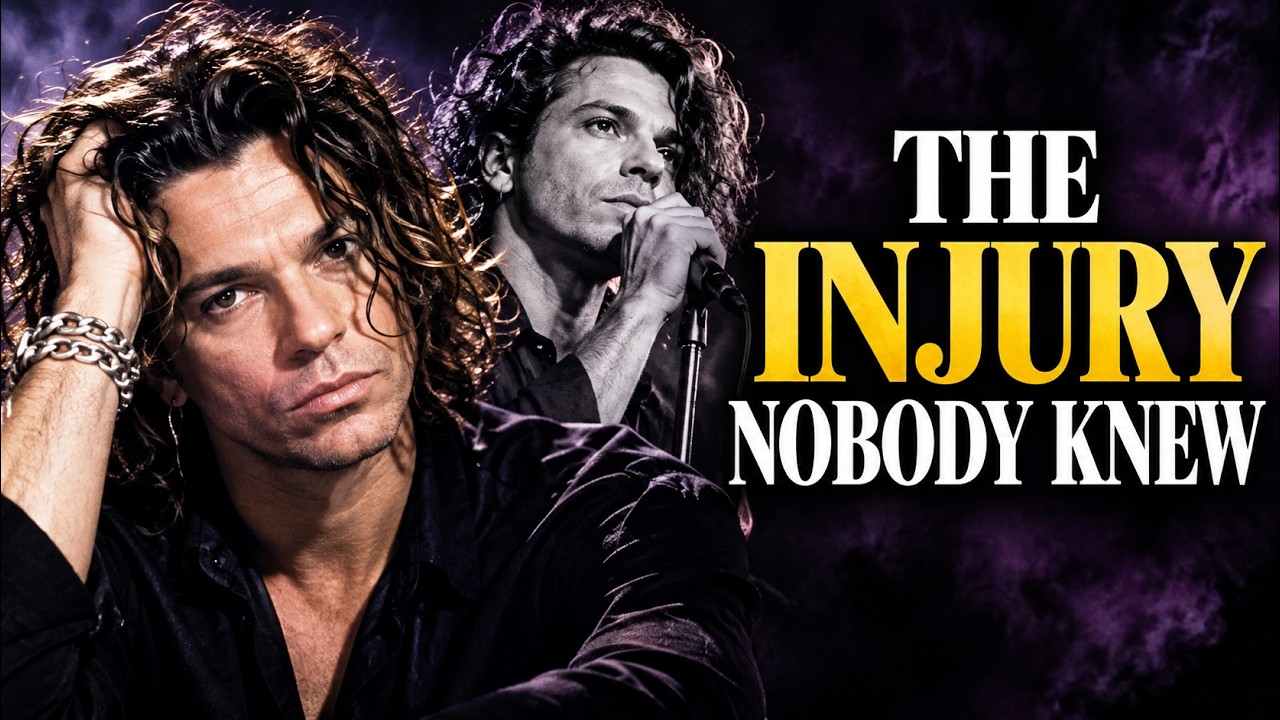
In the first days after his death, investigators were still trying to determine what had happened, and the absence of a suicide note quickly made uncertainty part of the public story. What made the story darker was not just how he died, but the vast gap between the man the public thought it knew and the private circumstances of his final months. Hutchence had spent years building an image of absolute confidence. Behind that image, however, were relationship problems, pressure surrounding Paula Yates and her custody dispute with Bob Geldof, his responsibilities as the father of a young daughter, struggles with alcohol, drugs, and depression, and the effects of a serious head injury suffered during an assault in Copenhagen in 1992.
None of these factors alone could explain what happened, and it would be irresponsible to claim that a single event caused his death. Together, though, they formed a more complex picture than the glittering rock star myth usually allowed. One detail made that final morning particularly difficult to understand. Hutchence was not completely isolated from those who cared about him.
He contacted a female friend that morning, and she was worried enough to go to his hotel. She knocked on his door, but no one answered. So she slid a note under the door and left, unaware that Hutchence was already in serious danger. Shortly before noon, a hotel maid discovered his body.
That discovery instantly turned what had seemed like another weekend on an INXS tour into a global tragedy. The official explanation eventually became clear, but the public story never became simple. After a coronial inquiry, the New South Wales coroner, Derek Hand, concluded that Hutchence had ended his life by hanging. The inquest also found that alcohol and drugs had played a role.
Nevertheless, because there was no suicide note, and because Paula Yates fiercely rejected the conclusion, an alternative theory continued to circulate for years, creating a second version of Hutchence’s death that competed with the official account. The story began long before the Ritz-Carlton. Michael Hutchence was born on January 22, 1960, in northern Sydney. His childhood soon took him away from Australia when the family moved to Hong Kong in 1964 because of his father’s work.
He grew up in a bicultural environment, attended schools in Hong Kong, and developed an interest in music and poetry. He also showed notable athletic ability before a broken arm ended his promising swimming ambitions. When the family returned to Sydney in 1972, Hutchence entered a very different phase of his life, befriending Andrew Farriss at school. That friendship would eventually become one of the most important creative partnerships in Australian rock music.
What mattered about Hutchence’s early development was that his charisma did not suddenly appear when INXS achieved success. It was already evident in the young man who could draw attention, experiment with music, and move easily between different social environments. But another quality lay beneath that confidence, one that would become far more important later. Hutchence was sensitive to people and fully aware of the atmosphere around him.
The same emotional openness that helped him become a captivating performer also made him vulnerable to hurt when relationships, circumstances, or audience expectations became difficult. Hutchence and Andrew Farriss developed their musical partnership while still young. Farriss became the principal musical architect of the band, while Hutchence contributed lyrics and melodies, and eventually the extraordinary stage presence that made him world-famous. The band that became known as INXS did not start as a perfectly designed commercial machine.
It spent years playing in bars and clubs, recording songs, touring, rehearsing, and slowly developing its identity. They adopted the name INXS in 1979 and released their first album in 1980, beginning a long climb that eventually took them from Australian clubs to international arenas. After “Listen Like Thieves” in 1985, and especially “Kick” in 1987, INXS became a major international name. Songs like “Need You Tonight,” “Devil Inside,” and “Never Tear Us Apart” transformed Hutchence from a successful Australian singer into a global star.
His commanding stage presence became as important to the band’s identity as the songs themselves. This success created the contradiction that would follow him for the rest of his life. The more convincingly Hutchence played the role of a confident, sensual, almost untouchable rock star, the easier it became for people to assume that this public character represented the whole man. It did not.
The performer was real, but he was only one part of him. In private, Hutchence could be quieter, more vulnerable, more complicated, and far less confident than the character who appeared in music videos and on enormous stages. Away from INXS, Hutchence also pursued acting and other musical projects, including “Max Q. ” His friendships and relationships became an increasing part of the public record.
His romantic relationships with women such as Michele Bennett, Kylie Minogue, Helena Christensen, and finally Paula Yates drew enormous media attention. But his relationship with Yates became especially significant because it placed Hutchence inside a family and legal conflict that was already attracting intense scrutiny. Yates was married to Bob Geldof and had three daughters with him. Her relationship with Hutchence became highly public while her marriage was collapsing.
In 1996, Hutchence and Yates had a daughter, Heavenly Hiraani Tiger Lily, giving Hutchence a child at a time when his career was still active and when the conflict over Yates’s other children was becoming increasingly bitter. The Australian Dictionary of Biography notes that the custody dispute was one of the pressures surrounding Hutchence’s final period, especially after an adjourned court session meant Yates and the children could not join him in Sydney as planned. The popular myth begins to mislead here. The simplified version says Hutchence was simply a rock star living recklessly until the lifestyle caught up with him.
But that explanation omits many details. The evidence suggests his final years involved alcohol and drug use, but it also shows a man dealing with depression and the consequences of a serious assault, while at the same time facing emotional and family pressures that the media followed intensely. The record does not tell us that any one of these factors caused his death. It tells us that several difficult circumstances existed at the same time.
The Copenhagen assault is especially important because it became part of the later understanding of Hutchence’s mental and behavioral changes. In 1992, he was attacked outside a hotel in Copenhagen and suffered a serious head wound. Later accounts linked the injury to depression and changes in his temperament. The Australian Dictionary of Biography specifically notes that Hutchence suffered from depression and uncharacteristic aggression following that injury.
This does not allow us to diagnose his final mental state from a distance, but it explains why the idea of Hutchence as a careless rock star is insufficient. Then came 1997. INXS had released the album “Elegantly Wasted” and was preparing for the twentieth-anniversary tour, bringing Hutchence back to Australia at a time that should have been another major stage in the band’s career. On Friday, November 21, Hutchence rehearsed with the band and later had dinner with his father Kelland and stepmother at the “Flavour of India” restaurant in Sydney.
Later that night, he returned to the Ritz-Carlton in Double Bay, where he spent several hours drinking champagne, cocktails, and beer with actress Kim Wilson and her partner Christopher Stollery. They left around two in the morning. There is something unsettling about that sequence, precisely because it initially seems ordinary. Hutchence spent his day working, had dinner with family, hosted friends at his hotel, and stayed up until the early morning.
The evening presented no clear warning sign that would allow those around him to look back later and say they should have known what was coming. The next morning was different. Hutchence contacted Michele Bennett, his former girlfriend and longtime confidante, and something in the conversation worried her enough that she went to the hotel. She reached his room, knocked on the door, and received no response.
Instead of simply leaving, she pushed a note under the door and departed. At the time, she did not know this would become one of the last documented attempts by someone who knew him personally to reach him while he was still alive. Someone tried to reach him. Later that morning, a hotel worker discovered Hutchence’s body in his suite.
Police began examining the room, and early reports reflected the uncertainty that naturally follows any death under unusual circumstances. There was no suicide note. Alcohol bottles were found in the room, as were prescribed medications including Prozac. Investigators initially waited for toxicology results, while newspapers immediately began speculating about drugs, sexual practices, depression, and pressures surrounding Hutchence’s personal life.
The most persistent alternative explanation involved erotic asphyxiation, suggesting that Hutchence’s death was accidental rather than intentional. Initial police reports did not support that interpretation, and the coroner ultimately concluded that Hutchence’s death was suicide. Nevertheless, Paula Yates continued to reject the official finding, and the alternative theory became a recurring feature in documentaries, interviews, books, and press coverage in the years that followed. There was a legitimate reason for uncertainty in the early days, because investigators were still waiting for toxicology results and determining exactly what had happened.
But the completed inquiry eventually produced an official outcome. Coroner Derek Hand ruled that Hutchence had ended his life by hanging, and the available evidence formed the basis for that official conclusion. The alternative theory persisted because the people closest to Hutchence did not approach the tragedy as neutral investigators. They were grieving.
Yates had lost the father of her daughter and had every emotional reason to find it difficult to accept a conclusion suggesting Hutchence had deliberately chosen death. Her public rejection of the coroner’s decision became part of the historical record, but it must be distinguished from the official finding itself. This distinction is vital, because Hutchence’s death has sometimes been portrayed as if the competing theories were equally established. They are not.
The alternative theory is part of the story because those close to him believed it and because the media continued to discuss it. But the formal determination by the New South Wales coroner was suicide. The deeper question is not whether the official record exists. It does.
The deeper question is why that record could never fully satisfy those left behind. The answer may be that an investigation can establish how someone died, but it cannot explain exactly what that person was feeling, what he feared, what he thought would happen next, or the private thoughts that occupied his final minutes. Those questions belong to a different category, and Hutchence was no longer alive to answer them. The journalist Dave Simpson, who spent an evening with Hutchence during an INXS tour in 1994, remembered a side of the singer entirely different from what the tabloids portrayed.
Simpson recalled Hutchence as playful, curious, interested in ordinary people, and passionate about music, with a sense of buried loneliness beneath the raucous public persona. That memory does not prove what Hutchence was thinking three years later, and it should not be treated as evidence of a specific motive. But it shows how easily the public image could mislead. Hutchence could step onto a stage and appear invincible, while in private life he was far more complex than that performance suggested.
The director Richard Lowenstein, who worked closely with Hutchence and directed many INXS videos, explored that contradiction in the 2019 documentary “Mystify: Michael Hutchence. ” The film used archival footage and interviews to examine Hutchence’s life rather than reducing his memory to his death. Lowenstein described Hutchence as someone able to transform into a dominant rock star on stage, but who also possessed a quieter, more vulnerable side away from the spotlight. Michael Hutchence was not simply the man who died in a Sydney hotel room.
He was the boy who grew up partly in Hong Kong, the teenager who befriended Andrew Farriss, the young musician who spent years playing in Australian pubs, the singer who helped make INXS a global band, the songwriter who worked hard with Farriss, the actor who explored opportunities outside music, the father of Tiger Lily, and the complex private person whose relationships were repeatedly dragged into the spotlight. His success also created a strange kind of trap. Once the world defined what Michael Hutchence looked like, anything contradicting that image struggled to receive the same attention. The confident singer on stage was easy to capture.
The quiet man away from the party noise was not. His glamorous relationships made headlines. Ordinary moments of friendship did not. His stage persona could be replayed endlessly through music videos, while his private emotional struggles remained invisible to outsiders.
After his death, that imbalance became sharper. Hutchence’s image froze at age thirty-seven. He could no longer grow older in the public imagination, explain himself in a later interview, correct a published story, or offer his own account of the events surrounding his final months. Others inevitably became the guardians of his story.
His family had their memories. His bandmates had theirs. Yates had her interpretation. Journalists had their interviews and archives.
Biographers collected memories years after the events. The coroner had the evidence gathered during the inquiry, and filmmakers later returned to old footage trying to understand the man behind the myth. None of them possessed the complete picture. The official record remains important precisely because it offers something more solid to hold onto.
The coroner concluded that Hutchence died by suicide, and the Australian Dictionary of Biography records that conclusion as the confirmed cause of death. At the same time, the historical record also acknowledges the depression, alcohol and drug use, relationship pressures, and personal turmoil surrounding his final period. That does not mean we know exactly why he made that decision. We do not.
Claiming otherwise would make the story less honest, not more. The final morning is best understood through what can actually be established. Hutchence was alive around 9:00 a. m.
when he called Michele Bennett. She went to the hotel but could not enter his room. A hotel worker later found him dead. Police investigated the circumstances, toxicology results were considered, and the coroner ultimately concluded that he had ended his own life.
Everything beyond these established facts should be treated with appropriate caution, especially claims about what he intended or felt in his innermost self. There is something painful in that ambiguity, but there is also something deeply human. People want tragedy to have a clear explanation because a clear explanation creates the illusion that the world makes sense. If one argument was the cause, that argument can be understood.
If one substance was the cause, that substance can be blamed. If one relationship was the cause, that relationship becomes the answer. But human lives rarely work that way, and Hutchence’s story is not an exception. His final years contained many pressures, but his life contained far more than those pressures.
Return to the photograph again. Michael Hutchence is still there, standing under stage lights holding the microphone, appearing completely in control of the room while thousands watch him, a man it seems almost impossible to hurt. That image survived after his death because it captured something real. Hutchence did possess extraordinary charisma, an unusual ability to lead an audience, and he did become one of the most prominent lead singers of his generation.
But the photograph cannot show what happened later. It cannot show the depression recorded in historical sources, the pressures surrounding his relationship with Paula Yates, the custody dispute that affected their plans, the alcohol and drugs of his final period, or the private emotional struggles that could never be fully reconstructed after his death. It cannot show Michele Bennett arriving at the hotel that morning, knocking on his door, and leaving a note without knowing she would never speak to him again. And it cannot show the years that followed, when Hutchence’s fans continued searching for an explanation that would make the tragedy easier to understand.
That is what makes Michael Hutchence’s death darker than the surrounding myths suggest. The mystery was never simply about how a famous rock star died. The deeper tragedy was that the man who could have explained what he was feeling was no longer present when everyone began trying to explain him. The official record reached a conclusion.
His loved ones carried different memories. The media created conflicting narratives. And somewhere between those narratives was a man far more complex than the image that made him famous. Michael Hutchence was not just a rock star who died young, nor merely a troubled man whose final decision erased everything that came before.
He was an artist and a private person at once. A magnetic public figure and a vulnerable human being. A father, a friend, a songwriter, and a man whose final chapter could never fully explain the life that preceded it.






