In 1927, the heirs of the Brown dynasty made a decision that would define the next century of forensic history. Faced with the escalating brutality of the tobacco wars, they did not choose to fight. They chose to cash out, selling Brown and Williamson to British American Tobacco, a London-based commercial empire with no sentimental attachment to the soil of Kentucky or the respiratory health of the American worker. The family took the payout, millions of dollars in 1920s currency, and walked away, reinvesting their capital into their whiskey barrels and retreating to the manicured lawns of their Louisville estates.
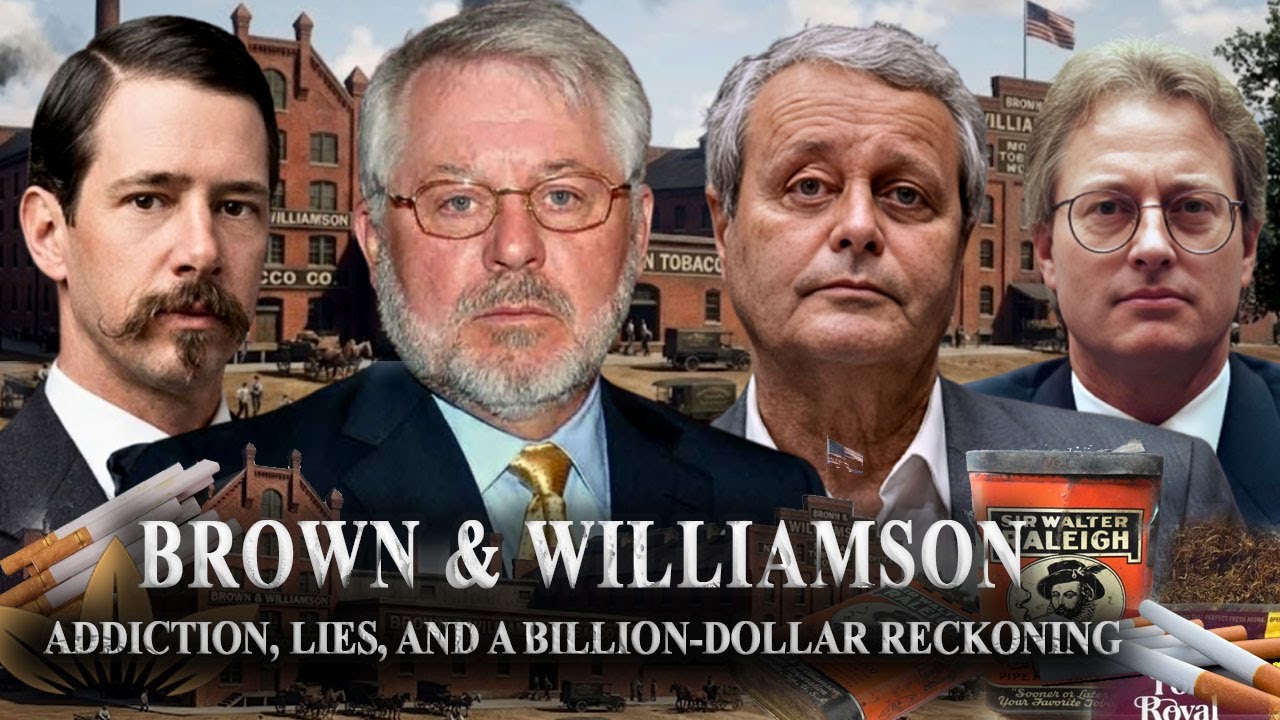
They left the dirty work to others. The story begins decades earlier, in the soot-stained streets of Louisville, Kentucky, in 1893. George Garvin Brown, remembered today as the revered patriarch of the spirits industry and the founder of Brown-Forman, created Old Forester, the first bourbon sold in sealed glass bottles to ensure medicinal purity. But that is only half of the forensic dossier.
In partnership with Robert Watson Williamson, Brown also formed the Brown and Williamson Tobacco Company. He was a product man, a tactile operator who walked the factory floors and inhaled the dust of the burley and flue-cured leaf. The cigarette of the late 19th century was a primitive agricultural product, unfiltered, harsh, and brutal. Under his stewardship, the company was dangerous, certainly, because tobacco is inherently carcinogenic, but it was an honest danger.
He treated tobacco with the same mindset he applied to whiskey: quality, purity, and class. As the 20th century dawned, the invention of the Bonsack automatic rolling machine, monopolized by his competitor James Duke, changed the velocity of death. Previously, a skilled worker could roll a few thousand cigarettes a day. Now machines could produce millions.
Tobacco was transforming from a leisure activity into a mass market necessity. The Brown family watched their competitors mutating into industrial leviathans. The war for market share was no longer a contest of leaf quality. It was becoming a total war of advertising, price undercutting, and supply chain dominance.
They saw the storm clouds gathering and a chance to wash their hands before the blood really started to flow. The sale in 1927 was the original sin of the dynasty’s timeline. By handing the keys of the Louisville factories to the British, the family effectively decapitated the company’s conscience. Brown and Williamson ceased to be a family business in anything but name.
The executives sent to run the Louisville operations were no longer patriarchs. They were proxies, corporate climbers answering to a board of directors in London who viewed the American South simply as a resource colony. The Brown name remained on the factory sign, but this was merely a calculated piece of camouflage. The goal was no longer to make the best Kentucky burley.
The goal was to crush competitors, no matter the human cost. The mercenaries looked at the cigarette not as a pleasure to be savored, but as a unit of dosage to be optimized. By the 1960s, they faced an existential crisis. Their rival Philip Morris had launched the Marlboro Man campaign, capturing the imagination of the country and dominating the market.
Brown and Williamson was falling behind, trapped with fading brands like Viceroy. The executives were desperate. They turned their eyes from the tobacco fields to the R&D department, transforming the laboratories from facilities that looked like food processing plants into something closer to weapons development. Chemists, toxicologists, and neurologists replaced the old tobacco blenders.
They were given a mandate that was as vague as it was menacing: make the smoker dependent, and do it faster. They began to dissect the nicotine alkaloid. They discovered that in nature, the nicotine molecule exists in a state of chemical captivity known as being protonated, a salt chemically bound to an acid. In this natural state, the nicotine molecule is clumsy and slow-moving, resisting vaporization.
They discovered that by flooding the tobacco blend with ammonia-based compounds such as diammonium phosphate, they could artificially raise the pH of the smoke, making it more alkaline. This chemical alteration stripped away the proton, transforming the drug into freebase nicotine. Freebased nicotine is lipophilic, meaning it loves fat, allowing it to slice through the cell membranes of the lungs and the blood-brain barrier with the velocity of a narcotic air strike. Instead of a slow rise in blood nicotine levels, the ammonia-treated smoke delivers a massive instantaneous spike.
The drug reaches the brain in seven seconds. The mercenaries had effectively turned the cigarette into a crack pipe. They found a second chemical key in menthol. Historically, Brown and Williamson’s flagship brand was Kool, marketed with imagery of snowcapped mountains and penguins.
But forensically, menthol is not a flavor. It is a local anesthetic. It numbs the nerve endings in the throat and bronchial tubes, allowing the smoker to inhale deeper and hold the smoke longer without coughing. It was particularly effective on new recruits, teenagers whose lungs were still pink and sensitive.
By numbing the warning system of the body, Kool allowed the poison to settle deep in the alveoli where the gas exchange happens and where the cancer begins. But chemistry was not enough. In the 1980s, under secret directives from London, Brown and Williamson embarked on a biological experiment that bordered on science fiction: Project Y1. Deep in the remote agricultural fields of Brazil, the company cultivated a genetically modified strain of tobacco plant engineered to contain twice the nicotine content of normal flue-cured tobacco.
High nicotine tobacco is notoriously bitter and harsh on the throat. The only reason to cultivate it is to increase the narcotic payload of the product. The mercenaries grew it in secret, harvested it in silence, and smuggled millions of pounds of Y1 tobacco into the United States, blending this supercharged leaf into their bestselling brands like Viceroy. The smoker didn’t know they were inhaling a biological weapon.
They only knew that when they tried to quit, the physical withdrawal was more violent and the craving was more absolute. The crown jewel of their deception was the Barclay cigarette, launched in the 1980s. The Federal Trade Commission used machines to smoke cigarettes and measure tar and nicotine. The company needed a cigarette that tested clean on the machine but delivered a massive kick to the human.
They designed a filter with microscopic channels and grooves that acted as air vents. When the rigid metal clamp of the testing machine held the cigarette, the vents remained open, diluting the smoke with fresh air. The machine registered an ultra-low tar reading. But the human mouth is made of soft flesh.
When a smoker put the Barclay filter between their lips, their soft tissue naturally blocked the vents. The smoker inhaled the full lethal dose of tar. They had effectively designed a filter that could distinguish between a robot and a human victim. Ascending to the role of CEO in the 1990s, Thomas Sandefur represented the final, most toxic evolution of the mercenary.
He read the internal memos. He saw the reports of rats dying in the inhalation chambers. He knew that the product he sold killed half of its long-term users. On April 14, 1994, the House Subcommittee on Health summoned the seven most powerful tobacco executives to Washington.
In the glare of the cameras, Sandefur looked into the lens and lied: “I believe that nicotine is not addictive. ” It was perjury, a perjury of protection, lying to protect a profit margin that flowed back to shareholders and historical beneficiaries. The Brown family, watching from the safety of their high society parlors, remained silent. While Sandefur was performing his synchronized perjury in Washington, a far more dangerous chemical reaction was taking place inside the quiet suburbs of Louisville.
The catalyst was Dr. Jeffrey Wigand, a biochemist with a background in the pharmaceutical industry, hired in 1989 as vice president of research and development with a mandate to develop a safer cigarette. Upon entering the inner sanctum of Brown and Williamson, Wigand discovered that safety was merely a marketing euphemism. He found the Y1 plants.
He found the ammonia blending protocols. He realized he had been hired not to cure the disease, but to optimize the vector. When he began to ask questions about the removal of coumarin, a rat poison and lung carcinogen, from pipe tobacco, he collided with the hardened heart culture. He was silenced, marginalized, and finally fired in 1993.
The reaction to Wigand’s defection was a masterclass in corporate terrorism. The executives authorized a kill order on his reputation. They assembled a legal and public relations team known internally as the Viper team. Their objective was not to debate Wigand’s science, because they knew his science was correct, but to destroy his character.
They forged a 500-page dossier compiling every mistake, every alteration, and every petty grievance in his life. It was printed and distributed to every major news outlet in America. The campaign employed tactics that seemed lifted from the playbook of the Stasi. Wigand would come home to find objects in his house moved slightly.
He received phone calls at 3:00 a. m. where silence hung on the line, followed by the click of a recording of his own children’s voices. Dark sedans with tinted windows would box him in on the highway.
On February 4, 1996, despite the threats and the dossier, Jeffrey Wigand sat down in front of the cameras of CBS’s 60 Minutes with Mike Wallace. He looked into the camera and uttered the words that would be engraved on the tombstone of the Brown and Williamson reputation: “We are in the nicotine delivery business. ” He confirmed everything. He confirmed the ammonia.
He confirmed the Y1. He confirmed that the CEOs had lied under oath. He confirmed that light cigarettes were a fraud. Millions of Americans watched as the veil was ripped away.
On November 23, 1998, the long bloody century culminated not in a prison cell, but in a hotel ballroom. The attorneys general of 46 states forced the tobacco giants to sign the Master Settlement Agreement. The headline number was astronomical: $26 billion to be paid out over 25 years, the largest civil litigation settlement in human history. But a forensic analysis reveals a far more cynical reality.
It was not a surrender. It was a purchase of survival. The companies chose to cut a deal, granting themselves immunity from future state lawsuits regarding tobacco-related healthcare costs. They bought a license to sell their lethal product without the constant fear of state-sponsored execution.
The true forensic victory of the settlement was the sunlight provision. The companies were forced to release millions of pages of internal documents to the public. The documents confirmed every suspicion. There in black and white were the memos from the 1960s admitting that nicotine was addictive.
There were the reports on the ammonia technology explicitly detailing how to increase the kick of the smoke. There were the marketing plans targeting replacement smokers, a grotesque euphemism for teenagers. The Y1 genetic project was laid bare. The dossier on Wigand was exposed as a calculated smear campaign.
And who actually paid the $26 billion? It was not the Brown Family Trust. It was not the shareholders. It was the addict.
The structure of the settlement allowed the tobacco companies to pass the cost of the fine directly to the consumer. The price of a pack of cigarettes rose by approximately 45 cents. The victims of the conspiracy, the working-class smokers, the addicted teenagers, the dying veterans, were the ones funding the settlement. The corporation did not bleed.
The customer bled twice. First they paid with their health, then they paid for the company’s punishment. The Brown family themselves pulled off the greatest magic trick in corporate history. They vanished into their other empire, whiskey.
Because they had structurally separated themselves from the operational management years prior, the social necrosis that killed the tobacco brand did not kill the family fortune. They became the titans of Brown-Forman, the purveyors of Jack Daniel’s and Woodford Reserve. They traded the ashtray for the crystal tumbler. The capital that built the whiskey empire was originally harvested from the tobacco fields.
The old money that now funds their philanthropy is radioactive with the half-life of the crimes committed in the 20th century. In 2004, Brown and Williamson merged with RJ Reynolds, forming Reynolds American, subsequently fully acquired by British American Tobacco. The name Brown and Williamson, the name that George Garvin Brown painted on the brick factory in 1893, was taken down. The specific entity that committed the crimes of Y1 and ammonia has been legally metabolized, but the money remains.
The modern industry, dominated by the very capital the Brown family helped amass, has pivoted from the combustible era to the aerosol era. E-cigarettes and vaping devices are the spiritual successors to the ammonia experiments of the mercenaries. A single vape pod can contain as much nicotine as a pack of cigarettes, yet it tastes like crème brûlée or cool mint. The tobacco wars were never truly won by the public.
They were merely settled. The industry is more profitable today than it was then. They streamlined their operations, raised their prices, and diversified their portfolios. The Brown Dynasty proves a chilling forensic theorem.
In American capitalism, if you kill enough people slowly enough, and if you generate enough profit while doing it, you become too big to punish. The factory whistle in Louisville may be silent, but the ghosts of the ashen legions of the Brown Empire have company now. A silent army of the suffocated marching behind a hearse made of gold, driven by a dynasty that escaped the crime scene almost a century ago.






