In the summer of 1899, Australia was slowly pulling itself out of the economic depression that had gripped the early part of the decade. Small towns like Broadford, about 70 kilometers north of Melbourne, were beginning to recover. The community, sustained by farms, sawmills, and a paper mill, was a place where neighbors knew one another and children ran simple errands without fear. One such child was eight-year-old Olivia Rita Jones, known to everyone as Rita, who lived with her grandparents, Alfred and Elizabeth Temple, so she could attend school while her parents worked in New South Wales.
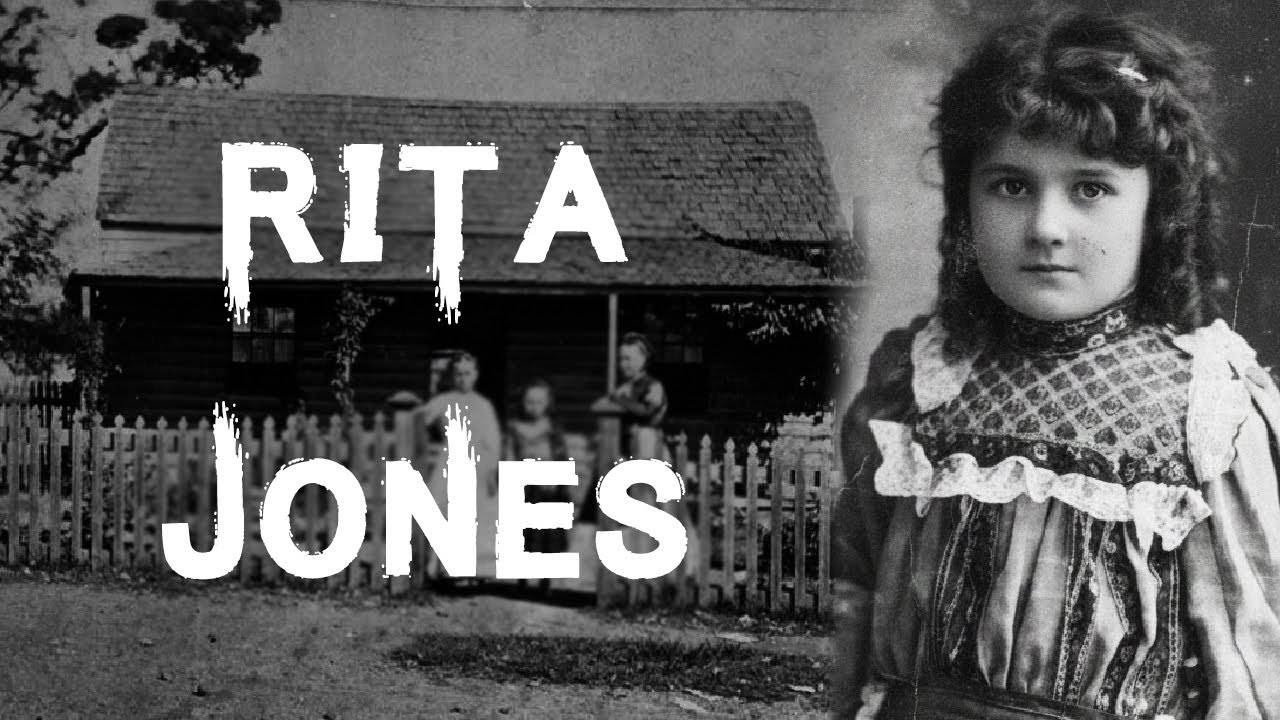
On the morning of Tuesday, December 26, 1899, the day after Christmas, Rita’s grandmother gave her a few coins and sent her to buy fruit from a shop about half a mile from home. It was a task she had performed many times before. Rita walked to the shop, made her purchase, and on her way back met a twelve-year-old girl named Sarah Brace near the general store owned by Mr. and Mrs.
Clayton. The two walked together past the local butcher shop, run by a man named Mr. Doaty, and parted ways at the Creek Bridge. By two o’clock in the afternoon, Rita had not returned home.
Her grandparents grew worried and went out to search for her, speaking with neighbors and townspeople as alarm began to spread through the quiet community. Volunteers searched sheds, abandoned properties, and the surrounding countryside. A young woman came forward, reporting that she had seen a child matching Rita’s description crossing the bridge, and fears quickly arose that the girl might have fallen into Sunday Creek. The creek was dragged through the night and into Wednesday morning, but no trace of the child was found.
It soon became apparent that someone else was also missing. A man named William Jones, no relation to the girl, had vanished as well. He was a butcher employed by Mr. Doaty and had only lived in Broadford for two weeks.
Suspicion fell upon him immediately. A search of his lodgings and the butcher’s premises revealed nothing, but on Thursday, December 28, three constables returned to carry out a more thorough examination. The building where Jones lived was a former hotel with roughly thirty rooms, most of them empty, and all were searched without result. The last place the constables inspected was an old, run-down wooden structure that had once been used as a chicken shed.
Looking through the wire netting, Constable Wright noticed a pile of hay in one corner that was unusually high. He pushed open the door and moved the hay aside. Beneath it was a sack, and inside the sack were the burned remains of the little girl. The evidence told a grim story.
It appeared that Rita had been murdered in the yard, then dragged to a large metal pot known as a boiling down copper, a heavy vessel normally used to render animal fat. A pile of charred rags showed that the murderer had tried to burn the body beneath the copper, but finding the burning too slow and fearing discovery, he had removed the remains, placed them in a sack, and hidden them in the chicken shed. The bag of fruit Rita had been carrying was found nearby. The crime had taken place in the very center of town.
Mr. Doaty did not live on the premises, and only two employees worked there. One, Alfred Wilson, had been away and only returned that morning. The other was William Jones, described as about five foot nine with a fair complexion, light-colored hair, a mustache, and long sideburns.
When police returned to the butcher shop, they found a note Jones had left behind. It read simply, “Gone on the drink. ”
The crime cast a deep gloom over Broadford, and business was almost entirely suspended. Sympathy for the child’s relatives was great, and public anger so intense that many believed that if anyone found the murderer before the police did, he would likely be lynched.
A further search of the butcher’s premises revealed that one of Mr. Doaty’s cleavers was missing. Alfred Wilson told police that he had found a butcher’s knife in William Jones’s room but, unaware of any crime at the time, had taken it back to the shop and cleaned it. On Friday afternoon, a rumor spread that the suspect had been arrested in a nearby town, and a large crowd gathered at the railway station expecting his return.
The rumor proved false, but it showed how strongly the community felt. A post-mortem examination carried out by Dr. Morton on Saturday, December 30 confirmed that the cause of death was suffocation and strangulation. The following day, an inquest began before the district coroner, Mr.
Morrison. Witnesses told of Rita’s movements on the day she vanished. A woman named Mrs. Clark recalled seeing a man light a fire behind the butcher shop on the afternoon of December 26.
She had never seen him before. Rita’s grandmother tearfully identified the body and described the simple errand from which her granddaughter never returned. Sarah Brace told the inquest that she had noticed a man coming out of the butcher shop dressed in a blue coat, but she did not recognize him. The inquest was adjourned to gather more information.
Rita’s funeral took place the next day and was very well attended. The Sunday school children marched in procession to the cemetery, and the coffin was carried by six of Rita’s school companions dressed in white. The service, conducted by Reverend Campbell, was solemn and deeply moving. William Jones was arrested on Wednesday, January 3, 1900, in the town of Kynton, some 40 miles from Broadford.
He denied murdering the girl and claimed that after reading in the newspaper that he was suspected of the crime, he had gone to the police station that morning to clear his name. Finding no officer on duty, he left and was later arrested as he tried to find a constable. He was taken back to Broadford under heavy escort and remanded. When the inquest resumed on January 19, thirty-three witnesses gave evidence.
Dr. Morton stated that in his opinion death was due to asphyxia, but because of the decomposed and burned condition of the body, he could not say exactly how it had occurred. He also believed an assault had taken place before the murder. A man named Thomas Arnold testified that he saw Jones come out of the butcher shop at around 12:30 on the afternoon of December 26, looking as though he was waiting for someone.
Arabella Clark, who lived across the creek from the butcher shop, said she saw a man near the shed where the boiling down process took place that afternoon and noticed smoke coming from the chimney. She said he was wearing clothes similar to those described as belonging to Jones and that he was the only person she saw behind the shop that day. A ten-year-old girl named Rose Jones, Rita’s cousin, said that when she and Rita had visited the butcher shop before Christmas, William Jones had served them, smiled at Rita, and told her she was a nice little girl. For the defense, a witness named Mrs.
Ellen Allen stated that when she passed the butcher shop between 12:30 and 1:00 on the day of the murder, she saw a young dark-haired man looking out of the window. She was certain that the man was not William Jones. After all the evidence was heard, the jury retired and returned after three quarters of an hour, stating that they believed William Robert Jones was guilty of the murder of Rita Jones. He was committed to trial at the criminal sessions in Melbourne.
The trial opened on Monday, February 19, before Mr. Justice Hodges. When asked how he pleaded, William Jones replied, “I am not guilty, sir. ” The prosecution laid out a clear timeline of the child’s final movements and a narrow period in which the crime must have occurred.
They pointed to the fact that Jones had abruptly abandoned his job and the town immediately after the murder, an action they argued strongly pointed to his guilt. The defense insisted that the case rested on assumption rather than proof. There was no direct evidence, only circumstantial evidence, which the defense argued was the most difficult kind for a jury to assess. They stressed that Jones had behaved exactly as an innocent man would, going to the police station himself after reading he was suspected.
They also criticized the police for arranging identifications in an unreliable manner, marching the prisoner in front of witnesses who had been told that the murderer had been arrested. Mrs. Allen again stated that the man she had seen had dark hair and was noticeably younger than the defendant. Several butchers who had previously employed Jones testified that he had a habit of leaving positions suddenly, especially when affected by drink.
The government analyst stated that he had examined Jones’s clothing and found no blood stains or incriminating marks. Jones testified in his own defense, giving an account of his movements on December 26. He said he had delivered meat to local hotels, drank whiskey, and slept until about ten in the morning. He claimed he spent the day moving between the butcher shop and Keen’s hotel, where he had made a delivery, drinking more whiskey, and eventually went to bed.
He said that the following day he felt unwell, gathered his belongings, and left Broadford, stopping at hotels seeking work before securing a job on a farm. There he heard news of the murder and learned he was a suspect, so he went to a police station to give himself up. He maintained he knew nothing about the murder and did not recall ever seeing Rita Jones. After both sides presented their cases, the jury retired at 3:20 to consider the verdict.
They returned at 4:15 and requested permission to visit the scene of the crime. The following morning, the jury traveled to Broadford by train and inspected the premises attached to the butcher shop. Two members went to the boiling down shed to test whether it was possible to identify anyone at a distance, since Mrs. Clark had testified she was certain she had seen a man behind the shop wearing Jones’s clothes.
Standing at Mrs. Clark’s house, the remaining jurors watched as one of the two men, wearing a distinctive coat, walked toward the hotel. He was easily recognizable. The jury examined the butcher shop window as well, then returned to Melbourne.
They found William Robert Jones guilty of murder. When asked if he had anything to say, Jones looked straight ahead and said, “I am innocent. That’s all I’ve got to say. ” Mr.
Justice Hodges sentenced him to death. An appeal was rejected on Monday, March 26, 1900, with no new evidence presented. When asked if he had any final words, William Jones replied, “I forgive everyone. That is all I have to say.
” He was then hanged. He always claimed that he was innocent of the crime.
