In October 1987, a geology team from the University of Virginia was surveying a ridge above the Clinch River, eleven miles southwest of Castlewood in Russell County, looking for evidence of a fault line. Instead, they found a three-story stone building half swallowed by forest, its windows empty, its iron door hanging open. Dr. Margaret Holloway stepped out of the truck and saw a structure that should not have existed on any map they carried.
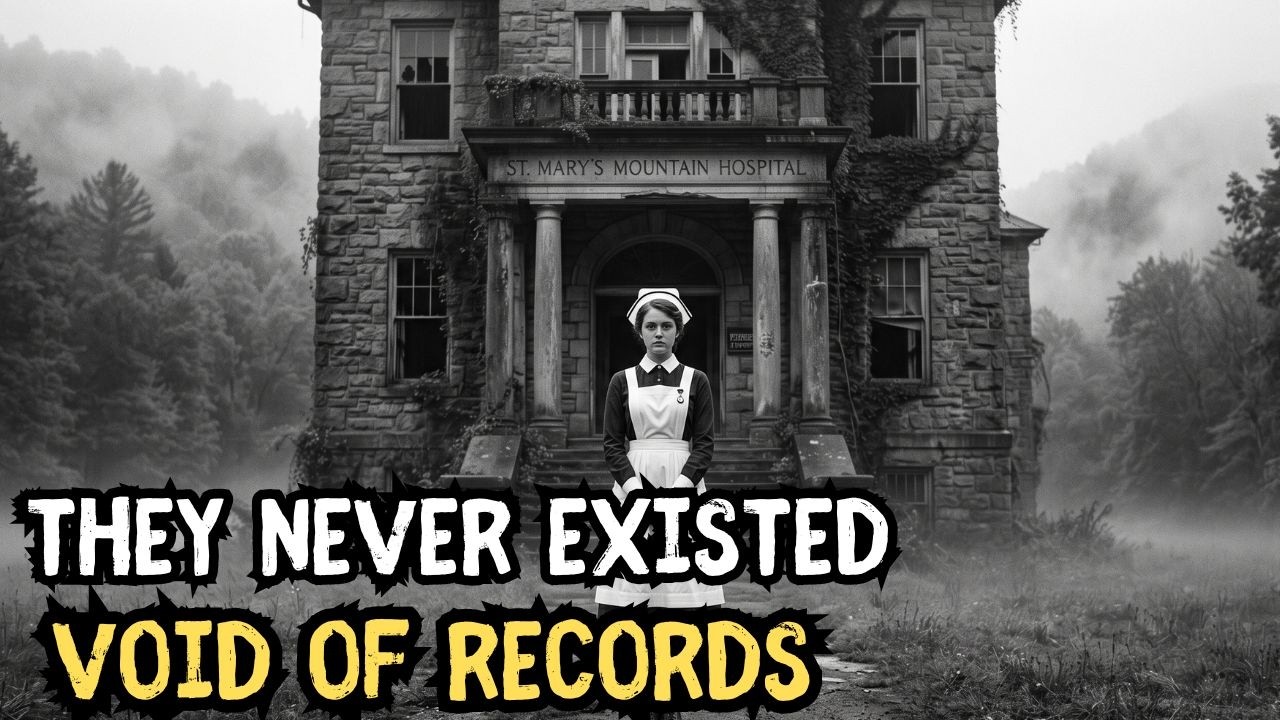
Her research assistant, Thomas Beckett, a fourth-generation Russell County man, had gone pale. His grandmother had always warned him: never go past the third ridge after dark, never go near the Clinch in winter, and never, under any circumstances, go looking for the building on the hill. He had assumed it was just a story to keep children out of the woods. Inside, the walls of the first-floor rooms were covered with scratches.
Not random damage, but names, dates, and desperate messages carved into the plaster by people who had been kept there. William Cates, Dante, Virginia. Brought here November 1928. I am not sick.
Ruth Combs, Haysi, my children don’t know where I am. John Fletcher, age 14, Clinchco, they said it was a checkup. Dr. Holloway counted 47 names before she reached the staircase.
The building had been built in late 1928, when southwestern Virginia’s coal country was a world apart from the prosperity of the Jazz Age. The hollow communities of Russell, Tazewell, and Dickenson counties were company towns where miners worked twelve-hour days in shafts so tight they crawled on their knees, where the coal companies owned the houses, the stores, and even the currency. Tuberculosis, pellagra, and rickets were common. Infant mortality ran nearly four times the national average.
The state government in Richmond knew about these conditions abstractly and preferred to do nothing about them. Dr. Edmund Harlow changed that. A 44-year-old physician trained at Johns Hopkins and in Germany, he was a respected authority on pulmonary disease and a committed eugenicist.
In 1928, eugenics was mainstream. Virginia had passed its Eugenical Sterilization Act in 1924, and the Supreme Court had upheld it in Buck v. Bell, with Justice Oliver Wendell Holmes declaring that three generations of imbeciles are enough. In the summer of 1928, Harlow proposed to the Virginia State Board of Health a facility where patients from the hollow communities could be admitted, studied, and subjected to experimental treatments without informed consent, oversight, or public scrutiny.
The board approved it in September. Construction began in October with workers imported from Kentucky and paid in untraceable cash. By December, the building above the Clinch River was complete. It had no official name, no license, no registry.
The land was registered to a timber company that had never operated in Russell County. For all official purposes, the building did not exist. Neither did the patients. They were collected from hollows and mining camps in unmarked vehicles under the pretense of free medical evaluation.
None were told the facility’s location. None signed anything. None were allowed to contact their families. Once admitted, each was assigned a number and placed in one of three experimental groups.
Group A was observational: subjects were simply watched as their conditions progressed untreated. Group B received experimental procedures, including high-dose mineral injections far beyond anything legitimate medicine recommended; eleven subjects hemorrhaged and died before the procedures were complete. Group C was designated constitutional study. These forty-seven subjects, selected for their social and familial profiles rather than their medical conditions, were subjected to forced sterilizations, performed without anesthesia in the early cases.
Dr. Holloway did not know any of this in October 1987. She only knew the names on the walls. But she and her team kept returning.
On their second trip, they brought a history PhD student named Carolyn Marsh, who spent three weeks in the state Board of Health archives and uncovered the paper trail: the approval letter, the funding routed through three separate accounts totaling over $42,000 across four years, and correspondence between Harlow and three other men. One was a coal company medical officer arranging referrals from mine workers. Another was a state delegate who provided access to the county public health nurse network and assured that the sheriff’s office would not pay attention to the ridge area. The third was Dr.
Arthur Peton Vass, a Johns Hopkins professor and one of the most respected names in American public health, who had designed the research protocols. In a letter dated November 3, 1928, six weeks after the facility opened, Vass had written: The material is excellent. Proceed as discussed. In November 1988, the team found a false wall on the third floor.
Behind it was a tin box containing seven notebooks, dated from November 1928 to January 1932. They contained 231 names, each followed by a date, an age, a place of origin, and procedure codes. In the fourth and fifth notebooks, small notations had been added in the margins in different handwriting. Someone had written back.
This was done to me. My name is Eliza Roe. I am from Haysi. I have two daughters.
Please tell them I was here. There are 14 of us still here. We do not know what month it is. The last notation, from December 1931, read simply: Please remember us.
Dr. Holloway cross-referenced the names against census rolls, employment records, and church registers. She identified 114 subjects with confidence. Of those, 67 had been living, documented individuals when they entered the facility.
After their admission dates, the public record simply stopped. No death certificates, no census entries, nothing. They had walked into the building above the Clinch River and ceased to exist. When Holloway presented her findings to the university and reported to the university’s legal counsel at a department meeting where the administration discouraged publication because naming individuals whose families remained professionally active in Virginia exposed the institution to legal and reputational risk, the university recommended narrowing her focus.
Carolyn Marsh’s funding was discontinued. Her library access was revoked. Her research notes disappeared from a filing cabinet. She left the university in May 1988 and went home to Scott County, where she taught high school history for thirty years.
A journalist named Robert Demarest, who had spent years covering Virginia’s eugenics program, was preparing to publish the story when two men identifying themselves as representatives of the Virginia Attorney General’s office came to his office to review his materials. He declined. In September 1988, the building above the Clinch River caught fire. The interior was destroyed completely.
The stone walls survived, but the names scratched into the plaster were gone, erased by heat and water beyond any forensic recovery. The fire marshal ruled the cause undetermined. Demarest published anyway, in November 1988, a four-part series on consecutive Sundays. The official response was swift and coordinated.
The Attorney General’s office said the material had not been authenticated. The Medical College of Virginia found no connection to any such project. Skeptical historians were quoted. The story was picked up by three Virginia newspapers and then disappeared.
Demarest never published a follow-up. He died in 2001, and his research files sat uncataloged in a regional archive for fourteen years. The story might have ended there. But in 2003, a historian named Dr.
Sara Combs called Dr. Holloway. Sara had grown up in Kingsport, Tennessee, the granddaughter of a woman who had come down out of the Virginia hollows in the early 1930s with nothing but the clothes on her back and a silence about her past so total that the family had learned to live around it. After her grandmother’s death, Sara found a folded piece of paper wrapped in oilcloth in the bottom of a cedar chest.
It read: I was at the place on the hill above the Clinch, Virginia, 1930. I came home. Not all of us did. Sara had spent twenty years becoming a scholar of Appalachian history, building the exact foundation she would need to understand what the note meant.
When she finally tracked down the Demarest series and read all four parts, she wrote to the University of Virginia’s geology department. The letter sat unanswered for two years. Then Holloway called. When Sara said her grandmother’s name was Ruth Combs, from Haysi, there was a long silence on the line.
She’s in the notebooks, Holloway said. I found her name on the wall. The collaboration between the two women, joined again by Carolyn Marsh, produced four years of research. Sara interviewed seventy-four elderly residents of the coal counties, and forty-one had direct or second-hand knowledge of the building.
Twenty-three had specific family members who had been taken there and never returned, or returned changed. Of those, seventeen had relatives whose names appeared in the notebooks. In March 2007, Names in the Stone was published by the University of North Carolina Press. It documented the facility in full: the construction, the funding, the three experimental groups, the marginal notations, and the suppression of the investigation.
It named Harlow, Vass, Wolfe, and Aldridge. Harlow had retired with emeritus status in 1949 and died in 1961, his obituary praising his contributions to Virginia’s medical heritage. Vass had received an honorary degree and had a professorship endowed in his name. None of them had ever been investigated or charged with anything.
They had simply waited, and the silence had held. In 2009, the Virginia governor’s office issued a formal acknowledgment of the state’s eugenics history, the first to reference the Clinch River Facility by name. It expressed regret. It offered no reparations.
It did not address the question of the two other sites referenced in Harlow’s correspondence, one in Dickenson County and one in Buchanan County, which have never been located. In the summer of 2007, a documentary filmmaker hiked to the ridge and found the building, its stone walls covered in kudzu, its interior open to the sky. The names had been destroyed by the fire. But in a section of plaster that had been protected from the worst of the flames, beneath the char, two words remained visible if you knew to look.
Please remember. In Scott County, Carolyn Marsh retired from teaching after thirty years. In Kingsport, Sara Combs keeps her grandmother’s note framed on her desk. Ruth Combs had come home, discharged in March 1931 for reasons the records do not explain.
She had kept the silence for sixty years, then folded one sentence into a piece of oilcloth and waited for the right person to find it. The building still stands, or what remains of it. The kudzu covers it so completely in summer that from a distance it looks like an ordinary hill. The plaster is gone, but the stone walls remain.
And stone, as the mountains have always known, does not forget.
