On January 14, 2015, detectives knocked on the door of a modest house on Westheimer Road in Houston. Edmund Beauregard Deegan answered, calm and unhurried, inviting them in like a man with nothing to hide. That composure had been thirty years in the making. In the interview room, the detective leaned forward and gave him one honest sentence: somebody was naming him.
Deegan did not flinch. He said he had never harmed anyone in his life. It was a practiced answer, rehearsed for three decades, and for the first few minutes it seemed to hold. Then the detective asked if he would submit to a DNA swab.
Deegan said yes, because he had no way of knowing that in 2009 a cold case detective had pulled a rape kit from a storage facility and sent it to a lab. He had no way of knowing the lab had extracted a complete DNA profile from biological material preserved for twenty-five years, and that the profile had been waiting in a national database ever since. Two weeks later, the results came back. Deegan’s DNA was a high-probability match to the unknown male profile recovered from Wylene Kennedy’s body.
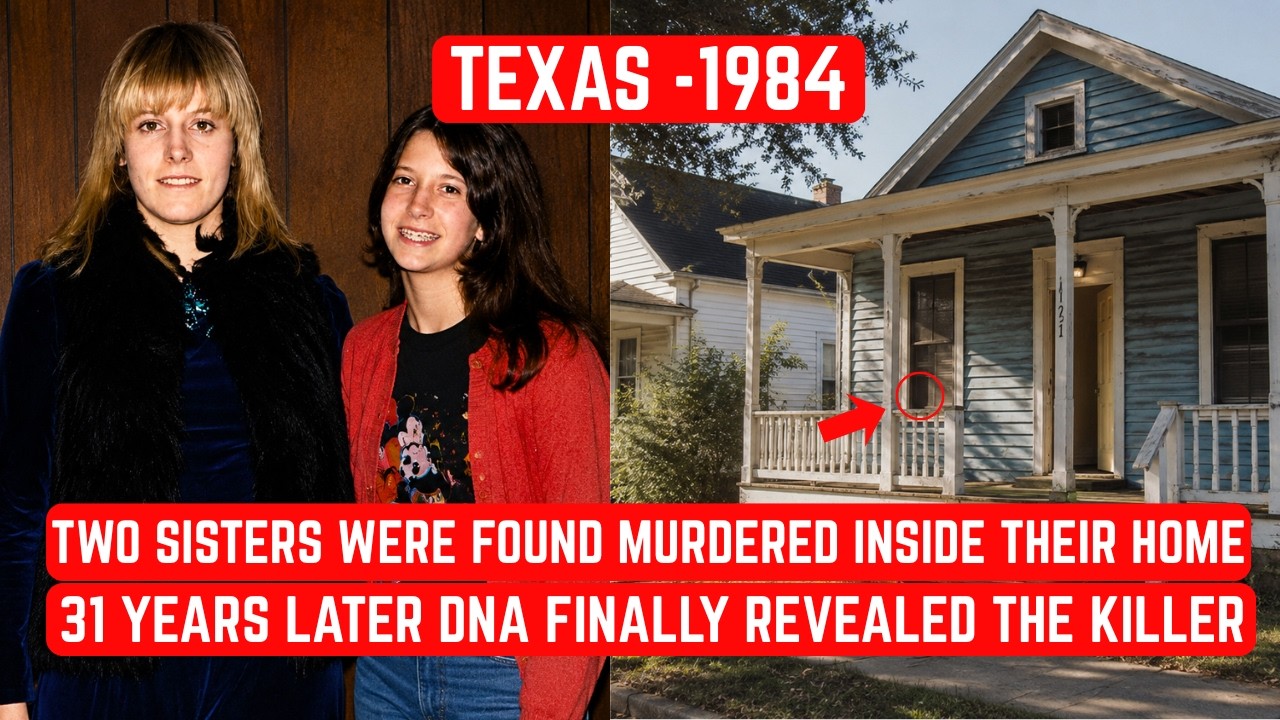
The case against Edmund Deegan did not begin in 2015. It began on an ordinary morning in March 1984, in the Heights neighborhood of Houston, a gritty, affordable pocket of Victorian homes and Craftsman bungalows that drew artists and musicians and people who wanted to live on their own terms. Wylene Kennedy, thirty-three, was a stained glass artist and interior decorator who ran a vintage clothing store. Her younger sister Lily, twenty-three, was quieter, recently divorced, recently out of work, and recently afraid of something she had not fully told anyone.
Two days before that Monday morning, Lily moved in with Wylene because she needed somewhere safe. She chose her sister. Jack Kennedy, their sixty-three-year-old father, lived around the corner with a heart condition. Wylene had agreed to take him to a doctor’s appointment on March 5th.
She never missed a commitment, not once in her life. By 8:30 she had not shown up, so Jack walked over to check on her. The front door was slightly open. He stepped inside.
Wylene was on the hallway floor, covered in blood. Lily lay at her feet. Neither of his daughters was moving. Emergency crews arrived at nine that morning.
Homicide detective Bob Deloney stepped through the door and immediately saw that what had happened to the two women was not the same thing. Lily was fully clothed, face down, taken by surprise, killed first. Wylene’s scene showed a different level of violence entirely. There were clear signs of a struggle and a severe assault.
She had been bound, attacked multiple times, and shot. Whoever was in that house had spent deliberate, sustained time with Wylene while her sister lay dead only inches away. Deloney had one thought standing in that hallway: whoever did this was not a stranger who panicked. This person knew Wylene, and was furious at her specifically.
The crime scene told a strange story. Bloody shoe prints in a wavy athletic tread tracked through the kitchen, across the carpet, and up the stairs. Lily’s purse had been dumped on the kitchen floor, her wallet gone. But upstairs, several hundred dollars in cash sat completely untouched.
Wylene’s antique jewelry inventory, laid out in plain view, was untouched. The killer was not there for money. And there was no forced entry. Every door was locked, every window intact.
Wylene or Lily had opened that door to someone they recognized, someone they trusted enough, or felt they had no choice but to let in. Just after 6:00 a. m. that morning, a neighbor leaving for work saw a man walking away from the direction of the house, carrying a bundle wrapped in a quilt, visibly out of breath.
The man said he had argued with his girlfriend and she had thrown him out. The neighbor believed him and watched him disappear. Hours later, the murders were on the news, and the neighbor realized what he had let go. He sat with a sketch artist and described the man as best he could: white or light-skinned Hispanic, dark hair, slim build, heavy accent.
The sketch was released on March 7th. It was the only physical description investigators had. Before the sketch produced a single useful lead, detectives learned something that reframed the entire crime. Two weeks before the murders, a neighbor had been woken by gunfire and saw a pickup truck crawling past the Kennedy house with its lights off.
The next morning, Wylene came to his door. Three shots had been fired into her home overnight, and she already knew who she thought was responsible. She told the neighbor it was an acquaintance with a grudge, not against her, but against Lily. This person had been specific about his intentions.
He was going to kill Wylene and their father to get back at her sister. Wylene described her own murder two weeks before it happened. Lily knew danger was coming too. Her divorce from her ex-husband was finalized on the Friday before her death, three days before the murders.
She had been terrified of him throughout the process, so terrified that the moment the papers were signed, she moved in with Wylene specifically so he would not know where she was. Their mother Rose begged her to go anywhere else, because Rose knew the house had already been shot at. Lily chose her sister anyway. She died alongside the person she moved in with for protection.
Detectives worked through every name connected to both women. Lily’s ex-husband was ruled out when the hospital confirmed he had undergone back surgery a month before, physically incapable of the violence. A drug dealer living one block from the crime scene drew multiple tips matching the sketch, but he passed a polygraph, failed a lineup, and his shoes did not match. Wylene’s on-again, off-again ex-boyfriend looked almost identical to the composite sketch, and there was a voicemail on her answering machine with his angry voice saying she owed him money.
He passed a polygraph too. The neighbor could not identify him either. Without a physical match or a witness identification, there was no case. In April 1984, investigators finally cut open a couch cushion found abandoned a block and a half from the crime scene, bloody on one side.
Inside were hidden packages of illicit substances, sewn into the cushion by Lily herself to hide them where her ex-husband would never think to look. The killer had taken that cushion when he left, carried it out bundled in a quilt at six in the morning, out of breath, with a story ready for anyone who stopped him. But this answer created a larger problem. If this was about drugs hidden in a cushion, why was every act of violence in that hallway directed at Wylene?
The drugs belonged to Lily’s world. Lily was executed quickly. Wylene was the one who suffered. The rage made no sense unless this person had a reason to be furious at Wylene specifically, a reason the investigation had not found.
The file went into a drawer. Bob Deloney was reassigned. Rose Kennedy started calling the department every day, then every week, then every month. Jack Kennedy moved to Austin four months after the murders because he could not live around the corner from that house anymore.
He died in 2007 without an arrest, without a name, without a single answer. Rose passed not long after him. The fight passed to Jackie Elliott, who was eleven years old when her mother walked into her school cafeteria to tell her both her aunts had been murdered. She grew up with that as the defining fact of her childhood.
Before retiring, a long-tenured HPD detective was handed the Kennedy sisters file as his final case. He spent a week going through old interview notes, evidence photographs, and autopsy reports. Then he pulled Wylene’s rape kit from evidence storage and sent it to the crime lab. In 2009, the analysts called back with something nobody expected.
The kit was viable. They had extracted a complete DNA profile from an unknown male. The profile went into CODIS, the national DNA database, and returned nothing. No match anywhere.
The reason there was no match was specific, and it mattered. Edmund Deegan had been arrested multiple times over the years, for aggravated robbery with a deadly weapon, assault of a family member, terroristic threat, drug possession. But Texas did not require DNA collection from arrestees until years after those convictions. The law that would have caught him did not exist yet when he was building his criminal history.
A man with a violent record spanning decades was completely invisible in the national system. In the winter of 2014, a defense attorney in Indiana called a cold case investigator. His client was facing serious charges on an unrelated matter and wanted to negotiate. The client had information about two sisters murdered in Houston thirty years ago.
Detectives flew to Indianapolis and sat across from the informant, who told them how, in the days after the murders, a man named Edmund Deegan had shown up at his door without calling ahead, agitated and wired. Deegan went to the trunk of his car, pulled out a bundle wrapped in a quilt, and asked for a hammer. He used it to take a revolver apart piece by piece, then threw every piece into a drainage ditch. He built a fire in the backyard and fed into it a woman’s belongings, identifying paperwork, and a weapon.
While he destroyed the gun, Deegan said: There were two sisters. Things went wrong. I had to take their lives. I didn’t realize it was so difficult to end a life.
Detectives flew back to Houston and pulled the 1984 case file. Deegan’s name was already in it. He had been interviewed weeks after the murders as a background witness. He ran a wholesale used clothing business in the Heights.
Wylene Kennedy bought inventory from him to stock her store. He was a familiar face in her professional world, familiar enough that he had been inside her house. He was questioned, found unremarkable, and dismissed. His name sat in the file for thirty years.
By 2015, Deegan was fifty-seven, divorced, working odd construction jobs, and living in his childhood home on Westheimer Road, one mile from Jackie Elliott’s front door. The file had his name. The neighborhood had his address. The composite sketch had his face.
Nobody connected any of it until a man in Indiana decided his silence was finally worth something. Deegan was arrested and charged with capital murder. Then the prosecution opened the file and the ground shifted. The DNA placed Deegan at Wylene’s sexual assault, powerful and scientifically irrefutable.
But it did not place him in the hallway with a gun when Lily was made to lie face down and shot in the back of the head. There was no physical evidence connecting him to Lily’s death. The prosecution ran the numbers and made a decision. If the defense created even a sliver of reasonable doubt about Lily, it could unravel the entire case.
Deegan would be charged with Wylene’s murder only. Lily Kennedy, twenty-three years old, taken first in an act of targeted violence, did not appear in the conviction. Her name was not in the charges. Her death was not part of the plea.
In the eyes of the legal process that was supposed to speak for her, she was legally invisible. On February 20, 2017, Deegan entered a guilty plea to the murder of Wylene Kennedy. The rape charge was dropped as part of the agreement. Capital murder was reduced to murder.
Lily’s name did not appear anywhere in the courtroom paperwork. The judge handed down the sentence: fifteen years. Five months later, Jackie Elliott opened a letter from the Texas Parole Board. Deegan was already under review for release.
In 1977, Texas had enacted the mandatory release law because the state’s prisons were dangerously overcrowded. Any inmate convicted between 1977 and 1987 would be automatically released once actual time served plus good conduct credits equaled their full sentence, at a rate of two days credit for every one day served. It applied to every inmate equally, including murder. Texas amended the law in 1987 to exclude violent offenders, but only going forward.
In 1995, the law was abolished entirely. When legislators tried to apply the fix retroactively, to close the window for violent criminals still accumulating credits, the United States Supreme Court said no. Changing the terms of a sentence after conviction violates ex post facto protections, the constitutional guarantee that prevents the government from changing the rules on someone after the fact. Even when those rules were catastrophically wrong.
The window stayed open permanently. Every person who committed a crime between 1977 and 1987 retained their right to automatic release for the rest of their lives, including Edmund Deegan. On December 1, 2021, Edmund Beauregard Deegan walked out of prison. The only legal condition placed on his freedom was that he could not enter Harris County until 2030, a geographic boundary in a state where a man can drive forty-five minutes in any direction and stand somewhere else entirely.
He served six years. Six years for the violence, for what occurred in that hallway, for the life of Lily, who was never named in the conviction. He walked free for thirty years after the murders before the case even broke. About a hundred miles west of Houston, in a small town called Hallettsville, two graves sit side by side in a quiet cemetery.
The same date of death is carved into both stones: March 5th, 1984. Rose Kennedy gave specific instructions. She did not want anyone glancing at two headstones with identical dates and assuming an ordinary tragedy. Beneath Wylene Fay Kennedy’s name, a single definitive statement is carved into the stone, marking that her life was unlawfully taken.
Beneath Lily Dale Kennedy’s name, the same solemn reminder. It was the last thing Rose Kennedy was able to do for her daughters. She could not keep them safe. She could not change the law.
But she could make sure the truth of what happened to them was permanently, undeniably carved in stone. At 600 East 12th Street in the Heights today, a new building stands where the blue and white house used to be. There is no marker, no memorial. Nothing on the outside tells you what happened inside.
Jackie Elliott is still saying the names out loud, still holding the possibility that somewhere out there, someone knows something about Edmund Deegan that could change what happens next. One story, one broadcast, one person who remembers a face, is the only card left to play. Wylene and Lily Kennedy never got to play it themselves.
