In the late summer of 2018, a children’s sneaker sat on a discount shoe store shelf, marked down from $24. 99 to fifteen dollars. A promotional code brought it to $11. 25.
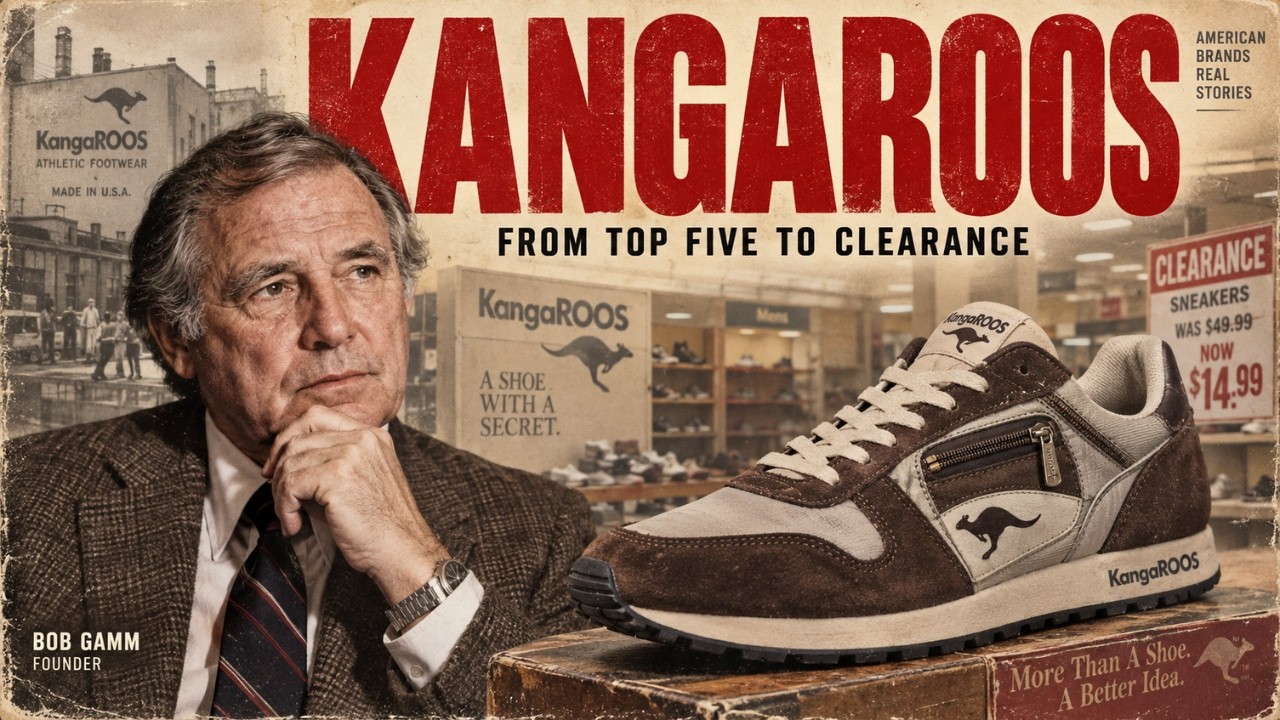
Stitched into its side was a small zippered pocket. The man who invented that pocket was dead. So was his company. The pocket had once ridden on the feet of football legends, basketball stars, and big-league shortstops.
The brand behind it had claimed a place among the top five performance shoe names in America. It all began with an architect in St. Louis, a man nearly sixty years old, who simply wanted somewhere safe to keep his keys. Robert J.
Gam came to shoes from a drafting table, not a factory floor. He studied at Clayton High School and Washington University in St. Louis, where he trained to think about how people move through the spaces they inhabit. In the running boom of the 1970s, his attention turned from buildings to something much smaller.
Gam ran ten kilometers every day and preferred to run light, wearing nothing that flapped or bounced, nothing with pockets. That preference created a problem every serious runner understood: where do the keys go, and where does the money go miles from home? For a while, his answer was nearly comical. According to the St.
Louis Post-Dispatch, he wrapped his keys and money in a handkerchief, left the bundle on the ground, and spent his run hoping it would still be there when he returned. Others had noticed the same problem. In 1979, a product called the Shoe Pocket was already being advertised to runners, a separate pouch that fastened through the laces of an ordinary shoe. Gam’s answer was different, and it was an architect’s answer.
Instead of attaching something to the shoe, he built storage into the shoe itself. A small pocket closed with a zipper, sewn directly into the side. No extra part to lose, no pouch to work loose. He chose the name Kangaroos, spelled with the last four letters in capitals, because the animal is a fast runner that never moves backward and carries what matters most in a pouch.
The first model was called the Combat. An advertisement from 1981 listed the company not as Kangaroos but as Envoys USA Incorporated, at 48 Worthington Drive in Maryland Heights, Missouri. Beside the shoes sat two words that showed how new it all was: patent pending. The timing was fortunate.
Running had become a national obsession. Many traced the boom to Frank Shorter’s Olympic marathon victory in 1972. By the end of the decade, President Jimmy Carter was photographed jogging on the White House grounds. In 1979, he entered a race near Camp David, faltered on the course, and had to be helped away by the Secret Service.
Running was everywhere, and runners wanted anything that made the habit easier. The brand’s own telling of its rise centers on one runner: Bill Rogers, the most famous marathoner in America. In April 1980, with the Moscow Olympics boycotted by the United States, Rogers won the Boston Marathon for the fourth time in 2 hours, 12 minutes, and 11 seconds. According to Kangaroos, he won it wearing a pair of Combats.
Some versions claim he broke his own record that day; he did not. But the connection stuck, and the public believed it. By the company’s own account, Kangaroos was selling more than 700,000 pairs a month by the early 1980s. When Gam died, the Post-Dispatch wrote that his company had sold hundreds of millions of dollars worth of shoes during that decade.
The product line grew quickly. By 1984, there was the Aussie, built on a compound sole developed with Goodyear, its tread adapted from a radial tire designed for that year’s Corvette. The company fielded its own racing squad, Team Kangaroos, and advertised victories at the Jacksonville River Run and other events. Every shoe still carried the pocket.
But a question hung over the entire enterprise: was Kangaroos a running shoe that happened to have a pocket, or a pocket that happened to be on a running shoe? Gam believed to the end that it was the first. A great many of his customers were about to decide it was the second. The people who loved the pocket most were not always runners.
They were often children. To a child, a zippered pocket on the side of a sneaker was not a storage solution. It was a secret, a place for coins, a house key, or whatever small treasure seemed worth protecting. On paper, that looked like pure good news.
But there was a trap hidden inside such success. A performance brand lives or dies on what the shoe does. A fashion brand lives or dies on how the shoe makes people feel. A child or a casual mall buyer stays loyal only as long as the shoe feels new, and nothing stops feeling new faster than the thing everyone already owns.
Meanwhile, the performance side of the industry was becoming an arms race. In 1978, Nike introduced air cushioning in a running shoe called the Tailwind. The major brands competed on technology, each promising a softer landing and a faster time. In that contest, a pocket was a clever idea, but it was not a cushioning system.
Another brand took the opposite road. In 1979, the same year Gam’s pocket shoe appeared, an American named Paul Fireman secured the North American rights to a little-known British running brand called Reebok. In 1982, Reebok launched the first shoe designed specifically for aerobic exercise. It came in bright colors, it was fashionable, and it swept across the United States.
Reebok did not fight the fashion market. It embraced it and grew into a company worth billions. The investment money behind that rise came from an obscure British shoe company called Pentland, a name that would matter greatly later. Gam chose a different path.
If Kangaroos was to be taken seriously, it needed athletes, and through the middle of the 1980s, he signed them in numbers that read like a sports almanac. In basketball, there was Clyde Drexler of the Portland Trail Blazers, the high-flying guard called Clyde the Glide, for whom Kangaroos built a high-top shoe called the Skywalker. In football, there were Walter Payton, William Perry, and Otis Anderson. In baseball, there were Ozzie Smith, Vince Coleman, and Mets pitcher Ron Darling.
On the track, Team Kangaroos included runners from Kenya, Ireland, and Wales. The closest bond was with Walter Payton. The company’s history says the partnership led to Payton’s own signature shoe in 1986 and that Gam once rewarded his loyalty with a new Lamborghini. When the Chicago Bears won the Super Bowl in January 1986, the brand says Payton and Perry wore Kangaroos models named the Bear and the Bear Low.
Gam spent on science as well. In 1985, Kangaroos opened a research facility at the University of Illinois called the Kangaroos Laboratory and Gymnasium, where shoes for football, basketball, hockey, tennis, and track were tested and refined. He hired a former Nike designer as vice president of design, and together they developed a patented energy return system called Dynacoil, a woven coil structure meant to absorb shock and give energy back to the runner. For the first time, the pocket shoe had a technology story of its own.
There was a warning sign hidden inside the roster. In 1985, a rookie wide receiver for the San Francisco 49ers named Jerry Rice wore Kangaroos. The next year, he switched to Adidas. Endorsement money rented loyalty; it did not own it.
Yet while Gam fought for credibility in America, something quieter was taking shape across the Atlantic. In the early 1980s, at a trade fair in New York, a German shoe entrepreneur named Burghard Hümmel came across a running shoe with a zippered pocket on its side. Based in Pirmasens, a town in southwestern Germany with a long tradition of shoemaking, he moved quickly. In 1981, his company secured the rights to distribute Kangaroos in Germany, Austria, and Switzerland.
In 1986, Hümmel traveled to St. Louis for a distributors’ meeting and was named distributor of the year. A photograph from that occasion shows him receiving the honor with Bob Gam standing beside him. From the moment he took his first license, Hümmel collected everything he could find belonging to the brand’s history: old shoes, old materials, pieces of a story that still seemed to belong to someone else.
Within two years, both men’s fortunes would reverse. By 1988, the athletic shoe business had become a contest of giants. Nike had turned a single basketball player into a shoe empire. Reebok had ridden the aerobics boom to a value measured in billions.
A young company from Los Angeles called L. A. Gear was proving that fashion could beat function outright, peaking at $818. 8 million in sales by 1990, third behind only Nike and Reebok.
The middle of the market was a dangerous place to stand. Bob Gam was now in his late sixties. According to the accounts that survive, he began to step back from the firm as the decade drew to a close. Then, in 1988, he stepped away entirely.
He retired and sold Kangaroos to a group of investors from California. The record is thin: the sources do not name the investors, give a price, or describe the terms. But the meaning is clear. For nearly a decade, the company had been shaped by a single conviction that belonged to one man.
When he sold, the name, the logo, the pocket, and the licensing agreements passed to owners whose connection to the brand was by necessity a business connection. The new owners did not want to shrink the brand. They wanted to push it into more sports in front of bigger audiences. In the years after the sale, Kangaroos went into professional wrestling.
One account says the company signed an advertising campaign with the World Wrestling Federation; the brand’s own history says it sponsored Rick Steiner of World Championship Wrestling, who wore bright red, knee-high Kangaroos into the ring. Athletes from motor racing, tennis, and aerobics also became brand ambassadors. Then came the brightest stage of all: at the 1992 Summer Olympics in Barcelona, according to the brand, the United States running team competed in Kangaroos footwear. But the most widely cited summary of the brand’s history says that by the end of the 1980s, Kangaroos had been quietly withdrawn from the market.
Both statements may be true at once: a brand can keep a sponsorship alive long after its shoes have vanished from ordinary store shelves. Across the Atlantic, Hümmel watched with growing concern. Wrestling rings, motor racing, and aerobic studios were a long way from the running shoe he had discovered in New York. One account describes this stretch of the brand’s life in a single word: blurry.
There were new owners, new sports, and new faces, but no single idea holding them together. Kangaroos never had a single dramatic day of collapse. There was no locked factory gate, no final shift, no sign pulled down in front of a crowd. The American company simply grew quieter until the only thing left worth selling was the name itself.
The trail of American addresses in the company’s advertisements runs out as the 1980s end. What replaces it is not an American company at all. Pentland, the British shoe company that had helped fund Reebok’s rise, spent the early 1990s buying a family of sporting brands: Speedo swimwear, Mitre soccer balls, and footwear names including Pony, Kickers, and Lacoste. Among them was a pocket shoe from St.
Louis. The German licensee’s history says Pentland has held the rights to the Kangaroos brand since 1991; Pentland’s own page says 1995. Both agree on the outcome: by the middle of the 1990s, the name belonged to a family-owned company in London. Kangaroos had become a single entry in a long list of subsidiaries, its address not a drive in Maryland Heights but a business center on Squire’s Lane in Finchley, North London.
In St. Louis, Bob Gam was still alive. He would live many more years in the city where the handkerchief had once sat on the ground. The shoes still carried the pocket he designed, but the company that carried his idea to three continents was gone.
The name did not stay buried long. By the late 1990s, Kangaroos began to reappear, pulled back into stores partly by nostalgia and partly by genuine appreciation for the athletic design and the famous pocket. In time, the brand would be sold in more than sixty countries. But its focus had moved away from performance sports toward what the industry calls sports lifestyle footwear.
The argument Gam had spent a fortune fighting, that his shoe was serious athletic equipment, had been quietly settled against him. In the United States, the name drifted further. By the late 2010s, one of the most visible places for an American family to find Kangaroos was Payless ShoeSource, the large discount shoe chain known in the 1980s for Pro Wings, its line of inexpensive sneakers with Velcro straps. In the late summer of 2018, Payless ran a sale on a Kangaroo sneaker called the Shadow Jogger.
One shopper commented that the shoes tended to run narrow, but that her children liked the fun pockets. Not long after, Payless itself collapsed, its thousands of stores liquidated through bankruptcy. But the story does not end there. When Pentland acquired the rights, Hümmel negotiated a contract as a master licensee, giving his company the right to design its own collections for the European market.
Kangaroos could now be made in Germany. Pirmasens was the right town, sitting in a region with generations of shoemaking behind it. His company began producing Kangaroos by hand in limited numbers from premium materials, crafted inside an old shoe factory by workers who treated the brand’s past as something worth protecting. For the thirtieth anniversary of the brand in 2009, they reclaimed the design, marketing, and distribution and relaunched classic models from the eighties: the Dynacoil, the Skywalker, and the Blaze.
A 2014 collaboration limited to one hundred pairs sold out almost immediately. By 2024, the company was producing a handcrafted model in Pirmasens with a retail price of 349 euros. The same name that had just been marked down on an American discount shelf was being sold in Europe as a piece of craftsmanship. The man who had been a partner selling another company’s idea in his own corner of Europe became the one who carried it furthest.
His company now describes itself as the world’s largest and longest-serving Kangaroos licensee. Robert Julian Gam died on July 13, 2012, at his home in Town and Country, Missouri. He was 91 years old. A few months later, the brand he created released a limited edition of his favorite model, the Blaze, in black and gray with touches of red.
There were exactly 91 pairs, one for each year of his life. Bob Gam named his shoes after an animal that never moves backward. In America, the name did move backward, from the Super Bowl to a clearance rack. But in a small town in Germany, someone kept it moving forward.
It began with a handkerchief on the ground and a runner hoping his keys would still be there when he came back. In a sense, they were. Someone had been keeping them safe the whole time.
