On the night of August 30th, 1979, Ahmed Hazny, the Algerian actor who had been with Jean Seberg in the final months of her life, told reporters what he knew of that last evening. They had gone to the movies. They came home. She seemed fine.
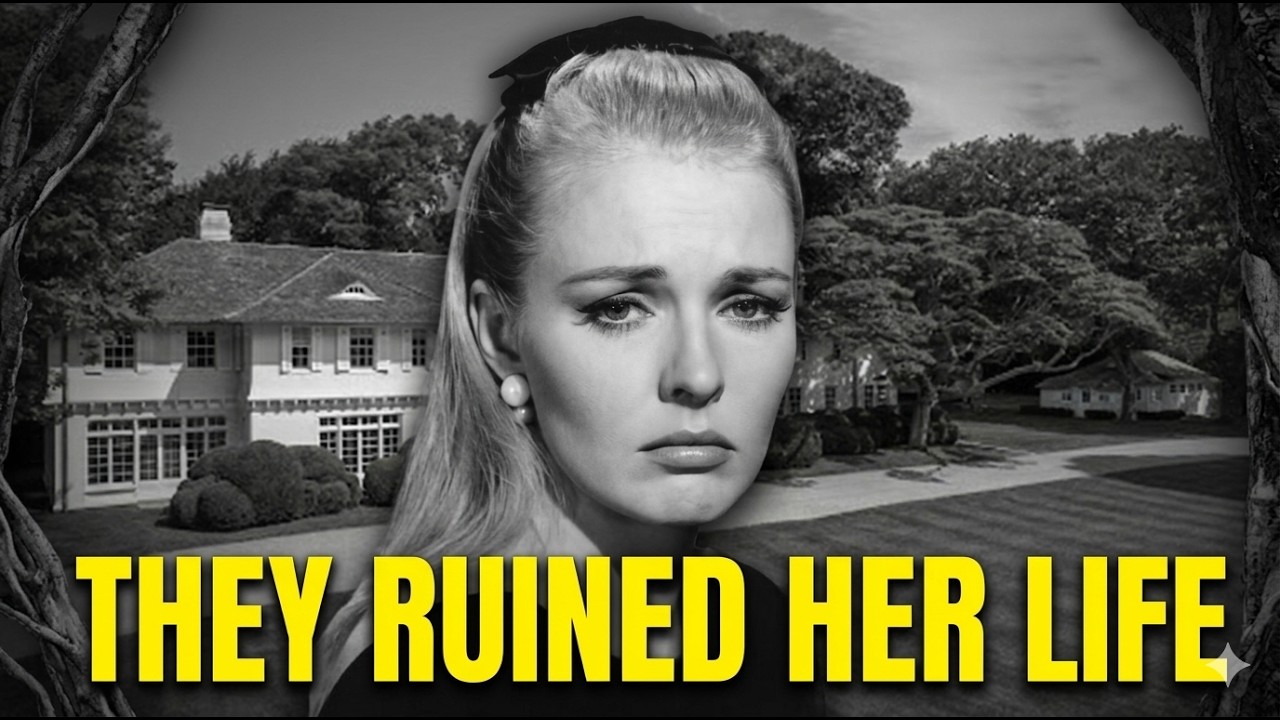
In the morning, she was gone. She had taken her papers, her blanket, her barbiturates, and a bottle of water. The note she left was addressed to her son, Alexandre Diego Gary. Not to the world, not to the press, not to the institution she had spent years fighting, but to her son, in French: “Forgive me, I can no longer live with my nerves.
”
For nine days, nothing. Then, on September 8th, her body was found in the back seat of her white Renault, parked in the 16th arrondissement near her apartment, wrapped in her blanket. The car was covered in leaves, as if it had sat there for some time. The police noted the neighborhood was well trafficked and that a vehicle parked in that precise spot for nine full days would likely have been noticed.
The timeline of when the car arrived at its final position was never definitively established. Her corrective lenses, which she maintained she could not drive without, were not with her when the body was found. The toxicology report found 7. 94 grams of alcohol per liter in her system.
Above three grams per liter, most adults fall into a coma; at 7. 94, the probability that she could have driven the car or done much of anything requiring physical coordination before losing consciousness is physiologically close to zero. The French coroner’s official ruling was probable suicide. Not certain.
Not confirmed. Probable, the word you use when the evidence points in one direction but something in the evidence will not quite close. There were two versions of Jean Seberg. The FBI’s files contained one.
Every encyclopedia published before 1980 contained the other. One of these versions required a federal operation to build. The other required nothing except a world willing to believe that a woman destroyed herself. The story that survived stripped her of the one thing she never surrendered: her understanding of what had been done to her, and her refusal to let it go unchallenged.
She arrived in Hollywood the way America loved best: from nowhere, chosen by a stranger, elevated overnight. She was seventeen years old, the daughter of a pharmacist and a schoolteacher in Marshalltown, Iowa, a flat prairie town where nothing much happened except what you made happen yourself. In 1956, director Otto Preminger ran a nationwide talent search for a young woman to play Joan of Arc in his film St. Joan.
More than eighteen thousand girls and young women auditioned. Preminger chose Seberg. Not yet eighteen, no screen experience, no Hollywood connections, just a face from Iowa that he believed could carry the most famous martyr in history. The discovery was news across America.
The pharmacist’s daughter. A small-town girl. The story wrote itself. The film did not.
St. Joan was released in 1957 to bruising reviews. Critics found the performance stiff, the production cold. Seberg, placed in the center of something far beyond her experience, absorbed much of the blame.
Preminger cast her again in Bonjour Tristesse, and again the notices were qualified. A narrative began to harden around her: chosen too young, elevated too fast, not, underneath the original promise, a great actress. This narrative followed her like weather. Then came 1960, and everything changed.
Jean-Luc Godard cast her in Breathless as Patricia Franchini, an American drifting through Paris, selling the New York Herald Tribune on street corners. Cropped hair, wide eyes, something unknowable in her stillness. The performance was unlike anything American cinema had trained its women to give. She was not performing; she was simply being, and the camera could not look away.
Overnight she became an international icon, the face of French New Wave cinema. She lived between two worlds after that. In Paris, she moved through literary circles and married the celebrated French novelist and diplomat Romain Gary, and in 1962 they had a son, Alexandre Diego Gary. In Hollywood she made Lilith opposite Warren Beatty, the role that finally silenced the critics who had dismissed her after St.
Joan, then Paint Your Wagon and Airport and a string of films that kept her working on both continents through the 1960s. Off-screen, she gave money to causes she believed in: the NAACP, a Native American school near Marshalltown, and the Black Panther Party, to which she donated an estimated $10,500, and for whom she used the code name Artura in certain circles. Knowing that being seen too clearly could cost her, she was careful. And she was not careful enough.
By the late 1960s, the FBI had opened a file on her. She was photographed with activists. Her phones were tapped. She had met Hakim Jamal, a fervent Malcolm X supporter and cousin by marriage to Malcolm’s widow, and had been romantically involved with him.
In 1969, while filming Macho Callahan in Durango, Mexico, she began a relationship with a young student revolutionary named Carlos Ornelas Navarra. By early 1970, she was pregnant with his child. Her ex-husband, Romain Gary, publicly claimed the pregnancy as his own, trying to shield her from what he already sensed was coming. He was right to sense it.
He just couldn’t stop it. J. Edgar Hoover had been director of the Federal Bureau of Investigation for forty-six years by 1970. He had run the bureau since 1924, outlasting Franklin Roosevelt, Harry Truman, Dwight Eisenhower, John Kennedy, and Lyndon Johnson.
He had files on senators, on cabinet members, on the sitting president. He knew what the files were for. The program he used to target Jean Seberg was called COINTELPRO, the Counter Intelligence Program, officially active from 1956 to 1971. Its stated purpose was national security.
Its operational purpose, as the documents eventually revealed, was the surveillance, infiltration, and deliberate destruction of political movements and individuals Hoover considered subversive. Martin Luther King Jr. was on the list. The NAACP was on the list.
By the late 1960s, the Black Panther Party was a priority target, and anyone who supported them financially was, in the bureau’s language, a candidate for neutralization. Jean Seberg had given $10,500 to the Panthers. That put her on the list. Paul Newman had given money, and so had Elizabeth Taylor.
Preminger himself was sympathetic to the movement. None of them were neutralized. Seberg was younger, less established in Hollywood, already marked in the cultural press as an unstable figure, and crucially, pregnant. That made her something the others were not: vulnerable and usable.
On April 27th, 1970, Richard W. Held, the special agent in charge of COINTELPRO operations in the FBI’s Los Angeles field office, drafted a formal cable to Hoover’s office in Washington. The cable requested authorization for a specific operation: contact Hollywood gossip columnists and plant a story claiming that Jean Seberg’s pregnancy was not the result of her relationship with Romain Gary, as was publicly understood, but the result of an affair with a member of the Black Panther Party. The cable was not vague about its purpose.
It stated plainly that publication of the story “could cause her embarrassment” and “serve to cheapen her image with the general public. ”
J. Edgar Hoover approved the operation. He added one procedural note: wait approximately two additional months before deploying the story, or until Seberg’s pregnancy was, in his words, obvious to everyone.
Make the image impossible to ignore. Let the body do the work. Then he wrote his closing line, six words: “Jean Seberg has been a financial supporter of the BPP and should be neutralized. ”
The mechanism chosen required no violence, no arrest, no charges, no due process.
It required only the weaponization of two things that already existed in America in 1970: a gossip press that asked no questions about its sources, and a culture primed with deep anxiety about interracial relationships. The lie didn’t need to be airtight. It only needed to be printed. The printing was arranged.
On May 19th, 1970, Los Angeles Times gossip columnist Joyce Haber ran a blind item. She described an unnamed international movie actress who supported the black revolution and was reportedly pregnant by a prominent black militant. She did not use Seberg’s name. She didn’t need to.
Anyone in Hollywood knew who was described. The item had been passed to Haber through the Times editorial chain, from an FBI-connected tip, through a reporter, through the metro editor, and onto the page with no apparent verification requested at any step. Weeks later, Newsweek ran the story with Seberg’s name directly attached. The story spread.
Jean Seberg was seven months pregnant when Newsweek printed her name. She read the story. She knew exactly what it was—not because she was paranoid, but because the FBI had tapped her phones and she had been watching the surveillance of civil rights supporters for two years. She knew the operation was real before most people in her life understood one was being run.
And she went into premature labor. On August 23rd, 1970, she gave birth to a daughter. The baby weighed four pounds. Her name was Nina Hart Gary, with Romain Gary’s name on the birth record.
The real father was Carlos Navarra. Nina Hart Gary lived for two days. She died on August 25th, 1970. And then something happened at the funeral that the comfortable version of the story has never been able to absorb.
The baby was brought back to Marshalltown to be buried. And before the burial, before this four-pound infant girl was laid in the ground, the coffin was opened. It was opened to prove, to the satisfaction of whoever required proof, that the child was white: that the story Newsweek had printed was false, that the baby’s race could be established visually as evidence against the lie. A grieving mother’s infant daughter, coffin opened so that people could look at a dead baby’s skin and establish that she was not the child the FBI had said she was.
The lie had already reached into the casket. The first crack in the comfortable story is this. Romain Gary, who knew Seberg for twenty years, who was the father of her son Diego, and who remained in her life until the end, was specific about what happened next. Every year after August 1970, he said, Jean Seberg attempted to end her life on August 25th, the anniversary of the baby’s death.
Not randomly, not triggered by vague depression, but on that specific date, year after year. That is not a woman undone by internal fragility. That is a woman with a specific wound on a specific date, caused by a specific event that the world had been told did not exist. The second crack: when Seberg and Gary sued Newsweek for libel, they won.
In 1974, the court awarded them $20,000 in damages—a formal legal acknowledgement that what Newsweek had printed was false. The story was false. The settlement was real. But the correction did not travel as far as the original story.
The settlement was a legal event; the original smear had been a cultural one, and culture does not correct itself on a court schedule. The $20,000 did not bring Nina Hart Gary back. It did not undo the nine years of August 25ths that were still ahead of Seberg when the settlement was reached. It did not change what most people already believed about her.
The third crack was in the files the bureau eventually released years after Seberg’s death. The April 27th, 1970 cable was made public. The authorization memo, Hoover’s signature, the language about cheapening her image, the word neutralized—everything Held had proposed and Hoover had approved, in their own words, now accessible to anyone who asked. The official story had been built on a classified foundation.
When the classification ended, the foundation was visible. The lie was always in the paperwork. It just took years for the paperwork to surface. The comfortable story required one essential piece of work: the FBI had to remain absent from the narrative of Seberg’s breakdown.
The specific April 27th cable, the specific authorization, the specific decision to weaponize her pregnancy—those had to stay classified long enough for the story of her decline to settle into historical fact before anyone could connect the decline to its documented origin. And they did stay classified long enough. By the time the documents were publicly available, the troubled-actress narrative had been in print for years. The correction came late, came quietly, and landed in a media ecosystem that had already moved on.
Nina Hart Gary’s death could not, inside the comfortable version, be connected to the smear campaign. If it was connected—if stress induced by a federal psychological warfare operation caused the premature labor that caused the infant’s death—then the question became unbearable: did the FBI kill a child? That chain is not speculation. Romain Gary stated it explicitly.
A pregnant woman read a lie about herself in a national magazine. She went into premature labor. Her daughter was born two months early at four pounds and died two days later. Gary made the connection direct and public.
Hiding it required the severance of that sequence in every public account. The birth had to be treated as medically incidental. The stress had to be treated as background. And so it was, in every obituary, in every profile, in every encyclopedia summary, because tracing the sequence required engaging with a federal document that wasn’t publicly available until after the funerals.
The detail that almost broke the comfortable version while Seberg was still alive was the pattern of August 25ths. Nine consecutive years. Each August 25th, the anniversary of the baby’s death, she attempted to die, according to Gary, who witnessed this pattern across the years they remained close after their divorce. Nine times, on one specific date.
If that pattern had been widely published and connected to the documented cause of the baby’s death, the sequence would have been impossible to read as simple mental illness. The pattern stayed private because Gary protected it—for reasons of dignity, for reasons of love, for whatever calculation a person makes when they are trying to hold together what is left of someone who is still alive. He did not tell the press while she could still be saved. He told them after her body was found.
By then, the window for intervention had closed. The comfortable version requires Seberg to be passive, a victim of her own fragility, someone to whom things happened, not someone who fought back. That version erases something the record contains. She fought back with every tool available to her.
She and Gary sued Newsweek and won. Her lawyers filed for access to her FBI file while she was alive and obtained portions of the April 27th cable. She knew what the documents said. She was not confused about what had been done to her.
The false version required her to be a woman in decline. What the record shows is a woman who was simultaneously in crisis and fighting the institution responsible for it, doing so with lawyers and court filings while the world watched her fall apart and attributed the falling entirely to her own nature. She kept Romain Gary not as a husband. They divorced in 1970, the same year the baby died.
But after the divorce, he remained in her life in a form the comfortable story has rarely examined. They lived in the same apartment building in Paris. They spoke. He knew her.
He knew the chronology, the dates, the specific shape of what the bureau had done to her pregnancy. He carried the knowledge of what had happened across the years when she could not speak it publicly, and when she was no longer able to speak it at all. The machinery that kept the wrong story alive did not require ongoing conspiracy. It ran on the gossip press.
Joyce Haber ran the blind item in May 1970 because a source she had reason to trust passed it to her through the editorial chain. She did not know she was carrying FBI material. She may have believed she was reporting something true. She published it, and the operation succeeded before anyone in the bureau had to do anything further.
Haber was later fired from the Los Angeles Times, though not specifically for the Seberg item. The man who first received the FBI tip at the paper, passed it up the chain, and enabled its publication faced no public accounting at all. It ran on Newsweek’s willingness to name her. Where Haber had used a blind item, Newsweek published Seberg’s name directly.
The story moved from gossip column implication to national magazine fact in a matter of weeks. The two outlets together accomplished what neither could have done alone: the blind item reached Hollywood insiders, and the Newsweek story reached everyone else. When the settlement came in 1974 and Newsweek acknowledged the story was false, the acknowledgement appeared without the prominence of the original publication. No front-page correction, no headline matching the scale of what they had printed.
A legal settlement is not a cultural retraction, and the culture had already moved on. Here is the mechanism’s most disturbing property. Because the smear campaign worked—because Seberg did deteriorate, did require hospitalization, did make suicide attempts, did struggle visibly through the 1970s—the comfortable story was able to point to the consequences of the operation as proof that no operation was required. She was falling apart; that was evidence of her own fragility.
The fact that the falling apart had begun in August 1970, in the months immediately following the baby’s death, following the smear, following the coffin being opened, was not examined loudly enough to change the story. The machinery created the damage. Then it pointed to the damage. It ran on the absence of Hoover.
By the time the April 27th cable was declassified and the bureau’s own language was visible to journalists and historians, J. Edgar Hoover had been dead for years. He died in May 1972. There was no one to face a microphone and answer for what the memo said.
The bureau issued its acknowledgement of the operation, including the line released days after Seberg’s death: “The days when the FBI used derogatory information to combat advocates of unpopular causes have long since passed. We are out of that business forever. ” They said this about an operation their director had authorized in writing, with a signature, and then died before he could be held to account for it. The bureau confessed in the past tense, to a director who was no longer alive to be named.
Each version left physical residue in the world. Not metaphor, not interpretation. Objects, documents, locations still there, still accessible, still containing exactly what they contained on the day they were made. The false version left a blind item in the Los Angeles Times archive, published May 19th, 1970 by Joyce Haber.
It was not removed when the truth became clear. It was not flagged as FBI-sourced disinformation. It sits in the archive as it was printed, a gossip item apparently ordinary, with no visible fingerprints. It left the Newsweek story with Seberg’s name, existing alongside the 1974 settlement that declared it false.
Both documents are accessible. The lie and its legal correction exist in the same historical record, one slightly louder than the other. It left encyclopedia entries and reference book summaries written in the years before the FBI files were public and never updated. The real version left the April 27th, 1970 cable, declassified, accessible through freedom of information requests, containing Held’s proposal and Hoover’s authorization in their exact original language: “cheapen her image with the general public,” “should be neutralized.
” The document exists. It is not reconstructed, not summarized, not interpreted by anyone with an argument to make. It is the original. It left the grave of Nina Hart Gary in Riverside Cemetery in Marshalltown, Iowa.
Born August 23rd, 1970. Dead August 25th, 1970. Two days old. Buried in the town where her mother was raised, after a burial at which the coffin was opened to establish what the lie had put in question.
The grave is still in Marshalltown. Anyone can visit it. It left Romain Gary’s press conference on the record, the statement he gave after Seberg’s body was identified, naming the FBI’s campaign as the origin of her death. His words are sourced.
They were reported. The journalists who covered it are on record. This was a man who was a decorated French diplomat and, by the end, a writer who had been inside this story since 1970 and who chose, in the days after Jean Seberg’s death, to put everything he knew before anyone who would print it. Fourteen months after that press conference, on December 2nd, 1980, Romain Gary shot himself at his apartment in Paris.
He left a note saying his death was unconnected to Seberg’s. Whether that is entirely true, no document can say. And it left the question about the car that the French coroner never answered with certainty. The timeline of when the car arrived at its final position was never definitively established.
Her corrective lenses were not with her when the body was found. The note was in her hand, addressed to Diego. The official ruling was probable suicide. Probable, not certain, not confirmed.
The false version left an image of a woman who could not hold herself together. The real version left the documents that show exactly who took her apart, and the question still unanswered of what happened on a Paris street in August 1979, when a woman whose government had spent a decade destroying her ended up dead in a car that the forensic evidence suggests she could not have driven herself. Both versions are in the record now.
The record is open.
