In the tense late-night conversations before the abdication announcement, Mary of Teck said little. Her presence alone conveyed a world of expectation. Her eldest son, Edward, had chosen love over the crown, and the Queen Mother—deeply conservative, devout, and schooled in the belief that a monarch’s first allegiance must be to his people—could not support him. She met the crisis with the same unfaltering composure she had shown in every challenge of her life.
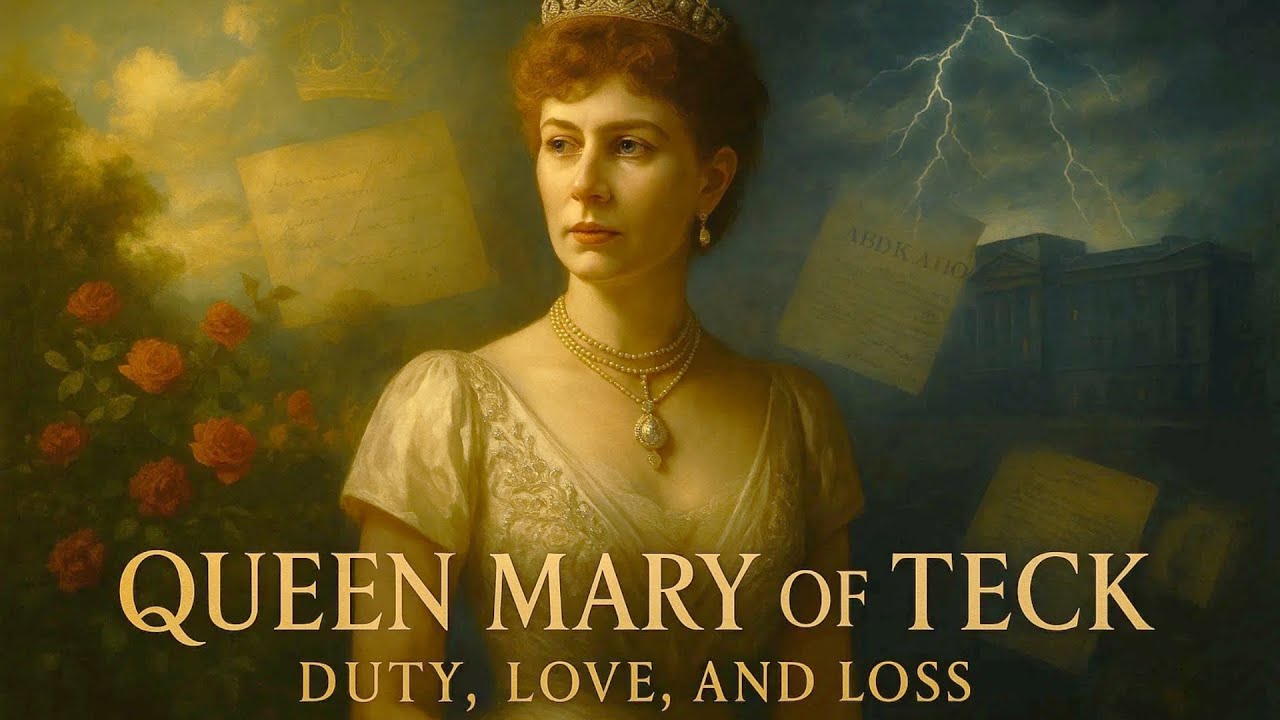
She repeated the lessons of her own upbringing, the values memorized since childhood: “I have always been taught, dear boy, that duty comes first. ” Edward listened attentively, but remained resolute. Even after he signed the instrument of abdication, she wrote to him, “I love you always, but I cannot support your decision. ” When he left Buckingham Palace for the last time that Christmas, Mary simply gave him a final blessing and turned to attend the next generation.
She had been born Victoria Mary Augusta of Teck, nicknamed May, on May 26th, 1867, at Kensington Palace—the very room where Queen Victoria had been born decades before. Grandmother Victoria was delighted by the baby’s arrival, writing that she was a fine one with pretty little features and a quantity of hair. Yet Mary grew up in an unusually humble royal household. Her father, Duke Francis of Teck, had no inheritance or wealth, and her mother lived largely on royal allowances.
The Teck family often lived beyond their means. When Mary was a teenager, they decamped to Florence for two years to save money. As one historian notes, she seemed destined to live in limbo, too royal for most and not royal enough for the rest. Young Mary’s upbringing reflected this paradox.
She was raised alongside the children of the Prince of Wales at Richmond Park, enjoying a happy but sparse Victorian childhood. Although not deprived, she learned thrift early on. Her family kept only a small staff, and Mary’s mother often took her on charity visits to the city’s poorer quarters. Mary was educated at home and was a bright, quiet girl, an observer at heart.
She spoke French and German fluently, read widely, and even spent hours admiring art in Florence’s galleries during those lean years. In the evenings, she would help her mother write letters to relatives and prepare for modest social events. Despite the slender budget, the Duchess of Teck wanted her daughter to be cultured and gracious, preparing Mary to exercise discretion, firmness, and tact in any station. In this nurturing but disciplined home, Mary learned the virtues that would define her later: quiet courage, sense of duty, and a deep respect for family tradition.
As Mary grew into adolescence, her beauty and poise caught the eye of the royal family. She was the only unmarried British princess not descended from Queen Victoria, making her a highly eligible match. In 1891, during a hunting party at Luton, the handsome Duke of Clarence, Prince Albert Victor, eldest son of the Prince of Wales, proposed marriage to the twenty-four-year-old May. Mary accepted, with hopes of love and of securing the future of her family line.
Queen Victoria herself had taken a special interest in May, and the old Queen’s fondness helped seal the engagement. Yet fate had other plans. Only six weeks after their betrothal, in early 1892, Prince Albert Victor fell ill in the influenza pandemic sweeping Europe. He died suddenly.
Mary’s first groom never returned from the hunt. The news devastated her. By Victorian custom, she had prepared herself to be a princess, and now that dream was shattered. According to later accounts, Mary had not been passionately in love with Albert Victor at first; she viewed him more as a kind and dutiful choice than a romantic ideal.
But she was nonetheless heartbroken when he died. His passing robbed her not only of companionship, but of any significant dowry or prospect of marriage, closing off the narrow paths open to a woman of her standing. In mourning, she withdrew from society for months, holding her head high in public, but allowing few to see her grief. Unlike many Victorian marriages arranged by family, this engagement had carried genuine expectation for Mary.
The end of it left a poignant void and steeled her resolve. She vowed to bear the loss with stoicism, a trait her son would later describe as invincible virtue and correctness. In that period of mourning, Mary found an unexpected comfort. Albert Victor’s younger brother, Prince George, Duke of York, began to spend time with her under Queen Victoria’s guidance.
The two young cousins shared their sorrow and soon grew close. In May 1893, George proposed marriage to Mary. She accepted, and within weeks she found herself deeply in love with her future husband. They wed on the 6th of July 1893 in the Chapel Royal at St.
James’s Palace. In an uncharacteristically warm pairing for a royal match of the era, both George and Mary genuinely cherished each other’s company. Prince George, who had never known a mistress—unlike his father—began to write to May every single day they were apart, a devotion recounted in royal letters. In private correspondence, he spoke of her quick wit, wisdom beyond her years, and a steady calm that balanced his more exuberant nature.
Mary, for her part, took pleasure in George’s love. Friends said she blossomed in the comfort of true affection, admiring how he treated their marriage as a partnership of equals. The young couple set up their first home at York Cottage on the Sandringham estate—a surprisingly modest royal retreat despite George’s status. George, who preferred simplicity, delighted in cooking for Mary in their snug kitchen and walking with her in the Norfolk woods.
In this cozy life far from court pomp, Mary felt secure. Within a year, they undertook a worldwide tour of the empire, visiting Canada, Australia, South Africa, and beyond. Mary handled these duties with grace, always by her husband’s side. Through letters and later recollections, it is clear their marriage was a success.
This union would last over fifty years, anchored by a true devotion that Mary rarely displayed in public. Marrying the Duke of York introduced Mary to the highest tiers of royal life. Already from childhood, she had enjoyed a friendly bond with Queen Victoria, who had praised Mary as an infant and, even after the breakup of the first engagement, continued to regard Mary as a fitting future queen. Under Victoria’s reign, Mary, now styled the Duchess of York, spent time at Balmoral and Windsor.
She made a point of showing respect and courtesy to her grandmother-in-law. Indeed, when King Edward VII died in 1910 and George ascended the throne, Mary even asked to drop her own name, Victoria, becoming simply Queen Mary, so as not to be confused with the still much-beloved late Queen. Mary’s relations with the extended royal family had their tensions. The Duchess of York had a sometimes strained dynamic with her new mother-in-law, Queen Alexandra.
Alexandra, once queen herself, could be exacting. Soon after Edward’s death, she insisted on standing as the most senior royal at the funeral, and even lingered in Buckingham Palace long after her son’s accession, delaying the new monarch’s takeover of the household. Alexandra’s small requests for treasures did not always translate peacefully. At one point, she retained some jewels that by custom should have passed to Queen Mary.
Mary handled these incidents with dignity. When a corner of competition threatened their relationship, Mary chose to meet her mother-in-law with patience and tact. Over time, they settled into an accommodation. On one memorable occasion, Alexandra stepped aside to allow Mary to enjoy a boating party in peace, marking a quiet truce between them.
Meanwhile, Mary took on the public duties of a princess and later queen with diligence. As Duchess of York, she presided over banquets, supported charities, succeeded her own mother in patronage of a London needlework guild, and dutifully traveled with George. She famously toured the globe from 1901 to 1902, leaving their infant children in the care of nannies. The five-year expedition tested her mettle, especially when it meant tearful farewells as she sailed away.
Private letters from those years show Mary was anxious about leaving her boys, but equally proud of George’s ambition in the mission. Her love for her children became one of her deepest drives. Even as societal norms had them raised by governesses, Mary often visited them each morning and night, helping to choose their books and learning their poems and prayers. In private moments, she delighted in her children’s accomplishments, having albums for each baby and recording their first words and steps.
Although she maintained a composed facade before the world, Mary’s parental instincts were unmistakable in how carefully she protected her children from scandal or hurt. Between 1894 and 1905, she bore six children: Edward, later Edward VIII; Albert, later George VI; Mary, Princess Royal; Henry, George, and John. York Cottage, once her simple retreat, often felt full with bouncing young princes and a princess in training. Like many upper class families of the time, Mary and George employed nannies to care for the children.
In fact, Mary dismissed two nannies for cruel behavior before installing the beloved Charlotte Bill as governess. Even so, Mary remained closely involved. Each evening she would visit the nursery to kiss the little ones good night. Each morning she recorded their meals and milestones in nursery logs.
She taught Mary how to sew, played games with Henry, and quizzed Albert on geography, all while balancing the demands of court. Her diaries often remark on her children’s progress and health. One survives in which she meticulously notes Edward’s first steps and Albert’s first words, as if they were royal proclamations. Mary’s family life had its tender moments.
Despite the impression of austerity, she delighted in making home warm. Her eldest son later recalled the peace of bedtime with her: her soft voice, her cultivated mind, the cozy room overflowing with personal treasures—all inseparable ingredients of the happiness associated with this last hour of a child’s day. Such was her pride in her children. Each child had an album Mary kept filled with newspaper clippings and postcards marking every little victory: a first cricket match, a prize at school, a fine drawing on their report card.
When they fell ill, Queen Mary always insisted they nurse in her own suite, where a nurse and mother could care for them. Her children rarely needed her to raise them, but they often needed her comfort and encouragement. Mary had a gentle way of soothing upset. She often remarked that one tear from a child’s eye felt heavier than all the pomp of the court.
Yet the closeness also bred complications, especially with Edward and Albert, called Bertie, as they grew older. Edward had a mercurial temper and a restless spirit. In public, he sometimes admired his mother’s learning and grace, but privately he felt suffocated by duty. In candid letters to his wife Wallis decades later, Edward described his feelings with painful clarity.
He wrote that his childhood warmth toward Mary—thinking of her voice and cozy room—turned to a sense of puzzlement in adolescence, for his mother could be so hard and cruel towards her eldest son. Edward struggled to understand why a mother so kind could sometimes appear distant and demanding toward him, her firstborn. The truth lay partially in Mary’s own upbringing. Just as her father had been inured to sacrifice, so Mary had always believed that duty must come first.
Edward later recalled that Mary had been taught to put duty before everything else in life. In that framework, a monarch’s comfort or passions were secondary to the stability of the realm. When Edward contemplated giving up his throne to marry for love, he knew he was confronting this very principle in his mother. In the aftermath of the abdication, Mary quietly aligned herself with her second son.
She became the first British dowager queen to attend her son’s coronation when George VI took the throne, a symbolic passing of the torch. To the public, she showed a steady figure at the relief services and gatherings for the new king. To her children, she was a pillar of encouragement. Ever the matriarch, Mary kept the household’s spirits up.
When young Princess Elizabeth struggled with her first radio broadcast, Mary patted her hand and said, “We have no fear for you. You will be a great queen. ” Words that would echo back at her nearly two decades later. Within days of Edward’s abdication, history forced new roles upon her family.
George VI and his wife Elizabeth became king and queen, and Mary found herself at sixty-nine years old in the newly created position of queen mother. She accepted it with characteristic grace. Her first duty was to comfort her second son as he faced a throne that had not been meant for him. Publicly Mary showed a dignified cheer at George’s side for his coronation.
Privately she warned him to cherish his wife—something she had never done for Edward. Throughout it all, she kept faith that the crowns and tragedies were part of a providence bigger than personal desire. As one friend observed, Mary left no doubt: Edward’s abdication pained her deeply, but she believed firmly that a king’s first allegiance must be to his people. The royal spotlight had first returned fully to Mary in 1910, when George V was crowned and she became queen consort.
Her first years as queen were dominated by the First World War, a conflict that tested her resolve. From the war’s outbreak in 1914, Queen Mary embraced the era’s austerity. Buckingham Palace itself went on strict ration. Mary insisted the royal kitchens cook on military rations and that uniforms be salvaged rather than replaced.
She visited military hospitals regularly, offering comfort to wounded servicemen and even singing to them at times. These efforts were strenuous. Court reports say the queen felt great emotional strain from witnessing the war’s toll. Though she rarely complained, her private letters hint at weariness from long days of duties and fundraising for wounded soldiers.
She organized the Crown Princess of Sweden, her cousin, to carry letters to her aunt still in Germany, and throughout stood as a symbol of perseverance on the home front. Behind the scenes, the war brought tragedy to her own family. In 1919, just months after the armistice, her youngest son, Prince John, collapsed and died suddenly at age thirteen from a seizure. John had suffered epilepsy quietly in Sandringham, largely away from the public eye, and his death broke Mary’s heart.
In diaries later published from her papers, Queen Mary recorded the loss in simple broken terms: “Our poor darling little Johnny had passed away suddenly. The first break in the family circle is hard to bear, but people have been so kind and sympathetic, and this has helped us much. ” The king and queen, consoled by public sympathy, allowed few tears in front of staff, but their friends remembered seeing Mary clutching George’s arm, her normally steady eyes welling up with grief. When World War II erupted in 1939, Queen Mary was well into her seventies.
London’s streets emptied as bombs fell, but she remained a commanding presence. She inspected munitions factories, took charge of an official scrap metal drive, and even gave lifts to soldiers hitchhiking on country roads. Though years had silvered her hair and creased her face, Mary’s resolve had not dimmed. She continued to correspond with wartime heads of state, offered her residences to evacuees, and encouraged the nation’s spirit with public appearances whenever possible.
The war also brought new personal sorrows. In 1942, one more tragedy struck her family. Her son, Prince George, Duke of Kent, was killed in an air crash while on active service. George was thirty-nine, a cheerful prince who had often joined Mary on family outings.
His loss came as a shock even after so many years of saying goodbye. Mary quietly mourned this son as she had all the others, keeping her tears private. Friends recalled that even the news of victory in Europe did not lift Mary’s spirits. The cost had been too high.
Five years later, when the war ended and London celebrated liberation, Mary allowed herself a rare smile as she returned to Marlborough House. She was frail but still addressed crowds with unwavering dignity. In these later years, Mary reflected privately on how much she had lost. At the age of eighty-five in 1952, she had now buried her third son, King George VI himself, and only two of her six children remained.
On hearing of his death, Mary quietly confided to an aide: “I have lost three sons through death, but I have never been privileged to be there to say a last farewell to them. ” The remark cut to the bone. She meant that neither John nor the Duke of Kent nor her beloved George had died with her at their side in their final moments. During those final peaceful years in the early 1950s, Mary spent quiet days reviewing family albums, working with charities, and lingering by the fireplace at Sandringham, reading letters from her grandchildren.
Even when she finally passed away on March 24th, 1953—just weeks before the coronation of her granddaughter, Elizabeth II—she did so with the same stoic grace she had shown all her life. As the New York Times would later eulogize, Mary of Teck died as the last of the English queens who had known Queen Victoria and the old ways of court and country.
