At the height of the Great Depression, when one in four American workers could not find a job, a man whose name had become a national punchline still insisted that help was not coming. President Herbert Hoover had built his reputation on the belief that the federal government should not interfere with the lives of its citizens, and even as millions lost everything, he held to that conviction. But in the winter of 1933, with banks collapsing and breadlines stretching around city blocks, the question that hung over the nation was whether a government that had always refused to act could suddenly learn how. The answer would not come from Hoover.
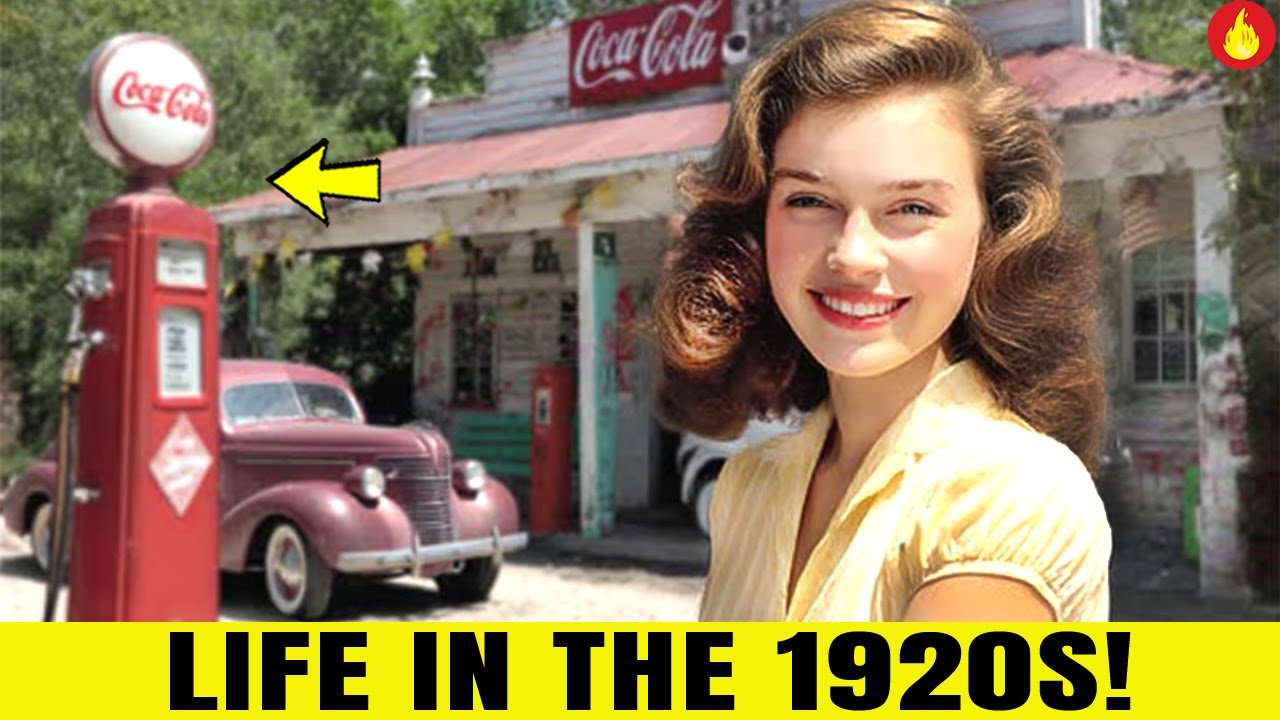
It would come from a man who had been sworn in with a promise to do something, anything, to pull America out of the abyss. The decade that led to this crisis had been almost giddy in its optimism. The 1920s had roared into American life with jazz music spilling out of speakeasies, flappers dancing the Charleston in shortened skirts, and a stock market that seemed to climb without limits. Promises of prosperity were everywhere.
The Republican administration under President Calvin Coolidge believed its only role was to create an environment where business and the nation could thrive, and by most measures, it seemed to work. In the years after the First World War, the Gross National Product grew by roughly 40 percent. Automobiles rolled off assembly lines in Detroit at a pace no one had thought possible, and for the first time in American history, the 1920 census showed that most citizens lived in cities rather than on farms. New technologies were transforming daily life.
The radio had become the centerpiece of the American living room, with hundreds of commercial stations broadcasting news, sports, comedy, and music into homes across the country. Families gathered around their sets to hear favorites like the Grand Ole Opry, which first aired in 1925. But the glitter of the twenties concealed deep fractures. The prosperity was not shared.
While the stock market tripled in value between 1923 and 1925, an estimated 80 percent of Americans had no savings at all. The wealthy grew wealthier, but factory workers and farmers found it increasingly difficult to buy the very goods they produced. Agricultural prices collapsed in the years after the war as overproduction flooded the market, and for the first time in American history, the total number of farms actually decreased between 1920 and 1930. Farmers, who had been urged to expand production during the war, now watched their incomes dwindle even as the cities around them boomed.
In the countryside, life moved at a slower pace, but the hardships were just as real. Rural schools still operated in single-room buildings, and many children had no access to secondary education at all. The twenties had also been a time of profound cultural upheaval, and not everyone welcomed it. The Eighteenth Amendment took effect in 1920, prohibiting the production and sale of alcohol, and it gave birth to a vast underground economy.
Bootlegging became an enormously profitable profession, and organized crime flourished under men like Al Capone, who built vast fortunes supplying the speakeasies that had sprung up in defiance of the law. These secret bars welcomed women in a way the old saloons never had, and they became centers of social life and entertainment, the places where jazz music and new dances found their audiences. The cultural shifts of the decade provoked fierce resistance. Flappers, the independent young women who bobbed their hair, wore makeup, smoked, drank, and danced until dawn, were denounced by conservative moralists who saw in them the undoing of Victorian values.
The actress Clara Bow embodied this new spirit on screen, appearing in fifteen films in 1925 alone, even as the image was increasingly commercialized and stripped of its charge. Beneath the surface of the Jazz Age lay a vicious current of racial violence and inequality. Nearly six million African Americans had migrated from the rural South to industrial cities in search of better lives, yet they still faced discrimination even in the North. They were pushed into low-paying manual labor, denied equal access to housing and education, and forced to live in overcrowded slums in neighborhoods like Harlem, Chicago, and Philadelphia.
In the summer of 1921, racial violence erupted in Tulsa, Oklahoma, when white mobs looted and burned Greenwood, a thriving Black district known as Black Wall Street. Historians estimate that between one hundred and three hundred people were killed during the massacre. Thousands of Black residents were detained at places like the Tulsa County Fairgrounds, and roughly ten thousand were left homeless as smoke rose over the ruined neighborhood. Even as the economy boomed, African Americans were effectively shut out of the prosperity, finding their only real release in the jazz music and dance they created, often performed for wealthy white audiences.
The Roaring Twenties also saw a resurgence of the Ku Klux Klan. After D. W. Griffith’s 1915 film The Birth of a Nation glorified the post-Civil War Klan, William Joseph Simmons revived the organization, profiting from membership fees.
By the mid-1920s, according to historians, several million Americans had joined. The Klan held rallies and public ceremonies, positioning itself as a defender of traditional values against the changes sweeping the nation. For African Americans, the decade was not a celebration but a struggle for survival, fought in the face of both private violence and official indifference. The Republican administrations of the twenties embraced a laissez-faire philosophy, believing that social responsibility beyond law and national defense was not the government’s business.
Helping the poor was seen as interference with individual freedom, and there was a confident optimism, shared by Hoover himself, that America was on the verge of permanently solving the problem of poverty. That optimism came crashing down in the autumn of 1929. On October 24, Black Thursday, panic hit the Wall Street stock market. By October 29, Black Tuesday, everything was out of control.
The crash was not merely a financial crisis; it was the beginning of the Great Depression, which economists and historians would later describe as the worst and longest economic downturn in modern industrial history. The effects spread quickly through every level of society. Unemployment, which had been a distant worry, rose to roughly four million in 1930, then climbed to eleven million by 1932, and reached an estimated thirteen million in 1933, about 25 percent of the workforce. One in four working-age Americans could not find work.
People who had once held steady jobs stood in breadlines, and families were evicted from their homes when they could not pay rent or mortgages. Makeshift shantytowns sprang up on the edges of cities, built from scrap metal, abandoned wood, and cardboard. They were mockingly called Hoovervilles, an insult aimed at a president who seemed unable or unwilling to help. The pain was not evenly distributed.
While the national unemployment rate stood at around 25 percent, nearly half of African Americans were out of work by early 1933. They faced severe discrimination in hiring and were often the first to be laid off. Many New Deal programs excluded agricultural and domestic workers, the very jobs where minorities were concentrated. The Depression was global in its reach, spreading to industrialized nations like Britain and Germany, where international trade fell by more than 50 percent and unemployment skyrocketed.
The economic collapse was compounded by an environmental catastrophe in the Great Plains, where drought, fierce winds, and poor farming practices combined to create the Dust Bowl. Fertile topsoil was blown away, turning green fields into vast dust deserts. The storms destroyed crops and homes, caused respiratory problems, and made life nearly impossible. Thousands of farm families, already struggling, made the heartbreaking decision to abandon their land and head west toward California.
They were often called Okies, a term derived from Oklahoma, though they came from any state in the Dust Bowl region. Life on the road and in California was filled with hardship, discrimination, and often outright hostility from local residents and authorities. The struggle of these families became immortalized in John Steinbeck’s novel The Grapes of Wrath, which followed the Joad family on their desperate journey west. Dorothea Lange’s photographs, particularly Migrant Mother, captured the face of the Depression in the anxious but resolute gaze of Florence Owens Thompson, a young mother of three small children.
These works were more than art; they were living historical documents that bore witness to human suffering and endurance. But even in the depths of the crisis, Americans found ways to hold on. When movie theaters, more than a third of which had closed for lack of audiences, were out of reach, families turned to the radio. It became the centerpiece of the household, the main source of entertainment and connection.
During the day, housewives listened to soap operas, serial dramas sponsored by soap companies that offered escape and identification. After school, children tuned in to thrilling action and adventure shows. In the evening, the whole family gathered around to hear the news, comedy programs, and live music. Board games also became wildly popular.
Sorry was released in 1934, but the most successful was Monopoly, officially released in 1935. It allowed players to buy and sell properties, build houses and hotels, and own famous streets, experiences they could only dream of in real life. For a few hours, they could feel wealth and power that their daily existence denied them. Outdoors, mini golf became a genuine craze, with more than thirty thousand courses opening across the country.
At twenty-five to fifty cents per game, it was affordable for many working families, requiring no special skill or expensive clothing. It provided a public space where people could socialize and briefly forget their troubles. Life was hard, but Americans always found ways to entertain themselves, to laugh together, and to strengthen the bonds of family and community. Food became an obsession of a different kind.
With hunger and malnutrition widespread, housewives had to learn to stretch every scrap. Cabbage soup became a national dish because it was cheap and easy to make in a big pot, stretching to feed a family for several meals. Cabbage was the main ingredient, mixed with whatever was on hand, potatoes, carrots, onions, and, if fortunate, a few bones or scraps of meat. A bowl of hot cabbage soup was simple, but it offered warmth and survival in hard times.
Casseroles were also extremely popular, often made with beans, potatoes, pasta, and a little meat when available. Chili, meat and bean stews, and macaroni and cheese were common. Bread was the staple at every meal, often eaten with potatoes and beans. Canned foods were popular for their convenience and long shelf life.
Some people hunted wild game for meat, though it was risky and not always successful. Home vegetable gardens became essential, not a hobby but a vital source of fresh produce. In some cities, local governments and organizations transformed unused land into community gardens where people worked together, sharing labor and harvests, building a powerful sense of solidarity. Detroit’s community garden program alone was said to feed as many as twenty thousand people.
The cookbooks of the Depression era testify to remarkable creativity. Recipes existed for cookies made without butter, eggs, or milk, using only lard, sugar, and flour. There were recipes for butterbean pickles, an unusual but ingenious way of preserving cucumbers. Pie crusts were even made from cornmeal mush.
Nothing was wasted. The liquid from canned beans was saved and used in cooking, a practice that stood out from ordinary habit. This creativity helped families survive and demonstrated a mentality of refusing to give in to adversity. Perhaps the most heartbreaking story was that of families who had to eat in shifts because there was not enough food for everyone at once.
Some members would eat on Monday, Wednesday, and Friday, while others ate on Tuesday, Thursday, and Saturday, and the whole family ate together only on Sunday. It was a testament not only to extreme want but to the infinite love and sacrifice of parents who would go hungry themselves to put food in their children’s mouths. The home became the last fortress against the storm. The family, faced with ruin from outside, became an economic unit where every member had to contribute.
Mothers became financial managers, stretching impossibly tight budgets, accounting for every penny to ensure food, clothing, and warmth. Even the most ordinary household chores had become enormously difficult. Monday was traditionally wash day. Women scrubbed mountains of dirty laundry by hand, often using homemade soap and boiling water over wood or coal stoves.
Tuesday was ironing day. Many women used heavy flat irons heated on the stove, a task that was not only exhausting but dangerous, requiring great care to avoid burning clothes or starting fires. Regular visits to the barber or beauty salon were unaffordable luxuries. People cut each other’s hair at home.
Healthcare was neglected. People only went to the doctor when illness became unbearable, because medical costs were a crushing burden. Many women chose to give birth at home with the help of midwives or family members to avoid hospital costs, despite the health risks. Clothes and shoes were precious.
Families patched garments and repaired worn-out shoes repeatedly, until nothing could be done with them. In extreme cases, families cut up old tires and used the rubber to patch the soles of torn shoes. It was a sign of both their creativity and their ability to make do with everything around them. Wearing hand-me-downs was common.
In the winter, families heated only one room, usually the living room or kitchen, where everyone gathered for warmth, burning scavenged wood, scraps of coal, and even dried corn cobs. To cut costs, extended families and relatives moved in together under one roof, sharing rent, utility bills, food, and other limited resources. Crowded homes became symbols of solidarity and mutual support in a time when isolation meant ruin. The sheer scale of the Depression overwhelmed private charities and local governments.
National recovery required the federal government to act on a massive scale. That effort came under President Franklin D. Roosevelt, who implemented a series of programs and policies collectively known as the New Deal. It was a turning point in American history, creating the American welfare state and placing on the government the responsibility of ensuring basic social protection for its citizens.
The New Deal was not merely an economic recovery plan; it was a revolutionary change in the role of government in the lives of its people. Its main goals were threefold: relief for those in distress, recovery for the national economy, and reform of financial and social systems to prevent a similar crisis in the future. Among the most important programs was the Emergency Banking Act of 1933, one of Roosevelt’s first and most critical actions. It stabilized the banking system by providing federal support to banks at risk of failing, and it ended the gold standard, allowing the government to issue more paper money, which increased liquidity and helped energize the economy.
The Federal Deposit Insurance Corporation, or FDIC, was established to insure bank deposits up to 2,500 dollars, restoring public confidence in the banking system. The Securities and Exchange Commission, or SEC, was created to oversee stock trading and prevent the fraudulent and manipulative market activities that had contributed to the crash of 1929. The Civilian Conservation Corps, or CCC, was a highly successful program that employed young men between eighteen and twenty-five in projects like tree planting, soil erosion control, and forest conservation. About two million young men participated, finding work and income while also preserving the nation’s natural resources.
The Federal Emergency Relief Administration, or FERA, provided direct aid in the form of food and other necessities to the unemployed and destitute. The Agricultural Adjustment Act, or AAA, aimed to stabilize agricultural prices by paying farmers to reduce the amount of land they cultivated, controversial when many were hungry, but it raised farm incomes and stabilized markets. The Works Progress Administration, or WPA, became the nation’s largest employer, giving jobs to millions of unemployed people in projects that built roads, bridges, schools, and airports. Its projects also supported artists, writers, and musicians, helping to preserve and develop American culture.
The Social Security Act of 1935 was one of the greatest achievements, creating a federally administered welfare system with benefits for the disabled, poor, and unemployed, as well as a national retirement insurance system. It formed the basis of America’s modern social safety net. The Tennessee Valley Authority, or TVA, developed the Tennessee River valley with hydroelectric dams and flood control, bringing electricity and flood prevention to a vast area. The Rural Electrification Administration, or REA, transformed the lives of millions by bringing electricity to rural areas.
Before the Depression, receiving government assistance was often stigmatized as a mark of personal failure. But when millions had lost everything and no other recourse existed, that outlook slowly changed. Government help became not a source of shame but an essential lifeline. Even so, the New Deal only partially improved the economy.
The real economic recovery came after the outbreak of the Second World War in 1939. Massive wartime spending created jobs and powerfully stimulated the economy. Millions of unemployed young men were drafted into the military, and many women went to work in factories producing war equipment, pulling America out of stagnation. The story of the letter carriers illustrates the daily struggle of workers in the Depression era.
In the early years of the Great Depression, a letter carrier’s job, paying about 264 dollars a year when thirteen million people were unemployed, was considered enviable. But the carriers themselves were not spared. President Hoover’s Economy Act of 1932 cut their wages by 8 and one-third percent. In March 1933, President Roosevelt replaced that with a 15 percent direct salary reduction, bringing wages back to their 1916 levels.
The substitute carriers were hit hardest, earning only fifty to sixty-five cents an hour, sometimes as little as six dollars a week, and the government’s freeze on filling vacant positions devastated their livelihoods. The National Association of Letter Carriers, the NALC, lobbied continuously for wage restoration and help for substitutes. They argued that the salary cuts did little to balance the national budget and that the government was acting unfairly and inconsistently by cutting its own employees’ pay even as it encouraged industry to raise wages. Their struggle was difficult, and they did not give up.
By April 1935, all government employees’ salaries had been fully restored. The NALC then carried on a vigorous campaign for pay increases, using radio broadcasts and public appeals to rally support, emphasizing the importance of the mail service and their own dedication. Under the dynamic leadership of William C. Doer, the letter carriers secured a 300-dollar wartime bonus in 1943, their first permanent pay increase in twenty years in July 1945, an additional 400 dollars per year by May 1946, and the goal of equal pay for all city letter carriers, regardless of community size, was achieved by October 1949.
The 1930s were indeed a turbulent chapter in American history. Faced with extreme poverty and devastating natural disasters, the American people showed a resilience that shone all the brighter in the darkness. They did not let suffering erase hope or weaken their will. The stories of their struggles, sacrifices, and even small joys are a powerful reminder of values that do not change: the worth of honest labor, the significance of family as a last refuge, and the enduring strength of community.
Before the decade was out, the New Deal had transformed the relationship between the American people and their government, and the resolve born of those years would carry the nation through an even greater trial still to come.
