On the afternoon of September 5, 1921, in a locked bedroom on the twelfth floor of the Saint Francis Hotel in San Francisco, Roscoe “Fatty” Arbuckle, the highest-paid comedian in Hollywood, found himself alone with Virginia Rappe. The door was bolted from the inside. Outside, her friend Bambina Maude Delmont heard a scream, then silence, then began to pound on the wood with her fists. Thirty minutes passed before anyone opened that door.
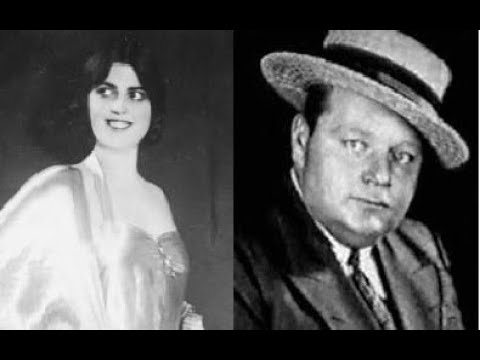
When it finally swung open, Arbuckle stood there in his pajamas, the green-banded white Panama hat belonging to Virginia Rappe perched rakishly on his head. On the bed behind him lay Rappe, semi-naked, moaning in distress. Whatever happened in that room would destroy the career of one of the most famous men in America, trigger three separate trials, and leave a question that a hundred years of argument has never fully settled. Futile as it may be to establish the exact facts of a murder case, this is the story of what happened at that Labor Day party in 1921.
In early September 1921, three friends from the motion picture industry drove up the coast from Hollywood to San Francisco. They were in high spirits. A weekend Labor Day party had been arranged, and although Prohibition had made drinking alcohol illegal, the law was more honored in the breach than in its observance. The biggest of the three friends, figuratively and literally, was at the wheel.
Roscoe Arbuckle weighed 266 pounds. From his outsized physique and slapstick comic talent he had carved himself a huge slice of the American entertainment pie, and his earnings were second only to those of Charlie Chaplin. He had just signed a three-year contract with Paramount Pictures for one million dollars a year—nearly twenty million dollars in 2021 terms. He was accompanied by Fred Fischbach and Lowell Sherman, both successful actor-directors.
They had taken a three-room suite at the Saint Francis Hotel for the party. Room 1219 was Arbuckle’s room. Another was Lowell Sherman’s. The third was to be used for the party itself.
About twenty-five people attended. Things started well enough. A Victrola gramophone played the crackling acoustic recordings of the Jazz Age. People danced.
Smoke hung thick and blue in the air. Laughter was liberal. Everyone drank too much—there was never any shortage of alcohol, despite Prohibition—and there was no shortage of young starlets anxious to get a part in movies or advance their careers. All attractive, eager, willing.
Among the girls attending the extended party was one who stood out from the rest: a thirty-year-old woman who claimed to be twenty-six, named Virginia Rappe. She arrived around ten-thirty in the morning with her friend Bambina Maude Delmont. Virginia Rappe was a woman who caught the eye, a woman of considerable beauty. Born out of wedlock in 1891 to Mabel Rappe and raised by her grandmother in Chicago after her mother died, she was bright, ambitious, blessed with extraordinary good looks and figure.
She had added an “e” to the end of her name to lend it a certain cachet, and it worked. She became a successful model, earning around four thousand dollars a year—about one hundred twenty thousand dollars in 2021. Her face and form graced magazine covers from coast to coast, and she modeled in Paris and London. In 1915 she became engaged to a fashion designer named Robert Moskowitz, a man who soon after died in a streetcar accident.
She gravitated, inevitably, to the new moving-picture industry. By 1920 she had carved out a successful career as an actress, having recently starred in a short film. She had acted with Rudolf Valentino, and was a friend of Charlie Chaplin’s wife Mildred. Naturally, she had been voted the best-dressed girl in pictures.
By 1917 she was engaged to the actor and director Henry Lehrman, a major Hollywood player who had directed a number of Chaplin and Arbuckle movies. He may have introduced her to Arbuckle. She had small parts in Arbuckle’s movies from 1917 onward and attracted his attention. Arbuckle loved attractive women.
He sent her gifts, including, it was reported, a gold watch inscribed to her. He was much taken with her. At the time of the fateful party, Lehrman and Rappe had quarreled, and he had gone to New York. Rappe was anxious about the breach with her fiancé, but she was a woman on the way up, if not yet quite Hollywood royalty: a woman with a future.
Or perhaps she was. The exact facts are, as ever in such cases, in dispute. But it is clear that early in the afternoon of September 5, 1921, Roscoe Arbuckle, wearing pajamas, was in his bedroom with Virginia Rappe, and the door was locked. At some point afterward, Delmont heard the scream.
She became concerned, went to the door, and knocked. Receiving no reply, she tried the handle, found it locked, and began to kick it and shout to be let in. Unable to get an answer, after Rappe had been closeted alone with Arbuckle for about thirty minutes, she sent for the hotel assistant manager, Harry Boyle. At length Arbuckle appeared at the door, in his pajamas, wearing Virginia’s hat.
Virginia was on the bed, semi-naked, moaning. The guests rushed in. Thinking she was drunk, they stripped her naked and placed her in a tub of cold water before removing her to her own room, carried by Arbuckle and Fred Fischbach. Delmont called a doctor.
Dr. Olaf Kaarbo, followed by Dr. Arthur Beardslee, saw the ill woman. Both were told by Delmont that Virginia had been raped by Arbuckle.
Neither seems to have taken her claims seriously, nor saw any sign of rape. Both thought she was merely drunk. Increasingly frustrated, Delmont called a third doctor, Dr. Melville Rumwell.
She told him that a drunk Arbuckle had dragged Virginia into his bedroom, sexually assaulted her, and that this was responsible for her present condition. Virginia Rappe deteriorated over the next forty-eight hours. She was admitted to hospital on September 7, and died there two days later, on September 9, 1921. Only now did Delmont go to the police.
She informed them that Virginia had told her that Arbuckle had raped her. A police investigation began. These are the facts upon which the case was predicated. Beyond this, there is a great deal of confusion and obfuscation, much of it, apparently, by design, and little agreement.
Every fact claimed on one side has its equal and opposite counter-fact on the other. Roscoe Conkling Arbuckle was born on March 24, 1887, in Smith Center, Kansas, one of nine children. When he was two, his family moved to Santa Ana, California. He was on stage from the age of eight.
His mother died when he was eleven, and he graduated to singing—apparently he had a good voice—then to a vaudeville career as a comedian. In 1908 he married actress Minta Durfee. The following year he made some short movies, initially with the Selig Polyscope Company, then, after a brief stint with Universal Studios, he settled with Paramount. The new silent moving pictures were ideal for his kind of visual humor.
He had a great talent for making people laugh, and, in spite of his size, a certain grace in his movements. The camera liked him. He was soon commanding huge salaries as “Fatty” Arbuckle. With success came the perks of money and power, and he lived well, and was known for it.
He bought a Pierce-Arrow motorcar for eight thousand dollars in 1919 and spent a further twenty-five thousand dollars—about four hundred thousand dollars today—customizing it, including a concealed bar ideal for transporting liquor in those Prohibition years. He bought Theda Bara’s old house on West Adams Boulevard for a quarter of a million dollars, about four million dollars today, and spent a fortune refurbishing it to his taste. He dressed flamboyantly in loud checkered suits, liked parties, food, and alcohol, and wherever he went, women were never in short supply. An autopsy on Virginia Rappe’s body revealed that she had died from a ruptured bladder, caused by great pressure applied to her abdomen.
The bladder was inflamed, and acute peritonitis was present, but no pathological change was found to have existed prior to the rupture—a fact that implied the rupture had initiated her other conditions. There was also extensive bruising to her thighs and arms. Police suspicion focused immediately on Arbuckle. Delmont, who claimed Virginia had told her, “Roscoe did this to me,” was not the most reliable witness—she had a distinctly checkered background—but she was insistent.
Another girl at the party, Alice Blake, a coarse girl, told police that Virginia had told her, the next day, “Roscoe hurt me. ” The starlet called Zey Prevost also told authorities that Virginia had said, “I am dying, he did. ”
Police took statements from those present, examined the hotel suite, and on September 11, Arbuckle was arrested and charged with the murder of Virginia Rappe. At the inquest into Virginia’s death, a nurse at the Wakefield Sanatorium, where Virginia had been taken, told the coroner, Thomas Leland, that Virginia had told her that “improper relations” had occurred with Arbuckle, but she did not indicate whether or not these had been consensual.
She said Virginia had been particularly anxious that her fiancé, Henry Lehrman, should not find out. Al Sennaker, a close friend of Arbuckle’s and also Virginia’s manager, told the inquest that Virginia had told him, the following day, “Roscoe had hurt me. ”
Delmont gave evidence that Arbuckle had pulled Virginia into his bedroom saying, “I’ve waited for you for five years, and now I’ve got you. ” She said he then closed the door.
After about thirty minutes, Delmont called Harry Boyle, the hotel assistant manager. When he arrived and called to Arbuckle, he opened the door, dressed in his pajamas and wearing Virginia’s hat at a comical angle. It was established at inquest that everyone had rushed in to see what was happening. Virginia lay semi-naked on the bed, obviously distressed, tearing at her clothes and screaming in pain.
According to witnesses, Arbuckle had told her, “Shut up, or I’ll throw you out of the window. ”
The evidence was mounting, but all of it was disputed, especially the autopsy results, and many guests claimed not to remember what had occurred. To clarify matters, the coroner’s physician, Dr. Shelby Strange, conducted a second autopsy.
He confirmed that the dead woman’s injuries had been caused by great external force applied to her abdomen. He also noted bruising to her right upper arm, which appeared to have been caused by the deep impression of fingers. Matthew Brady, the district attorney, concluded that Arbuckle had indeed raped Rappe, as Delmont claimed, and that as she and Alice Blake, Al Sennaker, Vera Cumberland, and Zey Prevost had further claimed, Roscoe had hurt her. It seemed conclusive that Arbuckle’s great weight had been responsible for her injuries.
But Arbuckle told a very different story. In fact, he told several different stories before settling on one. Initially he said he had a few drinks with Rappe in his room, and she complained she could not breathe, and tore off all her clothes. He said others were in the room at the time, and they had thought she was drunk and put her in the bath.
Then two women at the party took her to her own room. Arbuckle later adapted his story to admit he had been locked in his room alone with Rappe, but only for a short time, he said, and that he had found her there vomiting when he went in. Brady and his team were skeptical. But Brady had a problem: his chief witness, Maude Delmont, was hardly a woman whose character could stand the scrutiny of a skilled defense lawyer.
Nor could those of his other witnesses. These were not people of outstanding probity. Whatever Rappe had told various people was hearsay. The only people who knew what had happened in the locked room of 1219 on September 5 were Roscoe Arbuckle and Virginia Rappe, and one of these was dead.
The accounts heard were suggestive, and the coroner’s jury gave its verdict as manslaughter against Arbuckle. Despite this, Brady decided to press ahead and charge Arbuckle with murder. Under California’s civil code, it was provided that if life was taken during the commission of an offense, it should be regarded as murder. Therefore, even if Virginia’s death was not intended, the fact that it was caused as a result of the commission of another offense—namely rape—would make it murder.
At preliminary hearings in the police court, a judge rejoicing in the name of Sylvain Lazarus decided the charge against Arbuckle should be manslaughter. District Attorney Brady had little choice but to accept. With both the coroner’s jury and the police court determining that there was not sufficient evidence to pursue a murder charge, he would be forced to proceed with the lesser charge. Arbuckle was therefore bailed once the charge was reduced.
He had reason to be satisfied. The offense of manslaughter carried a maximum sentence of only ten years, compared with murder, whose penalty was death. The arrest for murder, and subsequent charge of manslaughter, of one of the greatest stars of the movies naturally created world headlines. The newspaper industry, which feeds on sensation, produced some of the most lurid headlines it could possibly have dreamed of.
William Randolph Hearst, the press mogul whose newspapers dominated America at the time, later said that the Arbuckle affair had sold more newspapers than any event since the sinking of the Lusitania by a German U-boat in 1915, according to Buster Keaton. It shocked America, and it shocked the world’s reading public too, because the movie phenomenon had reached into the homes and lives of people throughout the developed world. There was a great deal of public anger directed at Arbuckle as the circumstances became known—much of it innuendo and lurid speculation, but it caused great damage. Meanwhile, Brady became increasingly concerned at what he believed to be efforts by Arbuckle’s friends and others working for the defense to intimidate or buy off witnesses.
He decided to request that Betty Campbell and Alice Blake be placed under twenty-four-hour police protection. The trial of Roscoe Arbuckle began on November 14, 1921, before Judge Harold Louderback. Arbuckle was defended by Gavin McNab, a highly successful lawyer. Matthew Brady appeared for the state with Leo Friedman, his deputy.
Arbuckle and his advisors took a two-handed approach to his defense. One was to attack the state’s witnesses—people like Delmont, who had initiated the police complaint—and here there was much to attack. These were people whose lives were shocking to ordinary American folk, people whose mode of living and habits were far removed from their own. The other approach was to supply witnesses who were willing to give a different version of events, one more favorable to Arbuckle.
The prosecution’s case was that Arbuckle had attended a party whose principal purpose was the indulgence of the sexual appetites of the star and his friends. He had lusted after Virginia Rappe, perhaps even lured her there with promises of career advancement. Whatever the case, he had taken her to his room that afternoon, locked the door, and raped her, and as a result of that rape and his considerable weight and bulk, caused the injuries that resulted in her death four days later. The defense’s case was simply that there was no evidence to prove that this is what had occurred, and to show that Miss Rappe had suffered from a bladder condition which had precipitated her illness and led to her death.
Arbuckle and others had done what they could for Rappe, the defense claimed, but owing to no fault of his, she had died of injuries which had nothing to do with him. The prosecution soon ran into trouble. The defense had dug deep for dirt on Maude Delmont, and found something: she was bigamously married. It was a blow, seriously tarnishing her character as a witness.
She could not be called. She had effectively been neutralized. But it was not plain sailing for Arbuckle’s team either. There was much evidence of an oblique kind that damaged him.
Betty Campbell, a model, testified that she had spent most of the Labor Day party fighting off the unwanted advances of his friend Lowell Sherman. Sherman had called her into his bedroom, and when she went in, slammed the door behind her and locked it. Outside, she could hear everyone laughing. She ran into the bathroom and locked the door.
He continued to try to gain access, but at length gave up and she escaped. As she did so, Arbuckle’s other friend, Fred Fischbach, tried to push her back into the room. She said, “I shut the door on him, and later got out to safety. ”
Such revelations of the predatory, rapacious nature of Arbuckle and his two friends were profoundly shocking, and the press reported them with barely concealed glee.
The medical evidence was itself equivocal. Dr. William Ophuls, who performed the initial autopsy, found no signs of violence nor of illness to Miss Rappe. She was a healthy young woman, he said.
His report vindicated both defense and prosecution. Dr. Beardslee testified that the ruptured bladder had been caused by external force, but said there was no sign of rape. Other witnesses were more helpful to the prosecution.
A nurse, referring to the bruises and injuries Rappe had received, thought they gave the appearance of her having been raped. Zey Prevost, whose real name was Sadie Rice, said she heard Rappe say Roscoe had hurt her. Dr. Edward Heinrich, a fingerprint expert, discovered Virginia Rappe’s fingerprints on the door, over which Arbuckle’s were overlaid in a manner that suggested his hand had been placed over hers.
He believed this indicated that she had attempted to escape Arbuckle but had been prevented from doing so. The defense was able to mitigate or lessen the effect of these, introducing elements of uncertainty, even claiming that Rappe’s heavy jewelry accounted for the bruising on her body. But there was something shocking, something that was to become memorable and infamous in the case, yet to come. Arbuckle’s friend and Virginia’s manager, Al Sennaker, was called to the witness stand with obvious reluctance and a great deal of prevarication.
He agreed that he had been present at the party, and at a discussion involving Arbuckle and his friends the following day at which they had discussed the events. He constantly claimed he could not remember events. At length, he made a slip. Brady asked him: “Did Arbuckle say anything at the time about a piece of ice?
”
It was out of the blue, and Sennaker was clearly flustered. He said, at last: “He did. ”
“What did he say? ”
“He told us he had placed a piece of ice on Miss Rappe.
”
On being queried, Sennaker, following a long pause, said: “No. ”
“Well, exactly what did Arbuckle say? ” demanded Brady. “I don’t want to use his words,” said the unhappy Sennaker.
“I insist, they are important. Continue. ”
Sennaker would not say them. “Well, whisper them to the court reporter,” Brady suggested.
Sennaker did, and they were written down and conveyed to counsel. Arbuckle sat stone-faced. His wife, Minta Durfee, rigid by his side—separated from him, but consistently playing the part of loving wife throughout the proceedings—turned away from him, looking distressed. Pressed by counsel, Sennaker said that when Arbuckle recounted this anecdote concerning the ice to the male company on that occasion, all those present laughed.
Pressed further, he could not recall who had laughed, or whether he himself had laughed, and could not say who did it. “It was a general thing,” he said. There is little doubt that the story of the ice—which in popular urban mythology would become a Coca-Cola bottle or champagne bottle—is untrue, but it seems probable that Arbuckle did tell the anecdote concerning the ice to the male company that day, as a distasteful joke. How he must have regretted it.
Sennaker’s testimony was extremely damaging, all the more potent because it was drawn from him most unwillingly. The response of Arbuckle’s defense was to blacken his name and character and claim he was in conspiracy with Delmont and others. In truth, Sennaker had divided loyalties toward his deceased client and his friend Arbuckle. Arbuckle took the stand on November 28.
He stated he had known Virginia Rappe for five or six years, and said: “When I walked into 1219, I closed the door and locked it, and I went to the bathroom, where I found Miss Rappe on the floor in front of the toilet. She’d been vomiting. ” He had carried her to the bed and laid her on it. He went to get help, and when he returned, he found Miss Rappe tearing off her clothes.
“Mrs. Delmont rubbed ice on her stomach,” he claimed, “and they put her in a tub of cold water because she was hysterical. ” Then he and Fred Fischbach carried her to her own room. He stuck to this story, in which he was clearly well drilled, and kept his nerve impressively in the face of aggressive and provocative cross-examination by Assistant District Attorney Friedman.
Lowell Sherman was less effective. He took the witness stand and tried to make light of the party. It was, he said, “just a few old friends chatting. ”
Brady was quick upon him like a fox.
“A few old friends? What did you think when Virginia Rappe was carried out screaming? ”
“I thought she was drunk,” he replied. He admitted he had been present when she had all of her remaining clothes removed from her.
Brady inquired: “Is it customary for men at a party to take a girl’s clothes off, and for other men to watch, even if she’s drunk? Wouldn’t you say that that is more than just a couple of good friends chatting? ”
At the very least, Arbuckle and his friends looked like callous roisterers. The jury, after long and arduous deliberation lasting forty-four hours, was deadlocked.
A unanimous decision was required, and they could reach only a ten-to-two majority for not guilty. A mistrial was called. There would be a fresh trial. Nevertheless, Arbuckle’s attorneys issued a statement claiming that had it not been for a single woman juror, Mrs.
Helen Hubbard, who had been intransigent and unreasonable, he would have been acquitted and exonerated. It was a falsehood. There was another juror who had held out in the final twenty-second ballot and voted Arbuckle guilty. It also emerged that other jurors thought Arbuckle guilty too, but that they thought the evidence was insufficient to warrant a conviction.
Helen Hubbard was nevertheless vilified, and numerous attacks were made on her by Arbuckle’s attorneys and by those employed to shore up the public relations aspect of the trial for him. The case was heard again on January 11, 1922, for trial number two. The prosecution and defense teams were unchanged. Judge Louderback again oversaw proceedings.
But now the defense placed increased emphasis on the dissolute life and character of Virginia Rappe, and greater claims still were made concerning her medical history. The defense got off to a flying start. A string of witnesses attested to Virginia Rappe having suffered severe abdominal pain after drinking alcohol on previous occasions, which, they said, was frequently accompanied by her tearing her clothes off. It seemed suggestive.
But District Attorney Brady, sensing foul play, discovered that one of the witnesses making such claims, Mary Neighbors, had lied: Virginia Rappe had never been at her hotel. As a result, Mary Neighbors was charged with perjury. Another witness was also found to be lying. A third was found to be a friend of Arbuckle’s.
In addition, four people were discovered to have offered their services to give false evidence to the defense counsel for money. The defense did not deny this, but said they had not accepted the offers. The prosecution countered these claims by calling old friends of Virginia’s to testify that she had never suffered any illnesses of the bladder, did not have alcohol sensitivity, nor did she exhibit the conduct the defense attributed to her of tearing off her clothes after drinking. In addition, the prosecution pointed out that no medical history of Virginia’s alluded to bladder infections.
One feminine ailment she had suffered some years before her death was a common one and had no bearing on the matter. In any case, three doctors appointed by the court to examine Virginia’s organs concluded that there was no constitutional weakness or pre-existing complaint whatever, no matter what other random doctors recruited for such a purpose could be persuaded to claim. Additional evidence for the prosecution was presented in the form of a security guard at Culver Studios, who said that some time before, Arbuckle had tried to bribe him with cash to give him the key to Virginia Rappe’s dressing room. He had refused.
But Zey Prevost and other witnesses had curiously changed their minds, now denying earlier damning testimonies. They claimed the prosecution had forced them to make the earlier statements. Dr. Heinrich was now less certain of his declaration concerning the fingerprints on the door; he admitted they could be faked.
A maid, called by the defense, said she had thoroughly cleaned the door of room 1219 before it had been dusted for prints. It must all have seemed rather curious to the jury, if not suspicious. The prosecution had great difficulty in rounding up its witnesses to testify. There was undoubtedly a fear among them that their careers would be damaged by doing so.
Several were warned or bribed by Arbuckle’s friends. Betty Campbell, who changed her evidence to state the exact opposite of what she had originally claimed, admitted she had been approached by Hollywood figures to do so, but denied she had been paid fifty thousand dollars. By the end of the trial, Arbuckle’s attorney McNab was so confident of acquittal that he waived his right to reply to the prosecution’s case. He was mistaken.
Perhaps it was as a result of this, or possibly because the jury found the disappearance of prosecution witnesses and the obvious reversals of testimony too much to swallow, that fifteen hours of deliberation again resulted in a hung jury—this time a ten-to-two verdict for guilt against Arbuckle. Once again a mistrial was called, and the case was set for trial a third time. The third trial commenced on March 13, 1922. The same judge, Louderback, sat on the bench for a final, weary time.
The defense and prosecution counsel were as before. This trial was different, though. It was a confusion of people who had sworn one thing and now changed their minds, of bad-tempered accusations and counter-accusations by prosecutors and defense counsel. The defense launched an unbridled attack on Virginia Rappe.
She drank excessively, it claimed. She had abdominal problems. She was promiscuous. She got drunk at parties and stripped off.
It was even hinted that she had had an illegitimate child she had abandoned, and numerous miscarriages. Its approach seemed to have evolved into one which relied largely on throwing as much mud as possible at the dead woman, in the sure knowledge that some—perhaps most—of it would stick. And in this, they were successful. They attacked Delmont too—her character and reliability, and the fact that she had not been called by the prosecution to support its case, even though she was its chief instigator.
Many of the witnesses had disappeared or recanted their testimony. Betty Campbell could not be found. Zey Prevost, whose evidence was regarded as key, under intense pressure from the prosecutors and from Arbuckle’s friends, fled abroad. Three other witnesses disappeared, including the maid who had heard the woman’s screams of “No, no, no” and a man’s reply of “Shut up.
”
It looked bleak for the prosecution. The case for the state was leaking like a colander. On April 12, 1922, the jury acquitted Roscoe Arbuckle after just six minutes of deliberation. They also issued an extraordinary public statement apologizing to him, and then, one by one, shook hands with him.
The statement began: “Acquittal is not enough for Roscoe Arbuckle. ” It commended him for his manly attitude, and ended: “We wish him success, and hope the American people will see that Roscoe Arbuckle is entirely innocent and free from all blame. ”
It was claimed the statement was written spontaneously by the jurors. But it reads like a publicity handout; it is difficult not to suspect that that is precisely what it was.
Although the trial eventually produced an acquittal, the manner of its doing so settled little on the question of whether or not he was responsible for Virginia Rappe’s death. There are a great many disquieting aspects to the Virginia Rappe case—the reversed testimonies, the stream of witnesses discovered to be perjuring themselves, and the clear implication that they were in the pay of the defense. In the end, the final trial was a confused mass of conflicting evidence and unseemly abuse traded between counsel. Was Arbuckle guilty, or an unfortunate victim of malign, self-interested people and circumstances, as writers on the subject have claimed ever since?
There are insuperable problems with the version of events Arbuckle gave, and they are hardly compatible with the evidence given by a host of witnesses, nor even with common-sense understanding of the facts or of human behavior. A urologist said that spontaneous bladder rupture was highly unlikely; it had been caused by external pressure. Other doctors concurred. As a matter of fact, the overwhelming risk factor for ruptured bladder is blunt-force trauma to the abdomen, often involving fracture of the pubic bones.
Arbuckle initially claimed he was never alone with Rappe, but admitted subsequently that he was, and that he had locked the door on them both. He tried to claim he had done so before he realized Rappe was in the room. Even if the circumstances individually are conceivable, the sum of them is not. His version of events is not only improbable; it is unbelievable.
Delmont claimed Arbuckle followed Rappe into the room, or pulled her in. The best that can be said of this is that it is more likely than not, because of the fact that the two were alone in a locked room. Some circumstance led to that, and Arbuckle’s claim of not being aware of her presence is the less likely explanation of the two. But if he did go into his room in the manner he claimed—a room where a woman he was known to have been pursuing for five years just happened to be alone at that time—did he really lock the door before becoming aware of her presence?
It is a stretch. And even if he did, why did he not call for assistance immediately upon finding her ill—call her friends, Mrs. Delmont, for instance? Is it possible that while alone in this room with this beautiful woman whom he coveted, he carried her to the bed at her request?
Would she not have sought her friends rather than a man she was afraid of, and was said to dislike? And all the while Mrs. Delmont was hammering on the door demanding that he open it; others were gathering outside the door too, presumably amused, if other events at the party are an indicator. And he, oblivious to all, ostensibly in the room to change his clothes, to take a woman to the station, was still in his pajamas, the woman lying on his bed ill, a hullabaloo outside his door, absent for at least thirty minutes.
What was he doing? And when the hotel assistant manager Boyle arrived, he opened the door wearing Virginia Rappe’s hat. Thirty minutes alone with Virginia Rappe, and he emerged nonchalantly wearing her hat. Is it possible that the nature of Virginia Rappe’s ailment—not previously known or treated by a doctor—manifested itself that day, behind the locked door of a room in which she was alone with Arbuckle, and caused her to tear off her clothes?
It is difficult to believe. Consider this: Roscoe Arbuckle did not, as Sherman claimed, hold a party on Labor Day for old friends to chat. It was a party with sex as its objective. His parties were known for this.
A woman gave evidence that she had been warned of the sexual dangers of Arbuckle’s parties. Sherman, Fischbach, and Arbuckle did not go to San Francisco for a chat. They had a single purpose, and the subsequent behavior of all three men proved this. There were other oddities.
Why was he in his pajamas? He claimed, unconvincingly, that an injury had made them more comfortable for him to wear. But principally, his pajamas were a sign of his libidinous intentions, as well as a statement of his power as a star. It is hard to accept that a beautiful, drunk woman was in his room alone with him, locked in that room with him, apart from her friends, or any possibility of rescue, for an innocent reason.
Nor that she was lying on his bed with her underwear torn off because she had torn it off herself. Nor on the bed because he had laid her there having washed her face for her and carried her in out of consideration, as he claimed. Would a man of such delicacy and such gentle consideration toward her, only minutes later, admit to saying to her, “Shut up, or I’ll throw you out of the window”? Yet the jury was asked to believe these two incompatible things.
She had not, surely, as a matter of coincidence, while locked in Arbuckle’s room alone with him, succumbed to such an unlikely event as her bladder spontaneously rupturing. Many people gave evidence she had been quite well beforehand. Would she have gone to the party had she not been? She had never seen a doctor about this strange malady the defense claimed she possessed.
Those witnesses who claimed it were tainted. Several were found to have perjured themselves to establish it, or to be friends or acquaintances of Arbuckle’s. Others were known to have tried to sell such false testimony to the defense, who appeared only to have mildly demurred at the offer. Virginia Rappe had seen a doctor only once in eight years, for a medical condition which had nothing to do with her bladder.
Her only illnesses in recent years had been colds. The three doctors appointed by the court to examine her organs declared there was nothing amiss with her, nor evidence of a pre-existing condition. She was not known to be promiscuous, nor to have venereal disease, nor another sexual ailment, as Mack Sennett, a close friend of Arbuckle’s, claimed. Nor was she pregnant.
And set against this: at least eight people—Delmont, Betty Campbell, Zey Prevost, Alice Blake, Al Sennaker, and three nurses—all testified to being told by Virginia Rappe that Arbuckle had hurt her. That most of these changed their testimonies by the second and third trials to say quite the reverse, or disappeared, does not lessen the validity of their early statements. It reinforces it, and leads to the inevitable conclusion that they had, as the prosecutors believed and claimed, been bribed or otherwise gotten at by Arbuckle’s friends and attorneys. That both of the men Arbuckle had traveled to the party with in his Pierce-Arrow both attempted to employ the exact same strategy—locking a woman in their room against her will for sexual purposes—but were thwarted, is not coincidental.
It suggests a behavior or practice common to all three men. As Lowell Sherman said on the stand: “Arbuckle was a big star. You don’t question such men. ”
Indeed, it is the case that the defense, in its efforts to win an acquittal, attacked everyone, and even made counter-accusations against the prosecutors of bullying and threatening witnesses to procure false evidence.
But even if we can admit the possibility that one or two could have been pressured, it is against the run of common sense to accept that all of these people could have been. Eight people individually agreed, initially, that Virginia Rappe had used words that accused Arbuckle. There were far too many people who gave accounts which accorded with Delmont’s for it to be possible for them all to have been suborned. It is for this reason that the balance of probability in the case lies with prosecuting attorney Brady and the state.
But when it came to the matter of proof, it was not sufficient. The first jury seemed to acknowledge a likelihood of Arbuckle’s guilt in their deliberations. The second thought him guilty. This suggests that the argument lay along a fault line of proof—not of whether Arbuckle was responsible for her death, but whether it could be proved.
The third jury’s absolute acquittal is incomprehensible, because it veers so far from the judgments of the earlier juries and of the known facts of the case. We have, in recent years, heard stories of powerful figures in the movie world acting in plain sight, abusing those in subordinate positions to themselves, and getting away with it for long periods. Who can hear of the incident concerning Lowell Sherman locking Betty Campbell in his room, those outside the door laughing, the frightened woman escaping to the bathroom and thence to safety, without being reminded of the Harvey Weinstein case? Can anyone doubt what Sherman’s intentions toward Betty Campbell were, or what Fred Fischbach’s intentions were, as she fled the bedroom, in grabbing her and trying to force her back into the room?
And, for that matter, can it be doubted that Roscoe Arbuckle, in locking the door on himself and Virginia Rappe, had not the precise same object as his two friends in mind? The only difference being that in this case, he succeeded where they did not, with tragic consequences. And as in recent cases in movieland, one of the most shocking revelations is that those who witness the events, who know of them, are complicit with them. Those outside the door laughing as Lowell Sherman is about to abuse Betty Campbell laugh still.
It is a human failing that by our supplication, some among our number can be placed in positions of such power, far beyond their deserts, far beyond anything that is sensible. We wish to make gods of those who only live and breathe and die as us, and in so doing, we are the means of elevating such people to a point where abuse becomes almost a natural consequence. Henry Kissinger once said that power is the ultimate aphrodisiac. Perhaps.
But it also provides the ultimate tool of abuse, the means by which the haves force supplication from the have-nots. Lord Acton’s prescription is closer to the mark: all power corrupts, and absolute power corrupts absolutely. Arbuckle was at the top of the tree in 1921. He lived a wild life.
He was not the cuddly, lovable country bumpkin of his comedies. We wish our movie stars to be as the characters they portray on screen. Of course they are not. They are actors.
They are real people. Roscoe Arbuckle was at once a more worldly man, a more intelligent man, without doubt, and highly gifted. But he had his failings. He was probably addicted to morphine, a habit formed after a serious leg injury in 1916.
He was a heavy drinker, certainly, and a serial womanizer. His parties were opportunities for sexual encounters for him and his friends, always supplied copiously with drink and young women. He was not unique in this. So many other stars, plumped up with fame and the arrogance it nurtures, were notoriously remiss in their sexual conduct.
But Arbuckle was the one who got caught. That might have seemed unfair to some. His colleagues undoubtedly sympathized with him, but from the dubious and skewed perspective that everyone else was doing it too. It is the moral panacea of the reprobate.
Arbuckle earned big, and he spent big. He liked to throw parties: late hours and lots of parties. “Keep me in the pink,” he was quoted as saying. He was known for his insatiable pursuit of women.
“If there weren’t beautiful women in the world,” he told his friend Mack Sennett, “I wouldn’t want to live. ” He boasted to Adela Rogers St. Johns in a Photoplay interview in 1920 of his attractiveness to women, and predicted that the time of the big man was coming. There was nothing unusual in all of this for a big screen star.
But even by Hollywood standards, his parties were bywords for excess. Joyce Clark, a café singer invited to the Labor Day party by Arbuckle, said she had been warned of the sexual aspects of his parties. Henry Lehrman, the fiancé of the dead woman, said that when he had directed Arbuckle in his movies, he had had to warn him to stay away from the women on set. Arbuckle seemed unable to stop himself.
There was no shortage of beautiful young women willing to trade their charms for the favor of a powerful man at the Saint Francis Hotel on that Labor Day in 1921. But Roscoe Arbuckle had a different objective that day, another lust to satisfy. The beautiful Virginia Rappe was one woman who had not succumbed to his charms. He had pursued her for five years, all the time he had known her, without success.
Perhaps Virginia was not a woman who guarded her virtue jealously, but she was simply not interested in him. There is nothing a man who always gets what he wants prizes so highly as that which he cannot have. He denied himself nothing, yet he was being denied. It was an itch he could not scratch.
He made numerous efforts, and once even tried to get hold of the key to her room so that he could, he claimed, play a prank on her. The security guard refused the star. It is easy to imagine the kind of prank such a man as Roscoe Arbuckle might play—the same kind of prank Lowell Sherman tried to play on Betty Campbell, and Freddie Fischbach was also willing to try. The humor, of course, for Betty Campbell, as for Virginia Rappe, was a little one-sided.
The doorman sensed it. He knew picture people. He doubtless knew Arbuckle and his reputation. And so did Virginia Rappe.
She had said to Lehrman that Arbuckle was vulgar and disrespectful of women; she felt uncomfortable with the man. Virginia had a few drinks, was probably quite drunk, and Arbuckle got her into his bedroom—perhaps on the pretext of discussing her career away from the party, perhaps just by pulling her in, as the prosecution claimed and Delmont described. Arbuckle closed the door and turned the key in the lock. Virginia Rappe had no means of escape.
She almost certainly tried; the handprints suggest this. No matter that the defense did all it could to dismiss these, to claim they had been faked because a maid had cleaned the room thoroughly before it had been dusted for prints. Did she really wipe all the upper surface of the doors? What a diligent maid.
Virginia Rappe was trapped in his room. There is no innocent construction that can be placed on this. Or if there is one, then it escapes me. With all this in mind, there are two critical questions to consider in the Arbuckle case.
The first is whether something happened of a sexual nature behind that locked door between Virginia Rappe and Arbuckle. The second is: if it did, and only if it did, was it a consensual act or not? Taking question one: it seems beyond any possible doubt that something sexual occurred between them. Everything points decidedly to this.
Both of the first two juries argued the toss on this point. The second question is more difficult. Was it consensual? The matter of whether she was ill or not falls away, legally and morally, because if it was not consensual, then it was murder, whether she had a medical condition or not.
In the past forty years or so, the nature of consent has changed. The criteria applied that constitute an act of rape are quite different from those which defined it a hundred years ago. Social and cultural factors have influenced it, as have changes in public attitudes. But even with this taken into consideration, it seems probable that it was not a consensual act.
There are a number of things which suggest this. One: the fact that she was injured. It is a great deal more likely, for obvious reasons, that such a big and heavy man would injure a woman during sex that was not consensual or was resisted, than would be the case where there was consent. Two: the configuration of the handprints on the door suggests she had tried to escape.
Three: Virginia Rappe, even if drunk and though in great pain, was anxious that Henry Lehrman, her fiancé, should not learn of the matter. Because it is an unfortunate fact that a victim is often blamed for the crime of their assailant, in such a case. Four: her words to eight people, that Roscoe had done this, were accusatory. They suggest again that he did not have her consent.
Five: the bruising on her arms and legs suggests a degree of violence or roughness that makes a consensual act improbable. Six: Arbuckle’s conduct afterward—”Shut up, or I’ll throw you out of the window”—is a continuation of aggression, and does not accord with his claims of care and consideration for her. Seven: the testimony of Betty Campbell that he was grinning afterward, of Delmont that he was wearing Virginia’s hat at a rakish angle—these are the attributes of the conqueror, of one who has triumphed. Her hat is his trophy.
All of these things imply an absence of consent, but no more than this; none of this is the kind of proof that a court of law quite rightly requires in such a case. But it amply supplies us, in my view, with the truth of the matter. And the truth is important. What Delmont said—”I have wanted you for five years”—sounds in every respect to fit the circumstances of that encounter in room 1219.
Delmont was not in a position to know that Arbuckle had known Rappe for five years; few did. But Arbuckle knew it, and he said it. It bears out her testimony, that was heard by Prevost. He had wanted her for five years, pursued her for five years.
He had been separated from his wife for four years himself. She was recently parted from Lehrman. He was alone with her in a locked room. There were no others present.
Delmont was a terrible witness to have to rely on. But because she was a bigamist, it does not follow that where her words ring with the authority of truth they should be dismissed. She had a bad character, but there weren’t many parish priests or League of Decency women present at the party in Fatty Arbuckle’s suite that day. Matthew Brady had only such witnesses because they were the only ones present at the party.
Delmont did knock on the door of 1219. She called out and tried the door, as she said she did, and finding it locked and hearing Virginia scream, she began to kick the door furiously. Her act was entirely consistent with every aspect of what we know of the situation in the suite and in room 1219 that day. The tales that Virginia had had numerous abortions were simply untrue, and part of a policy to discredit, even to refile, the dead woman.
Nor was she pregnant; the three doctors employed by the court to disentangle the various testimonies of state and defense doctors, each of whom came with a different opinion, were clear on this. Nor was there any other abnormality, sexual disease, or anything else to suggest she was not a normal young woman. It is too often the last refuge of a hopeless defense to accuse the victim and her promiscuity. If it was true—it was not—it was irrelevant.
We know she did not wish to have sex with Roscoe Arbuckle, and it is enough. Claims relating to bladder infections are also of no relevance. Cystitis does not cause a bladder to rupture, and there was no evidence she had suffered from this. Her injuries were caused by great pressure being imposed on the abdomen.
We should also acknowledge that Virginia Rappe’s death was never Arbuckle’s intention. Her death must have shocked him profoundly. It was also a sad end to a talented man’s career. A man who did so much for the development of the picture industry as an art form in the twentieth century, and gave so much laughter and pleasure to millions of ordinary people, was ruined and lost to us.
After the trial, there were parties thrown for Fatty Arbuckle in Hollywood, at which alcohol was conspicuously absent. He was fined five hundred dollars for breaching Prohibition laws. Two weeks after his acquittal, he met with Paramount, and it was decided that he should take a break, to let things die down, to allow the public memory to fade. And so he undertook a world trip.
But the public memory did not fade. He was no longer the winsome, chubby, nice guy—the lovable simpleton—nor could he ever be again. He continued as a director and writer in films, using the name William Goodrich. He was to a degree rehabilitated to the public, but the stains of accusation, the exposure of his character, his rapacious, predatory, sexual nature, were hard to reconcile with the humorous, shy, lovable bumpkin he had created so memorably for the screen.
He was divorced from Minta Durfee in 1925, married Doris Deane that same year; they divorced three years later. He married for a final time, to Addie McPhail, in June 1932. A year later, on June 29, 1933, after negotiating a contract with Warner Brothers and a return to the big screen, he died of a heart attack in his sleep. He was forty-six years old.
Virginia Rappe, whose life was cut short on September 9, 1921, at the age of thirty, was buried at the Hollywood Forever Cemetery, in a dress provided by Charlie Chaplin’s wife, Mildred, on September 19, 1921. Henry Lehrman paid one thousand dollars for flowers to cover her casket. The funeral was well attended. Oliver Hardy was a pallbearer.
Lehrman remained embittered toward Arbuckle all his life, and apparently threatened to kill him. It was hardly surprising. He died in 1946, and was laid to rest in the same Hollywood Forever Cemetery, in a grave alongside that of the woman who had once been his fiancée—Virginia Rappe.
