The camera was rolling when Lisa Lopes lost control of the SUV. She was driving along a winding country road in Honduras, her friend beside her filming for a documentary she had hoped would show the world her transformation. The footage showed her smiling, talking, at peace. Then she moved to pass a slow truck, swerved into the path of an oncoming car, cut sharply back, and the vehicle left the road, tumbling violently down an embankment.
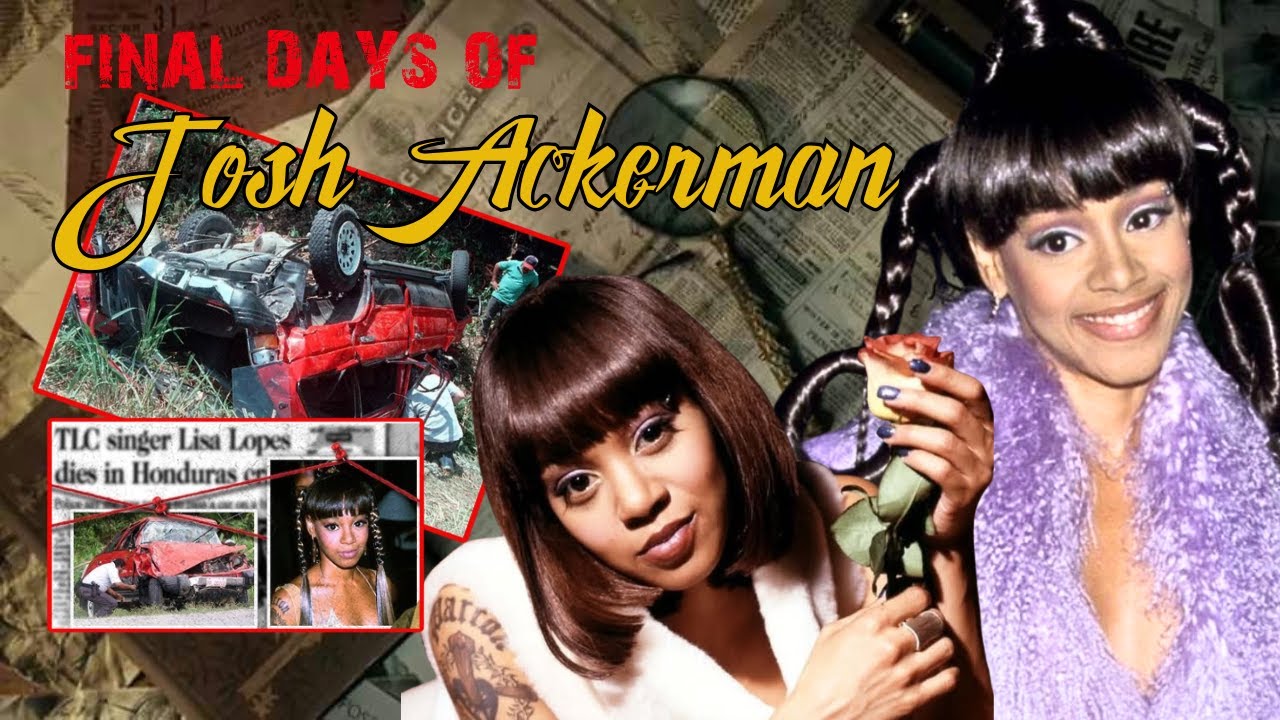
The serene images dissolved into a blur of green and brown, laughter replaced by twisting metal and screams. Lopes, who was not wearing a seat belt, was thrown from the vehicle. She died instantly from severe head and neck injuries. She was thirty years old, and the camera that had been documenting her search for a new life had instead captured the final seconds of her old one.
The woman who became known around the world as Left Eye was born Lisa Nicole Lopes on May 27, 1971, in Philadelphia. Her father, Ronald Lopes Sr. , was a staff sergeant in the U. S.
Army and a gifted musician who encouraged his children’s artistic talents, even forming a family gospel group called the Lopes Kids. But he also struggled with alcoholism, and his strictness frequently turned abusive. Lisa later described him as a Dr. Jekyll and Mr.
Hyde personality, capable of warmth one moment and terror the next. That upbringing forged in her a rebellious streak, a fierce independence, and a volatile temper, along with a restless search for the peace that had eluded her as a child. In 1990, at nineteen, she moved to Atlanta with a keyboard and seven hundred and fifty dollars in savings. Atlanta was becoming the center of a new wave of black music, driven by producers L.
A. Reid and Babyface and their LaFace Records. Lisa learned of an open audition for a girl group being organized by singer Perri “Pebbles” Reid. Her rapping style, sharp and rhythmic, along with her quirky fashion sense and bold creative ideas, made her an immediate standout.
She joined the group, initially called Second Nature, alongside Tionne Watkins and a singer named Crystal Jones. Lisa quickly established herself as its creative engine, renaming the group TLC after their first initials and adopting the nickname Left Eye after a man told her he was drawn to the slanted shape of her left eye. She embraced it as a symbol of her uniqueness, and soon made it her signature by wearing a condom over the left lens of a pair of glasses, a deliberate statement promoting safe sex during the height of the HIV/AIDS crisis. Crystal Jones was soon replaced by Rozonda Thomas, who took the nickname Chilli so the group’s acronym would hold.
The classic lineup of T-Boz, Left Eye, and Chilli was born. Under Pebbles’s management, TLC signed with LaFace Records, and in 1992 they released their debut album, Ooooooohhh… On the TLC Tip. The album was a vibrant fusion of hip-hop and R&B that stood out from the polished sounds dominating the charts, and Lisa’s high-energy raps were its secret ingredient.
It sold millions and announced the arrival of a new kind of girl group. Their sophomore album, CrazySexyCool, released in 1994, elevated them to extraordinary heights. It produced massive hits like “Creep” and “Red Light Special,” but its crowning achievement was “Waterfalls,” a cautionary tale about drug addiction, gang violence, and AIDS. Lisa’s rap verse on that song, a poignant plea to avoid self-destructive paths, became one of the most memorable moments in music history.
The album sold over twenty-three million copies worldwide, cementing TLC as the best-selling American girl group of all time and earning them Grammy awards. They were on top of the world. But while her career soared, Lisa’s personal life was unraveling. She was in a passionate, volatile relationship with Andre Rison, a star wide receiver for the Atlanta Falcons.
Their romance was marked by frequent violence and emotional abuse, a cycle of dramatic breakups and reconciliations that played out in public. On June 9, 1994, after a heated argument, Lisa set fire to a pair of Rison’s sneakers in the marble bathtub of their mansion, intending it as a symbolic act of frustration. The flames spread unexpectedly, igniting the fiberglass tub and engulfing the entire multi-million-dollar home. Lisa was arrested on arson charges.
Her mugshot circulated through the media, and she was swiftly branded the crazy member of TLC, a label that would cling to her for the rest of her life. She eventually pleaded guilty to a reduced charge of criminal damage and was sentenced to five years of probation, a ten-thousand-dollar fine, mandatory therapy, and treatment for alcohol abuse. T-Boz later offered a more compassionate view of the incident, saying, “She wasn’t a fire starter. She was just hurt.
”
The irony of their success was staggering. At the very moment TLC was becoming the biggest girl group in the world, they were broke. In 1995, at the peak of their fame, the group filed for Chapter 11 bankruptcy, claiming debts of over three and a half million dollars due to a contract they said had left them with almost nothing from the millions their music generated. The years that followed were a period of profound change for Lisa.
Court-ordered therapy pushed her to confront the trauma of her childhood, and she immersed herself in numerology, astrology, meditation, and holistic healing. She became a devoted follower of Dr. Sebi, a Honduran herbalist who preached veganism and natural cures. As TLC worked on their third album, 1999’s FanMail, creative tensions surfaced.
Lisa felt the group was moving away from its raw hip-hop roots toward polished pop, and that her raps were being sidelined. The album was another massive success, spawning the hit “No Scrubs,” but Lisa’s presence felt diminished. Her frustration boiled over in an open letter published in Vibe magazine, in which she challenged her bandmates to a public showdown, proposing that all three record solo albums and release them as a triple package called “The Challenge” so fans could decide who was truly the most talented member. The move was widely seen as an act of ego, but for Lisa it was a desperate plea for artistic freedom.
The challenge was never accepted, and the incident created a deep rift in the group, though they publicly reconciled. After the FanMail tour, Lisa pursued her solo ambitions and spent more and more time in Honduras at Dr. Sebi’s healing village. She considered it a sanctuary, a world away from the pressures of the music industry, where she could fast, meditate, and connect with nature.
She was setting up a children’s center there and had informally adopted a ten-year-old girl named Snow. It was during this time that she decided to make a documentary, filming her spiritual journey and reflections on her past, a raw, unfiltered portrait of the woman behind the persona. In the spring of 2002, she returned to Honduras for a thirty-day spiritual retreat with friends and family, her camera constantly rolling. The footage from this time shows her calm and thoughtful, talking about numerology and reincarnation.
But a dark cloud hung over the retreat. Weeks before her death, her personal assistant was driving a van when a ten-year-old Honduran boy darted into the road and was struck and killed. The boy’s name was Baron Lopes, the same last name as hers. The accident was ruled unavoidable, and no charges were filed, but Lisa was devastated.
She paid for the boy’s hospital expenses and funeral. The coincidence of the name haunted her, and she confided to those around her that she felt a malevolent spirit had been stalking her and had made a mistake, taking the boy instead. It was a chilling premonition. On April 25, 2002, Lisa and seven others were traveling in a rented SUV, heading to a nearby town.
She was at the wheel, her friend filming from the passenger seat. The footage showed a serene, beautiful road. Then came the attempt to pass the truck, the swerve, and the violent roll down the embankment. The camera kept recording.
Lisa Lopes was the only fatality. The documentary footage, eventually released as The Last Days of Left Eye, became a haunting artifact in pop culture history, a self-made portrait of a star’s final days ending in unplanned tragedy. Her death sent shockwaves around the world. But her significance had never depended on the circumstances of her end.
As the creative force of TLC, she had helped redefine what a girl group could be, tackling serious social issues with humor, style, and substance. With her condom glasses, her safe-sex advocacy, and her brilliant raps, she was the ideological and creative engine of the group, a female rapper who could be playful and political, a feminist icon unafraid of vulnerability. She spent her life fighting her traumatic past, the constraints of the music industry, and her own inner demons. She died in the place she had chosen as her sanctuary, at the moment she seemed closest to finding the peace she had searched for so desperately.
Lisa Lopes was so much more than the crazy one. She was the creative one, the searching one, the unforgettable one.
