The shot came from behind, and Dallas Stoudenmire never saw it. James Manning, standing at his back, fired twice. The first bullet chewed into a barber’s post. The second struck behind Stoudenmire’s left ear, and the man widely regarded as the fastest shooter in the American West dropped dead on an El Paso street, killed by a man he had come to meet in the name of peace.
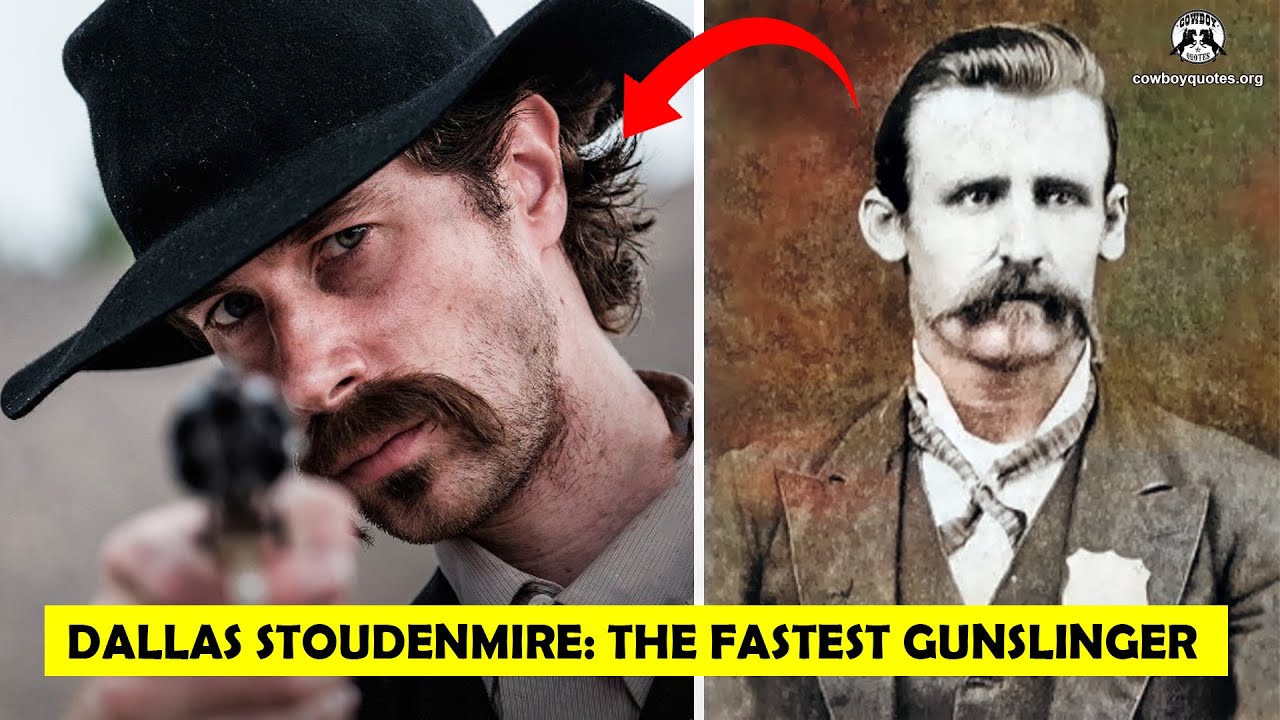
It had all started with a reputation. Dallas Stoudenmire was born on December 11, 1845, in Aberfoil, Alabama, one of nine children of Lewis and Elizabeth Stoudenmire. In 1862, still a teenager, he joined the Union Army’s 45th Alabama Infantry Regiment. Wartime service in the old West left him wounded multiple times, and he carried two bullets in his body for the rest of his life.
When the war ended, around 1867, he drifted toward Columbus, Texas, where his legend began to build. Standing an imposing six feet four inches tall, Stoudenmire cut a striking figure. He was handsome, well dressed, and possessed a charisma that made him popular with the ladies. But beneath that elegant exterior ran a volatile temper, one that flared dangerously whenever he drank.
In Columbus, he devoted himself to honing his shooting skills, practicing diligently with both hands and always carrying a pair of guns. He worked a scattered set of trades—sheep herding, carpentry, construction, and trading—but the marksmanship was the talent that would define him. In 1874, he joined the Texas Rangers, serving as second sergeant in the company of J. R.
Waller. He spent brief periods in the Texas Panhandle, ventured into Mexico during the days of Maximilian’s rule, and served for a time as a field marshal in Socorro, New Mexico. It was in Socorro that his brother-in-law, Doc Cummings of El Paso, Texas, convinced him to move to El Paso and take on the same role there. El Paso was notorious for its lawlessness, and the town was looking for an outsider to establish order.
Stoudenmire seemed the perfect fit. In early April 1881, he arrived in El Paso and wasted no time beginning his new position. On April 11, he became the town’s sixth town marshal in just eight months. His initial assignment set the tone for his tenure.
A deputy sheriff named Bill Johnson was in town, drunk, and in possession of the key to the city prison. Stoudenmire needed that key, but Johnson, in a drunken stupor, said he would go home and determine which key was the right one. Stoudenmire grew impatient and demanded the key immediately. As Johnson continued to delay, Stoudenmire forcefully overturned him, retrieved the key, and threw the man to the ground.
It was a humiliation Johnson would not forget—and one that would later prove costly. Just three days later, on April 14, 1881, Dallas Stoudenmire took part in one of the most famous gunfights in Texas history. It became known as the Four Dead in Five Seconds Gunfight. The trouble started in the King Saloon, a hotbed of lawlessness in El Paso.
Constable Gus Krempkau got into an argument with George Campbell, the former city sheriff, who was drunk and unarmed. Campbell’s accomplice, John Hale, snatched one of Campbell’s pistols and exclaimed, “George, I protected you. ” Hale then shot Krempkau, wounding him. Krempkau, bleeding, sought refuge by banging desperately on the pub door.
Dallas Stoudenmire witnessed the chaos and appeared with his pistol drawn, just as Hale took cover behind a nearby column. Stoudenmire fired, but the bullet deflected and struck an innocent Mexican bystander. Hale then ventured out of his hiding spot, and Stoudenmire resumed shooting, aiming expertly between Hale’s eyes and killing him instantly. Meanwhile, Campbell, witnessing Hale’s death, left the pub brandishing his gun and shouting, “Gentlemen, this is not my fight.
” But the wounded Krempkau vehemently protested. He retaliated by shooting Campbell, wounding his wrists and toes. At the same time, Stoudenmire turned his attention to Campbell and fired three bullets into the man’s stomach. Campbell, kneeling in the dusty road, shouted in a shrill voice, “You scoundrel, you killed me.
”
When things settled down, both George Campbell and Constable Krempkau were dead. Within less than five seconds, four people had been killed—a scene so fast and chaotic it was almost comical. Three days later, on April 17, violence hit the streets again. This time, the target was Stoudenmire himself.
The Manning brothers, influential men and allies of Hale and Campbell, persuaded the drunken Bill Johnson to carry out a plot to assassinate the marshal. But Johnson, still nursing the humiliation Stoudenmire had inflicted upon him, was hesitant to carry out the betrayal. Taking cover behind a large brick pillar with a shotgun, Johnson waited for his chance. Moments later, he recognized the voices of Stoudenmire and his brother-in-law, Stanley “Doc” Cummings, approaching.
As he tried to aim his weapon, his legs began to wobble. He fell backward, accidentally discharging both barrels into the air. Stoudenmire quickly pulled out a pistol, shot Johnson, and ended his life. Furious, the Mannings were determined to avenge their fallen comrades.
But Stoudenmire took a zero-tolerance stance against the lawlessness raging in El Paso. From the time Johnson was killed through the following February, he killed six more men in shootings during arrests. The city’s crime rate dropped dramatically, and Stoudenmire’s reputation as both a lawman and a gunman grew. In February 1882, Dallas made the short journey back to his hometown of Columbus, Texas, where he married Isabella Sherrington.
During his absence, however, a tragic event occurred. On February 14, a dispute broke out at the Coliseum Saloon, owned by James Manning. Both Manning and Stoudenmire’s brother-in-law, Stanley “Doc” Cummings, were present. The two began arguing, and the dispute quickly escalated, turning the pub into a gunfight.
Hit by bullets, Cummings staggered out of the pub and fell onto the dusty road, screaming in pain. He died there. Manning faced arrest, but at trial it was determined that he acted in self-defense. The jury, which included local residents and many friends of Manning, acquitted him.
The news sent a furious rage through Stoudenmire. Enraged, he sought solace in heavy drinking and frequently confronted those he believed were responsible for Manning’s acquittal. The situation became so tense that many people chose to avoid venturing into town or going to the pubs for fear of encountering him. Despite his legal acumen, his actions began to lose favor with the local community.
And as a newcomer in a town where Manning boasted many friends, matters were complicated. By May 27, 1882, the townspeople’s exasperation had reached its peak. The council issued a resolute announcement of its intention to fire the sheriff. But when Stoudenmire, drunk, confronted them and challenged them to take his gun or his job, they quickly retreated.
Just two days later, a sober Stoudenmire voluntarily resigned. He went on to manage the Globe Restaurant, a business formerly owned by his late brother-in-law, Doc Cummings. In July, he also assumed the role of Deputy Marshal of the United States. But this did not quell his tendency to settle disputes with guns, and the lingering feud with the Manning brothers continued.
The hostility ran so deep that the townspeople forced Stoudenmire and the Mannings to publicly declare a peace treaty, which was posted in the El Paso Herald. Unfortunately, whenever Stoudenmire got drunk, his threats continued, casting a dark shadow over the fragile truce. On September 18, 1882, Stoudenmire and the Manning brothers—Doc, Frank, and Jim—met at a local pub to make what they called a peace treaty to end their feud. It didn’t take long for tensions to reemerge between Doc and Dallas, rekindling their argument over the original peace treaty.
In the blink of an eye, Manning and Stoudenmire pulled out their pistols and fired. A friend of Stoudenmire tried to push both men apart, causing Stoudenmire to lose his balance. Doc’s first bullet lodged in Stoudenmire’s left arm. The second lodged in his shirt pocket, where he kept papers.
It didn’t penetrate his skin, but the strong impact pushed him backward, smashing him against the pub door and eventually sending him into the street. Under the circumstances, Stoudenmire, known for his ability to shoot with both hands, quickly grabbed his remaining gun and fired at Doc as he walked through the door, hitting him in the arm. But James Manning, from behind Stoudenmire, fired twice. One shot hit the barber’s post.
The other hit behind Stoudenmire’s left ear, killing him. After the tragic death of the marshal, James and Doc Manning were tried for murder but acquitted again, with the jury consisting mostly of their friends. Stoudenmire’s funeral was held at the Masonic Lodge in El Paso. His wife, Isabella, later shipped his body to Columbus for burial.
All funeral expenses were paid by the Masonic Lodge. Stoudenmire is buried at the Alton Cemetery in Colorado County, Texas.
