On the night of June 27, 1982, Frank Fiala stood outside the Plaza Suite disco on 86th Street in Gravesend, Brooklyn, surrounded by the glitter of a nightclub he believed he was about to own. He had arrived in a Rolls-Royce, and the closing on the property was scheduled for the next day. Hundreds of thousands of dollars were already tied up in the deal. Fiala thought he had purchased a nightclub.
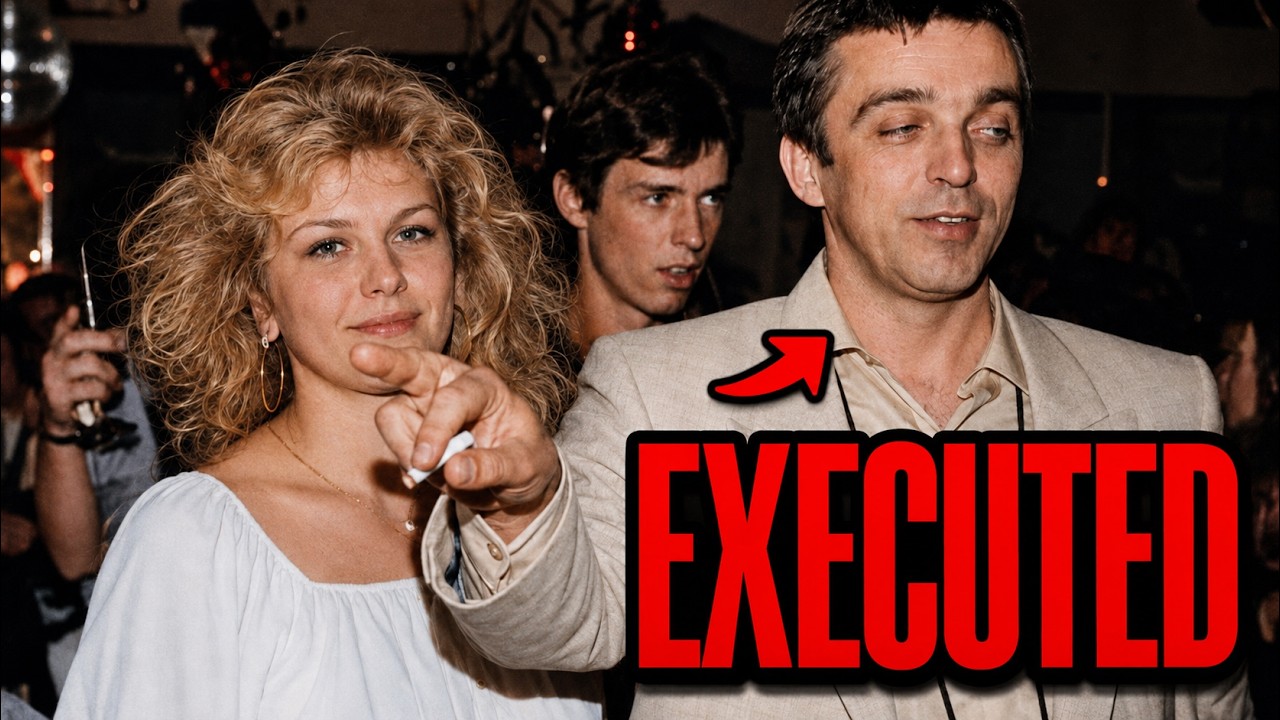
In reality, he had walked into a collision with Sammy Gravano, and before the night ended, the sidewalk outside his new investment would become the scene of his murder. The first reports out of New York told a sensational crime story. A millionaire buying a nightclub, attacked in public by masked gunmen. Police described a deliberate killing at close range, carried out in front of terrified witnesses.
But that was only the visible end of it. Behind it lay a million-dollar deal built on official payments, hidden money, and conflicting stories about who really controlled the club. The true story was not simply that a drug dealer had angered a mobster. Fiala had challenged Gravano inside the one place that represented Gravano’s money, reputation, and power.
Then Gravano assembled his crew, set an ambush outside the club, and carried out a murder without first obtaining permission from the Gambino family boss, Paul Castellano. That decision nearly turned the killers themselves into targets. It exposed the nightclub deal’s hidden payments to tax authorities, dragged a future mafia boss into court, and showed how quickly a profitable transaction could become a death sentence when ownership and insult collided. Frank Fiala had come a long way from a machine shop apprentice.
Born in Czechoslovakia, he arrived in the United States with little money, according to police accounts of the time. He started as an apprentice at a Brooklyn company that manufactured machine parts and eventually became its owner. By the time of his death, police described him as a millionaire who owned two small airplanes, a Rolls-Royce, and a Cadillac limousine. He had a wife from whom he was separated and two children living in Virginia Beach.
Those human details rarely survived in the legends that grew around his killing. His public image became that of the wealthy, reckless buyer of nightclubs. But there was also a family that would receive the news that the man they knew had been murdered on a Brooklyn sidewalk. Law enforcement reports presented Fiala as a businessman.
Organized crime accounts later described him as a major cocaine dealer. Some sensational claims about his private life and business interests surfaced after his death, but the essential confirmed facts were simpler. He possessed considerable wealth. He wanted the Plaza Suite, and he acted as if money gave him power over men who measured power by different standards.
Fiala first paid what was said to be $40,000 to rent the entire club for his birthday celebration. That sum alone made the event extraordinary. He did not want a table and a bottle. He wanted the whole place.
That night displayed his money, his entourage, and his appetite for attention. It also put Fiala in direct contact with the club’s operators. According to Gravano’s later account, Fiala carried cocaine, shared it openly, and treated the staff as if they already worked for him. He did not enter cautiously.
He was testing how far his wealth would let him go. Shortly afterward, he proposed buying the Plaza Suite. Here the numbers become important, and the historical records demand careful handling. Contemporary reports described a documented sale price that was lower, plus a large cash payment kept off the books.
Gravano later testified and told writers that the full value of the agreement was one million dollars. His account described a combination of advance payments, hundreds of thousands hidden from the official closing, and a final payment tied to the transfer of ownership. The exact breakdown of the sums varies between different accounts. In Gravano’s 1992 testimony, attorneys referenced $650,000 placed in escrow as part of a one-million-dollar purchase.
Other accounts describe gold bars or cash as part of the hidden portion. What is not seriously disputed is that the public contract did not tell the full financial story, and that the amount was far more than Gravano thought the club was worth. That should have made Fiala the perfect buyer. Gravano could take a huge profit and walk away.
But underworld business was never only about the final number. Money determined who had the right to buy an asset. Behavior determined who controlled the place until ownership legally changed hands. Fiala began acting as if the closing had already happened.
He moved into Gravano’s office, issued directions, and interfered with staff matters. Gravano later claimed that Fiala appeared armed with an Uzi and pointed it at him or pressed it against his chest during a confrontation. At John Gotti’s 1992 trial, defense attorney Albert Krieger challenged Gravano about the killing. Gravano answered that Fiala had put a machine gun on his chest.
That testimony matters because it is an admission from the man who ordered the murder, not an independent record of the confrontation. Gravano had reasons to portray Fiala as dangerous. Still, his account explains the psychology behind what happened next. Gravano believed that Fiala had barged into his headquarters, taken over his office, brandished a weapon, and humiliated him in front of people whose respect sustained his authority.
For an ordinary seller, the solution would have been to cancel the deal, call a lawyer, or involve the police. Gravano could not do any of that without admitting weakness or exposing the hidden structure of the sale. He interpreted the confrontation through mafia logic. If Fiala could threaten him in his own office and then walk away, every employee and partner who heard about it would reevaluate Gravano’s reputation.
The goal was no longer the club. The goal was obedience. Gravano left the Plaza Suite and began calling his men. The group he assembled included figures later identified as Louis Milito, Joseph Siami, Angelo and Eddie Garofalo, Nicholas “Nicky Cowboy” Mormando, Michael DeBatt, Thomas “Hawk” Carbonaro, and others mentioned in Gravano’s accounts.
These men were not hired strangers. They belonged to the network that operated around his businesses and enforced his status. Each man had a purpose. Some waited in vehicles or at nearby positions.
Some watched Fiala’s entourage. DeBatt, who worked at the door, could remain visible without arousing suspicion. Mormando was said to be positioned to respond if Fiala’s companions drew weapons. This arrangement turned the ordinary entrance of a nightclub into a controlled zone.
This was how violence worked as a management tool. Gravano did not simply explode in anger at the office and attack Fiala alone. He left, gathered a workforce, distributed his men in the street, and used the club’s routine to make Fiala predictable. The same staff who had been admitting customers now controlled who passed through the entrance.
The same parked cars that blended into the Brooklyn scene could hide armed accomplices. Fiala’s wealth could buy airplanes, cars, and a nightclub contract. It could not buy an understanding of the organization surrounding the club. He seemed to believe the dispute was between two businessmen, one of whom had finally been pushed out.
Gravano saw a challenge that had to be answered before sunrise. Shortly before two in the morning, Fiala appeared outside the Plaza Suite among the customers waiting to get in. Police reports at the time stated that masked gunmen attacked him. Gravano’s later account placed the crew’s positions and his own presence more directly.
In that version, Gravano called out to Fiala to get his attention, and Milito approached from behind. The attack was immediate and deliberately public. The precise criminal details reported at the time were shocking and need not be repeated. What matters is what dozens of people understood.
A millionaire who thought he had taken control of the club was killed directly outside it. The violence was not hidden in a remote field. It happened under social pressure from witnesses, lights, cars, and people scrambling for safety. Fiala was taken to Coney Island Hospital, where his death was pronounced.
He was thirty-seven years old. His Rolls-Royce, the scheduled closing, and the wealth attached to his name suddenly became pieces of a criminal investigation. The public saw masked attackers. The crew saw something else.
They saw Gravano responding to an insult with coordinated force. The murder cemented his immediate reputation, but it also created dangers he had not resolved. First came the police. The number of witnesses should have made the case easier, but fear and confusion protected the participants.
People saw movements and violence, but identifying each man and proving who ordered the attack required cooperation that was not readily available. Club staff and associated partners understood the price of helping. Later accounts alleged that corrupt NYPD detective Louis Eppolito received money to suppress or undermine the investigation. Eppolito was eventually exposed as a detective who had been providing information and services to organized crime.
However, the claims about the exact amount in the Fiala case rely heavily on later underworld accounts and should be treated as allegations rather than a proven explanation for every gap in the investigation. The second danger came from inside the Gambino family. Gravano had ordered the killing of a prominent figure without first obtaining permission from boss Paul Castellano. The mafia’s permission system protected the hierarchy.
A soldier who could carry out an independent public murder might attract law enforcement, disrupt another member’s interests, or begin acting like a boss. Castellano was reportedly furious. Gravano and Milito were summoned to explain themselves. For days, the men involved did not know whether the family would accept Gravano’s justification or decide he had crossed a line.
The crew that had surrounded Fiala now had to consider the possibility that Gambino members might surround them. Gravano defended his decision by emphasizing the weapon, the threat, and the need to act quickly. He also argued that keeping Castellano uninformed had protected the boss from any direct connection to the crime. It was a clever manipulation of the situation.
The absence of permission became, in Gravano’s telling, an act of loyalty. Castellano allowed Gravano to live. That outcome reinforced the lesson Gravano drew from the murder. Decisive violence could create a crisis, but if the justification protected the boss and the family, the rules could bend.
Fiala had believed money gave him control. Gravano learned that successful violence could give him room to negotiate after the fact. The third danger was financial. The murder drew attention to the proposed sale, and the sale contained money that would not fit into a public contract.
Investigators and tax authorities began asking what Gravano had received, how the deal had been structured, and whether the income had been reported. The nightclub’s price became evidence. The hidden payment that made the deal attractive also made it vulnerable. Fiala could no longer give his version of events.
Gravano faced a tax evasion case connected to the transaction, represented by attorney Gerald Shargel. He was ultimately acquitted, but the case proved the arrangement’s inherent flaw. The murder did not erase the money. It put a spotlight on it.
At the Gotti trial a decade later, defense attorneys used the Fiala killing to attack Gravano’s credibility and motives. Krieger suggested that greed, not fear alone, lay behind the murder and asked what had happened to the $650,000. Gravano insisted that Fiala’s wife eventually received most of the money and rejected the claim that he had killed only to keep the purchase funds. That exchange revealed two competing versions that still shape the story.
Gravano’s version says a heavily armed and unstable smuggler barged into his office and posed a direct threat. The opposing version says Gravano had a financial motive to eliminate the buyer after receiving a huge amount of money. Both motives could have existed at the same time. Money and humiliation were not separate forces in the underworld.
Together, they made the conflict far more dangerous. Not all the men who helped Gravano enjoyed long careers. Joseph D’Angelo was killed later in 1982. Nicholas Mormando was killed in 1986 after Gravano came to consider him unstable and disloyal.
Michael DeBatt was killed inside his own bar in 1987 after drugs and paranoia made him seem dangerous to the crew. Louis Milito, one of Gravano’s closest associates, was killed in 1988. Think about what connected these men to one another. They answered Gravano’s call on the night Fiala was killed.
They positioned themselves outside the Plaza Suite and shared the knowledge of an unauthorized murder. Within six years, many of them were dead, some on Gravano’s orders. One man built the machine, and the others became its weapons. Then the machine consumed the weapons.
In 1991, facing federal racketeering charges alongside John Gotti, Gravano became a government witness. He admitted involvement in nineteen murders and described crimes that had stayed hidden in the streets for years. The killings he had justified by protecting his reputation became part of the testimony he used to save himself from spending the rest of his life in prison. Here the entire idea of mafia loyalty collapses.
The alliance trusted money. Gravano trusted power. The associates trusted Gravano.
In the end, every form of trust proved temporary.
