The Sackler family’s empire was not built in a boardroom but at a kitchen table in Brooklyn during the Great Depression. Isaac Sackler, a failed grocer, gathered his three sons—Arthur, Mortimer, and Raymond—and told them he had lost everything. The only possessions that could never be taken away, he said, were a good name and an education. He charged Arthur, the eldest, with saving the family from ever knowing poverty again.
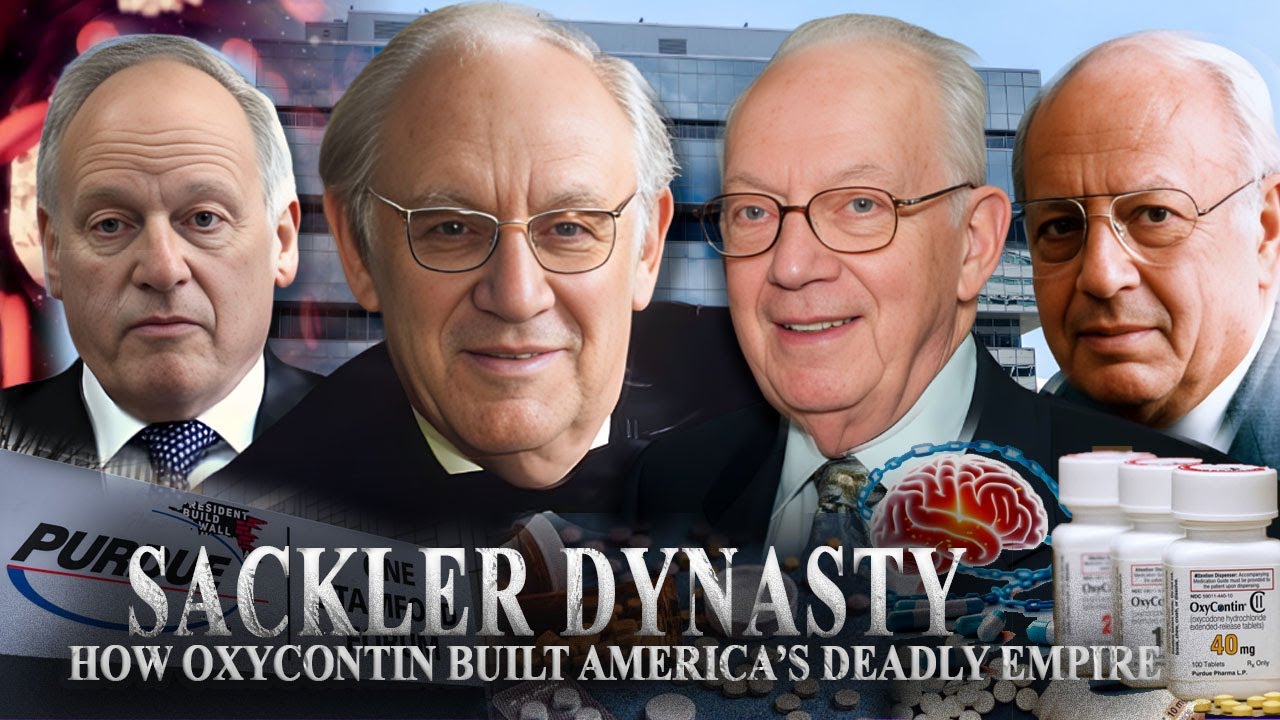
Arthur Sackler took that mission with ferocious intensity. By the 1940s, all three brothers had become doctors, achieving the immigrant dream. But Arthur was living a double life. By day, he was a respected psychiatrist at the Creedmoor Psychiatric Center in Queens.
By night, he was building a career in medical advertising, a field he would transform into a weapon. He believed doctors were not just scientists but consumers who could be manipulated like anyone else. So he bypassed patients entirely and targeted the prescribers. He bought the William Douglas McAdams ad agency in 1947 but kept his name off the door, using his medical credentials to lend scientific legitimacy to drugs he was paid to sell.
His breakthrough came in the 1950s with Pfizer and the antibiotic Terramycin. Arthur launched an unprecedented marketing blitz, flooding doctors’ mailboxes, ghostwriting scientific papers, and hiring armies of salesmen. The drug broke sales records, and Pfizer became a pharmaceutical giant. Arthur had proven that with enough marketing, a mediocre drug could become a blockbuster.
In 1952, the brothers pooled their money to buy a struggling patent medicine company called Purdue Frederick. It was tiny, selling laxatives and earwax removers, but it was wholly owned by the brothers, which meant no shareholders, no disclosures, and no oversight. It was the perfect vessel for their ambitions. While Mortimer and Raymond ran Purdue, Arthur landed the contract that made him one of the richest men in America.
In the 1960s, the Swiss pharmaceutical giant Roche hired him to market Valium. Arthur marketed it not just for severe anxiety but for the stress of modern life, aimed specifically at women. By the 1970s, Valium was the most prescribed drug in the Western world. It was also highly addictive, a fact Arthur and Roche consistently downplayed.
When regulators raised alarms, Arthur blamed the patients’ “addictive personalities” rather than the drug. Flush with cash, Arthur began buying immortality. He amassed a staggering art collection and donated millions to institutions on the condition that the Sackler name be displayed in perpetuity. There was the Sackler wing at the Metropolitan Museum of Art, the Sackler Gallery at the Louvre, and Sackler centers at universities worldwide.
The family had risen from poverty to the pinnacle of high society, and they were determined to stay there. The turning point came in the 1990s, when Mortimer’s son, Richard Sackler, took control of Purdue. Richard had inherited his uncle Arthur’s marketing philosophy but paired it with a product that would prove catastrophic. The company had developed a time-release formulation of oxycodone, a powerful opioid that was cheap to produce and carried less stigma than morphine.
The pill, named OxyContin, delivered doses ranging from 10 to 160 milligrams of pure oxycodone. It was a chemical cousin of heroin, but the company’s theory was that the time-release mechanism would prevent the euphoric rush that drove addiction. To sell a narcotic this powerful to family doctors, Purdue needed the blessing of the FDA. In 1995, the FDA approved OxyContin and allowed Purdue to place a sentence on the label stating that delayed absorption was “believed to reduce the abuse liability of the drug.
” It was a hypothesis, not a proven fact, but it gave sales representatives the ability to tell doctors the FDA had declared the drug safer. The FDA reviewer who signed off on the label, Dr. Curtis Wright, left the agency within a year and took a nearly $400,000-a-year job at Purdue. The launch in 1996 was not a typical pharmaceutical rollout.
It was a cultural crusade. Purdue poured millions into organizations that championed “pain as the fifth vital sign,” pressuring doctors to treat pain with the same urgency as blood pressure. They recruited a sales force of young, attractive, fiercely competitive representatives with uncapped commissions. They bought prescription data to identify the doctors already prescribing opioids heavily—often general practitioners in poor rural areas—and targeted them relentlessly.
They hosted all-expenses-paid conferences at luxury resorts, where doctors were lectured by key opinion leaders on Purdue’s payroll. The central claim was a deadly lie: that the risk of addiction was less than one percent. The financial results were staggering. In its first year, OxyContin generated $48 million in sales.
By 2000, that figure had exploded to nearly $1. 1 billion. The Sackler family, who owned the company outright, watched their wealth compound at a rate that rivaled the robber barons of the Gilded Age. But in the coal fields of Appalachia and the fishing towns of Maine, the first signs of catastrophe were appearing.
Users had discovered that crushing the pill destroyed the time-release mechanism, turning a safe medicine into a hit chemically almost indistinguishable from heroin. The drug earned a dark nickname: hillbilly heroin. Internal emails later revealed that Richard Sackler was aware of the rising body count. In 2001, a federal prosecutor in Maine warned the company that the drug was decimating entire communities.
Richard’s response was to demonize the victims. “We have to hammer on the abusers in every way possible,” he wrote. “They are the culprits and the problem. They are the reckless criminals.
” The company adopted a strategy of aggressive denial, blaming addicts rather than the product. When the US attorney who had sounded the alarm left government, Purdue hired him. The first major legal blow came in 2007. A tenacious US attorney in Virginia uncovered internal documents proving Purdue had lied about the drug’s addictiveness.
Facing a federal felony indictment, the company agreed to plead guilty to misbranding and pay a $600 million fine. But the Sackler name appeared nowhere in the indictment. The executives took the fall, and the family secured a non-prosecution agreement. They had bought their immunity for less than six months of OxyContin profits.
The fine did not deter them. In the years that followed, they turbocharged sales, paying themselves the vast majority of their fortune. When the patent on OxyContin was about to expire in 2010, they released a new, harder-to-crush version and successfully lobbied the FDA to ban the old generics. Millions of Americans who were addicted could no longer get high from the new pills, so they turned to heroin.
The Mexican drug cartels were waiting. Overdose rates exploded, and the prescription opioid epidemic became an illicit drug epidemic. The Sacklers had created a market of addicts with a pharmaceutical product, then handed that customer base over to the cartels. The legal walls began to crumble in 2017.
Journalist Patrick Radden Keefe published an exposé in the New Yorker, “The Family That Built an Empire of Pain,” explicitly linking the Sackler name on museum walls to the crisis on the streets. Then an artist named Nan Goldin, herself an OxyContin addict who had survived an overdose, brought the fight to the temples of high culture. In March 2018, she led a die-in at the Metropolitan Museum of Art’s Sackler wing, throwing hundreds of orange prescription bottles into the reflecting pool. The imagery went viral, shattering the family’s philanthropic shield.
That same year, the Massachusetts attorney general filed a landmark lawsuit naming eight individual Sackler family members as defendants. The complaint publicized their internal emails, revealing their disdain for victims and their personal involvement in pushing the drug. The floodgates opened. Nearly every state in the Union filed suit, and the potential liability reached into the trillions.
In September 2019, Purdue filed for Chapter 11 bankruptcy. The maneuver froze all litigation and, in a controversial ruling, the judge extended the temporary protection to the Sackler family themselves. They had used the bankruptcy court to shield their personal billions without declaring bankruptcy. For the next four years, the proceedings became a hostage negotiation.
The family offered to pay $3 billion in exchange for permanent, global civil immunity. Forensic accountants estimated their total wealth at around $11 billion, meaning they could pay the fine entirely from interest without touching their principal. In June 2024, the Supreme Court of the United States rejected the deal in a 5-to-4 ruling. The court ruled that American law does not allow billionaires to wipe away legal claims against them without filing for bankruptcy themselves.
The shield of immunity was shattered, and the family was exposed once again to the full force of the American legal system. The Sacklers have lost their company and their reputation, but not their wealth. They remain one of the richest dynasties in the world, their billions safely stashed in offshore trusts. Their name has been chiseled off museum walls and university buildings across the globe, a social execution no court could have ordered.
But the destruction they left behind endures. The opioid epidemic has killed more than half a million Americans, a death toll higher than all US combat casualties since World War II. It has overwhelmed foster care systems, filled hospitals with babies born in withdrawal, and hollowed out the workforce of the rust belt. The Sackler legacy is a story of unintended consequences on a planetary scale: a family that tried to buy immortality with philanthropy achieved the exact opposite—permanent historical infamy.
They are the wealthiest pariahs on earth, rich beyond measure, but stripped of the only thing their patriarch told them mattered most.
