In the late summer of 1941, as German armies drove deep into Soviet territory, a small and unusual unit arrived at the front lines: thirty dogs and forty trainers. This unit was not meant to scout, deliver messages, or guard positions. Each dog carried an explosive charge strapped to its back, designed to detonate when the animal ran underneath an enemy tank. The Soviet Union had committed itself to a tactic so desperate and so costly that within two years it would be abandoned altogether.
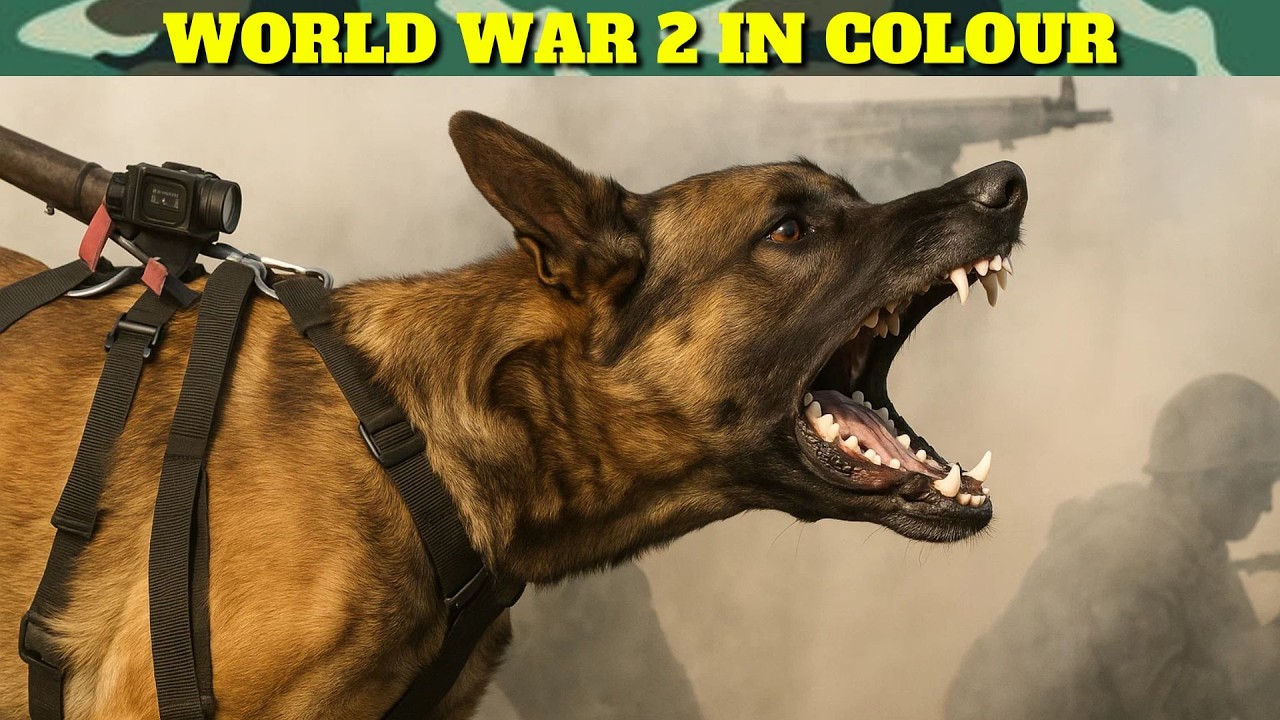
The idea of using dogs as weapons against armor had originated in the Soviet Union during the 1930s. As the Red Army watched the growing power of tank forces across Europe, it searched for unconventional counters to armored warfare. A specialized training facility was established on the outskirts of Moscow, and the military recruited top animal scientists to develop the program. Because professional dog trainers were scarce in the Red Army, the effort drew on the skills of hunters, police trainers, and even circus animal handlers.
The breed chosen for the mission was primarily the German Shepherd, valued for its intelligence and trainability, though other breeds were also considered. By 1935, anti-tank dog units had been formally incorporated into the Red Army. Training the dogs proved far more difficult than the planners had expected. The original concept called for the dogs to carry a bomb, place it near a target, and then return to safety.
The animal was meant to pull a self-releasing belt with its teeth, dropping the bomb, which would then be detonated by a timer or remote control. But this method was too complicated for the dogs, especially when the target was moving. Dangerous situations arose when the dogs returned to their handlers with the bomb still attached. The training failures forced a shift in approach, and the program adopted a simpler and far more brutal method.
The bomb, now designed to detonate upon contact, was permanently attached to the dog, which was trained to run underneath enemy tanks. Each mission meant the certain death of the animal. The training process itself was built on the dogs’ basic instincts. The animals were kept hungry and fed under tanks, creating an association between armor and nourishment.
Exercises began with stationary tanks, then progressed to tanks with running engines, and finally to moving tanks, all amidst blank gunfire intended to acclimate the dogs to the chaos of battle. Each dog was fitted with a harness holding a 12-kilogram mine, divided into two canvas bags for balance and comfort. A wooden lever, about 20 centimeters tall, protruded from a pouch on the harness and was connected to the detonation mechanism. When the dog dove under a tank, the lever struck the underbelly, triggering the explosive charge.
The undercarriage of an armored vehicle was more thinly protected than its front or sides, making it vulnerable to a smaller charge. Once the safety pin was removed before deployment, arming the charge, there was no turning back. These mines had no disarming mechanism and were made expressly for one destructive use. The strategy was intended not only to disable tanks but also to create psychological pressure on enemy forces.
When the first group of anti-tank dogs and their trainers reached the front lines in the late summer of 1941, they soon faced problems that had not appeared in training. A critical flaw was the difference in fuel between Soviet and German tanks. The Soviet vehicles used in training were diesel powered, while German tanks ran on gasoline. Dogs relied heavily on their sense of smell, and in the field they sought out the familiar scent of Soviet vehicles rather than the unfamiliar smell of German tanks, leading to friendly fire incidents.
The gap between the training ground and real combat conditions proved even more serious. On the battlefield, the dogs faced maneuvering German tanks actively engaged in fighting. Some dogs, instead of diving under moving tanks, ran alongside them and waited for the tanks to stop, only to be shot by enemy soldiers. Many animals were terrified by the noise and explosions and fled back toward the Soviet trenches.
Occasionally, dogs carrying unexploded bombs would trigger their charges among their own soldiers. A policy was put in place to shoot returning dogs, a task often left to the handlers, who had formed strong bonds with the animals. The psychological toll on the handlers was severe, and a depressive atmosphere settled over the canine units. Of the initial thirty dogs deployed, only a handful managed to detonate their bombs near German tanks.
German troops shot three dogs and took them away for analysis, revealing the detonation mechanism. Armed with this knowledge, German forces adapted their tactics to account for the Soviet anti-tank dog program, despite regarding it as desperate and inefficient. The dogs were small and fast, making them difficult to spot and hard to target. They were also too low to the ground for the top-mounted machine guns of armored vehicles to be effective against them.
In response, German troops were ordered to shoot any dog on sight in combat areas. A German propaganda campaign sought to discredit the Red Army by claiming that Soviet soldiers refused to fight and sent dogs instead. As the Eastern Front intensified and the German Army advanced toward Moscow, the Soviet Union increased its use of anti-tank dogs despite uncertainty about how effective they truly were. Of the 40,000 dogs the Red Army used for a variety of tasks during this period, the majority of training facilities concentrated on breeding anti-tank dogs.
This was an era of desperate measures, as the Red Army sought to halt the German panzers at any cost. There were documented moments of success. Near Stalingrad airport, anti-tank dogs reportedly destroyed a number of German tanks. During the Battle of Kursk, dogs were also reported to have disabled multiple tanks that had broken through Soviet lines.
But these isolated achievements were overshadowed by the program’s overall impracticality and its heavy cost in both human life and resources. By late 1942, the use of anti-tank dogs had drastically declined, and by the end of 1943 it was discontinued altogether. Training facilities shifted their focus to sentry duty and mine detection. This change reflected a growing recognition of the program’s limits and served as a sober reminder of how far military innovation could push itself during times of dire need.
The overall effectiveness of the anti-tank dogs remains disputed. Soviet records claim that approximately 300 German tanks were damaged by these animals, but a large number of Russian historians and military analysts consider those figures inflated for propaganda purposes, intended to justify the substantial resources poured into the program. Independent assessments suggest that the actual impact on German armored units was minimal. Notably, anti-tank dog training persisted in the Soviet Union during the Cold War and was only discontinued in June 1996, closing a controversial chapter in military history.
The use of animals as disposable weapons, unconventional and ultimately unsuccessful, proved mainly ineffectual and burdened by unforeseen tactical difficulties, particularly when the animals had to adjust to shifting and unpredictable battle environments.
