On the morning of Tuesday, 22 May 1934, Lawrence Major watched from the window of the family home in Kirkby on Bain as his father stepped outside to attend to his bicycle. The boy, still young, noticed something wrong at once. Arthur Major was unsteady on his feet, trembling as he moved. Lawrence called for his mother, and together they went out, catching Arthur just as he was about to fall.
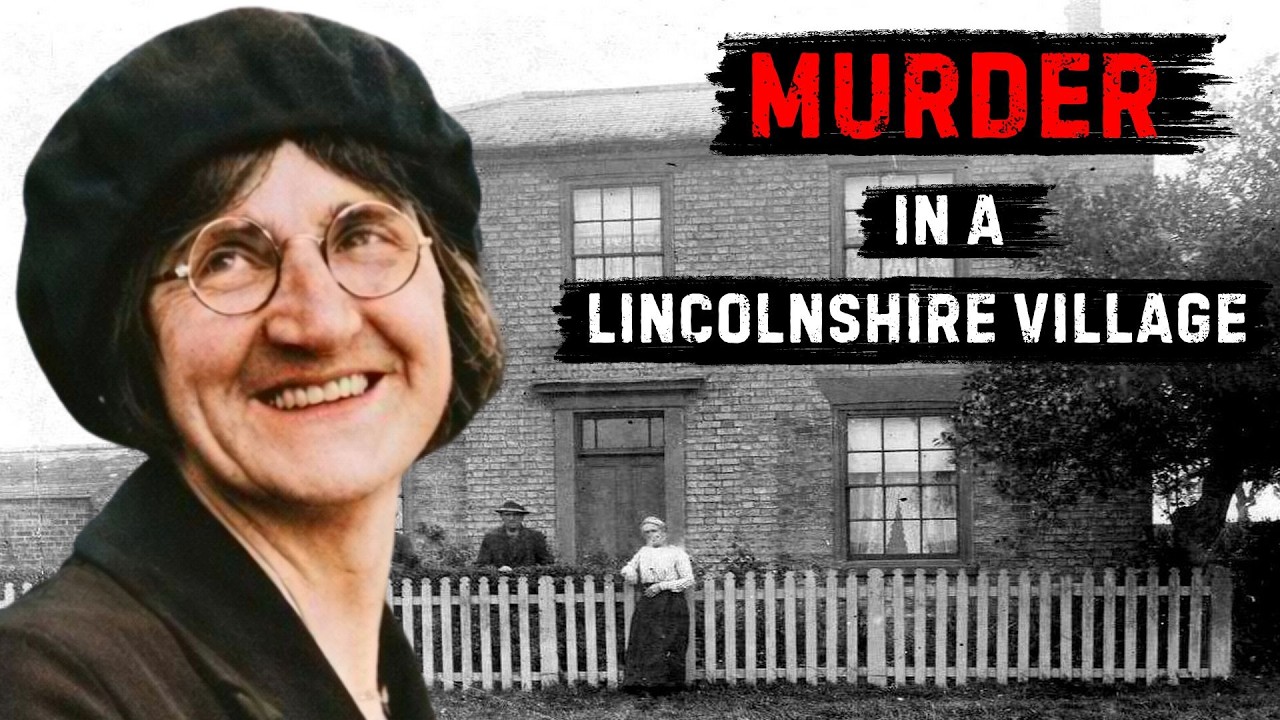
Ethel Major told her son that perhaps the corned beef he had eaten had not agreed with him. Arthur had come downstairs at about half past six that morning and left for work without breakfast. By mid-afternoon he was sitting in the front room with his head in his hands, a plate of leftover corned beef and a cup and saucer containing sugar and milk on the table before him. Two hours after his collapse, a worried Lawrence fetched his grandfather, Tom Brown, who was shocked by what he found.
Arthur was in obvious distress, foaming at the mouth and in severe pain. Tom immediately told Lawrence to fetch a doctor, expressing surprise that one had not already been called. When Dr. Frederick Smith arrived, he noted that Arthur Major was sweating heavily and suffering from convulsions.
Ethel told the doctor that her husband had experienced similar seizures over the last two years. Dr. Smith prescribed a sedative and some medication. Tom Brown returned home expecting that his son-in-law would soon recover.
Arthur remained unwell over the next two days, showing slight improvement by Thursday evening. But later that night, his condition suddenly worsened. He suffered another seizure and died at 10:40 p. m.
It was Ethel Major’s actions after her husband’s death that first raised suspicion. Less than ninety minutes later, she summoned the undertaker and asked for the funeral to be arranged as quickly as possible. The next morning, she visited Dr. Smith’s surgery to report the death.
The doctor was surprised that she had not called for him during the night but saw no reason to be suspicious. He signed the death certificate listing the cause of death as an epileptic seizure. That same day, Ethel sent Lawrence to the newspaper office with a note stating that now Arthur was dead, the notice about disowning her debts should not be printed. The notice had been arranged by Arthur himself on Saturday, 19 May, when he went to the local newspaper office and asked for a public statement to be published the following Friday declaring that he would no longer be responsible for his wife’s debts and that she had no authority to sign anything on his behalf.
On Saturday morning, the local coroner received an anonymous letter from someone signing themselves as Fair Play, which drew his attention to a suspicious incident. The writer, never identified, reported that a dog belonging to neighbor Herbert Maltby had died around the same time as Arthur Major, showing remarkably similar symptoms. Inspector Dodson investigated and heard several disturbing witness statements. On the morning of Wednesday, 23 May, after Arthur first became unwell, Ethel was seen entering the garden carrying a plate.
She bent down and scraped its contents onto the ground, which were promptly eaten by Maltby’s dog. A neighbor whose house overlooked the garden was certain that Ethel had been smiling as the dog devoured the corned beef. That evening, the dog suffered agonizing convulsions and died overnight. Inspector Dodson arranged for the dog’s body to be exhumed.
On Sunday morning, mourners gathered at the Major’s house waiting for the hearse to take them to the hastily arranged funeral. At the very last minute, the police arrived to inform Ethel that the coroner had ordered the burial to be halted and ordered a post-mortem. News of the dramatic stoppage of the funeral spread quickly through the village and soon reached the national press. Arthur Major’s organs were sent to London for analysis by Home Office pathologist Dr.
Gerald Roche Lynch. He detected strychnine in every organ tested, a total of 82 milligrams, almost three times the amount usually considered fatal for an adult. Almost half of it was found in Arthur’s stomach. Strychnine was also found in the remains of Maltby’s dog.
After the post-mortem, Arthur’s body was released and buried in St. Mary’s churchyard in Kirkby on Bain. But the investigation was far from over. Officers from Scotland Yard, led by Detective Chief Inspector Hugh Young, took up the case.
They quickly learned about the unhappy state of Arthur and Ethel’s marriage, though their son Lawrence told police that his father had never been violent. He also explained that a few days before Arthur became ill, his mother had given him money to buy a tin of corned beef. He did not know what she did with it afterwards. Ethel, however, claimed that Arthur had purchased the corned beef himself.
She insisted, “I know I never bought any. I hate corned beef and I think it’s a waste of money to buy such rubbish. ”
Lawrence stuck to his story, maintaining that his mother had sent him out to buy it. He also revealed that the day after Arthur’s death, Ethel had asked him to burn a piece of white paper.
She gave him no explanation, but it likely contained traces of poison and was an attempt to destroy any remaining evidence. It emerged that in the weeks before his death, Arthur Major had begun preparing his meals separately, keeping his food on the top shelf in the pantry while Ethel and Lawrence used the bottom shelf. Had he suspected his wife was trying to poison him? The police now faced a crucial question.
Where had the strychnine come from? They knew that Ethel’s father, Tom Brown, was a gamekeeper who used poison to control vermin, so they searched his cottage. Ethel claimed she had no knowledge of where he kept it. “I never had any poison in my house,” she insisted, “and I didn’t know my husband died of strychnine poisoning.
”
Inspector Young was both excited and uneasy, as he had never mentioned strychnine to Ethel. Could this be proof that she had murdered her husband? When he asked her how she knew Arthur had been killed by strychnine, Ethel replied, “Oh, I’m sorry. I must have made a mistake.
I didn’t understand what you said. ”
The police then discovered strychnine inside a locked box in Tom Brown’s bedroom at Primrose Cottage. Tom explained that he had two keys to it, but one had gone missing several years earlier. At the Major’s house, officers found a purse tucked inside a suitcase full of clothing.
Inside the purse was a small piece of scrunched up paper bearing the words “Mother’s Penny. ” Inside the paper were a penny and a key. Inspector Young returned to Tom Brown’s cottage and tried the key on the locked box. It fitted.
Ethel Major must have had the key in her possession for several years. On 9 July, after nearly seven weeks of investigation, Chief Inspector Young formally charged Ethel Major with the murder of her husband. She told them they should be looking at Rose Kettleborough instead, and in a flustered outburst, she said, “I’m innocent of it. He must have had the poison on Monday.
I mean Tuesday, while he was at work. I was too frightened of him even when he was ill. ”
The marriage that had ended in Arthur Major’s coffin had been troubled for years. Ethel Lily Brown was born in August 1892 in the tiny hamlet of Mockton near Little Cawthorpe in Lincolnshire on England’s East Coast.
She grew up among rural communities and wide stretches of farmland, and in those early years, her parents, Tom and Ellen Brown, saw little to suggest the dark turn her life would later take. By the time Ethel was six, the family had moved to the nearby village of Tumby near Horncastle, where her father worked as a gamekeeper for the prominent Hawley family. Later, Ethel would describe her quiet upbringing as restrictive rather than idyllic. She wrote, “There’s not much romance in a life spent almost entirely in a Lincolnshire Hamlet under the roof of humble parents who had few friends outside the family circle with only an occasional dance or a neighboring flower show for social intercourse.
”
Ethel’s older brother, Fred, went on to work as a farmer while Ethel spent her time practicing the piano or helping around the cottage. After leaving school, she worked as an apprentice dressmaker but gave it up to care for her declining mother. In 1915, in her early twenties, Ethel gave birth to a daughter after a brief relationship with a local man and named her Auriel Iris Trevena. To avoid the stigma attached to children born outside marriage at the time, her parents raised Auriel and passed her off as their niece.
Three years later, at the age of 26, Ethel began a relationship with Arthur Major, who was 28. He had served in the trenches in France during the first year of World War I but had been wounded and invalidated out of the army. The couple soon married and moved in with Ethel’s parents. Arthur found work as a lorry driver and at this point remained unaware that Auriel, who lived in the household, was in fact Ethel’s daughter.
Not long after the marriage, Arthur and Ethel had a son, Lawrence. Alongside driving lorries, Arthur volunteered as a gardener and helped at the local church while Ethel cared for Lawrence, helped her mother with the housework, and did voluntary work as a cleaner. After Ethel’s mother died, her father took Auriel, now 17, to live with him at Primrose Cottage in Raithby, a village at the foot of the Lincolnshire Wolds. In 1932, Arthur, Ethel, and their son Lawrence moved into a home of their own, a council house about a mile away in Kirkby on Bain.
At some point after this, almost certainly through village gossip, Arthur learned the truth that Auriel was his wife’s daughter from a previous relationship. Their marriage deteriorated. Arguments became frequent, and Arthur began drinking heavily. Before long, Ethel and Lawrence began sleeping at her father’s cottage in Raithby, returning to the Kirkby house only during the day.
Around this time, Ethel complained to Police Sergeant James Mitchell, alleging that her husband was driving his lorry while drunk and telling him that she could no longer live with him. Mitchell kept Arthur under observation but found no evidence to confirm Ethel’s story, and Arthur’s work colleagues described him as a very good working man. By 1934, the couple faced financial strain and frequent arguments. Arthur accused Ethel of spending too much, while Ethel complained that Arthur paid little attention to their son.
In May that year, a neighbor witnessed a violent quarrel in the street. He reported seeing Ethel tear the rear mudguard from Arthur’s bicycle as he wheeled it along. Arthur then chased her into the house and back out again, where Ethel picked up a brick and threw it at him, narrowly missing. Shortly afterwards, Ethel claimed to have received a troubling anonymous letter with Major spelt as m-a-j-a-r.
It read, “Mrs. Major, you are slow now. Don’t you know how your husband spends his weekends? He has got a nice bit of fluff now.
Everyone knows about him and Mrs. B. ”
Ethel also claimed to have found two letters on the bedroom floor, which appeared to be love letters written to Arthur from their neighbor, Rose Kettleborough. Ethel confided in the local doctor, George Armour, speaking angrily about her husband and saying, “A man like him is not fit to live.
I would do him in. ”
Ethel then confronted Rose’s husband, Joseph Kettleborough, accusing his wife of having written the letters. Joseph asked to see them, but Ethel said she had given them to her father for safekeeping. Ethel Major also approached Cyril Thornley, a manager at the Gravel and Sand Company where Arthur worked.
She told him, “People in Kirkby know that Arthur is idle. You ought to be ashamed for employing such a man. You ought to dismiss him. ” Yet Thornley insisted that Arthur was reliable.
In August, Ethel Major pleaded not guilty at the Magistrate’s Court. No witnesses were called in her defense, but further circumstantial evidence emerged. An inspector from the local council testified that two weeks before Arthur’s death, Ethel had complained to him about her husband’s drinking and showed him the letters that seemed to suggest he was having an affair. She asked if this would be enough to have her officially listed as the tenant of their home instead of her husband.
The inspector told her this was not possible without Arthur’s consent. During the visit, he noticed a broken window which Ethel said her husband had smashed in a rage. Words from Ethel during her police interview were read out. “He was a detestable man.
I feel very much better in health since he is gone. ”
After deliberating for a few minutes, the magistrates concluded that Ethel had both the opportunity and the motive to poison her husband. She was committed for a full trial at the next Lincolnshire Assizes and remanded in custody at Hull Prison. The trial took place in late October 1934 with Richard O’Sullivan KC leading the prosecution and Norman Birkett KC defending Ethel Major.
Mr. Justice Charles presided, and the jury consisted of nine men and three women. The case against Ethel was overwhelming, focusing on three main points: the death of the dog, the missing key to her father’s poison box which was found in her possession, and the statement she had allegedly made to Dr. Armour about wanting her husband dead.
However, one claim by Inspector Young did not hold up. He had believed he had trapped Ethel when she mentioned strychnine before he did, but it was proven that her solicitor had told her about the presence of strychnine before she was questioned. A local solicitor, Walter Holmes, gave evidence that about ten days before Arthur Major’s death, Ethel had come to his office and asked him to draw a legal letter on her husband’s behalf. At her request, he wrote a letter to Mrs.
Rose Kettleborough. “I request you to stop writing any more letters to me and that I shall not write to you any more as I don’t wish to speak to you or have any further trouble with you in future. Final notice, Arthur Major. ”
A few days later, when Arthur found out, he reportedly burst into the solicitor’s office shouting, “I’ll wring her bloody neck.
”
In court, Rose Kettleborough denied ever writing to Arthur. There was, however, some similarity between her handwriting and the letters, including the way Major was misspelled as m-a-j-o-r. Her husband, Joseph Kettleborough, was reticent in the witness box and was unable to confirm whether or not it was his wife’s handwriting. The police never found any evidence linking Rose and Arthur.
In his summing up, Mr. Justice Charles reminded the jury that suspicion was not proof. But Birkett was unable to find a single witness to speak in Ethel’s favor, and she herself declined to give evidence or explain her actions. After one hour of deliberation, the jury returned a guilty verdict.
Ethel collapsed in the dock and had to be supported by wardresses on each side. When asked if she had anything to say, she cried, “Yes, sir, I am innocent. ” The newspapers reported that her fear and grief moved the public gallery to tears, with both men and women weeping as she was taken away. After the trial, Ethel wrote to her father, “I can truly say I am as innocent as you are, dear father, or any police officers in the United Kingdom.
I have never in my life had such a thing in my possession. ” She added that she did not mind time in prison but was terrified of being hanged. Her appeal was dismissed in early December, and despite a petition of around 200 people to the Home Secretary for a reprieve, the execution was set to proceed. Ethel Major, aged 42, was hanged on 19 December 1934 at Hull Prison by Thomas Pierrepoint and his nephew Albert.
She was the only woman ever to be hanged at Hull Prison and the first woman to be executed in England in eight years. Her son, Lawrence Major, who had lost both parents in tragic circumstances, married a woman named Eileen Hilton in 1938 and moved about ten miles away to Billinghay, where he worked for the Castle Gravel Company. Ethel’s secret daughter, Auriel Iris Trevena, married a motor engineer named Leslie Lingard in 1937 and died in 1980, aged 65. It is unknown whether she ever learned the truth about who her mother was.
Several questions remain. Was neighbor Rose Kettleborough really having an affair with Arthur Major? The handwriting on the letters was never conclusively matched. Ethel was known to be a prolific letter writer and had been unusually keen to show these love letters to others.
Could it be that she wrote them herself to plant doubt about the killer, knowing she planned to commit murder? There was also the anonymous letter claiming her husband was having an affair which mentioned “Everyone knows about him and Mrs. B. ” Yet no one in the case had a name beginning with B, and its meaning was never determined.
Another possibility is that Arthur’s liaison was not with Mrs. Rose Kettleborough at all but with her 19-year-old daughter, also named Rose. Regardless of any possible provocation, the evidence showed that Ethel had obtained the poison and murdered her husband. While there was some limited public sympathy for her, there was little doubt in most people’s minds of her guilt.
In the end, she was mourned only by her elderly father and the two children she had left behind.
