On the third of October 1611, Margaret of Austria, Queen of Spain and Portugal, died from complications of childbirth. She was twenty-six years old and had just given birth to a son, Alonso Mauricio, who would not survive his first year. Her husband, King Philip III, was so devastated that he never remarried, despite being only thirty-three. He died a decade later, leaving behind a kingdom already sliding toward ruin.
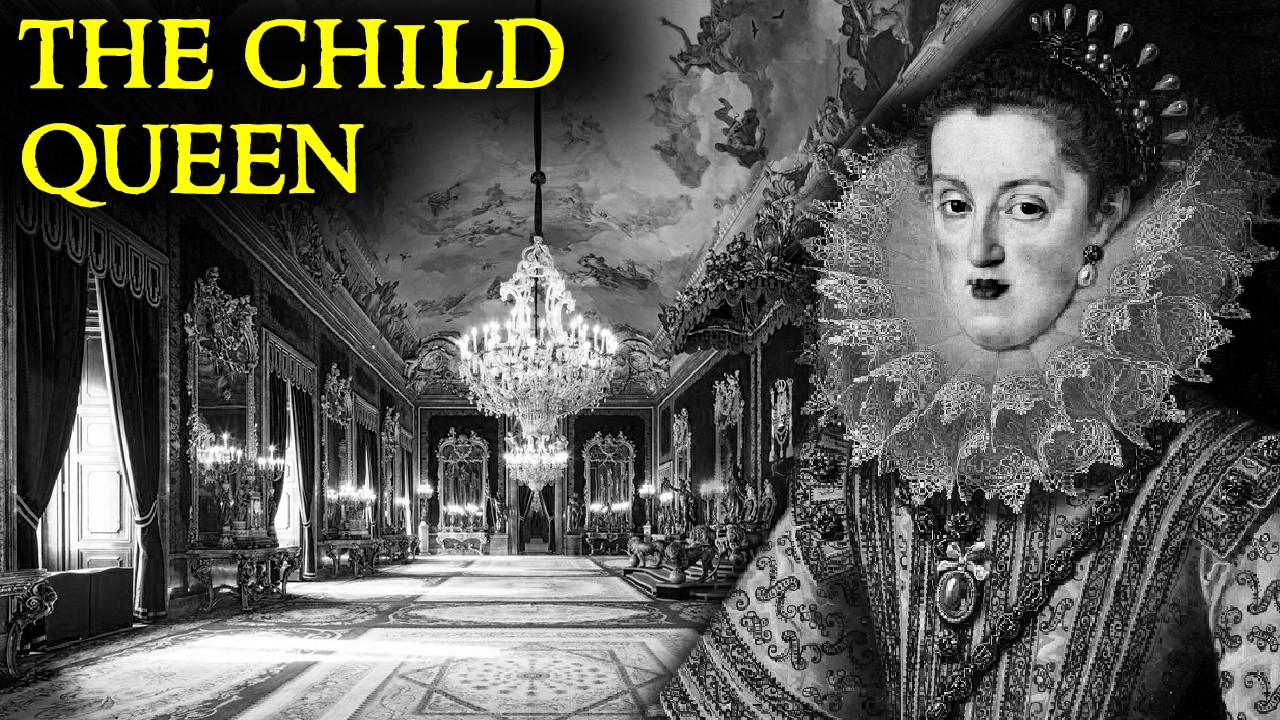
Margaret had not lived to see the consequences of the policy she had pushed so hard to shape. She had bent Spanish foreign policy toward the interests of her Austrian kin and had secured the succession of the dynasty. But the choice she helped force upon Spain would bleed it dry for decades, and the genetic legacy she passed on through her children would eventually destroy the line she had worked so hard to preserve. She was born on Christmas Day 1584 in Graz, in the Duchy of Styria, in what is now southern Austria.
Her father was Charles II, Archduke of Austria, and her mother was Maria Anna of Bavaria. They were uncle and niece, a marriage that would have been scandalous in most royal houses but was entirely typical of the Habsburgs, the most powerful family in early modern Europe. The dynasty had its origins as a minor noble house on the border between Austria and Switzerland, but by the sixteenth century it controlled Austria, Hungary, Bohemia, and Croatia. A rival branch ruled Spain and its enormous colonial empire, the result of a split in the early sixteenth century when two brothers, Ferdinand and Charles, divided the vast Habsburg inheritance in two.
Margaret came from the junior, Styrian branch of the family, but her branch carried dangerous potential. The senior line, ruling from Vienna under the eccentric Emperor Rudolf II, was thinning, and Margaret’s family could one day surpass their cousins and seize control. That possibility made young Margaret a critical piece on the chessboard of Habsburg power politics. She grew up in the junior Habsburg court in Graz, learning Latin, the language of scholarship and Catholic worship, and the expected skills of a court woman: manners, fashion, dance, and music.
She was conscious of the politics of her time. The Habsburgs presided over the Holy Roman Empire, a sprawling collection of hundreds of small principalities and free cities only loosely tied together by loyalty to an emperor. That fragile unity had shattered in 1517 when the Protestant Reformation ignited religious revolt. Lutheran and Calvinist states broke away, and centuries of imperial order began to crumble.
Margaret was born into this storm. In early modern Europe, there was no such thing as a teenager. A child became an adult at the onset of puberty, typically around thirteen or fourteen, and royal daughters were married off as diplomatic chess pieces at that age. For the Habsburgs, inbreeding was not taboo.
It was strategy, a way of keeping power bound by their own blood. Margaret might normally have been married to a lesser noble, but her cousin, Emperor Rudolf II, had never married, and his brother and likely successor, Matthias, was also childless. The junior Styrian branch was therefore likely to rule in Vienna one day, with Margaret’s brother Ferdinand potentially becoming Holy Roman Emperor. Her hand in marriage became a valuable diplomatic tool.
In early 1599, Margaret arrived in Spain to marry her cousin from the Spanish branch of the dynasty. Philip III, newly in his twenties and already burdened by kingship, wed the fourteen-year-old girl in April of that year. With that ceremony, Margaret became not just queen of Spain but the ceremonial empress of a global empire. Spain had absorbed Portugal and its overseas riches, ruling vast stretches of the Americas, the Caribbean, Africa, Asia, and the Pacific.
She had become arguably the most powerful woman on earth, though the reality behind the glitter was far more complicated. Philip III had inherited a fractured, bankrupt kingdom from his father, Philip II, a stern and relentless ruler who had spent decades waging wars across Europe to crush Protestantism. Unlike his father, Philip III was indecisive and easily swayed, and Margaret quickly began to exert quiet but growing influence. Her mission was clear: to bend Spanish foreign policy toward the interests of her Austrian kin.
The marriage was close and affectionate, and it soon produced children. Margaret was rarely not pregnant for the remainder of her life. Both Margaret and Philip were the products of uncle-niece unions, making them some of the most inbred individuals in European royal history. Their family tree was more like a circle than a branch.
Every pregnancy carried not just hope for the dynasty but the risk of genetic collapse. Despite those odds, Margaret gave birth at least eight times, and five of her children survived into adulthood, a remarkable outcome for such dangerously entangled DNA. On the twenty-second of September 1601, she gave birth to her first child, a daughter named Ana María Mauricia. Like her mother, Ana María was married off young, betrothed to King Louis XIII of France at age ten and wed in 1615 at fourteen.
She had a stillbirth and four miscarriages before giving birth to two healthy boys, including Louis XIV of France, Europe’s most powerful absolutist king. More children followed. A girl named María died just a month after her birth in the spring of 1603. Two younger children, Margarita and Alonso Mauricio, died in infancy or childhood.
But the middle children survived. The eldest boy, Philip, was born in April 1605 and would become King Philip IV of Spain, ruling the empire for forty-four years and earning the nickname Rey Planeta, the Planet King, for the extent of Spain’s world-spanning dominions. Another daughter, María Anna, born in 1606, married Ferdinand III of the Austrian Habsburgs. She was his first cousin, and she gave birth to six children, only three of whom survived into adulthood.
In 1607, Margaret gave birth to Charles, who lived into his mid-twenties and was briefly considered as a potential king when his older brother fell severely ill in the 1620s. Finally, Ferdinand, born in 1609, entered the church and became a cardinal, later serving as governor of the Spanish Netherlands. Philip III was not a decisive monarch. He was impressionable and easily swayed by courtiers, and even by his strong-willed wife.
Spain still sat atop a vast empire, but decades of disastrous wars against the French, Dutch, English, and Turks had drained its treasury. A circle of reformers at court demanded bold action to save what remained of Spain’s fading glory. Margaret was not helpful in this regard. Deeply conservative, she fiercely opposed proposals to cut spending on the church and royal ceremony.
The result was catastrophic. Spain’s economic situation continued to decline, and the government went bankrupt multiple times during Philip III’s reign. At the heart of the Spanish court, a fierce power struggle erupted. A faction of courtiers came into open opposition to Margaret, accusing her fanatical Catholic zeal of warping the king’s judgment and dragging the empire into chaos.
She clashed repeatedly with the Duke of Lerma, Spain’s most powerful noble and the true ruler behind Philip III’s feeble throne. Lerma grudgingly respected her cunning and sharp political instincts but clearly deemed her a serious problem and tried to shut her out of power. Margaret formed alliances with other female members of the court, including the Dowager Empress María, widow of Emperor Maximilian II, who wielded influence at the Spanish court until her death in 1603. More enduring was her alliance with María’s daughter, Margaret of the Cross, a royal nun known for her piety and courtly connections.
Together, the three Austrian Habsburg women steered Philip III toward a fiercely pro-Austrian, pro-Catholic policy. When Margaret’s brother Ferdinand II faced a Protestant revolt in Bohemia in 1618, sparking the Thirty Years War, Spain swiftly backed Austria. Their shared goal was to restore Catholic rule and Habsburg supremacy across the fractured Holy Roman Empire. It was a fateful decision that would bleed Spain dry.
The war dragged on for decades, and by the time Margaret’s son, King Philip IV, died in 1665, Spain was a ghost of its former glory, completely overshadowed by England and France. Margaret succeeded in imposing a pro-Austrian policy on her weak-willed husband, but she would not live to see the fruits of that policy realized. She died young, and the cost of the dynasty’s inbreeding would fall on the next generation. As the seventeenth century wore on, the Habsburgs doubled down on their deadly incestuous tradition, uncle marrying niece generation after generation in a desperate bid to keep power pure.
The cost was catastrophic. Their bloodline twisted in on itself, leading to severe health issues. From this genetic trap came Charles II, born to King Philip IV and his own niece. Feeble, infertile, and plagued by deformities, Charles became the living symbol of a dynasty on the brink.
His broken body marked not just the end of a king but the extinction of the Spanish Habsburgs.
