In a hushed corner of New York City’s Metropolitan Museum of Art, where glittering chandeliers and sumptuous French furniture beckon visitors to linger, there is a presence that seems to permeate every piece of gilded veneer and every brushstroke on a centuries-old canvas. It is not the name of any long-dead king or eminent artist. Instead, it is the subtle but unmistakable hallmark of Jane Wrightsman—the woman whose graceful generosity and private passions helped shape this cultural haven into an unmatched showcase of elegance. Yet the story of how she rose from a childhood overshadowed by her father’s disappearance to become a legendary philanthropist feels almost as ornate, layered, and occasionally tragic as the paintings and furniture she so painstakingly collected.
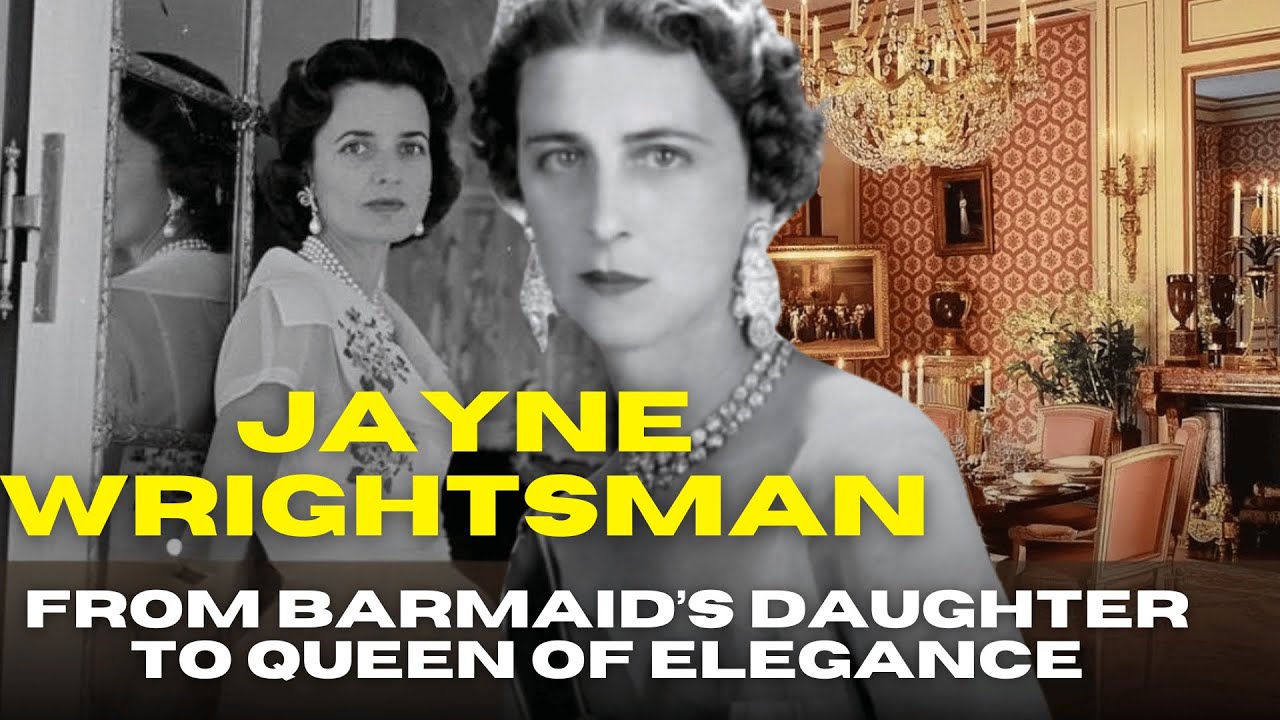
Her journey began in Flint, Michigan, on October 21, 1919. The city at that time was on the cusp of major industrial changes, and so was the Linn family, though they had no crystal ball to see what was coming. Jane was born Jane Kirkland Linn to father Frederick Linn, who ran a construction company, and mother Aline Chuggy Linn. In those early years, the family had stability, or something close to it.
Flint’s manufacturing base created jobs and a sense of hope for many residents. The Linns might have believed they were simply on an upward trajectory. Unfortunately, the onset of the Great Depression eroded that optimism with ruthless efficiency. At some point during those hard times, Frederick vanished.
Whether he slipped away in shame, overcome by financial turmoil, or left for reasons unknown, no one around Jane could say for sure. He was there, then he wasn’t. And so began her earliest lesson in the precariousness of security. Left to fend for herself and four children, Aline had no option but to improvise.
She took on the challenge of running a bar to put food on the table, managing each meager dollar while her father’s memory faded into a story she might recount over a rare quiet evening. For Jane, the environment was a hardscrabble education in resilience and adaptation. She saw her mother’s stoic, unrelenting shoulder take on adult responsibilities and face daily hardships. The presence or absence of money could shape a person’s life in profound ways, Jane realized even from a tender age.
She recognized an urgency in how one might escape the environment she’d been born into—a sense that if you had the will and the resources, you could craft a different destiny. At age 12, with her parents divorced, Jane moved alongside her mother and siblings to Los Angeles. This was an abrupt geographical and cultural shift—from the gritty reality of Depression-era Flint to the star-dazzled world of Southern California. LA offered the promise of sunshine, new beginnings, and, in Jane’s eyes, maybe a glimpse at the luminous realm of wealth and glamour that circulated around Hollywood studios.
She settled into Los Angeles High School, a place that must have felt like a separate universe—palm trees instead of industrial smokestacks, and star-eyed aspirations in place of Michigan’s Rust Belt gloom. Whether or not Jane recognized it at the time, these formative years in LA would plant seeds of poise, confidence, and quiet ambition within her. She observed how the city’s social circles formed themselves around parties, appearances, wealth, and reputations, and she would remember it. Despite her modest upbringing, Jane soon attracted attention for her charm and sense of style.
Unlike some who might have let adversity break them down, she took it as a silent motivator. She worked as a swimsuit model here and there, took on department store retail jobs, and found her way into parties that included big names—from minor Hollywood aristocrats to circles that orbited the inimitable William Randolph Hearst. Hearst’s parties were the stuff of legend, featuring everything from exotic animals to A-list celebrities who came and went. To slip into such gatherings—maybe just briefly, perhaps as someone’s plus one—was to glimpse a tapestry of wealth and glamour far beyond what Jane had known.
But she paid attention. She learned, and she quietly refined her social instincts, forging connections in small but meaningful ways. She saw a path forming: if one played the game right, the chasm between a neglected childhood and high society wasn’t necessarily unbridgeable. In the late 1930s to early 1940s, Jane’s life in Los Angeles continued on this precarious balancing act of modest means and lofty social stepping stones.
She helped her mother with the bar, an enterprise that still gave them day-to-day sustenance. Her father was nowhere to be found, not reappearing to see how or whether his children managed to keep afloat. Freed from paternal oversight, Jane navigated her adolescence into early adulthood, determined to shape a narrative separate from the family tragedies behind her. She graduated from Los Angeles High School, stepping into the uncertain adult world armed with little more than a graceful bearing and a willingness to adapt.
By 1944, at age 24, her life changed irrevocably. Through the swirl of Los Angeles’s elite dinner parties, she met Charles Beetzman Wrightsman, a 49-year-old oil tycoon whose fortune placed him among the wealthiest men in the country. He was no Hollywood actor, but he possessed the kind of gravitational influence usually reserved for the top brass of Tinseltown—money, power, and unwavering confidence. She was young, beautiful, and unaccustomed to the gilded environment he represented, but that was precisely the allure for them both.
He was entranced by her combination of poise and humility; she was intrigued by the possibilities of a world that extended far beyond anything she’d known. Some might have whispered that this was an opportunistic match—Jane’s hardscrabble background melding with Charles’s massive wealth. But from another angle, it was simply two people who recognized a mutual advantage. That same year, they wed.
Many in Charles’s orbit probably raised eyebrows at the 25-year age difference. Some might have gossiped about the backstory of a barmaid’s daughter marrying into an oil empire. But such whispers likely died away whenever Jane appeared, elegantly turned out, exuding an understated class that disarmed cynics. She quickly recognized that to thrive in Charles’s world, she needed to cultivate sophistication.
He was known to be controlling, determined that his wife would reflect the best version of a cultured companion. He arranged private tutors for her, instructing her in etiquette, French conversation, and maybe even the subtleties of how to navigate a dinner party full of aristocrats and society luminaries. She proved to be a diligent pupil, soaking up each lesson, learning not just the rules of refinement but how to adapt them to her own persona. The transformation must have felt staggering at times, almost surreal—from a fatherless girl in a Depression-ridden household to a budding society wife receiving personal tutorials in taste and deportment.
Charles’s money was almost beyond comprehension. He was president of Standard Oil of Kansas, and though the oil business can be precarious, his particular brand of cunning and strategy made him unstoppable. For Jane, this marriage was a ticket into realms she’d only glimpsed at glamorous LA soirées—vast estates, trips abroad, direct access to people of influence. Together, they gradually built a name as connoisseurs of 18th-century French furniture and European paintings, a collecting venture that would become legendary.
She followed him through the labyrinthine auctions and dealer negotiations, learning at each step what separated a mediocre piece from a masterpiece, or how to interpret the distinctive brushstrokes that signaled the hand of a revered painter. But married life had complexities beyond opulent table settings. Charles had two grown daughters from his first marriage—Charlene and Irene—who were less than welcoming toward their new stepmother. They saw Jane as an intruder, a gold digger, someone who couldn’t possibly belong to their father’s domain.
Their resentment never fully dissipated, and tension simmered beneath the well-manicured surface of social gatherings. Jane, for her part, maintained composure. She’d learned from her mother how to survive adversity—from a father’s disappearance to cutthroat LA circles. Handling two resentful stepdaughters was, if not easy, at least something she wouldn’t let break her composure.
Outwardly, the couple projected a glamorous image—a refined, philanthropic pair who represented a marriage of power and style. Privately, conflict occasionally broke through, especially when the daughters faced personal crises that Charles attributed to their own shortcomings. He was not known for paternal warmth. In 1950, Jane’s mother Aline died, leaving a mixture of sorrow and complicated memories.
The woman who’d kept the family afloat with grit and determination never got to see her daughter ascend to the apex of high society. Jane carried that loss quietly, perhaps reflecting on how different her life might have been if her father hadn’t abandoned them. In the 1950s, she continued to integrate further into the realm of the elite, honing her sense of style and forging relationships with influential figures. One notable detail: Charles’s daughter Irene had once been engaged to actor Kirk Douglas, a moment that ended in heartbreak.
That union’s collapse deepened her subsequent spiral into alcoholism. Meanwhile, Charles, by all accounts, wasn’t the comforting father figure Irene or Charlene might have needed. He was rumored to be aloof or outright critical. Jane, lacking the paternal instincts or maternal authority to fix that broken bond, focused instead on quietly building an identity of her own within the art world.
As the 1950s turned into the 1960s, the Wrightsman name began to carry weight among museums and connoisseurs. Their assemblage of exquisite art caught global attention, making them the couple whose taste in European paintings and French decorative arts set a standard of sophistication. Jane might not have had a degree in art history, but she made up for it entirely in study and an ability to connect with expert curators. People with advanced credentials marveled at her cultivated eye.
She could differentiate between periods and styles with a nuanced appreciation that defied her background. For a woman who’d once rung up customers in department stores, it was a breathtaking evolution. At the same time, tragedy continued to trail the family. Charles’s first wife, Irene Stafford, died in 1960 at 63, never having publicly resolved tensions with him.
The first wife’s passing didn’t alter the daughters’ resentments toward Jane. In 1963, Charlene, one of those daughters, died at age 36 from what was apparently a suicide by overdosing on sleeping pills. The painful reality: she was found beside her teenage stepdaughter in Palm Beach, painting a bleak picture of a troubled woman’s final hours. Even in death, the tragedy swirling around Charles’s first family didn’t abate.
Rumors spread about how he reacted, and some said he dismissed them all as failures—a harsh stance that only deepened the rifts. The weight of those tragedies settled over Jane as well. How could it not? Yet she pressed on, devoting energy to philanthropy and art, forging an increasingly robust presence in the social scene.
Perhaps immersing herself in beautiful objects was a coping mechanism against the ugliness that occasionally surfaced at home. By 1965, Jane’s refined public image earned her a place in the International Best Dressed List Hall of Fame—a crowning recognition for someone who’d grown up watching her mother run a bar to survive. She had become a quiet master of style, never ostentatious but undeniably immaculate in her attire. In her mid-40s at this point, she was at the height of her social and philanthropic power.
She drifted seamlessly among black-tie galas, dinner parties filled with ambassadors or European royalty, and circles that included the new First Lady, Jacqueline Kennedy. For a stretch, Jane was rumored to serve as a discreet advisor on cultural and aesthetic matters, extending all the way to suggestions for White House décor. Though she kept her involvement subdued, the era adored such hushed influence—powerful yet polite, behind the scenes but never overshadowing. Jane excelled in it.
Through the mid and late 1960s, her reputation as a collector soared. Monet, Goya, Vermeer—her home brimmed with iconic canvases that museums could only dream of obtaining. And indeed, many of those paintings eventually found their way to the Met, donated by the Wrightsmans in an arrangement that underscored their philanthropic synergy. To walk into their living quarters was to experience an 18th-century European reverie, complete with hand-carved chairs, ornate tapestries, and carefully curated sculptures.
Some joked that the Wrightsman household had a museum-level curation of its own. No piece was there by accident, and each told a story of craftsmanship that spanned centuries. Still, Charles’s notorious domineering side never disappeared. Family members described him barking orders at staff, at Jane, at times at houseguests—though rarely in her presence if it could be avoided for the sake of civility.
He wanted to orchestrate his environment down to the last detail: where the furniture would stand, how staff would present the table settings, even who was permitted to speak with him. Jane, aware of how tenuous her position might be, accepted these rules with outward serenity. Perhaps it was an echo of her mother’s stoic approach to adversity. Perhaps she recognized the tradeoff: by tolerating his controlling nature, she could continue to channel their resources and status into something philanthropic, building an enduring legacy rather than succumbing to petty domestic battles.
In 1975, Jane’s dedication to the Metropolitan Museum of Art led to her election to its board. It was an astonishing milestone for a woman who’d never taken the conventional academic route. She was there by virtue of her knowledge, generosity, and unwavering commitment to the institution. Curators and directors praised her discerning eye, describing how she’d personally weigh in on acquisitions, sometimes refusing to endorse pieces that didn’t meet her standards.
Her input on the arrangement of the French decorative arts galleries contributed immeasurably to the museum’s prestige. The Wrightsman Galleries became a must-see highlight—a testament to the synergy between money and art, but also to one woman’s improbable climb through social strata to the apex of cultural patronage. That same year, 1975, another event rippled through Jane’s circle. Truman Capote’s short story “La Côte Basque, 1965” was published in Esquire.
The piece was part of his unfinished novel Answered Prayers and took scathing aim at the high-society swans, many of them dear friends or acquaintances of Jane’s. Capote had once thrived on such social connections, but with this literary betrayal he essentially eviscerated his relationships. Though Jane herself wasn’t singled out by name, the story’s barbed references to the private lives of wealthy women in her sphere made her cautious. She sensed the danger of too much openness with flamboyant writers who thrived on gossip.
She, along with others such as Babe Paley, withdrew from Capote’s orbit. His depiction of their world—glittering on the outside, fraught with scandal within—wasn’t new to Jane. She’d seen tragedies in her own family, after all. But the public airing of these secrets was intolerable.
Thus she discreetly cut ties, reminding everyone once again that she guarded her personal life as fiercely as she curated her art. With each passing year, Jane drifted further into a philanthropic persona, rarely granting interviews or indulging in personal revelations. By the late 1970s and early 1980s, she was known primarily for her quiet support of museums, her lavish but tastefully curated gatherings, and her position as a paragon of refined style. Meanwhile, the memory of Charles’s daughters’ tragic ends still hung like a subtle shadow.
Irene had succumbed to alcoholism after a broken engagement to a Hollywood star. Charlene had died from an overdose. People whispered about curses, about the toll of Charles’s unrelenting expectations, about the weight that wealth and power can inflict on fragile souls. Jane avoided direct comment.
She might have felt sorrow, but it was a sorrow left unspoken in a world where image was paramount. Then Charles’s health began its decline in the mid-1980s. The unstoppable oil magnate, well into his 80s, found himself battling various ailments, culminating in pneumonia that took his life on May 27, 1986. He was 90.
Overnight, Jane became a widow at 66, inheriting an estate estimated at around $100 million—a figure that, by the standards of that era, was colossal. This wealth was both a liberation and a reminder of the life she had built with him—one marked by his controlling tendencies, yet also by the philanthropic achievements they’d accomplished together. She remained in their Fifth Avenue apartment, now the sole arbiter of the fortune that had once been so meticulously directed by Charles. Unsurprisingly, her philanthropic commitment soared.
With no children of her own and no reason to lavish money on extended family from Charles’s side, given the painful estrangements, she saw the Met and other cultural institutions as her lasting heirs. If she carried regrets or traumas, they scarcely showed in public. She continued to hold a certain mystique, rarely referencing the paternal abandonment that shaped her youth or the suicides that rattled her stepdaughters. Some society columnists tried to pry into her background, conjuring curiosity about how the barmaid’s daughter had navigated to the pinnacle of Manhattan society.
But Jane kept her lips sealed, preserving that air of secrecy and letting her philanthropic deeds speak for her. In the 1990s and early 2000s, she became, if possible, even more private—focusing on behind-the-scenes museum work, scholarship funding, and various charitable donations. People who knew her well attested to her unwavering sense of style, albeit more subdued with age. She seldom made loud statements or sought the spotlight.
Ironically, the more she withdrew, the more interest she stirred among those who found her background fascinating. How had a woman with minimal formal education become an internationally respected art connoisseur? What strength of will must it have taken to maintain composure in the face of multiple family tragedies and a forceful husband? She might have chuckled at the speculation or shrugged it off.
After all, she’d lived an entire lifetime perfecting the art of selective disclosure. Rarely did she call press conferences or accept lengthy magazine profiles. She valued the intangible sense of personal dignity she’d carved out over decades. And given her vantage point, she probably recognized that the philanthropic outcomes—restored artworks, thriving museum wings, scholarships—were far more meaningful than the ephemeral fodder of gossip columns.
In 2012, the public got a slight glimpse into her personal realm when an auction of her jewelry netted a staggering $15 million. The press wondered whether she was letting go of sentimental mementos from her marriage or simply downsizing her personal effects. Either way, the sale underscored her practical approach. Items that were no longer vital to her daily life could instead be converted into resources or parted with gracefully.
Some of that revenue likely found its way back into philanthropic channels, though she never confirmed or denied these rumors. Consistent with her modus operandi, she let the transaction happen quietly, offering no grand speeches about its significance. As the 2010s rolled on, Jane’s name cropped up only occasionally in society pages, typically in connection with museum receptions or philanthropic acknowledgements. She was in her 90s after all, and the physical toll of advanced age meant she no longer hosted lavish dinners or traveled for auctions the way she once had.
A small circle of staff and confidants kept watch over her, assisting her with errands and personal affairs. People who visited her at 825 Fifth Avenue recalled an almost reverential hush in her presence, as though they were stepping into a living relic of a bygone era—a woman who had once hobnobbed with Hollywood’s fringe, married an oil titan, befriended Jackie Kennedy, and left an indelible stamp on the Met’s galleries. The presence of old tragedies lingered too: the suicides of Charlene and the rumored demise of Irene from drink, the overshadowing question of the ex-wife’s death, and the father who once vanished in Flint. These remained the unspoken threads in her tapestry.
If anything, they highlighted how she had transcended the echoes of misfortune, forging a persona that refused to be fully tainted by sorrow. Yet those who believed in curses or generational misfortune found ample fodder in the Wrightsman story. Perhaps it was precisely because she’d witnessed these dark undercurrents that Jane was so determined to champion beauty in the form of art. By 2019, Jane was approaching her 100th birthday.
Her appearances in public were few and far between. Even official museum events rarely saw her name on the guest list. On April 20, 2019, at age 99, she passed away of natural causes. Her funeral took place in near secrecy at the Frank E.
Campbell Funeral Chapel, the favored venue for New York’s upper crust. A handful of mourners—presumably close confidants and perhaps some museum officials—paid respects. She was laid to rest beside Charles in Laurel Hollow Cemetery on Long Island, reuniting them in death. Tributes poured in, especially from the Metropolitan Museum of Art, which hailed her as a legendary benefactor whose donations had enriched the institution beyond measure.
Her name would remain attached to the Wrightsman Galleries, a living testament to her passion for French decorative arts, 18th-century furniture, and masterpieces by the likes of Vermeer and Monet. Visitors might have little idea that this philanthropic icon had once been a child of the Great Depression, bridging the chasm between a bartender’s daughter and refined aesthete through sheer will. She had no children of her own, no siblings left to carry on the Linn name or to share in her inheritance of wealth or cultural stewardship. It was as though she existed in a realm of her own making, crowned in art and philanthropy, unburdened by the ghosts that had accompanied her at the start.
Such is the legacy of Jane Wrightsman—the improbable union of humble origins and refined philanthropy, forever preserved in the halls of a museum that stands as a testament to her unyielding ambition and her love for the transcendent power of art. For those who find themselves strolling through the galleries, it may be worth taking a moment to remember that behind each polished gallery, behind each impeccably carved chair, lay a lifetime of silent resilience—a life shaped by heartbreak, overshadowed by tragedy, and then elevated by a deep commitment to sharing beauty with the world. And in that sense, the hush that descends when you step into those Wrightsman Galleries might well be the echo of her final enduring gift to us all.
